
How the The Church of Jesus Christ of Latter-day Saints and the Catholic Church approach global outreach and conversion.
When Christians talk about “the mission,” the mental imagery shifts depending on whom you ask.
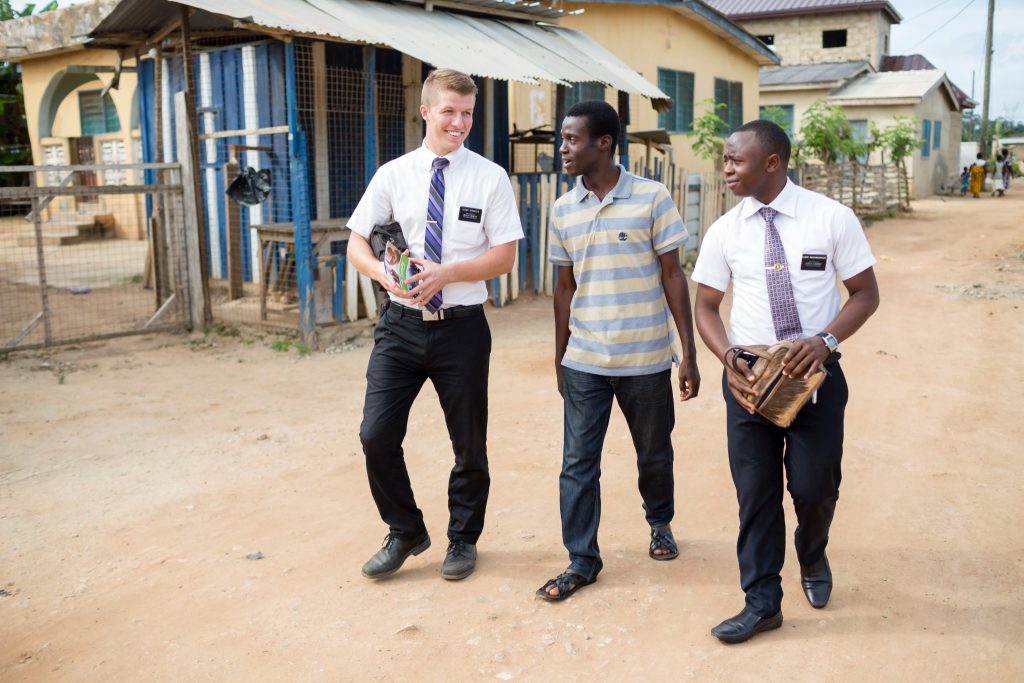
For many, the classical image is distinctively Catholic: Jesuit fathers building schools in Paraguay, Franciscan friars establishing self-sustaining agricultural settlements in California, or Mother Teresa’s Missionaries of Charity tending to the sick on the streets of Kolkata. For others, particularly in recent decades, mission conjures a pair of nineteen-year-old elders from The Church of Jesus Christ of Latter-day Saints in dark suits and name tags, riding bicycles through suburban neighborhoods or Latin American cities.
At a surface glance, both traditions send thousands into the world to represent Jesus Christ. Today, The Church of Jesus Christ of Latter-day Saints has increasingly taken on the scale and societal footprint traditionally associated with historic Catholic endeavors—funding global relief, establishing welfare storehouses, and mobilizing millions of volunteer service hours.
Yet underneath this shared desire to love God and neighbor lies a profound structural and missiological divide. Catholic missiology and the missionary program of The Church of Jesus Christ of Latter-day Saints are not simply two flavors of the same recipe; they are built upon fundamentally different theological architectures. More importantly, each offers a unique ethical solution to one of religion’s oldest dilemmas: how to serve human physical needs without exploiting human vulnerability.
The Theological Roots: Sacramental Incarnation vs. The Great Gathering
To grasp the difference between these two systems, one must look at what each faith believes a mission is fundamentally sent to accomplish.
Catholic Missiology and Missio Dei
In Catholic theology, mission flows directly from the doctrine of the Incarnation—the belief that God took on human flesh in Jesus Christ. Because God sanctified the physical world, the Catholic Church views physical healing, intellectual education, and sacramental life as an integrated, indivisible whole.
Catholic missiology is anchored in the Latin concept of Missio Dei (the “Mission of God”). As outlined in Vatican II’s decree Ad Gentes and Pope John Paul II’s encyclical Redemptoris Missio, God is already active everywhere in the world. The role of the missionary is not merely to bring God where He was supposedly absent, but to participate in God’s ongoing sanctification of human culture.
Catholicism emphasizes inculturation—allowing the faith to sink deep roots into local traditions, languages, and art without stripping away what is naturally good within that culture. Consequently, a Catholic mission often settles in for generations. The parish priest, the teaching sister, and the medical brother become part of the town’s civic fabric. Salvation is sacramental and gradual, nurtured within the ongoing communal life of the Church.
The Theology of The Church of Jesus Christ of Latter-day Saints and Restorationism
The missiology of The Church of Jesus Christ of Latter-day Saints operates on a distinct theological blueprint rooted in restorationism and the biblical mandate to “gather Israel.”
Members of The Church of Jesus Christ of Latter-day Saints believe that following the deaths of Christ’s original Apostles, essential priesthood authority and doctrines were lost in a centuries-long Great Apostasy. Beginning with the Prophet Joseph Smith in 1820, God restored the fullness of the Gospel, the ancient priesthood keys, and the authoritative covenants required for eternal life.
From this perspective, an LDS mission is an urgent, proactive endeavor: to proclaim the message of the Restoration, offer living baptism by valid priesthood authority, and set converts on the covenant path leading to the temple.
While Catholic missions emphasize inculturation (adapting to the local soil), The Church of Jesus Christ of Latter-day Saints prioritizes covenantal uniformity. A meetinghouse of The Church of Jesus Christ of Latter-day Saints in Tokyo functions, teaches, and worships under the exact same organizational handbook, correlated curriculum, and priesthood structure as one in São Paulo or Salt Lake City.
The Personnel: Lifelong Vocations vs. A Covenant of Consecration
The operational engines behind these movements look entirely different on the ground:
- The Catholic Engine: Catholic mission work is largely carried out by religious orders—such as the Jesuits, Salesians, Dominicans, and Spiritans—and diocesan programs like Fidei Donum. These missionaries are almost entirely vowed celibate priests, sisters, or trained, career-long lay workers. They make multi-year or lifetime vows, receive years of theological and linguistic formation, and typically dedicate their adult working lives to their assigned field.
- The Engine of The Church of Jesus Christ of Latter-day Saints: In popular media, serving a mission for The Church of Jesus Christ of Latter-day Saints is often labeled a cultural “rite of passage,” but that secular term fails to capture its spiritual gravity. It is not an obligatory social ritual; it is a profound act of covenant consecration. Prior to departing, missionaries enter the temple and make sacred covenants, pledging their time, talents, and means to the building of the kingdom of God.
Young men (serving 24 months) and young women (serving 18 months) in The Church of Jesus Christ of Latter-day Saints make concrete personal sacrifices: they defer university programs, suspend early careers, step away from relationships, and independently fund their own living expenses. They voluntarily give up personal social media, standard entertainment, and daily autonomy to dedicate every waking hour to the ministry of Christ.
A Lifelong Leadership Incubator
This consecrated season produces a transformative societal byproduct. Returned missionaries do not simply check off a religious box; they emerge at age 20 or 21 with fluent foreign language skills, public speaking competence, cross-cultural empathy, emotional resilience, and deep organizational discipline. Having spent up to two years entirely focused on serving others, they return home with an ingrained instinct for civic involvement, stepping into family life, professional careers, and voluntary local church leadership with extraordinary maturity.
The Ethical Dilemma: Rice Christianity and the “Clean Firewall”
Whenever a church offers temporal aid in developing or destitute communities, it runs headlong into a sensitive ethical issue: the historical reality of “rice Christianity.”
If a religious organization hands out bread, medicine, or schooling with one hand while holding a baptismal registry in the other, how can it be certain that conversions are genuinely spiritual rather than economic compromises? How can vulnerable people evaluate faith freely when their physical survival is intertwined with the missionary’s approval?
Catholicism and The Church of Jesus Christ of Latter-day Saints address this dilemma in distinct ways:
The Catholic Ideal: The Integrated Presence
Catholic missiology resolves this tension through long-term institutional presence. Catholic schools, hospitals, and charity networks (such as Caritas and Catholic Relief Services) routinely serve populations that are overwhelmingly non-Christian without requiring conversion or church attendance.
In places like India or the Middle East, Catholic institutions educate generations of Hindu, Muslim, and secular students who never become Catholic, and the Church views this service as intrinsically valuable. The risk in this model, however, is administrative blurring: because the clinic and the parish often share the same compound and leadership, separating temporal gratitude from sacramental pressure requires constant, vigilant local pastoral discretion.
The Solution of The Church of Jesus Christ of Latter-day Saints: The Structural Firewall
Rather than integrating charity and proselytizing into a single point of contact, The Church of Jesus Christ of Latter-day Saints built an explicit institutional firewall between spiritual preaching and humanitarian relief.
This model relies on structural separation:
- Unambiguous Proselytizing: When full-time teaching missionaries from The Church of Jesus Christ of Latter-day Saints arrive at a door, their purpose is clear and transparent from the first minute. They are there to share the message of Jesus Christ and the Restoration. They do not hand out financial stipends, distribute bags of grain, or offer free clinic passes. Prospective investigators evaluate the faith strictly on its spiritual merits, untainted by material incentives.
- Pure Philanthropy (Latter-day Saint Charities): On the temporal side, the massive global welfare arm of The Church of Jesus Christ of Latter-day Saints operates without proselytizing strings attached. Whether digging wells, responding to earthquakes, or funding maternal health programs, aid is delivered purely to relieve suffering and build long-term self-reliance. Recipients are neither tracked for missionary lessons nor pressured into baptism.

This separation protects the dignity of the recipient and ensures that spiritual conversions within The Church of Jesus Christ of Latter-day Saints are unencumbered by economic leverage.
The Modern Scope: Humanitarian Work by the Numbers
To appreciate the scale of this parallel track, look at the verifiable data published in the Church’s annual Caring for Those in Need reports. The numbers show an infrastructure rivaling long-standing global humanitarian agencies:
| Metric | The Church of Jesus Christ of Latter-day Saints: Global Reach |
| Total Global Expenditures | $1.58 Billion in direct aid, welfare, and emergency relief |
| Countries and Territories Served | 196 nations across every inhabited continent |
| Active Humanitarian Projects | 3,514 distinct community and emergency projects worldwide |
| Volunteer Service Hours | 7.4 million recorded hours across welfare facilities, service missions, and community service |
| Food Security Impact | 37+ million pounds of food (over 30 million meals) distributed through 121 storehouses |
| Maternal & Child Health | 21.2M children and mothers provided essential vitamins; 219,000 received prenatal care |
Crucially, the $1.58 billion expenditure figure excludes the monetary value of volunteer hours. It represents direct institutional funding, commodity distribution, emergency grants, and local bishop-administered welfare orders provided by The Church of Jesus Christ of Latter-day Saints.
Grassroots Service & The Power of JustServe
Beyond institutional checks, The Church of Jesus Christ of Latter-day Saints mobilizes grassroots action through JustServe.org. Surpassing 1 million registered users, JustServe is a free community platform that links local volunteers to community non-profits, animal shelters, food pantries, and civic centers. The platform deliberately carries no proselytizing agenda; it is offered as a pure civic gift to strengthen social fabric at the municipal level.
A Focus on Self-Reliance Over Dependency
A key distinction in the Church’s philosophy is uplifting human dignity through self-reliance. Rather than fostering perpetual foreign dependency, initiatives like the Perpetual Education Fund provide micro-loans for vocational training in developing countries. In addition, over 142,000 individuals worldwide participate annually in free church-sponsored self-reliance groups covering personal finance, business startup skills, and emotional resilience.
Furthermore, The Church of Jesus Christ of Latter-day Saints demonstrates institutional humility by frequently bypassing self-branded relief operations. Instead, it directs tens of millions of dollars into experienced, non-LDS partner organizations—including Catholic Relief Services (CRS), UNICEF, the World Food Programme, and the International Committee of the Red Cross.
The Question of Wealth: Hoard or Perpetual Endowment?
In recent years, public scrutiny has often focused on the scale of financial reserves and commercial investment holdings associated with The Church of Jesus Christ of Latter-day Saints. Critics often ask: Why should a church amass financial capital rather than spending every single dollar immediately?
The answer lies in the sustainability of modern missiology. Most traditional non-profits and churches operate on a cash-in, cash-out cycle (“passing the hat”). When an economic recession hits, member donations drop precisely at the moment the poor and vulnerable need the most help.
By managing its reserve assets like a university endowment (similar to Harvard or Notre Dame), The Church of Jesus Christ of Latter-day Saints uses capital market yields, commercial profits, and investment returns alongside voluntary member offerings. This endowment structure provides three decisive advantages:
- Counter-Cyclical Resilience: When global markets stumble or inflation spikes, The Church of Jesus Christ of Latter-day Saints does not have to scale back its humanitarian commitments. Investment returns ensure that humanitarian spending—now reaching $1.58 billion annually—remains continuous, protected, and predictable.
- Rapid Deployment Capacity: During major international crises, The Church of Jesus Christ of Latter-day Saints can immediately deploy tens of millions of dollars to global food programs or disaster relief without waiting months to organize reactive fundraising drives.
- Absorbing 100% of Administrative Overhead: In traditional charitable giving, 15% to 30% of each dollar is often consumed by marketing, administrative salaries, and transport logistics. The Church of Jesus Christ of Latter-day Saints utilizes its commercial earnings and general reserves to cover all administrative and operational expenses. As a result, 100% of every dollar donated by members to the Humanitarian Aid Fund goes directly into field relief.
Far from being a static hoard, this capital structure operates as a perpetual philanthropic engine, providing the financial permanence required to sustain worldwide relief at scale.
Synthesis: Two Legitimate Answers to Christian Discipleship
| Core Dimension | The Catholic Model | The Church of Jesus Christ of Latter-day Saints Model |
| Missiological Goal | Missio Dei, sacramental implantation, inculturation | Gathering Israel, restoring authority, saving ordinances |
| Primary Agents | Vowed religious orders, priests, career lay workers | Consecrated lay youth (18–25), senior couples, local members |
| Personal Impact | Lifelong clerical or religious vocation | Premier leadership incubator: language fluency, grit, civic duty |
| Temporal Aid Approach | Integrated: Schools, hospitals, and churches unified | Bifurcated: Clean institutional separation between aid and proselytizing |
| Global Humanitarian Footprint | Massive decentralized network (Caritas, CRS, orders) | Centralized, coordinated expenditures ($1.58B annually) and 7.4M volunteer hours |
| Grassroots Engagement | Parish-based social outreach and Catholic charities | JustServe.org (1M+ users) connecting communities to local non-profits |
| Financial Mechanism | Decentralized diocesan funds, orders, institutional donor drives | Endowment-style reserves, commercial returns, fast offerings, 100% pass-through giving |
| Ethical Safeguard Against Coercion | Pastoral non-proselytism in civic institutions (Redemptoris Missio) | Transparent boundaries: aid recipients are never solicited for baptism |
Evaluating the Catholic and Latter-day Saint approaches does not require declaring one superior and the other inferior. They represent two consistent theological systems responding to the command to love God and care for one’s neighbor.
Catholicism offers a long-term, physical presence that transforms civic landscapes through centuries of education, healthcare, and cultural immersion.
The Church of Jesus Christ of Latter-day Saints, by contrast, has engineered a modern, efficient dual-engine model: empowering tens of thousands of young lay adults to preach their faith openly through consecrated personal sacrifice, while deploying institutional reserves, market returns, and volunteer labor to relieve global suffering without strings attached.
For the modern observer, understanding this institutional separation is the key to appreciating both the spiritual transparency of the missionary work of The Church of Jesus Christ of Latter-day Saints and the profound, quantifiable fairness of its global humanitarian outreach.
Frequently Asked Questions (FAQ)
1. If Catholic missions and the missions of The Church of Jesus Christ of Latter-day Saints are so different, why do both emphasize community service?
Both traditions draw directly from Christ’s teachings to feed the hungry, clothe the naked, and care for the stranger. The difference lies in operational architecture. In the Catholic tradition, service institutions (hospitals, schools, agrarian clinics) are intrinsically tied to the parish or religious order as an active ministry. The Church of Jesus Christ of Latter-day Saints runs parallel tracks: full-time teaching missionaries focus strictly on teaching and baptism, while institutional welfare, local service missionaries, and Latter-day Saint Charities handle temporal relief, self-reliance courses, and infrastructure projects.
2. Are young members of The Church of Jesus Christ of Latter-day Saints required to serve a mission?
No. Serving a mission is an earnest ecclesiastical invitation and priesthood duty for young men (and an honored option for young women), but it is entirely voluntary. Missionaries in The Church of Jesus Christ of Latter-day Saints pay their own way or rely on family and congregational support. Because it involves 18 to 24 months of rigorous discipline, early mornings, scriptural study, and constant public engagement, it requires a high degree of personal faith and voluntary covenant consecration.
3. Does humanitarian aid from The Church of Jesus Christ of Latter-day Saints require recipients to listen to missionary lessons?
No. Latter-day Saint Charities operates under strict non-proselytizing guidelines. Global relief projects—such as clean water installations, neonatal resuscitation training, wheelchair donations, and food bank distributions—are provided without religious conditions. In many instances, The Church of Jesus Christ of Latter-day Saints delivers aid by directly financing vetted global partners, including Catholic Relief Services, UNICEF, and the Red Cross.
4. Why don’t Catholic missionaries have standardized two-year assignments like missionaries from The Church of Jesus Christ of Latter-day Saints?
Catholic mission work is rooted in long-term inculturation and permanent vocations. Most Catholic overseas missionaries belong to religious orders (such as the Salesians, Jesuits, or Franciscans) or are diocesan priests on extended assignment (Fidei Donum). They often spend years mastering local dialects, embedding within the community, and running schools or medical centers. Because their service is tied to a lifelong vocation rather than a temporary assignment, they may live and serve in a single region for decades.
5. How is the humanitarian work of The Church of Jesus Christ of Latter-day Saints funded?
It is funded through a multi-tiered financial engine:
- Voluntary Member Giving: Contributions designated for the Humanitarian Aid Fund and monthly fast offerings given to care for the poor.
- Investment Returns & Commercial Earnings: Earnings generated by the institutional reserve funds and commercial enterprises of The Church of Jesus Christ of Latter-day Saints. These investment yields allow the Church to sustain over $1.5 billion in annual aid and respond to catastrophic emergencies without relying solely on immediate donations.
- Zero Administrative Overhead: The Church of Jesus Christ of Latter-day Saints uses its general commercial reserves to cover all administrative, staffing, and transport costs. As a result, 100% of funds donated by individuals go directly to relief work in the field.