(Link to part 1 of this article on Joseph Smith)
In the spring of 1839, having escaped wrongful imprisonment in Missouri, Joseph Smith rejoined the main body of the Saints who had sought temporary refuge across the Mississippi River in Quincy, Illinois. Stripped of their lands and personal possessions, the early believers looked to their prophet not with despair, but with renewed faith. What followed was one of the most productive, spiritually profound, and momentous chapters in the history of the Restoration: the founding of Nauvoo the Beautiful, the unveiling of temple blessings for eternity, and Joseph Smith’s final, ultimate testimony of Jesus Christ.
The Miracle of Nauvoo: From Swamp to City of the Saints
Joseph directed the purchase of land fifty miles north along a horseshoe bend of the Mississippi River. The site, then known as Commerce, was an uninhabitable swamp infested with mosquitoes and malaria.
Through hard labor and mutual aid, the Saints drained the marshes, built canals, and erected homes, schools, and workshops. Joseph renamed the location Nauvoo, a Hebrew word signifying “beautiful location” or “city of rest.”
Within just four years, Nauvoo was transformed into one of the largest and most prosperous cities in Illinois, rivaling Chicago in commerce and population. Believers poured in from across the eastern United States, Canada, and particularly the British Isles, where modern apostles like Brigham Young and Heber C. Kimball had baptized thousands into the restored faith.
Nauvoo became a living testament to what a community consecrated to the Lord could build through shared purpose, industry, and Christian charity.
The Relief Society: Women in the Work of Salvation
In March 1842, twenty women gathered in the upper room of Joseph Smith’s Red Brick Store in Nauvoo to organize a charitable association. Recognizing their devotion, Joseph taught that the Lord had an even higher purpose for them.
On March 17, 1842, Joseph formally established the Female Relief Society of Nauvoo, ordaining his wife, Emma Hale Smith, as its first president. He organized the society under the authority of the priesthood after the pattern of the ancient Church:
- The society’s purpose was twofold: to provide relief to the poor and afflicted, and to save souls.
- Joseph explained that the Church had never been fully organized until the women were thus organized in their sacred capacity.
Today, the Relief Society stands as one of the oldest and largest women’s organizations in the world, serving millions globally under its enduring motto: “Charity Never Faileth” (1 Corinthians 13:8).
The Nauvoo Temple: Uniting Families for Eternity
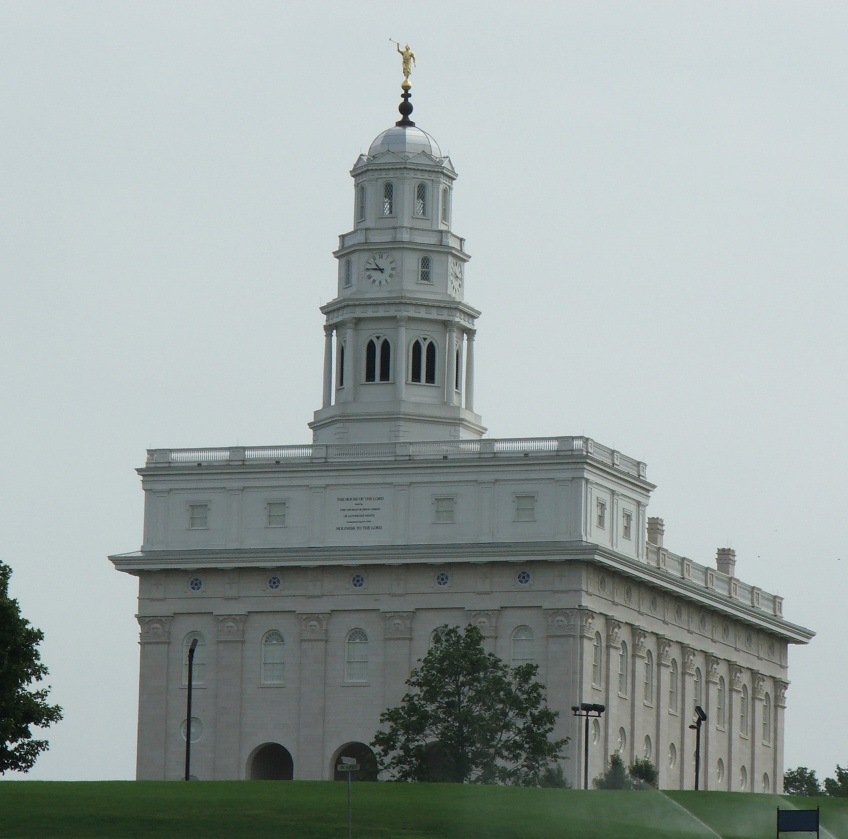
From the moment the Saints broke ground in Illinois, Joseph’s primary focus was the construction of a magnificent limestone temple crowning the high bluffs above the city.
In earlier dispensations, holy prophets built sanctuaries where the Lord could reveal Himself and bestow heavenly power. In Nauvoo, the Lord revealed core doctrines regarding the eternal destiny of the human soul:
- Baptism for the Dead: Joseph taught that God’s plan of redemption extends to all of His children, including those who died without having the opportunity to hear the gospel in mortality. Citing ancient Christian teachings (such as 1 Corinthians 15:29), Joseph revealed that living members could be baptized vicariously on behalf of their deceased ancestors in sacred temple fonts, offering every soul the choice to accept Christ’s grace.
- The Temple Endowment: Through the temple endowment ceremony, faithful men and women made sacred covenants to keep the commandments of God, live the law of chastity, and consecrate their talents to the service of their fellow men, receiving promises of spiritual power and light.
- Eternal Marriage and Family Sealings: Joseph revealed that the family unit is central to God’s eternal plan and not intended to end “until death do you part.” Under the sealing keys restored by the prophet Elijah, marriages solemnized in the temple bind husband and wife together for time and for all eternity. Children are sealed to their parents, creating an unbroken chain of loving families spanning across generations.
The construction of the Nauvoo Temple required monumental sacrifice. Men gave one day in ten as labor tithing, quarrying and hauling massive blocks of white limestone; women spun wool, made clothing for the workers, and gave up precious family heirlooms to finance the glass and masonry.
Expanding the Horizon of Christian Doctrine
During the Nauvoo period, Joseph Smith delivered some of his most memorable public sermons, expanding traditional Christian thought and offering comforting insights into the purpose of existence:
- The King Follett Sermon (April 1844): At the general conference held two months before his death, Joseph spoke to thousands about the true nature of God and humanity. He taught that God is a loving, personal Father who desires His children to grow, learn, and ultimately become partakers of the divine nature through the grace of Christ (theosis).
- The Eternal Nature of the Soul: Joseph taught that human spirits were not created from nothing; every individual possessed an eternal identity before this mortal life and lived as a beloved spirit son or daughter of heavenly parents.
- Light and Truth: Joseph continually urged the Saints to embrace all truth, declaring: “One of the grand fundamental principles of ‘Mormonism’ is to receive truth, let it come from whence it may.”
Clouds of Opposition Gather
Nauvoo’s rapid economic expansion, its disciplined civic unity, and the sheer number of converting immigrants triggered deep suspicion in neighboring frontier towns. Frontier politicians feared the Saints’ growing voting influence, while sectarian critics grew increasingly hostile toward Joseph’s bold theological declarations and the city’s independent legal protections.
In late spring of 1844, internal dissenters in Nauvoo allied with outside opponents, publishing inflammatory claims intended to invite mob violence against the city. Acting under Illinois law to maintain public order and prevent imminent riots, the Nauvoo City Council ordered the destruction of the printing apparatus of the Nauvoo Expositor.
This event gave external enemies the pretext they had sought. Hostile local papers called for open warfare, and exaggerated charges of treason were leveled against Joseph and his brother Hyrum Smith.
To avert a catastrophic invasion of Nauvoo by enraged state militias and to protect his people, Joseph chose to submit voluntarily to arrest. Illinois Governor Thomas Ford pledged the full protection of the state’s honor and promised the brothers a fair legal trial.
Carthage Jail: A Testament Sealed in Blood
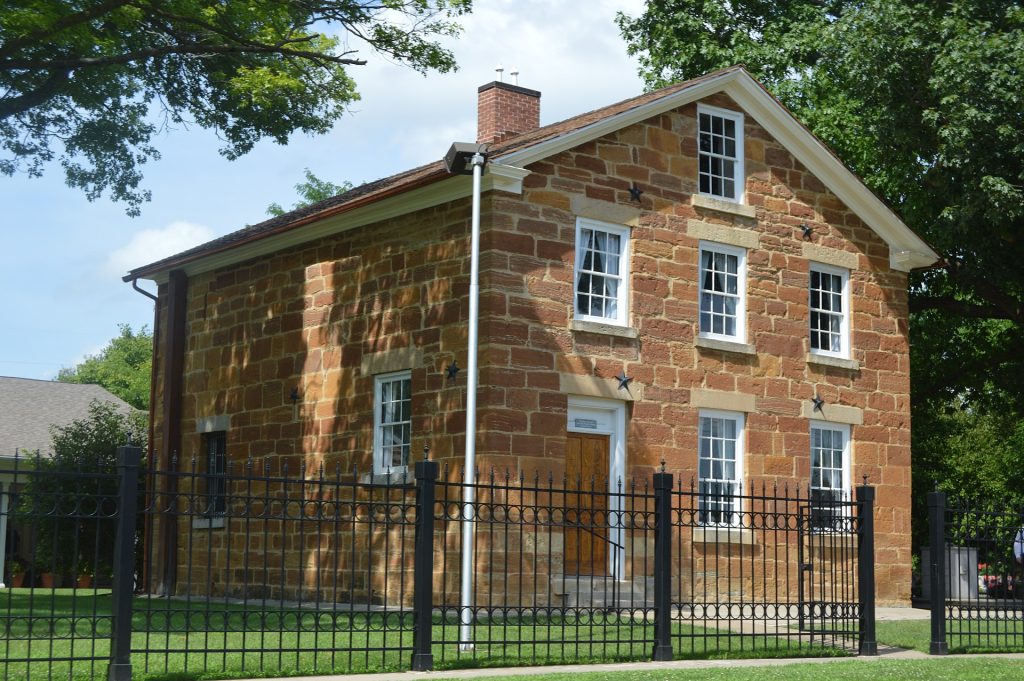
On June 24, 1844, Joseph, Hyrum, and a few close companions rode out of Nauvoo toward the county seat of Carthage. Joseph knew what awaited him, telling his companions:
“I am going like a lamb to the slaughter; but I am calm as a summer’s morning; I have a conscience void of offense towards God, and towards all men.”
The brothers were held under guard in an upstairs room of Carthage Jail. On the afternoon of June 27, 1844, as they sat quietly, apostle John Taylor sang the reverent hymn “A Poor Wayfaring Man of Grief,” which brought a peaceful spirit to the room.
Shortly after 5:00 p.m., a mob of approximately one hundred and fifty men with faces blackened with mud and gunpowder stormed the jail. Governor Ford had dismissed the main protective forces, leaving the prison guarded by the Carthage Greys, who actively sympathized with the attackers.
The mob rushed up the narrow stairs and began firing through the closed wooden door:
- Hyrum was struck in the face by a bullet through the door panel and fell backward, crying, “I am a dead man!”
- Joseph sprang forward to defend his friends, firing a pocket pistol down the corridor until the chambers were empty, drawing the mob’s fire toward himself to spare the surviving men in the room.
- Rushing to the open window to escape or deflect the onslaught, Joseph was hit multiple times from inside and outside the building, falling from the second-story window to the ground below. His final mortal words were: “O Lord, my God!”
At thirty-eight years old, Joseph Smith sealed his mission and his testimony with his life.
The Legacy of the Prophet of the Restoration
The assassination of Joseph and Hyrum did not extinguish the work they began. In an official tribute recorded shortly after the martyrdom, preserved in the Doctrine and Covenants (Section 135), the Church declared:
“Joseph Smith, the Prophet and Seer of the Lord, has done more, save Jesus only, for the salvation of men in this world, than any other man that ever lived in it… He lived great, and he died great in the eyes of God and his people; and like most of the Lord’s anointed in ancient times, has sealed his mission and his works with his own blood.”
Under the steadfast leadership of Brigham Young and the Quorum of the Twelve Apostles, the Saints completed the Nauvoo Temple, receiving their sacred endowments before being forced to embark on an epic westward trek across the Rocky Mountains to the Salt Lake Valley.
Today, missionaries continue to invite people worldwide to read the Book of Mormon, pray with a sincere heart, and discover for themselves the divine reality of Joseph Smith’s sacred calling. For millions across every continent, his life remains an inspiring beacon of faith: the story of a humble farm boy who trusted the promise of the Bible, sought the Lord in faith, and served as an instrument in God’s hands to restore the fulness of the gospel of Jesus Christ.