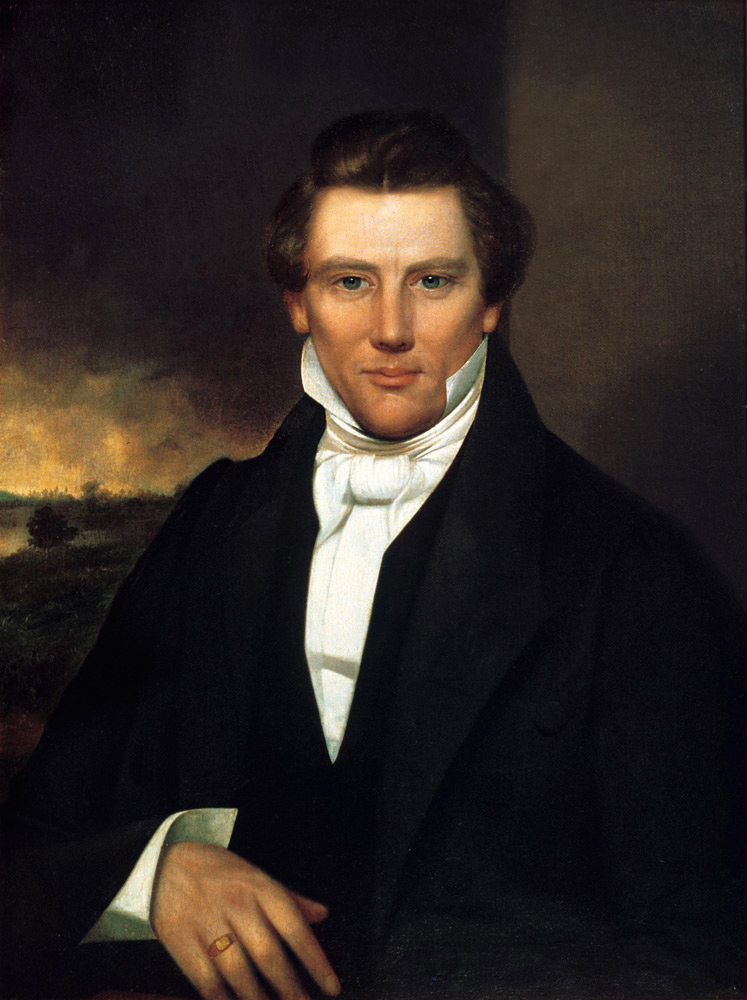
At the heart of the message of The Church of Jesus Christ of Latter-day Saints is the principle that God speaks to humanity today just as He did anciently. Latter-day Saint missionaries invite the world to consider a profound message: that after centuries of spiritual confusion following the deaths of Christ’s original Apostles—a period known as the Great Apostasy—the heavens were opened once again. Through Joseph Smith Jr. (1805–1844), God initiated the Restoration of His original Church, restoring divine priesthood authority, clarifying eternal truths about the nature of God, and bringing forth new scripture to stand alongside the Holy Bible.
The Search for Truth and the Sacred Grove
Born on December 23, 1805, in Sharon, Vermont, Joseph was raised by faithful parents, Joseph Smith Sr. and Lucy Mack Smith, who taught their children to revere the Bible and seek God’s guidance. In 1816, the Smith family moved to the farming community of Palmyra, New York.
During Joseph’s teenage years, western New York experienced an intense religious revival. Preachers from Presbyterian, Methodist, and Baptist pulpits competed passionately for converts. Joseph was a deeply earnest and reflective youth who desired to follow Jesus Christ, yet he found himself bewildered by the conflict between denominations. Each claimed to possess the truth, yet their doctrines often contradicted one another.
Seeking an answer, Joseph turned to the Scriptures. In the winter of early 1820, he read James 1:5:
“If any of you lack wisdom, let him ask of God, that giveth to all men liberally, and upbraideth not; and it shall be given him.”
This passage struck his heart with tremendous power. Believing with simple faith that God would answer, on a clear spring morning in 1820, fourteen-year-old Joseph walked into a quiet grove of trees on the family farm to pray out loud for the first time in his life.
The First Vision: A Modern Revelation of the Godhead
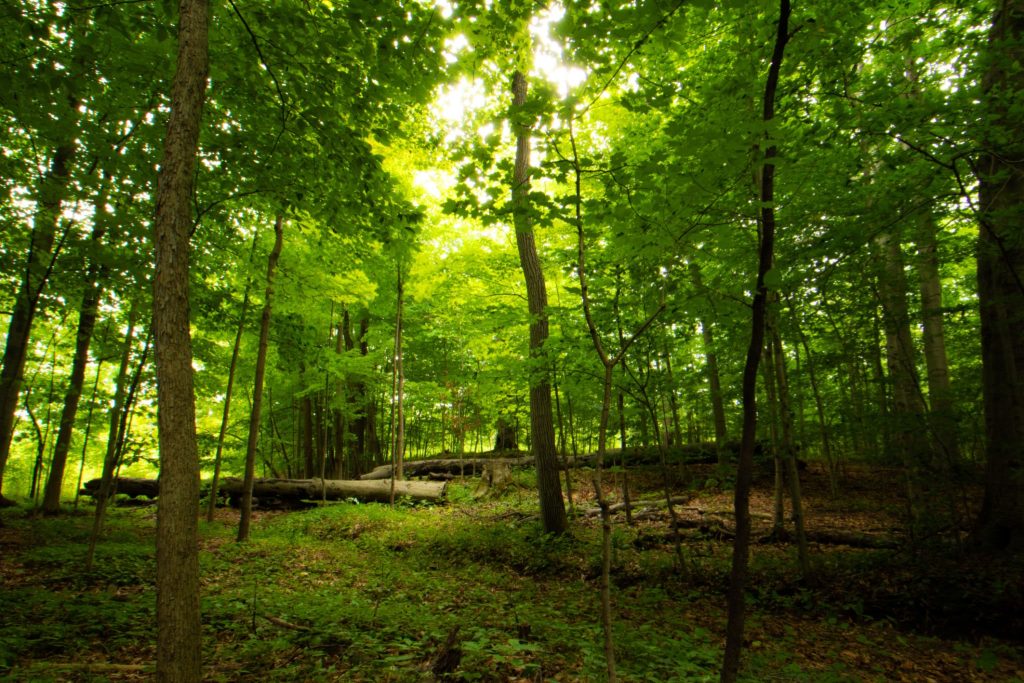
As Joseph began to pray in what is now revered as the Sacred Grove, he was initially seized by a dark, oppressive power that sought to stop him from speaking. Exerting all his spiritual strength, he called upon God for deliverance.
In that crucial moment, a pillar of light brighter than the sun descended directly above him:
- Within the light, Joseph saw two distinct, glorious personages standing above him in the air, whose brightness and glory defied all description.
- One of them pointed to the other and said, calling the boy by name: “Joseph, This is My Beloved Son. Hear Him!”
When Joseph asked which church was right and which he should join, the Savior instructed him to join none of them. The Savior explained that the churches of the day taught for doctrines the commandments of men, having a form of godliness but denying the power thereof. Joseph was told that the full truth would be made known to him at a future time.
This First Vision remains one of the most vital events in modern Christian history for Latter-day Saints:
- It revealed that God the Father and His Son, Jesus Christ, are two separate, distinct beings with resurrected, glorified bodies of flesh and bone.
- It demonstrated that God knows each of His children personally, answers humble prayers, and had begun to restore His true Church to the earth.
An Angelic Guide and the Golden Plates
Over the three years that followed, Joseph continued working alongside his family on their farm. On the evening of September 21, 1823, as he prayed for forgiveness and guidance, a heavenly messenger appeared in his room. The angel introduced himself as Moroni, a resurrected prophet from an ancient American civilization.
Moroni explained that God had an important work for Joseph to perform. He revealed that an ancient record, engraved upon thin gold plates, lay buried in a nearby hill named Cumorah. This sacred record contained:
- The history of ancient inhabitants of the American continent who had been led there by the Lord.
- The account of the resurrected Jesus Christ visiting and ministering to them shortly after His ascension in Jerusalem, establishing His gospel and ordaining twelve disciples among them.
- The fullness of the everlasting gospel as taught by the Savior Himself.
Joseph was also told that buried with the plates were instruments prepared by God—the Urim and Thummim (interpreters)—which would enable him to translate the ancient writing by the gift and power of God.
For four consecutive years, on September 22, Joseph met Moroni at the Hill Cumorah to receive divine instruction in spiritual maturity, humility, and leadership. On September 22, 1827, Joseph was finally entrusted with the plates.
The Book of Mormon: Another Testament of Jesus Christ
Between April and June 1829, primarily in Harmony, Pennsylvania, and Fayette, New York, the translation moved forward rapidly. Because of his limited formal education, Joseph dictated the ancient text to trusted scribes, chief among them a young schoolteacher named Oliver Cowdery. Joseph did not work from notes or books; he translated purely through revelation.
To establish the truth of the work by the mouths of reliable witnesses (in accordance with 2 Corinthians 13:1), the Lord called special witnesses to view the plates:
- The Three Witnesses (Oliver Cowdery, David Whitmer, and Martin Harris) testified that an angel of God descended and showed them the plates, and that the voice of God commanded them to bear witness that the translation was true.
- The Eight Witnesses were shown the plates by Joseph directly, handling the metal leaves and observing the curious engravings.
In March 1830, the translation was published in Palmyra as the Book of Mormon: Another Testament of Jesus Christ. As missionaries teach today, the Book of Mormon serves as the keystone of the religion—a companion scripture to the Holy Bible that proves to the world that Jesus is the Christ, living and active in guiding His children.
The Restoration of Priesthood Authority and the Church
A central teaching of the Restoration is that good intentions alone are not enough to administer the ordinances of salvation; divine authority—the Priesthood—is required.
| Priesthood Conferred | Heavenly Messengers | Date & Place | Authority and Keys Restored |
| Aaronic Priesthood | John the Baptist | May 15, 1829 (Susquehanna River, PA) | The preparatory priesthood: authority to baptize by immersion for the remission of sins and the ministering of angels. |
| Melchizedek Priesthood | Ancient Apostles Peter, James, and John | May–June 1829 (Near the Susquehanna River) | The higher priesthood: authority to confer the Gift of the Holy Ghost, organize the Church, and administer spiritual blessings. |
With divine authority restored and the Book of Mormon in print, Joseph received a commandment from the Lord to organize the Church. On April 6, 1830, in the home of Peter Whitmer Sr. in Fayette, New York, the Church of Christ was officially organized.
The infant church immediately began sending missionaries across the frontier. Believers were drawn to the warmth of modern revelation, the assurance of living apostles and prophets, and the invitation to prepare the world for the Second Coming of the Savior.
Faith Amid Persecution: Kirtland and Missouri
As the Church grew, so did external opposition. Seeking peace and answering a revelation from the Lord, the Saints gathered first to Kirtland, Ohio, and later established settlements in Missouri, which was designated as the gathering place for “Zion.”
Despite severe poverty and mob violence from neighbors who misunderstood their beliefs, the early Saints demonstrated extraordinary faith:
- The Kirtland Temple: Built through heroic personal sacrifice, the first temple of the Restoration was dedicated in 1836. Shortly after the dedication, the resurrected Savior appeared in glory, accepting the house. Heavenly messengers—Moses, Elias, and Elijah—also appeared, committing sacred priesthood keys for the gathering of Israel and the sealing of families for eternity.
- Refining Trials in Missouri: In late 1838, amid widespread religious intolerance, the Saints were driven from their Missouri homes under an unjust executive order. While faithful Saints fled across the ice into Illinois, Joseph Smith and his close companions endured five agonizing months in Liberty Jail.
Rather than breaking Joseph’s spirit, this dark period deepened his reliance on God. In answer to Joseph’s heartfelt prayers, the Lord gave heavenly comfort (recorded in Doctrine and Covenants 121 and 122), reminding the young prophet:
“My son, peace be unto thy soul; thine adversity and thine afflictions shall be but a small moment; and then, if thou endure it well, God shall exalt thee on high.”
With resilient faith, Joseph rejoined the displaced Saints in early 1839 on the banks of the Mississippi River, ready to lay the foundation for their next great haven: the city of Nauvoo.
Part II will explore the miraculous rise of Nauvoo the Beautiful, the building of the Nauvoo Temple, the restoration of sacred ordinances like baptism for the dead and eternal family sealings, and Joseph Smith’s enduring testimony sealed with his life at Carthage.