Innovation

“Progress is made by lazy men looking for easier ways to do things.” ― Robert A. Heinlein

Top 23 Best Quotes from Zero to One by Peter Thiel

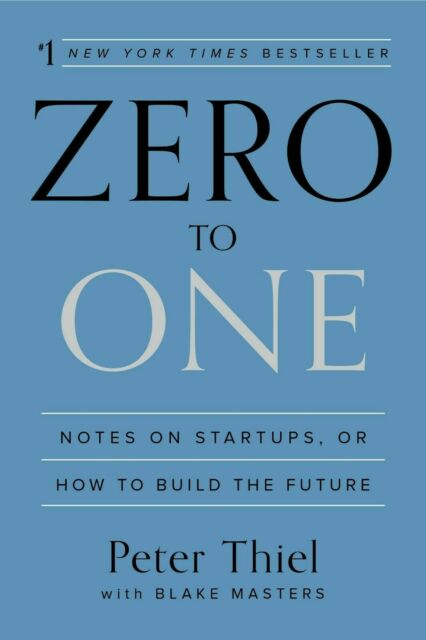
Zero to One : Notes on Startups, or How to Build the Future is a book written by Peter Thiel. Taken on its own merits, Zero to One is a well-written and provoking book. But it is a read that requires an open mind, because it challenges many common opinions.

Improving something that is already being done, takes the world from one to n, adding more of the same. But going from zero to one is going from nothing to something. This is the greatest improvement possible , greater than going from one to 10 or even from one to 100. To go from zero to one is to bring something into existence and therefore is the essence of true innovation.

Going from zero to one means to escape competition altogether, because the new businesses will be unique.

If leaders want to build a better future, they must believe in secrets, and the great secret of our time is that there are still undiscovered frontiers to explore and new inventions to create. In order to do this, leaders need to master the most important skill: learn to think for themselves.

In Zero to One, Peter Thiel uses his own experience at PayPal and Palantir to present ideas and suggestions for technology startups entrepreneurs. In order to unlock the power of innovation, business leaders need to challenge conventional wisdom, and try to build a monopoly. According to Thiel, competition is not the social good we were all taught, because it engenders anti-social behavior and stifles innovation. However, when a company earns a monopoly (even if temporary) through patents or similar methods, it is then motivated to invent new technology, which benefits society. In other words, while monopolies can be misused, they can still benefit society.

In Zero to One, Thiel doesn’t discuss needed protections against the negative effects of monopolies, but this is not the purpose of his book. The flaws in this book don’t eliminate its value in giving advice to business leaders.

My Favorite 23 Quotes From Zero to One

“ZERO TO ONE EVERY MOMENT IN BUSINESS happens only once. The next Bill Gates will not build an operating system. The next Larry Page or Sergey Brin won’t make a search engine. And the next Mark Zuckerberg won’t create a social network. If you are copying these guys, you aren’t learning from them.” 

― Peter Thiel, Zero to One: Notes on Startups, or How to Build the Future

“The best entrepreneurs know this: every great business is built around a secret that’s hidden from the outside. A great company is a conspiracy to change the world; when you share your secret, the recipient becomes a fellow conspirator.” 

― Peter Thiel, Zero to One: Notes on Startups, or How to Build the Future

“Tolstoy opens Anna Karenina by observing: “All happy families are alike; each unhappy family is unhappy in its own way.” Business is the opposite. All happy companies are different: each one earns a monopoly by solving a unique problem. All failed companies are the same: they failed to escape competition.” 

― Peter Thiel, Zero to One: Notes on Startups, or How to Build the Future

“What important truth do very few people agree with you on?” 

― Peter Thiel, Zero to One: Notes on Startups, or How to Build the Future

“Monopoly is the condition of every successful business.” 

― Peter Thiel, Zero to One: Notes on Startups, or How to Build the Future

Buy at Amazon: Zero to One
Buy at Amazon

For the privilege of being turned into conformists, students (or their families) pay hundreds of thousands of dollars in skyrocketing tuition that continues to outpace inflation. Why are we doing this to ourselves?” 

― Peter Thiel, Zero to One: Notes on Startups, or How to Build the Future

“The most valuable businesses of coming decades will be built by entrepreneurs who seek to empower people rather than try to make them obsolete.” 

― Peter Thiel, Zero to One: Notes on Startups, or How to Build the Future

“All failed companies are the same: they failed to escape competition.” 

― Peter Thiel, Zero to One: Notes on Startups, or How to Build the Future

“In the most dysfunctional organizations, signaling that work is being done becomes a better strategy for career advancement than actually doing work (if this describes your company, you should quit now).” 

― Peter Thiel, Zero to One: Notes on Startups, or How to Build the Future

“If your product requires advertising or salespeople to sell it, it’s not good enough: technology is primarily about product development, not distribution.” 

― Peter Thiel, Zero to One: Notes on Startups, or How to Build the Future

“Madness is rare in individuals—but in groups, parties, nations, and ages it is the rule,” 

― Peter Thiel, Zero to One: Notes on Startups, or How to Build the Future

“If your goal is to never make a mistake in your life, you shouldn’t look for secrets. The prospect of being lonely but right—dedicating your life to something that no one else believes in—is already hard. The prospect of being lonely and wrong can be unbearable.” 

― Peter Thiel, Zero to One: Notes on Startups, or How to Build the Future

Buy at Amazon: Zero to One
Buy at Amazon

“Customers won’t care about any particular technology unless it solves a particular problem in a superior way. And if you can’t monopolize a unique solution for a small market, you’ll be stuck with vicious competition.” 

“All Rhodes Scholars had a great future in their past.” 

“Most of a tech company’s value will come at least 10 to 15 years in the future.” 

“Ralph Waldo Emerson captured this ethos when he wrote: “Shallow men believe in luck, believe in circumstances…. Strong men believe in cause and effect.” 

“CREATIVE MONOPOLY means new products that benefit everybody and sustainable profits for the creator. Competition means no profits for anybody, no meaningful differentiation, and a struggle for survival.” 

“When Yahoo! offered to buy Facebook for $1 billion in July 2006, I thought we should at least consider it. But Mark Zuckerberg walked into the board meeting and announced: “Okay, guys, this is just a formality, it shouldn’t take more than 10 minutes. We’re obviously not going to sell here.” Mark saw where he could take the company, and Yahoo! didn’t.” 

“You should focus relentlessly on something you’re good at doing, but before that you must think hard about whether it will be valuable in the future.”

“the single most powerful pattern I have noticed is that successful people find value in unexpected places, and they do this by thinking about business from first principles instead of formulas.” 

“The best projects are likely to be overlooked, not trumpeted by a crowd; the best problems to work on are often the ones nobody else even tries to solve.” 

“If you’re less sensitive to social cues, you’re less likely to do the same things as everyone else around you.” 

“The most successful companies make the core progression—to first dominate a specific niche and then scale to adjacent markets—a part of their founding narrative.” 

Top 20 Best Quotes from Creativity, Inc. by Ed Catmull

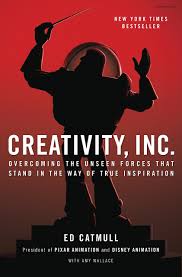
Creativity, Inc.: Overcoming the Unseen Forces That Stand in the Way of True Inspiration by Ed Catmull is one of the best books ever written about creative business and creative leadership.

Creativity, Inc.: Overcoming the Unseen Forces That Stand in the Way of True Inspiration by Ed Catmull is a great inspirational book, one of the best books ever written about creative business and creative leadership.

Ed Catmull, is co-founder with Steve Jobs and John Lasseter of Pixar Animation Studios. In Creativity, Inc, Ed Catmull tells the story of Pixar from his perspective as a founder and President of the company. He provides great inspirational insights into the challenges of growth and change and about making sure that your organization and product truly reflect your companies values.

Ed Catmull

As a young man, Ed Catmull had a dream: to make the first computer-animated movie. He nurtured that dream as a Ph.D. student at the University of Utah, and later established a partnership with George Lucas that over a period of time led to the founding of Pixar with Steve Jobs and John Lasseter in 1986. When Toy Story was released in 1995, it changed animation forever. According to Catmull, one of the main reasons of Toy Story’s success, and of the movies that followed, was the special environment that Catmull and his colleagues built at Pixar, based on philosophies that protect the creative process and defy convention.
 

My Favorite Top 20 Quotes From Creativity, Inc.

“Failure isn’t a necessary evil. In fact, it isn’t evil at all. It is a necessary consequence of doing something new.” 

― Ed Catmull, Creativity, Inc.: Overcoming the Unseen Forces That Stand in the Way of True Inspiration

“If you give a good idea to a mediocre team, they will screw it up. If you give a mediocre idea to a brilliant team, they will either fix it or throw it away and come up with something better.” 

― Ed Catmull, Creativity, Inc.: Overcoming the Unseen Forces That Stand in the Way of True Inspiration

You are not your idea, and if you identify too closely with your ideas, you will take offense when they are challenged.” 

― Ed Catmull, Creativity, Inc.: Overcoming the Unseen Forces That Stand in the Way of True Inspiration

Don’t wait for things to be perfect before you share them with others. Show early and show often. It’ll be pretty when we get there, but it won’t be pretty along the way.” 

― Ed Catmull, Creativity, Inc.: Overcoming the Unseen Forces That Stand in the Way of True Inspiration

“If you aren’t experiencing failure, then you are making a far worse mistake: You are being driven by the desire to avoid it.” 

― Ed Catmull, Creativity, Inc.: Overcoming the Unseen Forces That Stand in the Way of True Inspiration

“Getting the right people and the right chemistry is more important than getting the right idea.” 

― Ed Catmull, Creativity, Inc.: Overcoming the Unseen Forces That Stand in the Way of True Inspiration

Creativity Inc, Buy at Amazon
Buy at Amazon

“When it comes to creative inspiration, job titles and hierarchy are meaningless.” 

― Ed Catmull

“Fear can be created quickly; trust can’t.” 

― Ed Catmull

“For many people, changing course is also a sign of weakness, tantamount to admitting that you don’t know what you are doing. This strikes me as particularly bizarre—personally, I think the person who can’t change his or her mind is dangerous. Steve Jobs was known for changing his mind instantly in the light of new facts, and I don’t know anyone who thought he was weak.” 

― Ed Catmull

“What is the point of hiring smart people, we asked, if you don’t empower them to fix what’s broken?” 

― Ed Catmull

“The future is not a destination – it is a direction.” 

― Ed Catmull

“Making the process better, easier, and cheaper is an important aspiration, something we continually work on—but it is not the goal. Making something great is the goal.” 

― Ed Catmull

“You’ll never stumble upon the unexpected if you stick only to the familiar.” 

― Ed Catmull

“But I should caution that if you seek to plot out all your moves before you make them—if you put your faith in slow, deliberative planning in the hopes it will spare you failure down the line—well, you’re deluding yourself. For one thing, it’s easier to plan derivative work—things that copy or repeat something already out there. So if your primary goal is to have a fully worked out, set-in-stone plan, you are only upping your chances of being unoriginal.” 

― Ed Catmull

“Be patient. Be authentic. And be consistent. The trust will come.” 

― Ed Catmull

“it is not the manager’s job to prevent risks. It is the manager’s job to make it safe to take them.” 

― Ed Catmull

“The best way to predict the future is to invent it.” 

― Ed Catmull

“By ignoring my fear, I learned that the fear was groundless. Over the years, I have met people who took what seemed the safer path and were the lesser for it…I had taken a risk, and that risk yielded that greatest reward…Always take a chance on better, even if it seems threatening.” 

― Ed Catmull

“THERE IS NOTHING quite like ignorance combined with a driving need to succeed to force rapid learning.” 

― Ed Catmull

“We want people to feel like they can take steps to solve problems without asking permission.” 

― Ed Catmull

Top 12 Best Quotes From The Innovator’s Solution by Clayton M. Christensen

In his first best seller book on innovation, The Innovator’s Dilemma, Clayton Christensen reveals how many industry leaders, by focusing on pleasing their most profitable customers, actually pave the way for their own company’s demise, by ignoring disruptive technologies.

In The Innovator’s Solution, Clayton M. Christensen explains that innovation is not as unpredictable as most managers have come to believe. Although the process of innovations may seem random, if business leaders understand and properly manage the variables that influence the process, they can learn to create truly disruptive growth. The Innovator’s Solution identifies the processes that create successful innovations and teaches how to tailor effective strategies to the changing circumstances.

My Favorite 12 Quotes From The Innovator’s Solution

“People don’t want to buy a quarter-inch drill. They want a quarter-inch hole.” 

— Clayton M. Christensen (The Innovator’s Solution: Creating and Sustaining Successful Growth)

“Cost reductions meant survival, but not profitability,” 

— Clayton M. Christensen (The Innovator’s Solution: Creating and Sustaining Successful Growth)

“Necessity remains the mother of invention.” 

— Clayton M. Christensen (The Innovator’s Solution: Creating and Sustaining Successful Growth)

“Disruptive innovations, in contrast, don’t attempt to bring better products to established customers in existing markets. Rather, they disrupt and redefine that trajectory by introducing products and services that are not as good as currently available products. But disruptive technologies offer other benefits—typically, they are simpler, more convenient, and less expensive products that appeal to new or less-demanding customers.” 

— Clayton M. Christensen (The Innovator’s Solution: Creating and Sustaining Successful Growth)

“Competitiveness is far more about doing what customers value than doing what you think you’re good at.” 

Clayton M. Christensen (The Innovator’s Solution: Creating and Sustaining Successful Growth)

Focus is scary—until you realize that it only means turning your back on markets you could never have anyway. Sharp focus on jobs that customers are trying to get done holds the promise of greatly improving the odds of success in new-product development.” 

— Clayton M. Christensen (The Innovator’s Solution: Creating and Sustaining Successful Growth)

“Research suggests that in over 90 percent of all successful new businesses, historically, the strategy that the founders had deliberately decided to pursue was not the strategy that ultimately led to the business’s success.” 

— Clayton M. Christensen (The Innovator’s Solution: Creating and Sustaining Successful Growth)

“To succeed predictably, disruptors must be good theorists. As they shape their growth business to be disruptive, they must align every critical process and decision to fit the disruptive circumstance.” 

— Clayton M. Christensen (The Innovator’s Solution: Creating and Sustaining Successful Growth)

“Study after study, however, concludes that about 90 percent of all publicly traded companies have proved themselves unable to sustain for more than a few years a growth trajectory that creates above-average shareholder returns.” 

— Clayton M. Christensen (The Innovator’s Solution: Creating and Sustaining Successful Growth)

“You need to define an opportunity that is disruptive relative to all the established players in the targeted market, or you should not invest in the idea.” 

— Clayton M. Christensen (The Innovator’s Solution: Creating and Sustaining Successful Growth)

“When people encounter a significant threat, a response called “threat rigidity” sets in. The instinct of threat rigidity is to cease being flexible and to become “command and control” oriented—to focus everything on countering the threat in order to survive.” 

— Clayton M. Christensen (The Innovator’s Solution: Creating and Sustaining Successful Growth)

“Probably the most daunting challenge in delivering growth is that if you fail once to deliver it, the odds that you ever will be able to deliver in the future are very low.” 

— Clayton M. Christensen (The Innovator’s Solution: Creating and Sustaining Successful Growth)

BUY ON AMAZON: The Innovator’s Solution

Top 15 Best Quotes From the Innovator’s Dilemma by Clayton M. Christensen

Clayton M. Christensen

The Innovator’s Dilemma: The Revolutionary Book that Will Change the Way You Do Business by Clayton M. Christensen discusses the counter-intuitive thesis that firms with good management practices and a sound understanding of their customers need, eventually fail at disruptive innovations while they may still be succeeding at sustainable innovations.

VIDEO

My Favorite 15 Quotes From the Innovator’s Dilemma

1. “Disruptive technologies typically enable new markets to emerge.” 

― Clayton M. Christensen, The Innovator’s Dilemma: When New Technologies Cause Great Firms to Fail

2. “To succeed consistently, good managers need to be skilled not just in choosing, training, and motivating the right people for the right job, but in choosing, building, and preparing the right organization for the job as well.” 

― Clayton M. Christensen, The Innovator’s Dilemma: When New Technologies Cause Great Firms to Fail

3. “First, disruptive products are simpler and cheaper; they generally promise lower margins, not greater profits. Second, disruptive technologies typically are first commercialized in emerging or insignificant markets. And third, leading firms’ most profitable customers generally don’t want, and indeed initially can’t use, products based on disruptive technologies.” 

― Clayton M. Christensen, The Innovator’s Dilemma: When New Technologies Cause Great Firms to Fail

4. “When commercializing disruptive technologies, they found or developed new markets that valued the attributes of the disruptive products, rather than search for a technological breakthrough so that the disruptive product could compete as a sustaining technology in mainstream markets.” 

BUY ON AMAZON
BUY ON AMAZON

5. “The techniques that worked so extraordinarily well when applied to sustaining technologies, however, clearly failed badly when applied to markets or applications that did not yet exist.” 

6. “This is one of the innovator’s dilemmas: Blindly following the maxim that good managers should keep close to their customers can sometimes be a fatal mistake.” 

7. “With few exceptions, the only instances in which mainstream firms have successfully established a timely position in a disruptive technology were those in which the firms’ managers set up an autonomous organization charged with building a new and independent business around the disruptive technology.” 

8. “Disruptive technologies bring to a market a very different value proposition than had been available previously. Generally, disruptive technologies underperform established products in mainstream markets. But they have other features that a few fringe (and generally new) customers value. Products based on disruptive technologies are typically cheaper, simpler, smaller, and, frequently, more convenient to use. There” 

9. “Watching how customers actually use a product provides much more reliable information than can be gleaned from a verbal interview or a focus group.” 

10. “Sound managerial decisions are at the very root of their impending fall from industry leadership.” 

11. “They must be plans for learning rather than plans for implementation.” 

BUY ON AMAZON

12. “In the instances studied in this book, established firms confronted with disruptive technology typically viewed their primary development challenge as a technological one: to improve the disruptive technology enough that it suits known markets. In contrast, the firms that were most successful in commercializing a disruptive technology were those framing their primary development challenge as a marketing one: to build or find a market where product competition occurred along dimensions that favored the disruptive attributes of the product.” 

13. “managers may think they control the flow of resources in their firms, in the end it is really customers and investors who dictate how money will be spent because companies with investment patterns that don’t satisfy their customers and investors don’t survive.” 

14. “What this implies at a deeper level is that many of what are now widely accepted principles of good management are, in fact, only situationally appropriate. There are times at which it is right not to listen to customers, right to invest in developing lower-performance products that promise lower margins, and right to aggressively pursue small, rather than substantial, markets.” 

15. “If good management practice drives the failure of successful firms faced with disruptive technological change, then the usual answers to companies, problems—planning better, working harder, becoming more customer- driven, and taking a longer-term perspective—all exacerbate the problem.” 

BUY ON AMAZON: The Innovator’s Dilemma: The Revolutionary Book that Will Change the Way You Do Business

Top 10 Best Books on Innovation

Clayton M. Christensen

The Webster’s Dictionary defines innovation as “the introduction of something new.”  Peter Drucker, the famous management consultant and author said “Innovation is the specific instrument of entrepreneurship… the act that endows resources with a new capacity to create wealth.”

The word Innovation is used constantly and has become a confusing buzzword in the business world that is used probably too much and not always appropriately, but Innovation surely is a fascinating topic.

Below is a list of my favorite top 10 Books on Innovation. Reading them has been a fascinating learning experience.

My List of Top 10 Books on Innovation

——————————————————————————-

The Innovator’s Dilemma: When New Technologies Cause Great Firms to Fail by Clayton M. Christensen

The Innovator’s Dilemma was written by Clayton M. Christensen, the Harvard Business Professor who created the term disruptive innovation. 

The Innovator’s Dilemma explains how even the most outstanding companies can do everything right yet still lose market leadership.

——————————————————————————-

Where Good Ideas Come From: The Natural History of Innovation by Steven Johnson

This book is a fascinating deep dive on innovation. The printing press, the pencil, the flush toilet, the battery: they are all great ideas. But where do they come from? What kind of environment produces them?

Steven Johnson identifies the seven key patterns behind genuine innovation, and traces them across time and disciplines.

——————————————————————————-

The Lean Startup: How Today’s Entrepreneurs Use Continuous Innovation to Create Radically Successful Businesses by Eric Ries

Eric Ries defines a startup as an organization dedicated to creating something new under conditions of extreme uncertainty. We know that most startups fail. But according to Eric Ries, many of those failures are preventable. The Lean Startup describes a new approach, a movement, being adopted across the globe, that is changing the way companies are built and new products are launched. 

——————————————————————————-

The Art of Innovation: Lessons in Creativity from IDEO, America’s Leading Design Firm (Hardcover) by Tom Kelley

In The Art of Innovation, Tom Kelley, general manager of the Silicon Valley based design firm IDEO, takes readers behind the scenes of this wildly imaginative and energized company to reveal the strategies and secrets for fostering a culture and process of continuous innovation.

——————————————————————————-

The Innovator’s Solution: Creating and Sustaining Successful Growth (Hardcover) by Clayton M. Christensen

In this bestseller Clayton M. Christensen exposed this crushing paradox behind the failure of many industry leaders: by placing too much focus on pleasing their most profitable customers, these firms actually paved the way for their own demise, by ignoring the disruptive technologies that aggressively evolved to displace them.


——————————————————————————-

The Ten Faces of Innovation: IDEO’s Strategies for Defeating the Devil’s Advocate and Driving Creativity Throughout Your Organization by Tom Kelley

The author of the The Art of Innovation reveals the strategies IDEO, the world-famous design firm, uses to foster innovative thinking throughout the organization to overcome the naysayers who block creativity. 

The role of the devil’s advocate is nearly universal in business today and it allows individuals to effectively kill new projects and ideas.

——————————————————————————-

The Innovator’s DNA: Mastering the Five Skills of Disruptive Innovators (Hardcover) by Jeffrey H. Dyer

Building on the Theories of Disruptive Innovation, The Innovator’s DNA demonstrates how individuals can develop the skills necessary to move progressively from idea to impact.

The world’s best innovators share several skills in common that distinguish them from ordinary managers.

——————————————————————————-

Creativity, Inc.: Overcoming the Unseen Forces That Stand in the Way of True Inspiration (Hardcover) by Ed Catmull

As a young man, Ed Catmull had a dream: to make the first computer-animated movie. He nurtured that dream as a Ph.D. student at the University of Utah, where many computer science pioneers got their start, and then forged a partnership with George Lucas that led, indirectly, to his founding Pixar with Steve Jobs and John Lasseter in 1986. Nine years later, Toy Storywas released, changing animation forever.


——————————————————————————-

Steve Jobs by Walter Isaacson

Based on more than forty interviews with Jobs conducted over two years—as well as interviews with more than a hundred family members, friends, adversaries, competitors, and colleagues—Walter Isaacson has written a fascinating story of the roller-coaster life and intense personality of Steve Jobs, a creative entrepreneur whose passion for perfection and ferocious drive revolutionized six industries.

——————————————————————————-

Zero to One: Notes on Startups, or How to Build the Future by Peter Thiel

If you want to build a better future, you must believe in secrets. The great secret of our time is that there are still uncharted frontiers to explore and new inventions to create. In Zero to One, legendary entrepreneur and investor Peter Thiel shows how we can find singular ways to create those new things. 

error

Enjoy this blog? Please spread the word :)