
These are regularly updated feeds from several websites and blogs about leadership
- Leading Thoughts for October 15, 2026
 by Michael McKinney on October 15, 2026 at 6:48 pm
IDEAS shared have the power to expand perspectives, change thinking, and move lives. Here are two ideas for the curious mind to engage with: I. Dave Rossi on living with purpose: "Without this sense of purpose, emotion and rumination can take over, acting like a thick fog that distorts vision and clouds judgment. While emotions are powerful, they are not the objective truth. They can trigger impulsive reactions that feel right in the moment but ultimately lead to regret. Living with purpose forces you to challenge your automatic responses. It requires you to pause and ask yourself: Am I acting from fear, ego, or programming, or am I acting from a place of alignment with my deeper values? This simple shift-learning to recognize emotion and then choosing behavior instead of reacting—is profound. You either live for approval or live for purpose." Source: Alphas Die Early: For the Man on a Mission — And the Women Who Love Him II. Nathan Bennett and Stephen Miles on the shifting role of COOs: "COOs must simultaneously guide organizational development and manage high-velocity operations where necessary skills constantly evolve. Success depends less on executing predetermined plans than on orchestrating continuous adaptation—a skill set many traditional operators never mastered. Executive search professionals caution that operators without strategic depth face limited growth prospects. The label ‘solid operator,’ once praise, now functions as a ceiling. Today’s COOs are expected to act as strategic architects who not only translate vision into execution but provide operational insights that…
- The Leadership Style That Gets You Here Won’t Get You There
 by Michael McKinney on October 13, 2026 at 8:27 pm
IN the early stage of an enterprise software startup, the founder is often the best – and main – salesperson. And that makes sense – founders have the deep product knowledge, intuitive understanding of the market, and heartfelt enthusiasm to win over customers, even when they thought ‘sales’ wasn’t really their thing. But if you want to scale up, at some point founder-led sales are going to hit a ceiling, and founders have to work out how to transition to a different model. This can be difficult: Intuition, improvisation, and sheer force of character often work to get deals over the line when a founder is the one working with the customer, but it is very hard to recreate once they pass the torch. The foundational principle of my go-to-market framework – which I detail in my new book, Built to Grow: A Handbook for High-Performance Sales Teams – is that every startup passes through three distinct phases on the road to success. First, you experiment with the tactics that will form the bedrock of your business. Second, you build systems and processes that create a repeatable and sustainable business. And then you scale everything: you hit the gas pedal and accelerate, investing heavily to drive growth. When it comes to sales, founders and CEOs play a different role and must have different priorities in each of these phases. The approach that gets a business going isn’t the same one that will get it to $100m in sales. Here’s…
- Leading Thoughts for October 08, 2026by Michael McKinney on October 8, 2026 at 7:02 pm
IDEAS shared have the power to expand perspectives, change thinking, and move lives. Here are two ideas for the curious mind to engage with: I. Ryushun Kusanagi on living in the now: "Clinging to the past and using it as a reason to negate the present is a mental trap-a distraction from what truly matters, and a source of inner turmoil. Life is full of missteps and failures. What matters is how you respond to them. Don’t dwell on your mistakes. Don’t beat yourself up. Don’t look back in regret. Don’t give in to pessimism. Instead, focus on the present, understand it correctly, and dedicate yourself to what you can do right now. Of course, if you’ve hurt someone, it’s important to acknowledge it and sincerely apologize. Doing this is part of taking responsibility. Embrace that moment and take the opportunity to start afresh." Source: The Practice of Not Reacting II. John Maxwell on not taking sides: "If you’re a leader and you allow yourself to get drawn into taking sides and working against other groups of people, you’re limiting your leadership. As leaders, we all need the people on the other side. Our side doesn’t have all the answers. Believing we do is arrogant. I’m not always right, and neither are you. And those on the “other side” are not always wrong. If you don’t listen to them, you’re shrinking your influence and limiting your impact. If you can’t work with people who disagree with you, you will…
- How to Respond When People Throw Wrenches During Change
 by Michael McKinney on October 6, 2026 at 2:11 am
CHANGE initiatives rarely fail because of flawed strategies or poor execution. They fail because of human behavior: what people do when they feel threatened or at risk of losing status, control, or relevance. A senior leader withholds resources from another team. A project team member hoards information about transition status. Each move undermines the initiative’s success. When combined with others, they can derail it. These are the wrenches people throw during high-stakes change. They can be hard to spot and address because they are often covert, uncoordinated, and unpredictable. Without quick and effective responses, dysfunction grows and plans unravel. Left unchecked, the self-interested behaviors become cultural norms, and the downward spiral to failure accelerates. Why People Throw Wrenches During Change Change initiatives typically start well. The leader’s vision of a better future is clear and widely supported. The kick-off builds momentum, and work begins. Before long, people piece together their relative position in the post-change organization. Employees view disruptions through the lens of personal gain or loss. What will this mean for my role, status, influence, or security? As the answers become clearer, emotions flare, which drives actions intended to improve their position. Four forces explain self-interested behavior: Self-preservation: People try to protect the status, certainty, freedom, camaraderie, and confidence they have. Power: People seek the capacity to influence outcomes. They do so through formal authority or personal influence. Change can threaten existing power sources or create opportunities for new ones. Politics: People maneuver to influence those who define…
- Leading Thoughts for October 1, 2026by Michael McKinney on October 2, 2026 at 12:48 am
IDEAS shared have the power to expand perspectives, change thinking, and move lives. Here are two ideas for the curious mind to engage with: I. Brady, Kliman, and Smith on seeing the full story: "We feel strongly that empathy and humility aren’t distractions from value creation; they’re the drivers of value creation. In fact, they’re essential if we want to lead difference-filled teams that solve problems creatively, build trust across difference, and adapt in real time to new challenges. These aren’t soft skills. They are strategic capabilities for a complex world. Empathy, the emotional engine behind perspective-taking, is where real understanding begins. Without empathy, it’s impossible to truly see another person’s point of view, because you wouldn’t care enough to try. Empathy and humility ground us in the understanding that we don’t possess all the answers and that other people’s experiences matter just as much as our own in terms of making sense of any situation." Source: All the Difference. Six Leadership Actions to Bridge Perspectives, Strengthen Teams, and Create Value II. Jim Schleckser on peanut buttering: "A lot of the mediocre and hardworking CEOs we have run into over the years are exceptionally good at what we call ‘peanut buttering.’ When it comes to allocating their time to the various tasks and stakeholders in their businesses—their boards, their supply chains, their investors, their communities, etc.—these CEOs do their best to spread their time as evenly as possible across all of them. The concern, of course, is to make…
- First Look: Leadership Books for October 2026
 by Michael McKinney on October 1, 2026 at 7:54 pm
HERE’S A LOOK at some of the best leadership books to be released in October 2026 curated just for you. Be sure to check out the other great titles being offered this month. The Mattering Effect: Creating a Life of Meaning and Worth by John R. Miles If you’ve ever wondered, If I stopped performing, producing, fixing, achieving, proving, would I still matter? then this book is for you. As John R. Miles explores The Great Erasure happening in our lives―the sense of loneliness and disengagement despite outward success–he also provides a way for you to remember that you mattered before any professional or personal titles or achievements. Miles examines the cultural shift that has replaced human significance with human usefulness, resulting in exhaustion, self-erasure, and quiet despair. Where others have also diagnosed the symptoms, Miles identifies a deeper cause and offers a solution through M.A.T.T.E.R., a research-based framework grounded in six elements―meaning, autonomy, trust, time, energy, and reciprocity―that, when used together, can restore sustainable significance, dignity, and spiritual coherence. Lead with Quiet Confidence: A Practical Guide to Success for Introverts by Jennifer Marcou As an introvert, you can become an influential, confident, and authentic leader, without pretending to be extroverted, without performing, and without draining your energy. You don’t need to be the loudest voice in the room to be a powerful leader. Introverted professionals often bring deep thinking, strategic insight, and calm influence. Yet, our strengths can be overlooked in systems built around extroverted norms. Becoming a…
- LeadershipNow 140: September 2026 Compilation
 by Michael McKinney on September 30, 2026 at 3:59 pm
Here is a selection of Posts from September 2026 that you will want to check out: The Biscuit Story: A Lesson in Leadership From the Antarctic via @AdmiredLeaders Words That Change the World by @KevinPaulScott Leading with Inquiry (How to Have a Better Dialogue) by @EdBatista Slumps via @LeadershipMain When Every Choice Costs You Something by @PhilCooke Why Does Originality Feel So Rare in a World Full of Ideas? by @UX_Person Abigail Aghaibie The willingness to sit with a problem long enough for our own idea to emerge. 5 Ways The Greatest Leaders Reproduce Themselves by @BrianKDodd Why Speaking Up Doesn’t Always Make You More Visible by @SusanMazza Be a Ford, Then a Sloan by @SahilBloom Authenticity Has a Moodboard Now by @shrutisitara We didn’t kill authenticity. We hired a creative director for it. Have we done this in leadership as well? Stuff happens. Where you look matters. How your Locus of Control affects your success. by @artpetty Why the Best Communicators Repeat Themselves by @PhilCooke What’s Happening to Wonder? by @Julie_WG AI can deliver answers in seconds, but what might we lose when we stop sitting with questions long enough to wonder? The Great Delayering Is Solving the Wrong Management Problem by @artpetty From Structure to Breakthrough: The 5-Step Leadership Chaos Formula by @BrianKDodd Always Encouraging, Never Discouraging by @jamesstrock See more on Twitter. * * * Follow us on Instagram and X for additional leadership and personal development ideas. …
- Leading Thoughts for September 24, 2026by Michael McKinney on September 24, 2026 at 3:28 pm
IDEAS shared have the power to expand perspectives, change thinking, and move lives. Here are two ideas for the curious mind to engage with: I. Richard Hagberg and Tien Tzuo on strategy: "How do you know when your strategy is working? When your employees wake up in the morning knowing (a) why they are working for your company, (b) what the corporate strategy is, and (c) how they can contribute to that strategy by achieving specific goals and objectives. That’s the ideal green light situation." Source: Founders, Keepers: Why Founders Are Built to Fail, and What it Takes to Succeed II. Geoff Tuff and Steven Goldbach on improving the process: "The problem with best practices is that, by definition, if everyone around you follows the same best practices, they are no longer best. They are average. And what business leader wants to be average? The playbooks of business that have been crafted over decades yield an approach to management that is more concerned with risk mitigation than delighting customers and staying ahead of accelerating change. Many of these are so ingrained in business habits that there is no explanation for why we do things the way we do beyond ‘Well, that’s just how we do things around here.’" Source: Hone: How Purposeful Leaders Defy Drift * * * Look for these ideas every Thursday on the Leading Blog. Find more ideas on the LeadingThoughts index. * * * Follow us on Instagram and X for additional leadership and personal…
- Leading Thoughts for September 17, 2026by Michael McKinney on September 17, 2026 at 1:46 am
IDEAS shared have the power to expand perspectives, change thinking, and move lives. Here are two ideas for the curious mind to engage with: I. Marshall Goldsmith and Mark Reiter on inertia: "Our default response in life is not to experience meaning or happiness. Our default response is to experience inertia. We think of inertia as the state of being inert or motionless—one of our purer displays of passivity and disengagement. It’s not. Inertia is an active event in which we are persisting in the state we’re already in rather than switching to something else." Source: The Earned Life: Lose Regret, Choose Fulfillment II. Sebastian Wernicke on data objectivity: "It’s easy to understand why one would intuitively view data as a kind of ‘objective truth.’ After all, we assume that data originates from objective measurements, making the resulting numbers clear and unequivocal. However, capturing our reality in numbers is rarely straightforward. Defining precisely how we arrive at a number isn’t mere nitpicking, as these choices can carry significant consequences when we use that number to make a decision. Fundamentally, there is no single ‘right’ method to translate reality into data. Usually many valid methods exist, but each will turn the facts into a different number. Data compresses a subjective view of the world. Those who look at data see not an objective truth but rather a specific (hopefully at least consistent and documented) interpretation of the world, expressed as numbers." Source: Data Inspired: Building an Organizational Culture of Inquiry…
- Leading Thoughts for September 10, 2026by Michael McKinney on September 10, 2026 at 7:41 pm
IDEAS shared have the power to expand perspectives, change thinking, and move lives. Here are two ideas for the curious mind to engage with: I. Nick Bare on doing the work: "Sometimes, we think that just doing more of something or working harder on anything will get us to our goal, but just because you’re working harder doesn’t mean you deserve the outcome. It doesn’t mean you’ve earned it. The work we put in needs to be strategic, intentional, and very thoughtful to have the outcome we want and desire." Source: Go One More: Find the Clarity to Make Intentional, Life-Changing Choices II. Aaron Chapman on cutting corners: "There’s only so many places the opportunivore can go before you completely run out of options altogether. If you could just go back to the beginning, work in the service of others. Ensure their benefit. The time will come that the compound effect of all that energy and work returns to benefit you. Those who choose to take from others or cut corners from the beginnin’ eventually find that there is nothin’ left for them. Fits right into the overall concept: take a beatin’ up front doin’the right thing, bein’ accountable, bein’trustworthy, and you’ll have an abundance poured upon you. Cuttin’ corners, takin’ advantage of people, and cheatin’the process might make for some easy returns up front, but over time avenues will dry up; others become wise to your BS, and now you’re takin’ an enormous beatin’ ’cause you can’t find…
- Inside the Box: How Constraints Make Us Better
 by Michael McKinney on September 5, 2026 at 3:08 am
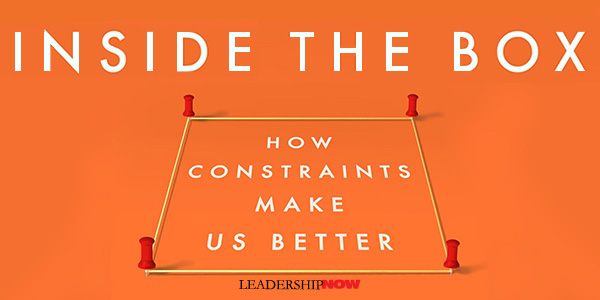
WE don’t need more freedom; we need more helpful boundaries. David Epstein, author of Inside the Box: How Constraints Make Us Better, says we don’t need to work outside the box as much as we need to be working inside the right box. We instinctively add to solve a problem when the best course of action is to subtract. Boundaries provide clarity. Ideas are plentiful. Figuring out what not to do is the key. You need constraints. Constraints are so important that engineer and designer Tony Fadell admonishes, “If you don’t have constraints, then make up constraints!” Constraints make room for learning. Constraints make you think. Epstein explains: As the cognitive scientist Daniel Willingham has written: “Contrary to popular belief, the brain is not designed for thinking. It’s designed to save you from having to think.” Because the brain is naturally inclined to avoid effortful thinking and to rely instead on familiar patterns, complete freedom tends to lead to unoriginal ideas, simply repeating what is known. Constraints push the brain beyond its default tendencies, forcing it to engage in deeper problem-solving. Total freedom, then, is the enemy of creativity, and constraint its companion. “In other words,” says Epstein, “when anything is possible, it becomes nearly impossible to do anything new. Complete freedom, paradoxically, leads to conformity.” In a chapter entitled The Remix of Everything, he explains that Martin Luther King, Jr. borrowed and remixed to create his messages. He “grew up in the folk-preaching tradition—beginning with watching his father—in…
- Leading Thoughts for September 3, 2026by Michael McKinney on September 3, 2026 at 6:32 pm
IDEAS shared have the power to expand perspectives, change thinking, and move lives. Here are two ideas for the curious mind to engage with: I. Jenna Nicholas on hope: “Hope is more than a lofty ideal; it’s a lifesaving force. Ultimately, hope encourages us to think expansively while integrating our vision into our daily actions, both big and small. It also challenges us to remain realistic and grounded. We may never achieve a human utopia on earth, but hope doesn’t require us to remake the world in some sparkly image of perfection. Instead, we can stay focused on making the next positive changes, both personally and professionally, that support those around us and our vision of integrated, healthy progress.” Source: Enlightened Bottom Line: Exploring the Intersection of Spirituality, Business, and Investing II. Lloyd Blankfein on a partnership culture: “It takes more time to treat your partners as owners. It takes time to inform people, entertain objections, and, sometimes, accede to contrary views. It means more iterations and slower decision-making. But the decisions are likely to be better, and the outcomes better accepted, because people were consulted and listened to, even if they didn’t get their way in the end.” Source: Streetwise: Getting to and Through Goldman Sachs * * * Look for these ideas every Thursday on the Leading Blog. Find more ideas on the LeadingThoughts index. * * * Follow us on Instagram and X for additional leadership and personal development ideas. …
- First Look: Leadership Books for September 2026
 by Michael McKinney on September 1, 2026 at 3:09 pm
HERE’S A LOOK at some of the best leadership books to be released in September 2026 curated just for you. Be sure to check out the other great titles being offered this month. The Executive Condition: The Hidden Health Crisis of High-Performing Leaders by Denis Cronson High performers aren’t burning out—they’re breaking down. The Executive Condition exposes how modern leadership accelerates biological decline and then shows executives how to turn health into their next strategic advantage. Leadership performance is built on biology—and that foundation is failing. Sleep debt becomes personality. Stress hardens into culture. Decision quality narrows even as résumés grow longer. Boards notice it late. Teams feel it early. And the body—quietly, relentlessly—keeps the score. For too long, modern leadership has rewarded the very habits that erode it: relentless pace, chronic sleep loss, performance martyrdom, and identity fused to output. The result is a hidden crisis at the top of organizations: leaders who still look successful while their cognition, metabolism, emotional range, and judgment quietly decline. This is not a character flaw. It is an operating-system failu Leadership Intelligence: Science-Backed Strategies for Mastering 21 Everyday Management Challenges by Caroline Webb In times of great change, great leadership is crucial—and our current times are no exception. Today, along with the demands that leaders have always faced—balancing short-term progress with long-term planning; delivering strong results without burning people out—we’re also in an era of major technological disruption. As that change accelerates, the instinct to lean hard into AI can feel…
- LeadershipNow 140: August 2026 Compilationby Michael McKinney on August 31, 2026 at 4:40 pm
Here is a selection of Posts from August 2026 that you will want to check out: What Launches an Organization or Initiative Isn’t What Sustains It from @AdmiredLeaders No Excuses: Lesson #1 from a Lifetime of Leadership by @TomBrady When you’re explaining, you’re losing Write Down Your Purpose Statement and Read It Each Day by @JonGordon11 Your Culture Is Built by What You Celebrate by @daveferguson Why Every Leader Needs a Point of View by @PhilCooke The 6 Leadership Lessons You Need When Everything Is on the Line by @BrianKDodd 4 Secret Habits of the World’s Best Performers by @BrianKDodd Deep Work: How to Actually Focus When Your Brain Has Been Trained to Scroll by Michela Allocca @breakyourbudget Ordinary Abundance Our lives today are a gallery of past generations’ heroic efforts to do the same. 6 Ways Great Leaders Find Value Where Everyone Else Sees None by @BrianKDodd Who Gets to Decide? Why the Future of Leadership Is Becoming More Decentralized by @DanielBurrus The Decisions You Delay Will Eventually Make Themselves by @PhilCooke The Danger of Outsourcing Your Thinking to AI by John Spence @AwesomelySimple Nothing Past 1967 by @donhornsby When a founder is gone, there’s a real temptation to become a tribute act. How Does a Leader Become a Leader? by @SusanMazza The 4 Stages of Leadership Drift by @BrianKDodd on Leadership 10 Ways to Strengthen Your Self-Confidence by @FSonnenberg Betrayal by @jamesstorck Say Less: When More Words Mean Less Impact by @Julie_WG You Spent a Fortune on…
- You Need AI Literacy: Here’s How to Get It
 by Michael McKinney on August 28, 2026 at 3:12 pm
WORRIED about AI? You’re not alone. About three-quarters of adults have concerns about where AI is taking us. And no wonder. Doomsayers predict that AI could destroy humanity. Evangelists promise that it will usher in a golden age. The truth is that nobody knows exactly what’s coming. But you can prepare yourself to succeed. Consider a thought experiment. Two explorers are trekking through a hostile jungle. One is “jungle literate,” knowledgeable and experienced. The other is a novice. The experienced explorer studies the terrain, recognizes danger, and chooses a sensible route. The novice blunders ahead without understanding the risks. It’s easy to predict who is more likely to make it through safely. We can expect a similar divide in the workplace. AI-literate professionals will be better positioned to navigate an uncertain future. Those with limited understanding risk falling behind. It’s a jungle out there, and strategic AI literacy can help you navigate it. I’ve watched a similar transition before. When personal computers surged into business, much of the early attention went to learning word processors, spreadsheets, and other programs. Those skills mattered, but computer literacy became broader: understanding what computers could do, recognizing where they could add value, and knowing enough to work effectively with technical specialists. AI literacy is developing in much the same way. Knowing how to prompt ChatGPT, Gemini, or Claude is useful. But strategic AI literacy is broader. I chose the word strategic deliberately because the goal is more than AI proficiency. It is to…
- Strategies for Effective Cross-Cultural Communication in the Workplace
 by Training Industry on April 1, 2026 at 11:00 am
Strategies for Effective Cross-Cultural Communication in the Workplace – Read more by Training Industry on Training Industry, Inc..
- 5 Important Communication Skills for Leadersby Sarah Gallo on March 10, 2026 at 4:00 pm
5 Important Communication Skills for Leaders – Read more by Sarah Gallo on Training Industry, Inc..
- The Pruning Principle
 by Nick Jaworski on October 17, 2022 at 7:00 am
Botanists will tell you to have a vision for how you want a plant to look before you start pruning it. The same is true for your life and your business. Whether you’re talking about programs, processes, personal commitments, or even people – over time, they all tend to accumulate. You simply end up with more of everything. However, overgrowth impedes your ability to scale yourself and your business. In order to grow, you’re going to have to prune. Continue reading The Pruning Principle at Full Focus.
- 6 Essential Ingredients for Effective Strategic Planning
 by Nick Jaworski on September 20, 2022 at 7:00 am
It’s that time of year again. The weather is changing, leaves are falling off the trees, and your favorite leadership podcast is talking about Strategic Planning again. If there’s one thing that humans do well, it’s imagining the future. (We can do it badly, too, of course.) But the important thing is that we can create better outcomes for ourselves and our businesses when we do it intentionally. That’s where Strategic Planning comes in. Continue reading 6 Essential Ingredients for Effective Strategic Planning at Full Focus.
- How to Avoid Quiet Quitting in Your Business
 by Michael and Megan on September 13, 2022 at 7:00 am
“Quiet quitting” seems to be the hot topic of conversation in business and leadership circles right now. But what exactly is “quiet quitting”? How can you figure out if your employees are doing it? And, perhaps most importantly, how can you create an organizational culture where your team members will feel empowered in their job? Continue reading How to Avoid Quiet Quitting in Your Business at Full Focus.
- 5 Mistakes Business Owners Make When Hiring an Assistant
 by Michael Hyatt on September 6, 2022 at 7:00 am
You spend your days managing details, scheduling meetings, and replying to emails — by the time you start on the “real work,” the workday is half over. This ends up cutting into your personal life as you try to make up for lost time. It all leads to you feeling more tired, more stressed, and less productive at work and at home. If you heed our advice, you can minimize this pain. The advice is simple: hire an executive assistant! Continue reading 5 Mistakes Business Owners Make When Hiring an Assistant at Full Focus.
- 4 Ingredients for a Thriving Company Culture
 by Michael and Megan on August 30, 2022 at 7:00 am
Last week we talked about the importance of a thriving company culture. Hopefully, Michael and Megan made the case that a company culture is both important and the responsibility of the leader. We’re going to continue that conversation by talking about how businesses can actually cultivate a thriving company culture – no matter where they’re starting from. Continue reading 4 Ingredients for a Thriving Company Culture at Full Focus.
- Why a Thriving Culture Is Essential
 by Michael Hyatt on August 23, 2022 at 7:00 am
Anywhere you find a group of people, you’ll find a culture. That’s true for families, churches, cities, neighborhoods, and anything else you can think of that includes more than one person. This idea is especially true for businesses. Leaders need to have a vision for how they want their culture to look and feel. If they don’t, they could find themselves surrounded by a toxic culture that not only hurts business but makes everyone miserable. Continue reading Why a Thriving Culture Is Essential at Full Focus.
- How to Maximize the Market Value of Your Business in 8 Steps
 by Michael and Megan on August 16, 2022 at 7:00 am
Your business is probably the largest single asset in your portfolio. You’ve invested time and money, and, one day, you may want to see a healthy return on those investments. If you want to maximize the value of your business, then you should start making plans today. Continue reading How to Maximize the Market Value of Your Business in 8 Steps at Full Focus.
- What Makes Good Coaching Great
 by Michael Hyatt on August 9, 2022 at 7:00 am
There is no denying that you will get further, faster with a good coach. But what about a great coach? How much further could you get with amazing coaching? Today’s episode tackles that question by talking with LeeAnn Moody, Director of Performance Coaching for Full Focus. LeeAnn and Michael break down the four characteristics of great coaching and help you identify what you might need to be successful for your organization. Continue reading What Makes Good Coaching Great at Full Focus.
- What Elon Musk Gets Wrong About Remote Work
 by Michael and Megan on August 2, 2022 at 7:00 am
During the height of the pandemic, everyone was forced to go remote. But, now that offices have opened back up, leaders and staff are confronted with some challenging questions around a seemingly basic concept: Where should work happen? Continue reading What Elon Musk Gets Wrong About Remote Work at Full Focus.
- The 10/80/10 Principle: Grow Your Business with 20% of the Work
 by Michael and Megan on July 26, 2022 at 7:00 am
What if you could grow your business and only do about 20% of the work you’re currently doing? If that were true, you would do almost anything to find out how to do it, right? Continue reading The 10/80/10 Principle: Grow Your Business with 20% of the Work at Full Focus.
- How to Sustain Company Culture During the Pandemic With a Virtual Mentorship Program: A Case Studyby Danielle Johnson on January 17, 2022 at 2:00 pm
How to Sustain Company Culture During the Pandemic With a Virtual Mentorship Program: A Case Study – Read more by Danielle Johnson on Training Industry, Inc..
- Navigating Instructional Design Without Formal Training: 9 Tips for Successby M. Allen on January 12, 2022 at 2:00 pm
Navigating Instructional Design Without Formal Training: 9 Tips for Success – Read more by M. Allen on Training Industry, Inc..
- When To Deploy Coaching vs. Training vs. Consultingby M. Allen on January 7, 2022 at 2:00 pm
When To Deploy Coaching vs. Training vs. Consulting – Read more by M. Allen on Training Industry, Inc..
- 3 Ways to Improve Organizational Culture and Retentionby Danielle Johnson on December 17, 2021 at 2:00 pm
3 Ways to Improve Organizational Culture and Retention – Read more by Danielle Johnson on Training Industry, Inc..
- Give Customer-facing Employees a Makeoverby Ashley Li on December 15, 2021 at 2:00 pm
Give Customer-facing Employees a Makeover – Read more by Ashley Li on Training Industry, Inc..
- How Workplace Productivity Depends on Training and Developmentby Ashley Li on December 10, 2021 at 2:00 pm
How Workplace Productivity Depends on Training and Development – Read more by Ashley Li on Training Industry, Inc..
- Accelerate Your Career Growth With Sponsorshipby Sarah Gallo on December 9, 2021 at 1:30 pm
Accelerate Your Career Growth With Sponsorship – Read more by Sarah Gallo on Training Industry, Inc..
- Lessons Learned From Talking to 53 Sales Managersby M. Allen on December 2, 2021 at 2:00 pm
Lessons Learned From Talking to 53 Sales Managers – Read more by M. Allen on Training Industry, Inc..
- What We’re Hearing for the Modern Workplace: Upskilling Acts in Concert With Talent Objectivesby Sarah Gallo on November 30, 2021 at 1:30 pm
What We’re Hearing for the Modern Workplace: Upskilling Acts in Concert With Talent Objectives – Read more by Sarah Gallo on Training Industry, Inc..
- Make Learning Sticky Through Deliberate Reinforcement: How One Organization Used Learning Reinforcement Plans To Increase Learner Retentionby M. Allen on November 24, 2021 at 2:00 pm
Make Learning Sticky Through Deliberate Reinforcement: How One Organization Used Learning Reinforcement Plans To Increase Learner Retention – Read more by M. Allen on Training Industry, Inc..
- Help Leaders Be Better at Running the Businessby Ashley Li on October 28, 2021 at 1:00 pm
Help Leaders Be Better at Running the Business – Read more by Ashley Li on Training Industry, Inc..
- Improve Training Effectiveness With VR: A Future-forward Case Studyby Ashley Li on October 26, 2021 at 1:00 pm
Improve Training Effectiveness With VR: A Future-forward Case Study – Read more by Ashley Li on Training Industry, Inc..
- Why Lateral Moves Are Beneficial to Your Careerby Sarah Gallo on October 5, 2021 at 1:11 pm
Why Lateral Moves Are Beneficial to Your Career – Read more by Sarah Gallo on Training Industry, Inc..
- 5 Tips for Communicating Under Pressureby Sarah Gallo on September 7, 2021 at 12:00 pm
5 Tips for Communicating Under Pressure – Read more by Sarah Gallo on Training Industry, Inc..
- How L&D Can Create a Human-centered Workplaceby Sarah Gallo on August 12, 2021 at 1:18 pm
How L&D Can Create a Human-centered Workplace – Read more by Sarah Gallo on Training Industry, Inc..
- How to Instill the 7 Cs of Team Resilience in Your Organizationby Ashley Li on August 3, 2021 at 12:00 pm
How to Instill the 7 Cs of Team Resilience in Your Organization – Read more by Ashley Li on Training Industry, Inc..
- Design Thinking Skills for Internal Consultantsby M. Allen on July 2, 2021 at 5:08 pm
Design Thinking Skills for Internal Consultants – Read more by M. Allen on Training Industry, Inc..
- Sell Better, Faster and Stronger: How to Fix Your Closing Problemby M. Allen on June 23, 2021 at 12:00 pm
Sell Better, Faster and Stronger: How to Fix Your Closing Problem – Read more by M. Allen on Training Industry, Inc..
- Measuring the Impact of Better Development Discussionsby M. Allen on June 18, 2021 at 12:00 pm
Measuring the Impact of Better Development Discussions – Read more by M. Allen on Training Industry, Inc..
- Identifying and Developing Inclusive Leadersby M. Allen on June 16, 2021 at 12:00 pm
Identifying and Developing Inclusive Leaders – Read more by M. Allen on Training Industry, Inc..
- 3 Ways to Improve Training in a Hybrid Classroomby M. Allen on May 28, 2021 at 12:00 pm
3 Ways to Improve Training in a Hybrid Classroom – Read more by M. Allen on Training Industry, Inc..
- What Does It Mean to Be a Fair Leader?by Sarah Gallo on May 24, 2021 at 12:00 pm
What Does It Mean to Be a Fair Leader? – Read more by Sarah Gallo on Training Industry, Inc..
- “Can’t You Just Do That Over Zoom?”: A Crash Course in Blended Virtual Learningby M. Allen on May 19, 2021 at 2:00 pm
“Can’t You Just Do That Over Zoom?”: A Crash Course in Blended Virtual Learning – Read more by M. Allen on Training Industry, Inc..
- The Future of the Training Industry Is the Ecosystemby Ashley Li on May 14, 2021 at 12:00 pm
The Future of the Training Industry Is the Ecosystem – Read more by Ashley Li on Training Industry, Inc..
- 4 Requirements for Successful Virtual Training Labsby Ashley Li on May 11, 2021 at 2:00 pm
4 Requirements for Successful Virtual Training Labs – Read more by Ashley Li on Training Industry, Inc..
- From the Sage on the Stage to the Back of the Room: A Case Study in Improving Instructor-led Trainingby Ashley Li on April 16, 2021 at 10:00 am
From the Sage on the Stage to the Back of the Room: A Case Study in Improving Instructor-led Training – Read more by Ashley Li on Training Industry, Inc..
- It’s Not a Skills Gap but a Training Gap That We Need to Fixby Ashley Li on April 15, 2021 at 2:00 pm
It’s Not a Skills Gap but a Training Gap That We Need to Fix – Read more by Ashley Li on Training Industry, Inc..
- 6 Signs of an Engaged Workforce, According to Employees and Supervisorsby Ashley Li on April 13, 2021 at 2:00 pm
6 Signs of an Engaged Workforce, According to Employees and Supervisors – Read more by Ashley Li on Training Industry, Inc..
- 5 Ways to Encourage Learners to Develop a Growth Mindset During the Pandemicby Ashley Li on March 26, 2021 at 2:00 pm
5 Ways to Encourage Learners to Develop a Growth Mindset During the Pandemic – Read more by Ashley Li on Training Industry, Inc..
- Is Leadership a Learned Skill or an Innate Ability?by Ashley Li on March 26, 2021 at 10:00 am
Is Leadership a Learned Skill or an Innate Ability? – Read more by Ashley Li on Training Industry, Inc..
- 6 Leadership Communication Practices for Great Leadersby Ashley Li on March 25, 2021 at 12:00 pm
6 Leadership Communication Practices for Great Leaders – Read more by Ashley Li on Training Industry, Inc..
- 4 Steps to Pivot to a Successful Virtual Eventby Sarah Gallo on March 23, 2021 at 1:00 pm
4 Steps to Pivot to a Successful Virtual Event – Read more by Sarah Gallo on Training Industry, Inc..
- Leaders, Are You Energizing Your Team?by Ashley Li on March 19, 2021 at 10:00 am
Leaders, Are You Energizing Your Team? – Read more by Ashley Li on Training Industry, Inc..
- Bringing Learning to Every Person, Every Dayby Ashley Li on March 18, 2021 at 12:00 pm
Bringing Learning to Every Person, Every Day – Read more by Ashley Li on Training Industry, Inc..
- 4 Rules for Creating a Resilient Team Mindsetby Ashley Li on March 17, 2021 at 4:00 pm
4 Rules for Creating a Resilient Team Mindset – Read more by Ashley Li on Training Industry, Inc..
- 4 Ways to Improve Leadership Development Trainingby Ashley Li on March 16, 2021 at 4:00 pm
4 Ways to Improve Leadership Development Training – Read more by Ashley Li on Training Industry, Inc..
- Change Enthusiasm®: 3 Steps to Harness the Power of Emotion to Fuel Your Evolution to “Best”by Ashley Li on March 15, 2021 at 12:00 pm
Change Enthusiasm®: 3 Steps to Harness the Power of Emotion to Fuel Your Evolution to “Best” – Read more by Ashley Li on Training Industry, Inc..
- A Common Reason Diversity Initiatives Failby Ashley Li on March 12, 2021 at 11:00 am
A Common Reason Diversity Initiatives Fail – Read more by Ashley Li on Training Industry, Inc..
- Leading in 2021: Lessons From 2020by Ashley Li on March 3, 2021 at 3:00 pm
Leading in 2021: Lessons From 2020 – Read more by Ashley Li on Training Industry, Inc..