Happiness in family life is most likely to be achieved when founded upon the teachings of the Lord Jesus Christ. – The Family: A Proclamation to the World
Rootstech London 2019: Exceeding Expectations

According to an article published today on the Church News, the RootsTech London family history and technology convention held in the London ExCel Convention Center on Oct. 24-26 exceeded expectations.
Almost 5,000 participants pre-registered for the three-day event, but attendance practically doubled the final day, Saturday, when meetings were conducted specifically for local Latter-day Saints.
The total of nearly 10,000 participants in London, representing 42 different countries, is many times over the 1,500 attendees of the inaugural RootsTech in Salt Lake City a decade ago. In addition, there were 1,300-plus live-stream views online.
“RootsTech London has exceeded our expectations in nearly every way,” said Elder Kevin S. Hamilton, a General Authority Seventy and executive director of the Church’s Family History Department. “For a first-time event, we were thrilled to see the response of the industry and the attendees. The most common question I received from those attending was ‘When will RootsTech London be held next year?’”
RootsTech London has been key to extend FamilySearch’s reach into the archivist community, as many heads of state-owned archives from across the continent attended, Elder Hamilton explained.
“This gave us a chance to further our relationships and to develop plans to digitize key collections we have not previously had access to.”
“While FamilySearch has developed an industry-leading reputation in North America with RootsTech Salt Lake City, RootsTech London helped to establish FamilySearch as a credible industry leader in Europe and beyond, the presence of FamilySearch as the sponsor of RootsTech London firmly establishes it as the umbrella organization under which the entire industry can come together to showcase its technology and services for the amateur and professional genealogist.”
For more details, read here the full article: Elder Bednar, a centuries-old church, Donny Osmond and Twister wrap up RootsTech London
Rootstech London: Days in Review Videos
A historic day! RootsTech London 2019 kicked off in exciting fashion as thousands of storytellers, family historians, and genealogists poured into the ExCeL to discover and celebrate family heritage. Dan Snow, popular historian, was the featured keynote speaker. Take a look at some of the day’s highlights.
On the second day of RootsTech London 2019, World champion Kadeena Cox and FamilySearch International CEO Steve Rockwood inspired the audience as they shared stories of courage, faith, compassion, and connection.
RootsTech London has come to a close! The last day of the conference was filled with exciting sessions, an inspiring performance from Donny Osmond, informative demos, sponsors, connections, discoveries, and more. Hopefully we’ve sent you home with a few good stories of your own to share with your family.
All Talks and Trainings About Family History

This page includes all General Conference talks, Leadership Training and RootsTech training sessions for member of the Church of Jesus Christ of Latter-day Saints about Family History that I have found. There may be more.. If you know of any other talk or training (done by General Authorities), please let me know.
Contents
- General Conference 1971-present
- Leadership Sessions 2015- present
- Rootstech Church Members Sessions 2015-present
- Others
General Conference
- Great Love for Our Father’s Children Quentin L. Cook April 2019
- Let Us All Press On Russell M. Nelson April 2018
- Family History and Temple Work: Sealing and Healing Dale G. Renlund April 2018
- Prepare to Meet God Quentin L. Cook . April 2018
- That Our Light May Be a Standard for the Nations . Benjamín De Hoyos . April 2017
- Gathering the Family of God . Henry B. Eyring . April 2017
- Don’t Look Around, Look Up! Yoon Hwan Choi . April 2017
- Where Are the Keys and Authority of the Priesthood? Gary E. Stevenson . April 2016
- “In Praise of Those Willing to Save Dieter F. Uchtdorf . April 2016
- Eternal Families . Henry B. Eyring . April 2016
- See Yourself in the Temple . Quentin L. Cook . April 2016
- The Sabbath Is a Delight . Russell M. Nelson . April 2015
- The Book . Allan F. Packer . October 2014
- Live True to the Faith William R. Walker April 2014
- Roots and Branches . Quentin L. Cook April 2014
- When You Save a Girl, You Save Generations . Mary N. Cook April 2013
- The Joy of Redeeming the Dead Richard G. Scott October 2012
- The Hearts of the Children Shall Turn David A. Bednar October 2011
- The Redemption of the Dead and the Testimony of Jesus D. Todd Christofferson October 2010
- Generations Linked in Love Russell M. Nelson April 2010
- Salvation and Exaltation Russell M. Nelson April 2008
- Faith of Our Father . Dieter F. Uchtdorf April 2008
- O Remember, Remember . Henry B. Eyring October 2007
- Faith, Family, Facts, and Fruits . M. Russell Ballard . October 2007
- Constant Truths for Changing Times Thomas S. Monson April 2005
- Hearts Bound Together . Henry B. Eyring . April 2005
- We Did This for You Elaine S. Dalton . October 2004
- Roots and Branches . Russell M. Nelson . April 2004
- The Phenomenon That Is You James E. Faust . October 2003
- “Them That Honour Me I Will Honour” . James E. Faust . April 2001
- Born Again James E. Faust April 2001
- The Redemption of the Dead and the Testimony of Jesus D. Todd Christofferson . October 2000
- Be a Strong Link . David B. Haight . October 2000
- Resurrection Dallin H. Oaks . April 2000
- As Doves to Our Windows . Jeffrey R. Holland . April 2000
- Welcome to Conference . Gordon B. Hinckley . October 1999
- Strengthening Families: Our Sacred Duty . Robert D. Hales April 1999
- Bridges and Eternal Keepsakes Dennis B. Neuenschwander April 1999
- The Work Moves Forward Gordon B. Hinckley April 1999
- Live the Commandments . David B. Haight . April 1998
- New Temples to Provide “Crowning Blessings” of the Gospel Gordon B. Hinckley April 1998
- A New Harvest Time . Russell M. Nelson April 1998
- Understanding Our True Identity Carol B. Thomas . April 1998
- Search for Identity . Monte J. Brough April 1995
- The Spirit of Elijah . Russell M. Nelson . October 1994
- Exceeding Great and Precious Promises . Howard W. Hunter . October 1994
- Decisions . Gerald E. Melchin . April 1994
- Personal Temple Worship . David B. Haight . April 1993
- Redemption of the Dead . Earl C. Tingey . April 1991
- Linking the Family of Man . David B. Haight . April 1991
- Temples and Work Therein . David B. Haight . October 1990
- Redemption: The Harvest of Love . Richard G. Scott . October 199
- Covenants . Boyd K. Packer . April 1987
- Turning the Hearts . Hartman Rector Jr. April 1981
- Writing Your Personal and Family History . John H. Groberg . April 1980
- Eternal Links that Bind . A. Theodore Tuttle . April 1980
- The Heritage of Royal Families . Royden G. Derrick . April 1979
- Ours Is a Shared Ancestry . J. Thomas Fyans . October 1978
- Worthy of All Acceptation . Ezra Taft Benson . October 1978
- “Hold Fast to the Iron Rod” . Spencer W. Kimball . October 1978
- The True Way of Life and Salvation Spencer W. Kimball April 1978
- God Moves in a Mysterious Way His Wonders to Perform . LeGrand Richards . April 1977
- These Four Things . Robert L. Simpson . April 1976
- Relationships . William Grant Bangerter . April 1976
- The Message of Elijah . Mark E. Petersen . April 1976
- Family Research . Eldred G. Smith . October 1975
- Salvation for the Dead—A Missionary Activity . Theodore M. Burton . April 1975
- Do Not Procrastinate! Eldred G. Smith . October 1974
- Genealogy: A Personal Responsibility . Theodore M. Burton . October 1972
- “Having Been Born of Goodly Parents” . S. Dilworth Young . October 1972
- Why Do Latter-day Saints Build Temples? Eldred G. Smith . October 1972
- Elijah the Prophet . Howard W. Hunter . October 1971
Leadership Sessions / RootsTech
- Leadership Session 2019: Elder David A. Bednar
- Leadership Session 2019: Elder Gary E. Stevenson
- Leadership Session 2019: Elder Dale G. Renlund
- Leadership Session 2019: Panel Discussion
- Leadership Session 2018: Elder Bradley D. Foster
- Leadership Session 2018: Elder Hallstrom and Sister Jones
- Leadership Session 2018: Elder Kearon and Elder Nielson
- Leadership Session 2017: Elder M. Russell Ballard
- Leadership Session 2017: Elder Quentin L. Cook
- Leadership Session 2017: Elder Dale G. Renlund
- 2017 Family History Leadership Session
- Leadership Session 2016
- Full Session 2015: Elder Neil L. Andersen
- RootsTech 2015 – Gathering, Healing, and Sealing Families – Elder Foster, Sister Burton, Sister Oscarson, Brother Callister
RootsTech Sessions for Church Members
- 2019 RootsTech Sessions
- 2018 RootsTech Sessions
- 2017 RootsTech Sessions
- 2016 RootsTech Sessions
- 2015 RootsTech Sessions
Others
- Elder Quentin L. Cook, “Our Father’s Plan Is about Families,” Feb. 2015
- President Thomas S. Monson, “Hastening the Work,” Ensign or Liahona, June 2014
- President Thomas S. Monson, “Reach Out to Rescue,” 2013
7 Italian Genealogy Resources From The FamilySearch Blog
There are several recent posts in the FamilySearch Blog about Italian genealogy (family history). I am listing 7 of them here with a short introduction. To read the full posts on FamilySearch Blog, click the link in the title of each section
1) Your Italian Heritage

From the Roman Empire to the Renaissance to the modern day, Italy has influenced cultures globally with its great achievements. With such a rich history behind them, Italians around the world today are deeply proud of their Italian roots. With anywhere from 60–140 million people with Italian heritage worldwide, Italians are among the most populous ethnic groups in the world. It’s possible that you too have Italian ancestry.
2) Italy Emigration: The Who, Why, and Where

Italy has a long tradition of exploration and emigration, from Amerigo Vespucci to Christopher Columbus (Cristoforo Colombo) and John Cabot (Giovanni Caboto). For centuries, Italians have been explorers, inventors, and adventurers. Since the 1800s, Italians have immigrated to other countries for a variety of reasons, but most prominently for growth and employment opportunities. Millions of Italians immigrated to Brazil, Argentina, the United States, Canada, and other countries between 1880 and 1920. Nearly 80 million descendants of Italian immigrants1 live outside of Italy today, making tracing one’s Italian heritage a popular quest worldwide.
3) What Can I Learn about My Italian Last Name?
Do you think you have an Italian surname? It ends in an “o,” “e,” “a,” or “i,” so it must be Italian, right?
Odds are it could be, but to be sure, you can explore in several places to learn more about your name.
Italians didn’t generally use surnames until the Italian population started to grow and more families needed to be distinguished one from another. So beginning in the 15th century, Italians in the upper classes started to add a surname. By the time of the Council of Trent (1545–1563), using a surname was a common practice and further solidified by that council when they emphasized the need to record baptisms, marriages, and burials.
4) Italian Genealogy Research—How to Find Italian Records
If you are struggling with Italian genealogy research, take heart! Many record collections from Italy have now been microfilmed, digitized, and published online for free, so you have a good chance of finding information about your Italian ancestors.
In Italy, most records are created locally, so it is important to first find where your ancestors lived. The best resources for discovering your Italian heritage are Italian civil records and Italian Catholic parish records from your ancestors’ home town. Learn more about these vital records and how to find them online.
5) Italian Dual Citizenship: What You Need to Know

Do you have Italian ancestors? If so, you may qualify for Italian dual citizenship from your heritage alone. This type of dual citizenship is called “dual citizenship by descent,” reclaiming citizenship of another country through jus sanguinis (right of blood) while maintaining citizenship in your country of birth.
For Italian descendants around the world, the idea of reclaiming the citizenship of Italian ancestors has become very popular over the last 10 years–so much so that long waits for citizenship appointments have become standard with many Italian consulates around the world. However, the benefits of reclaiming Italian citizenship might very well be worth the wait!
6) The Valastro Family: Italian American Dreamers

Buddy Valastro, more commonly known as the Cake Boss, says he learned so much from his father through example. Both of Buddy’s grandfathers were bakers born in New York City. They moved back to Sicily after earning some money, but times were tough in Italy during World War II. The family dinner often consisted of fish heads and a single shared orange.
Buddy’s father was thirteen when he came back to the United States in search of a better life and the American Dream. He thought bread baking as a career was hard on the family because you had to get up at midnight to start the next day’s dough. He wanted a better life for his family, but baking was in his DNA, so he found a job at a cake bakery where he worked as a pot washer for the owner. When the owner retired, he financed a business loan for Buddy’s father to buy the bakery on the condition that Buddy’s father would keep the name of the bakery, Carlo’s Bakery.
7) Important Italian Research Resources

Once you have done some basic research, you’ll be primed and ready to continue discovering more and more about your Italian heritage. The following are some valuable websites for researching records to discover more about your Italian ancestors (links corrected from original article)
- Italian Civil Registration Online (://www.familysearch.org/wiki/en/Italy_Civil_Registration).FamilySearch.org and the Italian government have gone to great lengths to digitize, preserve, and make accessible millions of Italian birth, marriage, and death records.
- “Italy Genealogy” on the FamilySearch wiki (FamilySearch.or/learn/wiki/en/Italy_Genealogy).
- FamilySearch Italian Records Online (FamilySearch.org/search/collection/location/1927178). These are documents available in the Records section of FamilySearch.org.
- FamilySearch Family History Library Catalog. Some records are only available through the catalog on film or digitally converted film.
- Portale Antentati (English, Italian). This is a family history website sponsored by the Italian government.
5 African American Genealogy Resources From the FamilySearch Blog

There are several recent posts in the FamilySearch Blog about African American genealogy (family history). I am listing 5 of them here with a short introduction. To read the full post on FamilySearch Blog, click the link in the title of each section.
1) Famous African Americans in FamilySearch Records
FamilySearch’s African American records are filled with useful genealogical information. For example, FamilySearch has records supporting the family history of famous African Americans such as Frederick Douglass, George Washington Carver, and Harriett Tubman—and the records are readily accessible for no charge!

2) Three African American Stories

Much of what we know about early African Americans comes from records. Such records are very valuable for tracing African American roots. By searching them and using additional sources, you can learn intimate details of the lives of your ancestors. The following three famous African Americans have records that can be found on FamilySearch.org. Read on to learn more about these individuals—Harriet Tubman, Frederick Douglass, and George Washington Carver — or learn how to find their records, and how to use those techniques to find your family.
3) Finding African American Ancestors in the 1850 Mortality Schedules
Nelly Harby was seventy-five when she died in November of 1849 in Charleston, South Carolina. Her death was recorded by Assistant Marshall Morris Goldsmith. William Hardeys was fifty-five when he died in September in Troup County, Georgia. Both were born in Africa.

What do Nelly and William have in common? They were both African slaves whose deaths were recorded in the 1850 United States Mortality Schedules, indexed and available on Family Search.org. Twenty years before, former slaves were first recorded in the population schedules of the 1870 census. Those who died one year prior to the taking of the 1850 census were recorded by name. Many of these entries were recorded with just a first name. Some may have been record along with the owner’s name like Cuffy, age 50, Reuben age 12, and Lowell age 2. All were owned by William A Carson whose name also appears on the schedule. They are just a few of the 42,000 slave deaths recorded.
4) African Americans Share Stories of Finding Ancestors in Freedmen’s Bureau Records

The Freedmen’s Bureau helped transform the lives of African Americans following the Civil War. In addition to providing critical goods and services to emancipated slaves, the Freedmen’s Bureau documented the names of freed individuals in a systematic way for the first time.
Before the Freedmen’s Bureau, there were no formal record collections for births, deaths, and legal designations like marriage during the time of slavery. The Freedmen’s Bureau helped usher in a new era of recognition and dignity.
Today, Freedmen’s Bureau records are critical genealogy resources for African Americans tracing their roots.
We’ve asked African American genealogists to share stories of ancestors they have found with the help of Freedmen’s Bureau records. Read these tales from the early days of freedom that may have been lost to us if not for the Freedmen’s Bureau.
5) Discovering My Passion for Genealogy

by Kenyatta D. Berry, JD, Genealogy Roadshow (PBS)
How did you get started in genealogy? What is the most interesting thing you have discovered about your ancestors? These are the top two questions I receive from fans of Genealogy Roadshow. I got my start in genealogy while in law school. Unlike most professional genealogists who start by researching their own families then moving onto friends, I began this journey by researching the family of a former boyfriend whose ancestors were prominent members of the African-American communities in Atlanta, Fayetteville (NC), and Philadelphia. Spending long hours at the State Library of Michigan in Lansing, I roamed the stacks looking at biographies and reviewing various online databases. During this time, I developed an interest in genealogy and quickly discovered it was my passion!
10 Mexican Genealogy Resources and Ideas From the FamilySearch Blog
There are several recent posts in the FamilySearch Blog about genealogy (family history) for Mexico. I am listing 10 of them here with a short introduction. To read the full post on FamilySearch Blog, click the link in the title of each section.
1) Mexican Genealogy: Understanding Mexican Records

Are you trying to find your Mexican ancestors and begin your Mexican genealogy but don’t know where to start? One way to learn more about your ancestors is to search records for information about them.
Thankfully, record keepers in Mexico have been recording information for centuries. Do you know the name of a Mexican ancestor? Search our indexed Mexican records, and see what you can find.
Some records are especially helpful for Mexican genealogy. Understanding what these resources are—and how they can help you—can jumpstart your family history.
2) Discover Your Mexican Heritage

When you connect with your Mexican heritage, you discover that your ancestors are people you are related to and you can relate to.
Your Mexican heritage could be eating pan de dulce together at the end of a long day, celebrating a Quinceañera in your family, gathering together at grandmother’s to enjoy her delicious food, or never being alone because your family always has your back.
In many ways, a Mexican heritage is a heritage of family, and one way you can connect to your heritage is by connecting to your family—past and present.
3) 6 Unique Mexican Traditions
Mexican traditions have become increasingly popular in regions well outside of Mexico, even inspiring the creation of popular films and other media. And it’s no wonder. These traditions reflect the rich history of Mexico and the fun personality of its people so well that it’s easy to fall in love with Mexican traditions.
Celebrations. If there’s one thing Mexico is known for, it’s the celebrations. Values such as family and friendship are deeply embedded in this country’s culture. What better way is there to celebrate both than to gather together for a healthy helping of music, dancing, food, and fireworks?
Learn more about some of the most popular celebrations in Mexico.
4) Día de Muertos (Day of the Dead)

During Day of the Dead, or Día de Muertos, October 31 through November 2, families gather together to remember and honor their deceased loved ones. A sacred, joyous time, Day of the Dead traditions include food and flowers, visits with family members, prayers, and stories about those who have died.
Day of the Dead began as a traditional Mesoamerican celebration in southern Mexico meant to guide the spirits of departed loved ones in the afterlife. Today, the holiday is observed throughout the country and includes Christian influences.
5) Quinceañeras

Quinceañeras mark a young woman’s transition from childhood to adulthood and often feature lively music, dancing, and food. These and other quinceañera traditions are celebrated on a young woman’s 15th birthday. The word quinceañera can refer to either the party itself or the young woman celebrating her birthday.
6) Mexican Last Names: Frequently Asked Questions
There is one thing that is easy to see when researching Mexican names—everyone seems to have more than one. Understanding the reason for multiple Mexican last names (apellidos) and other naming conventions will help you do your Mexican family history.
What Does a Typical Mexican Name Look Like? When looking at Mexican names, you will often see at least two given names (for example, Maria Angelica) and two surnames (for example, Rodriguez Lopez). All put together, a full Mexican name could look like this: Maria Angelica Rodriguez Lopez
7) Traditional Mexican Food—A Treat for All the Senses

Authentic Mexican food is more than just something you eat—it is something you experience.
Traditional Mexican food has a vibrant history and is tied to the heart of Mexican culture and values. Indeed, one of the best ways to understand your Mexican heritage is to understand its food.
History of Mexican Food. Many of the tastes, sights, and sounds of authentic Mexican food stem from three main Mexican cultures: Mayan, Aztec, and Spain, with Spain being the most heavily represented.
Mayan Influence. The Mayans were hunters and gatherers, and some of the most traditional foods come from the Mayan culture. Food made from corn was a staple, which is where corn tortillas derived. Mayans would often eat corn tortillas with a bean paste.

8) Finding Mexican Ancestors: Two Success Stories
Every family has a story to tell—lots of stories, in fact. Some stories get passed down and are told again and again, while others are lost and forgotten, buried in the records. Of course, anything that has been lost has the possibility of being found.
With newly indexed records available, more families with Mexican ancestry are uncovering clues about their families and are again telling their stories. Here are two stories of families who successfully used the records to learn more about their Mexican ancestors….
9) Guelita Survived the Mexican Revolution
Sometimes when I hear stories about Guelita Caro –Carolina Amezcua Salinas—I can hardly believe that the same tiny, frail woman I remember from my childhood could have endured so much.
10) Genealogy Made Easy: 16 Ideas under 20 Minutes
These suggestions apply to Mexican Genealogy as they apply to many other areas.
Want to do genealogy but don’t have a lot of time? No problem! Genealogy is made easy with these quick activities. Learn more about yourself and your family history in just a few minutes.
2 Minutes
- Discover the meaning of your last name, including how many people have the same last name and where the last name comes from.
- Which ancestor do you look most like? Compare faces and find out!
- Note: You will want to add photos of your ancestors in FamilySearch Memories for the best results.
- Put yourself in the shoes of your ancestors, and use FamilySearch’s Picture My Heritage tool.
- See if you are related to your friends! Download the FamilySearch app to try Relatives around Me.
24 Top Quotes: How to Improve Your Marriage Without Talking About It

I decided to listen to the audiobook How to Improve Your Marriage Without Talking About It by Patricia Love and Steven Stosny because I couldn’t find anything else interesting (and available) that I hadn’t already listened to in the online library. My marriage is great, but it is a topic that interests me, and I see many couples around me who struggle. However, initially I was a little skeptical about this book.
But as soon as I started listening to this audiobook, I realized that there was a lot that I could learn from it. Some of its ideas are not necessarily new to me, but others are, or at least, they are presented in a way that helped me understand better certain differences between men and women, and how I could deal better with those differences, not only in my marriage, but also with other members of the family, friends, coworkers, and so on. In other words, even if you marriage is great, some of the ideas of this book may still help you understand better even yourself, and then other people in your life, not just your spouse.
Main Idea of the Book
Men are right. The “relationship talk” does not help. Dr. Patricia Love’s and Dr. Steven Stosny’s How to Improve Your Marriage Without Talking About It reveals how to achieve marital happiness: Love is not about better communication. It’s about connection.
In other words, if you are a woman, forget what you have heard about sharing your feelings or getting him to express his. New research into the male mind makes it clear that discussion may be the fastest way to shut down communication.
The number one myth about relationships is that talking helps. The truth is, more often than not, it makes things worse. While talking about their feelings helps women, it makes men physically uncomfortable. Even with the best of intentions, talking about their relationship doesn’t bring necessarily spouses together, and it may even drive them apart.
The reason for this problem is that there is a biological difference between men and women. Women’s stronger vulnerability to fear and anxiety makes them draw closer to their spouse, while men’s sensitivity to shame makes them pull away in response. This is why so many married couples fall into the classical roles of nagging wife and stonewalling husband, and why improving a marriage it’s almost impossible to achieve through words.
But if talking about relationships doesn’t really help, then what’s the alternative? According to Love and Stosny’s, what matter is the connection. People need to learn that before they can communicate with words, they need to connect nonverbally. This can be done do in simple ways, through touch, sex, or doing things together, because the deepest moments of intimacy actually occur when they are not talking.
How to Improve Your Marriage Without Talking About It helps couples to get closer in ways that don’t require “trying to turn a man into a woman.” In the book there are plenty of stories of couples who have turned their marriages around, and practical advice about the kind of behaviors that make and break marriages.
7 Short Quotes
You’ll never get a closer relationship with your man by talking to him like you talk to one of your girlfriends.
Men want closer marriages just as much as women do, but not if they has to act like a woman.
Talking makes women move closer; it makes men move away.
The secret of the silent male is this: his wife supplies the meaning in his life.
The stunning truth about love is that talking doesn’t help.
Have you ever had this conversation with your spouse? Wife: “Honey, we need to talk about us.” Husband: “Do we have to?”
Male emotions are like women’s sexuality: you can’t be too direct too quickly. There are four ways to connect with a man: touch, activity, sex, routines.
3 Quotes about How We’re Different: Fear and Pain
The differences that underlie male and female vulnerabilities are biological and present at birth. Baby girls, from day one, are more sensitive to isolation and lack of contact… When a woman feels close, she can relax; when she feels distant, she gets anxious. This is why a baby girl can hold your gaze for a long period of time. She is comforted by the closeness the eye–to–eye contact provides. It also explains why, left alone for the same period of time, a girl baby will fuss and complain before a boy baby. This heightened sensitivity to isolation makes females react strongly to another person’s anger, withdrawal, silence, or other sign of unavailability. It is more frightening to her to be out of contact than it is for a male. This is not to say that males prefer isolation or distance; it’s just that females feel more discomfort when they are not in contact.
Gender Difference in the Frequency and Intensity of Fear
Men have a hard time understanding a woman’s fear and the pain associated with it. One reason is that a woman’s fear provokes shame in a man: “You shouldn’t be afraid with me as your protector!” This is why he gets angry when she gets anxious or upset. But there’s another reason men just don’t get women’s fear. They don’t know what it feels like. Research shows the single biggest sex difference in emotions is in the frequency and intensity of fear—how often you get afraid and how afraid you get.
Girls and women both experience and express far more fear, as measured in social contexts and in laboratory experiments that induce fear. Newborn girls are more easily frightened than boys. Girls and women are more likely to feel fear in response to loud noises and sudden changes in the environment. They have more anxiety and worry a lot more than boys and men. Women have a markedly higher fear of crime, even though they are far less often the victims of it.
Females Feel More Pain
Another reason that females have more fear of harm may be that they feel more pain. The scientific data suggest that women suffer quite a bit more physical pain than males, not counting childbirth. As early as two weeks old, girls cry louder and more vigorously than boys in response to mild pain stimulus. The higher anxiety levels of females only ratchet up their sensitivity to pain. Around 90 percent of chronic pain disorders afflict women. Men have a hard time empathizing with the pain and fear of their wives, both because they’re conditioned from toddlerhood to suck it up, and because it doesn’t hurt them as much!
9 Quotes About How We’re Different: Hyperarousal and Shame
Hyperarousal in Boy Babies
Although boy babies feel less fear and pain than girls, they have a heightened sensitivity to any type of abrupt stimulation, which gives them a propensity for hyperarousal, that is, hair–trigger reactions. Male infants startle five times more often than female infants and are provoked by a much lower stimulus—a loud stomach gurgle will do it.
Intimacy in Small Doses
Because of their high sensitivity to arousal, newborn boys have to guard against the discomfort of overstimulation. This is why boy babies have to take eye contact and other intimate contact in small doses. If you have a boy and a girl, you may have noticed this difference. Your baby girl was able to hold eye contact almost as soon as you brought her home from the hospital. You could gaze into her big eyes (she widens them to draw in your gaze) for hours on end.
But your little boy was less likely to hold that kind of eye contact before six to nine months of age, if at all. When you looked deeply into his eyes, he probably looked down, then back at your eyes, then up, then back at your eyes, then down the other side, then back at your eyes, then up the other side, then back at your eyes.
He was interested in you—or he wouldn’t have kept looking back—and he certainly wasn’t afraid of you. His intermittent attention was his way of staying in contact with you without becoming overwhelmed.
Trying to Avoid a Cortisol Hangover
When it comes to relationships, women often mistake this guarded response, which many males retain throughout life, for lack of interest or even loss of love. Most of the time, he hasn’t lost interest; he’s merely trying to avoid the overwhelming discomfort of a cortisol dump that comes with hyperarousal. Cortisol is a hormone secreted during certain negative emotions. Its job is to get your attention by making you uncomfortable so that your discomfort drives you to do something to make the situation better. The pain a woman feels when her man shouts at her is caused by the sudden release of cortisol. A man feels this same discomfort when he is confronted with her unhappiness or criticism. He may look like he is avoiding her, but he is essentially trying to avoid a cortisol hangover for the next several hours.
How Hyperarousal Translates Into Hypersensitivity to Shame?
Boys and girls both experience shame, which is a stop–and–hide response. The root meaning of the word shame is “to cover or conceal.” When you’re embarrassed you want to crawl into a hole, and a child feeling shame wants to cover his face because he can’t bear to look at you. If you are playing with a boy or girl infant and you suddenly break eye contact and turn away, he or she will experience the physical displays of shame: reddened face, contorted facial expressions, writhing muscles, and other signs of more general distress, especially if he/she was interested in or enjoying the eye contact. In this way, shame is an auxiliary of interest and enjoyment—babies have to be interested in something or feel enjoyment to experience shame when it stops abruptly.
Because little girls are more comfortable with longer periods of eye contact, caregivers tend to stay engaged and break contact with them less often, meaning little girls experience the shame response associated with abrupt disconnection far less often. On the other hand, if parents or caregivers don’t understand a little boy’s need for smaller doses of eye contact, they will break the intimate contact abruptly when the little boy looks away, constantly reinforcing the shame response, which is amplified by the extra kick of cortisol that the response produces.
Males who experience this over and over develop a hypersensitivity to shame. Studies show that parents gaze into the eyes of their little girls (and talk sweetly to them while doing it) 50 percent more than they look into the eyes of their little boys. With their sons they laugh and make nonverbal utterances, wave toys in front of them, tickle them, or pick them up to shake and roughhouse with them. Both kinds of play are of high quality—children and parents enjoy them immensely. But they are qualitatively different.
Little boys need the intimate contact—albeit in small doses—just as much as they need the active play. Little girls need active play as much as they need intimate contact.
Intimacy is riskier for little boys when they have consistently felt shame in conjunction with it—if I like it too much, the boys learn, they’ll take it away, because I don’t do it right. From the very beginning, many little boys don’t feel like they can measure up in intimate relationships. Little girls can hold eye contact, while little boys are easily overwhelmed and have to look away. The eye–contact gap is especially sad because eye contact is our principal source of intimacy throughout our lives. Boys and men are deprived of the very intimacy that would help them overcome their vulnerability to shame.
If you have a baby boy, you must understand that he likes eye contact, but you have to be more patient with him and not start tickling him when he looks away from you. The best thing you can do for your infant son to help him manage shame in the future is allow him to feel the comfort of eye contact gradually, at his pace. Keep looking at him, and you should notice that he will stay focused on your eyes for longer and longer periods. Just being sensitive to the invisible differences in male and female vulnerabilities can shift your perception and deepen your connection—without talking about it.
5 Quotes About How We Avoid Fear and Shame
Most of the time a woman’s fear and a man’s shame are unconscious—outside awareness. You can live a lifetime without ever hearing a man say, “I feel ashamed when you get scared of my driving” or a woman say, “I want that Gucci bag to keep my fear of deprivation at bay.” Instead you will see the tip–off indicators of fear and shame: resentment and anger (blaming your shame or fear on someone else); materialism (providing illusions of status for a man and security for a woman); people pleasing (doing things detrimental to the self to gain the admiration or approval of others); obsessions (thoughts you can’t get out of your mind); and compulsive behavior like impulsive shopping, overeating, and binge drinking. All the above have temporary pain–relieving effects that work for both shame and fear.
It is not our innate differences in fear and shame that drive us apart; it is how we manage the differences. If you manage them with criticism, defensiveness, withdrawal, or blame, your relationship will fail; it’s as simple as that. If you manage them with the inspiration to improve, appreciate, connect, or protect—as you’ll learn to do in this book—your relationship will flourish. But it will take conscious attention for a while to overcome the force of habits that began forming very early in your life.
From early childhood, girls avoid fear by building alliances and forging emotional bonds—there is comfort and strength in numbers… This predominant female coping mechanism is called tend and befriend. Women respond to stressful situations by protecting themselves and their young through nurturing behaviors—the tend part of the model—and forming alliances with others, particularly women—the befriend part. Women bond around helping one another through troubled times. The more they talk about their troubles, the closer they feel.
Because emotional bonds serve as a woman’s primary source of comfort, it appalls women when men try to cope with stress in ways that seem to threaten emotional bonds, for example: distraction (work, TV, computer, hobbies); status seeking (work, sports, acquiring expensive toys); emotional shutdown (if you feel nothing, you won’t feel inadequate); anger (if you numb the pain you won’t feel it); and aggression (if you exert power and control, you won’t feel the powerlessness of failure and inadequacy).
What women have an even harder time understanding is this: For the average male, relationships are not a reliable source of comfort. A man’s greatest pain comes from shame, due to the inadequacy he feels in relationships; therefore, going to the relationship for comfort is like seeking solace from the enemy. Talking about the relationship, which is guaranteed to remind him of his inadequacy, is the last method he would use for comfort, in the same category as choosing a bed of nails for a good night’s sleep. This is why he often goes to a fight–or–flight response to ease his distress and not to a heart–to–heart talk with the woman in his life. Fight or flight is the male equivalent of tend and befriend.
Divorce Rates Are Dropping, But Not For The Right Reasons
Generation X and Millennials Divorce Less Than Baby Boomers

We have all probably heard multiple times that half of all marriages will end in divorce. It’s actually wrong now, but it was true in the 1980s in America. Since the 1980 divorce has been on the decline. Currently, researchers say that divorce is around 39% in the U.S.
This may seem like a positive new trend, but in practice, this does not mean necessarily that more people are happily married, there are many factors to consider.
One of these factors are the generational changes. Americans under the age of 45 are staying married more than the older generation, the baby boomers.
Research shows that younger couples have a different approach to relationships than baby boomers. Generation X and especially millennials marry at older ages and are being more selective about who they marry. They are usually waiting to marry only after they have completed their education and are more established, even because good jobs for those who only have a high school diploma have become harder to find.
This seems to suggest that falling divorce rates are a consequence of marriage becoming a more specialized institution, reserved for more educated and mature people. In the past, marriage was more of a starting point for young people, while now it is becoming more of a sign that they have achieved their goals.
Among the poor and uneducated, divorce rates are still very close to where they were in the 1980s.
Census figures released on Nov. 14 2018 show that the median age at first marriage in the U.S. is now nearly 30 for men and 28 for women, up from 27 and 25 in 2003.

However, this doesn’t account for cohabitation that is becoming the new normal in most western countries. In 2018, 15% of people ages 25 to 34 were cohabiting, 12% more than a decade earlier. More Americans under 25 live with a partner (9%) than are married to one (7%). Two decades ago, only 5% were cohabiting while 14% were married.

Research has also shown that low-income couples have the tendency to decide to cohabit earlier than those who have a college education. But those who start cohabitation sooner are also less likely to get married later.
The divorce rate is actually declining, therefore, but mostly because those who decide to get married are becoming a smaller and more privileged group of individuals. When we account for all factors, the trend doesn’t seem to be really improving.
Other Highlights From the 2018 Census
Households
- In 2018, there are 35.7 million single-person households, composing 28 percent of all households. In 1960, single-person households represented only 13 percent of all households.
Marriage and Family
- In 2018, 32 percent of all adults age 15 and over have never been married, up from 23 percent in 1950.
- Over a quarter (27 percent) of children under the age of 15 who live in married-couple families have a stay-at-home mother, compared to only 1 percent who have a stay-at-home father.
Living Arrangements of Adults and Children
- Over half (54 percent) of young adults ages 18 to 24 live in the parental home, compared to 16 percent of young adults ages 25 to 34.
Unmarried Couples
- In 2018, there were 8.5 million unmarried opposite-sex couples living together.
A Few More Statistics About Divorce
I have found out that Divorce Attorneys’ websites like to give statistics about divorce. Perhaps they want to convince people that they are in good company if they decide to move forward with their divorce plan. One website in particular has lots of statistics. I don’t know if they are good lawyers, but if you want to know all sort of statistics, you can visit this page of their website DIVORCE STATISTICS: OVER 115 STUDIES, FACTS AND RATES FOR 2018, from where I am taking just a few that I share below. I am not planning to divorce, so I will not use their services, and I hope you will not need them also, but the statistics are interesting.
Median duration of first marriages that end in divorce:
Males: 7.8 years
Females: 7.9 years
Median duration of second marriages:
Males: 7.3 years
Females: 6.8 years
People wait an average of three years after a divorce to remarry (if they remarry at all).
WHO IS GETTING DIVORCE, WHEN, AND WHY?
Who is getting divorced?
The average age for couples going through their first divorce is 30 years old.
60 percent of all divorces involve individuals aged 25 to 39.
Wives are the ones who most often file for divorce at 66 percent on average. That figure has soared to nearly 75 percent in some years.
5 Professions with highest divorce rate:
- Dancers – 43
- Bartender s- 38.4
- Massage Therapists – 38.2
- Gaming Cage Workers – 34.6
- Gaming Service Workers – 31.3
5 Professions with lowest divorce rate:
- Farmers – 7.63
- Podiatrists – 6.81
- Clergy – 5.61
- Optomitrists – 4.01
- Agricultural Engineers – 1.78
Why people are divorcing in the United States
Lack of commitment is the most common reason given by divorcing couples according to a recent national survey. Here are the reasons given and their percentages:
- Lack of commitment 73%
- Argue too much 56%
- Infidelity 55%
- Married too young 46%
- Unrealistic expectations 45%
- Lack of equality in the relationship 44%
- Lack of preparation for marriage 41%
- Domestic Violence or Abuse 25%
(Respondents often cited more that one reason, therefore the percentages add up to much more than 100 percent)
Funny, Serious, Romantic, Tragic and TragiComic Quotes about Marriage and Love From Lots of People

I love being married. I married early, at 22, to my wife, Giovanna. We have been married for 32 years and it has been a great life together. We had also challenges, like everybody, but those challenges have made us stronger, and brought us closer and not more distant.
I believe that marriage is good and that if we know how to navigate it, it is one of the best things we can have in this life and in the next one.
I was thinking about writing something serious about marriage today, but then I thought of looking for some random quotes and found some interesting ones, that express different ideas and feelings about marriage and love.
Some are positive and uplifting, some are funny, some are romantic and some are sarcastic or comical. They all reflect the experiences or ideas of the writer, not necessarily mine, but they provide an interesting combination of different point of view. In almost all of them there is some true, even when they describe what may happens in the lives of some people, and not the ideal.
So, I will leave the serious posts about marriage for another day. I hope you enjoy these quotes about marriage and love.
Marriage Quotes for All Tastes

“It is not a lack of love, but a lack of friendship that makes unhappy marriages.”
― Friedrich Nietzsche

“By all means marry; if you get a good wife, you’ll become happy; if you get a bad one, you’ll become a philosopher.”
― Socrates

“So it’s not gonna be easy. It’s going to be really hard; we’re gonna have to work at this everyday, but I want to do that because I want you. I want all of you, forever, everyday. You and me… everyday.”
― Nicholas Sparks, The Notebook

“It is a truth universally acknowledged, that a single man in possession of a good fortune, must be in want of a wife.”
― Jane Austen, Pride and Prejudice

“Let there be spaces in your togetherness, And let the winds of the heavens dance between you. Love one another but make not a bond of love: Let it rather be a moving sea between the shores of your souls. Fill each other’s cup but drink not from one cup. Give one another of your bread but eat not from the same loaf. Sing and dance together and be joyous, but let each one of you be alone, Even as the strings of a lute are alone though they quiver with the same music. Give your hearts, but not into each other’s keeping. For only the hand of Life can contain your hearts. And stand together, yet not too near together: For the pillars of the temple stand apart, And the oak tree and the cypress grow not in each other’s shadow.”
― Khalil Gibran, The Prophet

“Happiness [is] only real when shared”
― Jon Krakauer, Into the Wild

“To be fully seen by somebody, then, and be loved anyhow – this is a human offering that can border on miraculous.”
― Elizabeth Gilbert, Committed: A Skeptic Makes Peace with Marriage

“The trouble with some women is that they get all excited about nothing – and then marry him.”
― Cher

“Love, n. A temporary insanity curable by marriage.”
― Ambrose Bierce, The Unabridged Devil’s Dictionary

“To say that one waits a lifetime for his soulmate to come around is a paradox. People eventually get sick of waiting, take a chance on someone, and by the art of commitment become soulmates, which takes a lifetime to perfect.”
― Criss Jami, Venus in Arms

“Sometimes I wonder if men and women really suit each other. Perhaps they should live next door and just visit now and then.”
― Katharine Hepburn

“When in a relationship, a real man doesn’t make his woman jealous of others, he makes others jealous of his woman.”
― Steve Maraboli, Unapologetically You: Reflections on Life and the Human

“People always fall in love with the most perfect aspects of each other’s personalities. Who wouldn’t? Anybody can love the most wonderful parts of another person. But that’s not the clever trick. The really clever trick is this: Can you accept the flaws? Can you look at your partner’s faults honestly and say, ‘I can work around that. I can make something out of it.’? Because the good stuff is always going to be there, and it’s always going to pretty and sparkly, but the crap underneath can ruin you.”
― Elizabeth Gilbert, Committed: A Skeptic Makes Peace with Marriage

“If I get married, I want to be very married.”
― Audrey Hepburn

“Aim high, but do not aim so high that you totally miss the target. What really matters is that he will love you, that he will respect you, that he will honor you, that he will be absolutely true to you, that he will give you the freedom of expression and let you fly in the development of your own talents. He is not going to be perfect, but if he is kind and thoughtful, if he knows how to work and earn a living, if he is honest and full of faith, the chances are you will not go wrong, that you will be immensely happy.”
― Gordon B. Hinckley

“Why does a woman work ten years to change a man, then complain he’s not the man she married?”
― Barbra Streisand

“Here’s something else to think about: calling when you say you’re going to is the very first brick in the house you are building of love and trust. If he can’t lay this one stupid brick down, you ain’t never gonna have a house baby, and it’s cold outside.”
― Greg Behrendt

“After all these years, I see that I was mistaken about Eve in the beginning; it is better to live outside the Garden with her than inside it without her.”
― Mark Twain, Diaries of Adam & Eve

“Some people claim that marriage interferes with romance. There’s no doubt about it. Anytime you have a romance, your wife is bound to interfere.”
― Groucho Marx

“You can measure the happiness of a marriage by the number of scars that each partner carries on their tongues, earned from years of biting back angry words.”
― Elizabeth Gilbert, Committed: A Skeptic Makes Peace with Marriage

“An archaeologist is the best husband a woman can have. The older she gets, the more interested he is in her.”
― Agatha Christie

“Men marry because they are tired; women, because they are curious: both are disappointed.”
― Oscar Wilde, The Picture of Dorian Gray

“Oh, Lizzy! do anything rather than marry without affection.”
― Jane Austen, Pride and Prejudice

“Nice people don’t necessarily fall in love with nice people.”
― Jonathan Franzen, Freedom
“Men don’t settle down because of the right woman. They settle down because they are finally ready for it. Whatever woman they’re dating when they get ready is the one they settle down with, not necessarily the best one or the prettiest, just the one who happened to be on hand when the time got to be right. Unromantic, but still true.”
― Laurell K. Hamilton, A Kiss of Shadows
“A great marriage is not when the ‘perfect couple’ comes together. It is when an imperfect couple learns to enjoy their differences.”
― Dave Meurer

“To be loved but not known is comforting but superficial. To be known and not loved is our greatest fear. But to be fully known and truly loved is, well, a lot like being loved by God. It is what we need more than anything. It liberates us from pretense, humbles us out of our self-righteousness, and fortifies us for any difficulty life can throw at us.”
― Timothy Keller, The Meaning of Marriage: Facing the Complexities of Commitment with the Wisdom of God

“Love’s about finding the one person who makes your heart complete. Who makes you a better person than you ever dreamed you could be. It’s about looking in the eyes of your wife and knowing all the way to your bones that she’s simply the best person you’ve ever known.”
― Julia Quinn, The Viscount Who Loved Me
“The only way love can last a lifetime is if it’s unconditional. The truth is this: love is not determined by the one being loved but rather by the one choosing to love.”
― Stephen Kendrick, The Love Dare

“What greater thing is there for two human souls, than to feel that they are joined for life–to strengthen each other in all labor, to rest on each other in all sorrow, to minister to each other in all pain, to be one with each other in silent unspeakable memories at the moment of the last parting?”
― George Eliot, Adam Bede

“When you find somebody you love, all the way through, and she loves you—even with your weaknesses, your flaws, everything starts to click into place. And if you can talk to her, and she listens, if she makes you laugh, and makes you think, makes you want, makes you see who you really are, and who you are is better, just better with her, you’d be crazy not to want to spend the rest of your life with her. (Carter Maguire)”
― Nora Roberts, Happy Ever After

“There is one thing more exasperating than a wife who can cook and won’t, and that’s a wife who can’t cook and will.”
― Robert Frost

“The remedy for most marital stress is not in divorce. It is in repentance and forgiveness, in sincere expressions of charity and service. It is not in separation. It is in simple integrity that leads a man and a woman to square up their shoulders and meet their obligations. It is found in the Golden Rule, a time-honored principle that should first and foremost find expression in marriage.”
― Gordon B. Hinckley, Standing for Something: 10 Neglected Virtues That Will Heal Our Hearts and Homes

“Women may fall when there’s no strength in men.
Act II”
― William Shakespeare, Romeo and Juliet

“I was married by a judge. I should have asked for a jury.”
― Groucho Marx
Top 11 Best Quotes From The Seven Principles for Making Marriage Work, by John Gottman

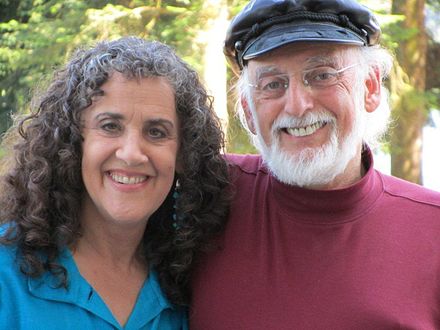
Over 40 year period, 67% of first marriages will break up. Half of divorces occur within the first 7 years, but people who stay married live on average 4 years longer. But even when couples stay together, bad marriages lead to many negative physical and psychological consequences, such as heart disease, anxiety, depression, and even suicide, violence, psychosis, homicide, substance abuse, etc.
The Seven Principles for Making Marriage Work, by John Gottman describes seven principles that can guide a couple toward a harmonious and long-lasting relationship. While most marital advice is based on the subjective opinion of a therapist or counselor, Dr. John Gottman bases the ideas in his book on the results of decades of scientific research. In The Seven Principles for Making Marriage Work, Gottman explains why marriages truly fail, and what are the seven principles that, if followed, will make marriage work.
After debunking a number of myths about marriages and why they fail, Dr. Gottman describes the seven principles that can truly help couples to have a successful relationship.
The 7 Principles
Couples strengthen the friendship that is at the heart of any marriage by following these 7 principles.
Enhancing love maps
The more you are familiar with your spouse, the more intimacy happens. This is called having a love map of your spouse. A “love map” is that part of a spouse’s brain where she stores all the relevant information about her husband (or the husband about his wife). The love map helps maintain better prepares to deal with stressful evens and conflict.
Nurturing fondness and admiration
Nurturing fondness and admiration increases positive emotions about each other and it is the antidote to contempt. It is also a buffer to stressors. It involves thinking about one’s spouse and consider what makes cherish him or her.
Turning toward each other
Small things are important in a marriage. This principle is based on the idea of staying positively connected even through small interactions that build romance and provide protection against stresses. It adds to the “emotional bank account” to be used during conflict.
Accepting influence
Spouses need to learn to accept being influenced by each other and taking their respective opinions and feelings into account. Spouse need to be willing to share power and influence in their relationship. Males tend to have more problems in this area, but females can also be at fault in some cases. Studies show that 81% of couples where the men do not share power and influence will self-destruct.
Solving solvable problems
There are two kinds of marital conflict: solvable and unsolvable. Spouses need to learn to customize their coping mechanism to whether the conflict is solvable or not. 69% of conflicts fall into the category of unsolvable perpetual problems that are underlying assumptions and issues which cannot be fixed situationally. Since the perpetual issues are perpetual by definition, people should choose a spouse whose differences they can live and cope with. Otherwise, the perpetual problems become obstacles that lead to gridlock situations.
On the other hand, solvable problems are situational and they are less intense than the perpetual problems. Principle 5 will go into further detail about how to solve them, but in few words Gottman’s model for conflict resolution involves softening the startup (avoid criticism or contempt), learning to make and receive repair attempts; making efforts to deescalate the tension; soothing oneself and one’s partner; compromising; and being tolerant of each other’s faults.
Solvable problems, if not addressed or coped with, can lead to perpetual problems due to resentment and entrenchment of the spouses in their positions.
Overcoming gridlock
Gridlock is a sign that one spouse has dreams that the other hasn’t accepted, doesn’t respect, or isn’t even aware of. When dreams are accepted and respected couples are happier because they expect their marriage to help them achieve their goals. Gridlocked perpetual problems are perpetual problems that have been mishandled and have become something “uncomfortable.” When a couple tries to discuss a gridlocked issue, they may feel that they are getting nowhere, because usually there are hidden issues underlying the problem.
To overcome gridlocked perpetual problems, spouses should learn to establish a dialogue that communicates acceptance of their partner, using humor, affection, and even amusement, to actively cope with those problems. Gridlocked discussions only lead to very painful exchanges or cold silence, and almost always involve the Four Horsemen of criticism, contempt, stonewalling, and defensiveness.
Creating shared meaning
It is important for spouses to create shared meaning in their marriage. They need a spiritual dimension, they need to create a family culture rich with symbols and rituals which increases and strengthens their sense of togetherness. When a marriage has a shared sense of meaning, conflict is more manageable and perpetual problems are less probable to lead to gridlock.
My Favorite 11 Quotes from John Gottman
“Friendship fuels the flames of romance because it offers the best protection against feeling adversarial toward your spouse.”
“Some people leave a marriage literally, by divorcing. Others do so by leading parallel lives together.”
“You don’t have to be interesting. You have to be interested.”
“The problem is that therapy that focuses solely on active listening and conflict resolution doesn’t work. A Munich-based marital therapy study conducted by Kurt Hahlweg and associates found that even after employing active-listening techniques the typical couple was still distressed. Those few couples who did benefit relapsed within a year.”
“Once you understand this, you will be ready to accept one of the most surprising truths about marriage: Most marital arguments cannot be resolved. Couples spend year after year trying to change each other’s mind—but it can’t be done. This is because most of their disagreements are rooted in fundamental differences of lifestyle, personality, or values. By fighting over these differences, all they succeed in doing is wasting their time and harming their marriage.”
“But in their day-to-day lives, they have hit upon a dynamic that keeps their negative thoughts and feelings about each other (which all couples have) from overwhelming their positive ones. They have what I call an emotionally intelligent marriage.”
“The point is that neuroses don’t have to ruin a marriage. If you can accommodate each other’s “crazy” side and handle it with caring, affection, and respect, your marriage can thrive.”
“In the midst of a bitter dispute, the husband or wife picks up a ringing telephone and is suddenly all smiles: “Oh, hi. Yes, it would be great to have lunch. No problem, Tuesday would be fine. Oh, I am so sorry to hear that you didn’t get the job. You must feel so disappointed,” and so on.”
“Admit when you’re wrong. Shut up when you’re right.”
Marriages are much more likely to succeed when the couple experiences a 5 to 1 ratio of positive to negative interactions whereas when the ratio approaches 1 to 1, marriages are more likely to end in divorce.
The Four Horsemen of the Apocalypse predict an ailing marriage: Criticism, Defensiveness, Stonewalling and Contempt. The worst of these is contempt.
————————————————————-
To open or buy The Seven Principles for Making Marriage Work, by John Gottman on Amazon click here
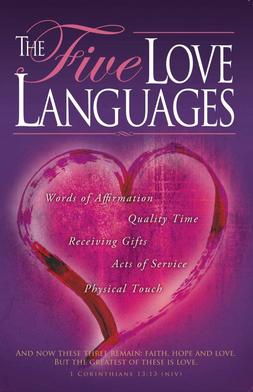
The Five Love Languages by Gary Chapman – Book Review

Many years ago, not long after I got married, I remember listening to a talk given in Church about love in marriage. Since the talk was in Italian and was given 30 years ago, I cannot remember the exact words that were used, but the concept was clear then and it is even more clear now: to love someone is not like getting a virus.
People who give up too easily on relationships because – they say – have fallen out of love, don’t really understand the real meaning of loving someone. We don’t fall in love as if we were getting a virus, and then fall out of love as if we were cured. Love is not a virus over which we don’t have any control. Real love requires action.
Keeping the Relationship Alive
In the #1 New York Times bestseller The 5 Love Languages: How to Express Heartfelt Commitment to Your Mate, Dr. Gary Chapman explains how couples can keep their relationship alive and growing in spite of the demands, conflicts, and even some boredom of everyday life. It is an effective approach that help couples to “stay in love” and not “fall out of love” too easily.
Some couples believe that the end of the “in-love” experience means they have only two options: to live a dull life with their current spouse or to find another spouse. However, there is another better alternative: they can pursue real love and understand that the in-love experience is mostly a temporary emotional high that don’t have the power to sustain a long term relationship.

In order to be successful in the pursuit of lasting love, however, it is important to recognize that people speak different love languages. Chapman believes that there are 5 Love Languages, or 5 ways to communicate love to one another. If we want a long-lasting and loving marriage, we need to identify and learn to speak our spouse’s primary love language. While they may all be important, there is one love language that is the most dominant and vital for each person to feel loved consistently.
The five ways (love languages) to express and experience love according to Gary Chapman are:
- Words of Affirmation (compliments and verbal praises)
- Quality Time (undivided attention and meaningful activities together)
- Receiving Gifts (gift like flowers, chocolates, cards, notes, etc)
- Acts of Service (something that “shows” the love like cleaning the house, doing the dishes or the laundry, helping with projects, etc)
- Physical Touch (holding hands, being kissed, hugging, touches, etc)
The Love Tank
When people don’t feel loved, when their “love tank” is empty, that’s when their relationship is most in danger. Gary Chapman shares many examples of couples who were able to save their marriages by simply discovering their respective love languages and by learning to focus on making their partner feel loved through a particular “language”.
A question partners should regularly ask is: On a scale from 1-10, how full is your love tank right now?
Relationships have a higher probability of being successful when we focus on making our partner feel more loved. Identifying and then using their love language when interacting with them will substantially increase the success of the relationship.
Overall, this is a great book that will have a very positive impact on many troubled relationship or will help strengthen even more already successful ones.
3 Quotes from the 5 Love Languages
“People tend to criticize their spouse most loudly in the area where they themselves have the deepest emotional need.”
― Gary Chapman, The Five Love Languages: How to Express Heartfelt Commitment to Your Mate
“Real love” – “This kind of love is emotional in nature but not obsessional. It is a love that unites reason and emotion. It involves an act of the will and requires discipline, and it recognizes the need for personal growth.”
― Gary Chapman, The Five Love Languages: How to Express Heartfelt Commitment to Your Mate
“For love, we will climb mountains, cross seas, traverse desert sands, and endure untold hardships. Without love, mountains become unclimbable, seas uncrossable, deserts unbearable, and hardships our lot in life.”
― Gary Chapman, The Five Love Languages: How to Express Heartfelt Commitment to Your Mate
———————–
To check out The 5 Love Languages by Gary Chapman on Amazon.com, click here.