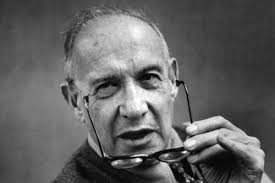
Peter Ferdinand Drucker (1909 – 2005) was an Austrian-born American management consultant, educator, and author, whose writings contributed to the philosophical and practical foundations of the modern business corporation. He was also a leader in the development of management education and he created the concept of management by objectives. He has been described as “the founder of modern management”.
Drucker’s books and scholarly and popular articles explored how humans are organized across the business, government, and nonprofit sectors of society. He is one of the best-known and most widely influential thinkers and writers on the subject of management theory and practice.
Peter Drucker apparently wrote 39 books, probably more than anybody would want to read. I list below three of his best sellers that are worth reading, at least to start.
The Effective Executive
Managing Oneself
Essential Drucker
Reading quotes is not a good substitute for reading the books, but they are a concentrate of wisdom and quick to read.
“Knowledge has to be improved, challenged, and increased constantly, or it vanishes.” –Peter Drucker
“Management is doing things right; leadership is doing the right things.” –Peter Drucker
“If you want something new, you have to stop doing something old” –Peter Drucker
“The most important thing in communication is to hear what isn’t being said.” –Peter Drucker
“Unless commitment is made, there are only promises and hopes; but no plans.” –Peter Drucker
“No one learns as much about a subject as one who is forced to teach it.” –Peter Drucker
“Whenever you see a successful business, someone once made a courageous decision.” –Peter Drucker
“The leaders who work most effectively, it seems to me, never say “I.” And that’s not because they have trained themselves not to say “I.” They don’t think “I.” They think “we”; they think “team.” They understand their job to be to make the team function. They accept responsibility and don’t sidestep it, but “we” gets the credit. This is what creates trust, what enables you to get the task done.” –Peter Drucker
“The purpose of business is to create and keep a customer.” –Peter Drucker
“There is nothing quite so useless, as doing with great efficiency, something that should not be done at all.” ––Peter Drucker
“What’s measured improves” –Peter Drucker
“Business has only two functions — marketing and innovation.” –Peter Drucker “Rank does not confer privilege or give power. It imposes responsibility.” –Peter Drucker
“People who don’t take risks generally make about two big mistakes a year. People who do take risks generally make about two big mistakes a year.” –Peter Drucker
“Leadership is not magnetic personality, that can just as well be a glib tongue. It is not “making friends and influencing people”, that is flattery. Leadership is lifting a person’s vision to higher sights, the raising of a person’s performance to a higher standard, the building of a personality beyond its normal limitations.” –Peter Drucker
“Results are obtained by exploiting opportunities, not by solving problems. ” –Peter Drucker
“This defines entrepreneur and entrepreneurship – the entrepreneur always searches for change, responds to it, and exploits it as an opportunity.” –Peter Drucker
“Your first and foremost job as a leader is to take charge of your own energy and then help to orchestrate the energy of those around you.” –Peter Drucker
“The most serious mistakes are not being made as a result of wrong answers. The true dangerous thing is asking the wrong question.” –Peter Drucker
“Plans are only good intentions unless they immediately degenerate into hard work.” –Peter Drucker
“People in any organization are always attached to the obsolete – the things that should have worked but did not, the things that once were productive and no longer are.” –Peter Drucker
“The three most charismatic leaders in this century inflicted more suffering on the human race than almost any trio in history: Hitler, Stalin, and Mao. What matters is not the leader’s charisma. What matters is the leader’s mission.” –Peter Drucker
“So much of what we call management consists in making it difficult for people to work.” –Peter Drucker
“Innovation is the specific instrument of entrepreneurship…the act that endows resources with a new capacity to create wealth.” –Peter Drucker
“Strategy is a commodity, execution is an art.” –Peter Drucker
“Trying to predict the future is like trying to drive down a country road at night with no lights while looking out the back window. ” –Peter Drucker
“When a subject becomes totally obsolete we make it a required course. ” –Peter Drucker
“Management is about human beings. Its task is to make people capable of joint performance, to make their strengths effective and their weaknesses irrelevant.” –Peter Drucker
“The problem in my life and other people’s lives is not the absence of knowing what to do but the absence of doing it.” –Peter Drucker
“A manager is responsible for the application and performance of knowledge. ” –Peter Drucker
“A person can perform only from strength. One cannot build performance on weakness, let alone on something one cannot do at all.” –Peter Drucker
“It is more productive to convert an opportunity into results than to solve a problem – which only restores the equilibrium of yesterday.” –Peter Drucker
“The best way to predict your future is to create it.” –Peter Drucker
“Effective leadership is not about making speeches or being liked; leadership is defined by results not attributes.” –Peter Drucker
“Until we can manage time, we can manage nothing else.” –Peter Drucker
“The “non-profit” institution neither supplies goods or services not controls. Its “product” is neither a pair of shoes nor an effective regulation. Its product is a changed human being. The non-profit institutions are human-change agents. Their “product” is a cured patient, a child that learns, a young man or woman grown into a self-respecting adult; a changed human life altogether.” –Peter Drucker
“We all have a vast number of areas in which we have no talent or skill and little chance of becoming even mediocre. In those areas a knowledge workers should not take on work, jobs and assignments. It takes far more energy to improve from incompetence to mediocrity than it takes to improve from first-rate performance to excellence.” –Peter Drucker
“Intelligence, imagination, and knowledge are essential resources, but only effectiveness converts them into results.” –Peter Drucker
“Entrepreneurship is “risky” mainly because so few of the so-called entrepreneurs know what they are doing.” –Peter Drucker
“The aim of marketing is to know and understand the customer so well the
product or service fits him and sells itself.”
“Like so many brilliant people, he believes that ideas move mountains. But bulldozers move mountains; ideas show where the bulldozers should go to work.” –Peter Drucker
“Effectiveness must be learned.” –Peter Drucker
“Effective executives know that their subordinates are paid to perform and not to please their superiors.”
“Every enterprise is a learning and teaching institution. Training and development must be built into it on all levels—training and development that never stop.”
“The computer is a moron. ”–Peter Drucker
“A man should never be appointed to a managerial position if his vision focuses on people’s weaknesses rather than on their strengths. The man who always knows exactly what people cannot do, but never sees anything they can do, will undermine the spirit of his organization.”
“Working on the right things is what makes knowledge work effective.” –Peter Drucker
“Follow effective action with quiet reflection. From the quiet reflection will come even more effective action.” –Peter Drucker
“The companies that refused to make hard choices, or refused to admit that anything much was happening, fared badly. If they survive, it is only because their respective governments will not let them go under.” –Peter Drucker

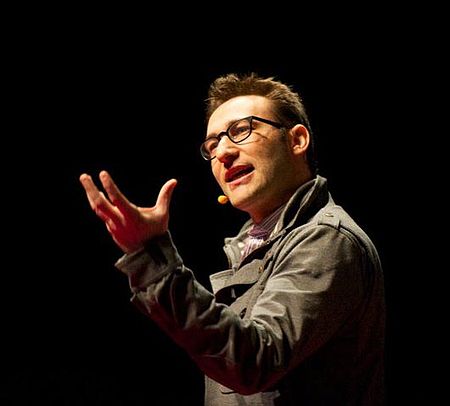
Simon Sinek’s Leaders Eat Last: Why Some Teams Pull Together and Others Don’t is the natural extension of Start with Why, expanding his ideas at the organizational level. Determining a company’s WHY is crucial, but it is only the beginning. The next step is how do you get people on board with your WHY? Through powerful and inspiring stories, Sinek describes how to support an organization’s WHY while continually adding people to the mix.
The book was inspired by a conversation Sinek had with a Marine Corps general who told him that ‘officers eat last’. When they go to eat, junior marines eat first while the most senior officers take their place at the back of the line in the chow hall. In other words, great leaders sacrifice their own comfort for the good of those in their care.
“If your actions inspire others to dream more, learn more, do more and become more, you are a leader.” ― Simon Sinek, Leaders Eat Last: Why Some Teams Pull Together and Others Don’t
“You can easily judge the character of a man by how he treats those who can do nothing for him.” ― Simon Sinek, Leaders Eat Last: Why Some Teams Pull Together and Others Don’t
“The true price of leadership is the willingness to place the needs of others above your own. Great leaders truly care about those they are privileged to lead and understand that the true cost of the leadership privilege comes at the expense of self-interest.” ― Simon Sinek, Leaders Eat Last: Why Some Teams Pull Together and Others Don’t
“As the Zen Buddhist saying goes, how you do anything is how you do everything.” ― Simon Sinek, Leaders Eat Last: Why Some Teams Pull Together and Others Don’t
“Returning from work feeling inspired, safe, fulfilled and grateful is a natural human right to which we are all entitled and not a modern luxury that only a few lucky ones are able to find.” ― Simon Sinek, Leaders Eat Last: Why Some Teams Pull Together and Others Don’t
“And when a leader embraces their responsibility to care for people instead of caring for numbers, then people will follow, solve problems and see to it that that leader’s vision comes to life the right way, a stable way and not the expedient way.” ― Simon Sinek, Leaders Eat Last: Why Some Teams Pull Together and Others Don’t
“It is not the genius at the top giving directions that makes people great. It is great people that make the guy at the top look like a genius.” ― Simon Sinek, Leaders Eat Last: Why Some Teams Pull Together and Others Don’t
“Let us all be the leaders we wish we had.” ― Simon Sinek, Leaders Eat Last: Why Some Teams Pull Together and Others Don’t
“Stress and anxiety at work have less to do with the work we do and more to do with weak management and leadership.” ― Simon Sinek, Leaders Eat Last: Why Some Teams Pull Together and Others Don’t
“The rank of office is not what makes someone a leader. Leadership is the choice to serve others with or without any formal rank.” ― Simon Sinek, Leaders Eat Last: Why Some Teams Pull Together and Others Don’t
“Integrity is when our words and deeds are consistent with our intentions.” ― Simon Sinek, Leaders Eat Last: Why Some Teams Pull Together and Others Don’t
“All the perks, all the benefits and advantages you may get for the rank or position you hold, they aren’t meant for you. They are meant for the role you fill. And when you leave your role, which eventually you will, they will give the ceramic cup to the person who replaces you. Because you only ever deserved a Styrofoam cup.” ― Simon Sinek, Leaders Eat Last: Why Some Teams Pull Together and Others Don’t
“Leaps of greatness require the combined problem-solving ability of people who trust each other.” ― Simon Sinek, Leaders Eat Last: Why Some Teams Pull Together and Others Don’t
“The ability of a group of people to do remarkable things hinges on how well those people pull together as a team.”
“Good leadership is like exercise. We do not see any improvement to our bodies with day-to-day comparisons. In fact, if we only compare the way our bodies look on a given day to how they looked the previous day, we would think our efforts had been wasted. It’s only when we compare pictures of ourselves over a period of weeks or months that we can see a stark difference. The impact of leadership is best judged over time”
“Leadership takes work. It takes time and energy. The effects are not always easily measured and they are not always immediate. Leadership is always a commitment to human beings.”
“It is not the demands of the job that cause the most stress, but the degree of control workers feel they have throughout their day. The studies also found that the effort required by a job is not in itself stressful, but rather the imbalance between the effort we give and the reward we feel. Put simply: less control, more stress.”
“And that’s what trust is. We don’t just trust people to obey the rules, we also trust that they know when to break them.”
“Leadership is not a license to do less; it is a responsibility to do more.”
“Truly human leadership protects an organization from the internal rivalries that can shatter a culture. When we have to protect ourselves from each other, the whole organization suffers. But when trust and cooperation thrive internally, we pull together and the organization grows stronger as a result.”
“I know of no case study in history that describes an organization that has been managed out of a crisis. Every single one of them was led.”
“The cost of leadership,” explains Lieutenant General George Flynn of the United States Marine Corps, “is self-interest.”
“What this means is that the converse is also true. A supportive and well-managed work environment is good for one’s health. Those who feel they have more control, who feel empowered to make decisions instead of waiting for approval, suffer less stress. Those only doing as they are told, always forced to follow the rules, are the ones who suffer the most. Our feelings of control, stress, and our ability to perform at our best are all directly tied to how safe we feel in our organizations. Feeling unsafe around those we expect to feel safe—those in our tribes (work is the modern version of the tribe)—fundamentally violates the laws of nature and how we were designed to live.”
“A 2011 study conducted by a team of social scientists at the University of Canberra in Australia concluded that having a job we hate is as bad for our health and sometimes worse than not having a job at all.”
“Children are better off having a parent who works into the night in a job they love than a parent who works shorter hours but comes home unhappy. This is the influence our jobs have on our families. Working late does not negatively affect our children, but rather, how we feel at work does. Our jobs don’t just affect us. They affect our families.”
Buy on Amazon: Leaders Eat Last: Why Some Teams Pull Together and Others Don’t

How To Win Friends and Influence People by Dale Carnegie is an old classic, a timeless bestseller. Dale Carnegie’s advice has already helped countless people to become better people and better leaders. I loved reading this book and I should read it again.
Dale Harbison Carnegie (November 24, 1888 – November 1, 1955) was an American writer and lecturer. He developed famous courses in self-improvement, salesmanship, corporate training, public speaking, and interpersonal skills. One of the core ideas in his books is that it is possible to change other people’s behavior by changing one’s behavior toward them first.
———————————————————————
“It isn’t what you have or who you are or where you are or what you are doing that makes you happy or unhappy. It is what you think about it.”
― Dale Carnegie, How to Win Friends and Influence People
“Don’t be afraid of enemies who attack you. Be afraid of the friends who flatter you.”
“You can make more friends in two months by becoming interested in other people than you can in two years by trying to get other people interested in you.”
“Any fool can criticize, complain, and condemn—and most fools do. But it takes character and self-control to be understanding and forgiving.”
“Everybody in the world is seeking happiness—and there is one sure way to find it. That is by controlling your thoughts. Happiness doesn’t depend on outward conditions. It depends on inner conditions.”
“Talk to someone about themselves and they’ll listen for hours.”
“Actions speak louder than words, and a smile says, ‘I like you. You make me happy. I am glad to see you.”
“When dealing with people, let us remember we are not dealing with creatures of logic. We are dealing with creatures of emotion, creatures bristling with prejudices and motivated by pride and vanity.”
“Personally I am very fond of strawberries and cream, but I have found that for some strange reason, fish prefer worms. So when I went fishing, I didn’t think about what I wanted. I thought about what they wanted. I didn’t bait the hook with strawberries and cream. Rather, I dangled a worm or grasshopper in front of the fish and said: “Wouldn’t you like to have that?”
Why not use the same common sense when fishing for people?”
“A man convinced against his will is of the same opinion still”
“The difference between appreciation and flattery? That is simple. One is sincere and the other insincere. One comes from the heart out; the other from the teeth out. One is unselfish; the other selfish. One is universally admired; the other universally condemned.”
“You can’t win an argument. You can’t because if you lose it, you lose it; and if you win it, you lose it.”
“To be interesting, be interested.”
“Names are the sweetest and most important sound in any language.”
“I have come to the conclusion that there is only one way under high heaven to get the best of an argument— and that is to avoid it. Avoid it as you would avoid rattlesnakes and earthquakes.”
“If You Want to Gather Honey, Don’t Kick Over the Beehive”
“All men have fears, but the brave put down their fears and go forward, sometimes to death, but always to victory.”
“Why talk about what we want? That is childish. Absurd. Of course, you are interested in what you want. You are eternally interested in it. But no one else is. The rest of us are just like you: we are interested in what we want.”
“Criticism is dangerous, because it wounds a person’s precious pride, hurt his sense of importance and arouse resentment.”
“Winning friends begins with friendliness.”

In my post yesterday I have listed my favorite 10 books on leadership. These other 10 books have also taught me valuable principles of leadership. They are not necessarily in order.
1-10 Best Books on Leadership (click the link to see the list)
———————————————–
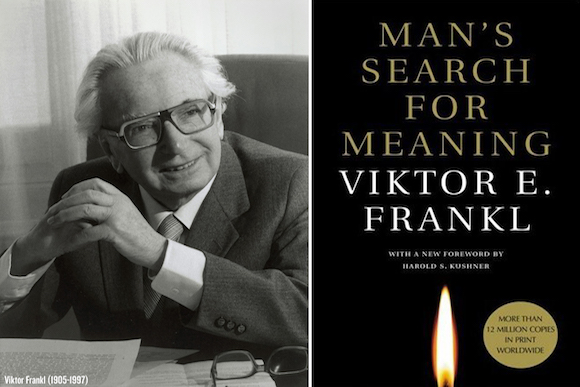
This is not a traditional leadership book, but teaches fundamental principles that can be applied by leaders in any organization. In Man’s Search for Meaning, Viktor Frankl reports his experiences as a prisoner in Nazi concentration camps during World War II, and describes his psychotherapeutic method, which involved identifying a purpose in life to feel positively about, and then immersively imagining that outcome.
According to Frankl, the way a prisoner imagined the future affected his longevity. The book intends to answer the question “How was everyday life in a concentration camp reflected in the mind of the average prisoner?”
So, what has all this to do with leadership? True leadership includes the ability to understand our fellow man and ourselves at the level where we learn what being human truly is, and to share that knowledge with others to help them learn, achieve, and grow. This book can help leaders to develop or at least to understand the importance of having those skills.
Between stimulus and response, there is a space. In that space is our power to choose our response. In our response lies our growth and our freedom.~ Viktor Frankl
———————————————–
This is a fascinating and unique book in which acclaimed historian Doris Kearns Goodwin illuminates Abraham Lincoln’s political genius. Tolstoy called Lincoln “so great he overshadows all other national heroes”. Lincoln riskily gave key cabinet posts to three men that had previously run against him in the 1860 Republican nomination – William Seward, Salmon Chase and Edward Bates.
When Lincoln emerged as the victor, his rivals were dismayed and angry. However, Lincoln’s extraordinary ability to put himself in the place of other men and to understand their motives and desires, enabled him, as president, to bring these opponents together, creating the most unusual cabinet in the history of the U.S., and using their talents to preserve the Union and win the war.
———————————————–
In The Five Dysfunctions of a Team Patrick Lencioni once again offers a leadership fable that is as captivating and instructive. It describes the many pitfalls that teams face as they seek to “grow together”. This book explores the fundamental causes of organizational politics and team failure. Like most of Lencioni’s books, the bulk of it is written as a business fable.
According to the book, the five dysfunctions are:
Lencioni has written a compelling fable with a powerful message for all those who strive to be exceptional team leaders.
———————————————–
This book tries to synthesize and popularize scientific work in epidemiology, psychology, and sociology, and to apply it to social behaviors and cultural trends.
According to Gladwell, the Tipping Point is the “magic moment when an idea, trend or social behavior crosses a threshold, tips, and spreads like wildfire.” The book is a study of human behavior and what makes people accept and spread the knowledge about particular causes and products.
His thesis is that “the best way to understand the emergence of fashion trends, the ebb and flows of crime waves, or, for that matter, the transformation of unknown books into bestsellers, or the rise of teenage smoking, or the phenomena of word of mouth, or any number of the other mysterious changes that mark everyday life is to think of them as epidemics. Ideas and products and messages and behavior spread just like viruses do”.
———————————————–
Most startups fail. But many of those failures are preventable. Eric Ries defines a startup as an organization dedicated to creating something new under conditions of extreme uncertainty. The Lean Startup: How Today’s Entrepreneurs Use Continuous Innovation to Create Radically Successful Businesses presents a method for developing and managing startups or new ventures in bigger organizations.
According to Reis, startups need to operate following their own methods in order to succeed. What works in established companies may actually damage the development of a startup. However, startups policies and procedures shouldn’t be created at random, but they should be the result of proper techniques and research.
———————————————–
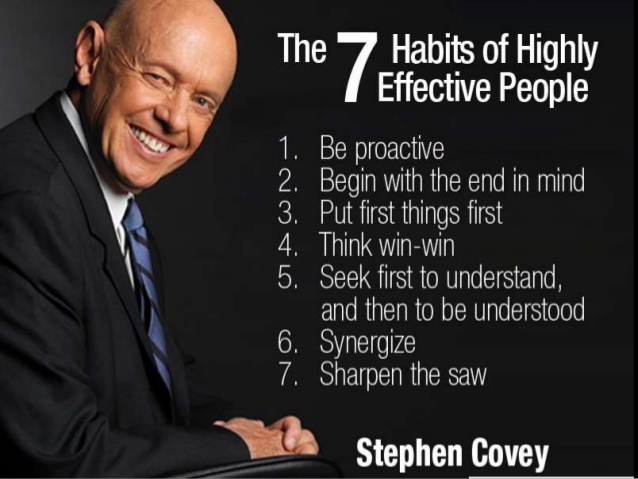
Stephen R. Covey’s book, The 7 Habits of Highly Effective People, first published in 1989, has sold more than 25 million copies worldwide since its first publication. The audio version of this book became the first non-fiction audio-book in U.S. publishing history to sell more than one million copies.
The 7 Habits of Highly Effective People by Stephen R. Covey is a self-improvement book. According to Covey, the way we see the world is entirely based on our own perceptions. In order to change a given situation, we must change ourselves, and in order to change ourselves, we must be able to change our perceptions.
Since we all want to succeed, identifying the habits that can help us on our journey is key to our success. Covey organizes his book in a series of habits, showing them as a progression from dependence through independence on to interdependence.
———————————————–
To quote former Apple board member Bill Campbell: “High Output Management is a bible that every entrepreneur and every manager in the country should look at, read and understand.” Andy Grove co-founded Intel and grew it to over $20 Billion in revenue over a 30 year run as CEO. His approaches to leadership and management are legendary. He shares many of his ideas in this management guide. For example:
“As a middle manager, you are in effect a chief executive of an organization yourself….As a micro CEO, you can improve your own and your group’s performance and productivity, whether or not the rest of the company follows suit.”
———————————————–
It’s important to recognize our strengths and weaknesses, and learn to delegate tasks that others could do better. We cannot do everything or be the best at everything. Based on the discoveries of the Gallup landmark 30-year research project on strengths, Strengths-based leadership is a book about focusing on our strengths, and delegating tasks that others can accomplish more effectively, instead than trying to do all by ourselves. It is also a book about identifying team members’ strengths, and encourage them to use these in a way that helps the entire team and the organization.
“If you spend your life trying to be good at everything, you will never be great at anything.” ― Tom Rath
———————————————–
Based on more than forty interviews with Jobs conducted over two years—as well as interviews with more than a hundred family members, friends, adversaries, competitors, and colleagues—Walter Isaacson has written a fascinating story of the roller-coaster life and intense personality of Steve Jobs, a creative entrepreneur whose passion for perfection and ferocious drive revolutionized six industries.
“The way we’re running the company, the product design, the advertising, it all comes down to this: Let’s make it simple. Really simple.” Apple’s design mantra would remain the one featured on its first brochure: “Simplicity is the ultimate sophistication.” ― Walter Isaacson, Steve Jobs
———————————————–
In this book John Kotter outlines the process every organization must go through to achieve its goals, identifying where and how even top performers get in troubles during the change process.
The book describes the differences between management and leadership. Management is a function of making systems work, while Leadership is what is necessary to build the systems, or change existing ones.
Kotter describes why companies or organizations fail, in his “eight mistakes”:
Kotter suggests that correcting these eight mistakes is the process and the order in which the process work best.
“skipping a single step or getting too far ahead without a solid base almost always creates problems”
What follows is a list of 10 of the best book about leadership that I have actually read. I will probably add another 10 later. There are many others that I have not read yet and that I am planning to read, but for now this is the list of my favorites.
The Bible doesn’t make most of the lists about the best books on leadership, and the Bible is a lot more than that, but I believe it to be also the best book on leadership ever written. It just takes more efforts to extract leadership lessons from the Bible than from the other books in this list, but the story of so many prophets and leaders, including, and especially, the life of the Savior, are incomparable.

“Carrots and sticks are so last century”. According to Pink, for 21st century work, we need to upgrade to autonomy, mastery and purpose.
We have moved from a Motivation 2.0 world (rewards and punishments) to a Motivation 3.0 world (inherent satisfaction in the work itself). Routine tasks may still benefit from incentives, but for creative ones, incentives can have a limiting effect.
Why certain leaders or companies are successful, and others are not? Because “people don’t buy what you do; they buy why you do it.” In Start with Why, Sinek explains that people won’t truly buy into a product, movement, or idea until they understand the WHY behind it. When you start with the why, everything else falls into place. People are inspired by a sense of purpose (the “Why”), and that should always be communicated before the “How” and the “What”. Sinek calls this triad the golden circle.
The “disease” of self-deception, or acting in ways contrary to what one knows is right, underlies all leadership problems in today’s organizations. Even when they are well intentioned, leaders who deceive themselves always end up undermining their own performance. Leadership and Self-Deception explains how leaders can discover their own self-deceptions and learn how to escape destructive patterns.
True leadership isn’t only a matter of having a certain job or title. To have a leadership position is only the first and the lowest level on a scale of five. In this book John C. Maxwell describes each of these stages of leadership, and shows how to master each level and rise up to the next.
The 5 Levels of Leadership are:
This book is an old classic, a timeless bestseller. Dale Carnegie’s advice has already helped countless people to become better people and better leaders. A few quotes from the book follow:
In The 21 Irrefutable Laws of Leadership John C. Maxwell has combined insights learned from his 40-plus years of leadership with observations from the worlds of business, politics, sports, religion, and the military. The book is a great study of leadership that can help measure our own personal growth in leadership abilities. Each of the 21 laws has its own chapter in which John Maxwell shares personal stories and biographical sketches of some of history’s greatest leaders. It is a great and inspiring reading.
This book is the natural extension of Start with Why, expanding his ideas at the organizational level. Determining a company’s WHY is crucial, but it is only the beginning. The next step is how do you get people on board with your WHY? Through powerful and inspiring stories, Sinek describes how to support an organization’s WHY while continually adding people to the mix.
This book is a result of observations based on 80,000 interviews with managers as conducted by the Gallup Organization in the last 25 years. These managers have discredited the old myths about management and devised more effective ways of obtaining and keeping talented people in their organization. Some of the key ideas are:
The title and the message of the book are inspired by a speech given by Teddy Roosevelt in 1910, where Roosevelt said:
“It is not the critic who counts; not the man who points out how the strong man stumbles, or where the doer of deeds could have done them better. The credit belongs to the man who is actually in the arena, whose face is marred by dust and sweat and blood… who at the best knows in the end the triumph of high achievement, and who at the worst, if he fails, at least fails while daring greatly.”
According to Brené Brown, Roosevelt’s words perfectly summarize her research into why people find being vulnerable such a hard thing to do.

What is leadership? How would you define it? What are the most important aspects of leadership? What constitute a good leader?
I tried to Google the word leadership and I got about 4,500,000,000 results in 1.7 seconds! Clearly there are lots of different ideas about what is leadership. It’s a difficult concept to define exactly, probably because it means so many things to various people.
The word “leadership” can bring to mind a variety of images to different people. Some associate that word mostly with the images of political leaders, others with those of religious leaders or business executives. Some people respect and appreciate leadership, others are frustrated by the leaders they have encountered in their lives, and have grown resentful of all types of leadership.
But leadership is needed, and the best of them help themselves and others to do the right things. They may set direction, build inspiring visions, organize efficiently, or create something new. The worst of them do just the opposite.
1. “Jesus saith unto him, I am the way, the truth, and the life: no man cometh unto the Father, but by me.” – John 14:6
2. “A leader is best when people barely know he exists, when his work is done, his aim fulfilled, they will say: we did it ourselves.” –Lao Tzu
3. “You don’t need a title to be a leader.” –Mark Sanborn
4. “Leadership is the art of getting someone else to do something you want done because he wants to do it. “–Dwight Eisenhower
5. “The greatest leader is not necessarily the one who does the greatest things. He is the one that gets the people to do the greatest things.” –Ronald Reagan
6. “A great person attracts great people and knows how to hold them together.”–Johann Wolfgang Von Goeth
7. “Leadership is the capacity to translate vision into reality.” –Warren Bennis
8. “Leadership defines what the future should look like, aligns people with that vision, and inspires them to make it happen, despite the obstacles.” –John Kotter
9. “Leadership is unlocking people’s potential to become better.” —Bill Bradley
10. “One measure of leadership is the caliber of people who choose to follow you.” –Dennis Peer
11. “Innovation distinguishes between a leader and a follower.” –Steve Jobs
12. “A leader takes people where they want to go. A great leader takes people where they don’t necessarily want to go, but ought to be.” –Rosalynn Carter
13. “If your actions inspire others to dream more, learn more, do more and become more, you are a leader.” — John Quincy Adams
14. “The challenge of leadership is to be strong, but not rude; be kind, but not weak; be bold, but not bully; be thoughtful, but not lazy; be humble, but not timid; be proud, but not arrogant; have humor, but without folly.” –Jim Rohn
15. “Leadership is lifting a person’s vision to high sights, the raising of a person’s performance to a higher standard, the building of a personality beyond its normal limitations.” –Peter Drucker
16. “Leadership is an opportunity to serve. It is not a trumpet call to self-importance.” –J. Donald Walters
17. “A leader is one who knows the way, goes the way, and shows the way.” –John Maxwell
18. “A leader is a dealer in hope.” –Napoleon Bonaparte
19. “Leadership is working with and through others to achieve objectives.” –Paul Hersey
20. “Management is about arranging and telling. Leadership is about nurturing and enhancing.” –Tom Peters
21. “A leader’s role is to raise people’s aspirations for what they can become and to release their energies so they will try to get there.” –David R. Gergen
22. “Effective leadership is not about making speeches or being liked; leadership is defined by results not attributes.” –Peter F. Drucker
23. “Effective leadership is putting first things first. Effective management is discipline, carrying it out.” –Stephen Covey
24. “Leadership is solving problems. The day soldiers stop bringing you their problems is the day you have stopped leading them. They have either lost confidence that you can help or concluded you do not care. Either case is a failure of leadership.” –Colin Powell
25. “Leadership is the key to 99 percent of all successful efforts.” –Erskine Bowles
26. “Leadership is a matter of how to be, not how to do it.” –Frances Hesselbein
27. “One of the tests of leadership is the ability to recognize a problem before it becomes an emergency.” –Arnold Glasow
28. “The growth and development of people is the highest calling of leadership.” –Harvey S. Firestone
29. “Never tell people how to do things. Tell them what to do and they will surprise you with their ingenuity.” –George Smith Patton
30. “Leadership by example is the only kind of real leadership. Everything else is dictatorship.” –Albert Emerson
31. “Leadership is difficult but it is not complex.” –Michael McKinney
32. “Great leadership is about human experiences, not processes. Leadership is not a formula or a program, it is a human activity that comes from the heart and considers the hearts of others.” –Lance Secretan
33. “Leaders aren’t born, they are made.” ―Vince Lombardi
34. “While a good leader sustains momentum, a great leader increases it.” –John C. Maxwell
35. “To do great things is difficult; but to command great things is more difficult.” —Friedrich Nietzsche
36. Leadership is a potent combination of strategy and character. But if you must be without one, be without the strategy. —Norman Schwarzkopf
37. “Leaders must be close enough to relate to others, but far enough ahead to motivate them.” —John C. Maxwell
38. “Great leaders are not defined by the absence of weakness, but rather by the presence of clear strengths. ” –John Zenger
39. “Great leaders are almost always great simplifiers, who can cut through argument, debate, and doubt to offer a solution everybody can understand.” –General Colin Powell
40. “A man who wants to lead the orchestra must turn his back on the crowd.” —Max Lucado
41. “A great leader’s courage to fulfill his vision comes from passion, not position.” —John Maxwell
42. “No man will make a great leader who wants to do it all himself, or to get all the credit for doing it. “—Andrew Carnegie
43. “Anyone can hold the helm when the sea is calm.” —Publilius Syrus
44. “Leadership is influence.” —John C. Maxwell
45. “He who cannot be a good follower cannot be a good leader.” ―Aristotle
46. “But it shall not be so among you: but whosoever will be great among you, let him be your minister” —Matthew 20:26
47. “Where there is no vision, the people perish.” —Proverbs 29:18
48. “Lead me, follow me, or get out of my way.” — General George Patton
49. “Before you are a leader, success is all about growing yourself. When you become a leader, success is all about growing others.” —Jack Welch
50. “Don’t find the fault, find the remedy” — Henry Ford

“It’s not that I’m so smart, it’s just that I stay with problems longer.” – Albert Einstein, physicist, 1879-1955.
Angela Lee Duckworth (born 1970) has an impressive background as a global management consultant, inner-city teacher, and research psychologist at the University of Pennsylvania, where she earned her PhD. She also has a BA in neurobiology from Harvard and a MSc in neuroscience from Oxford. Duckworth believes that what really drives success is not talent, intelligence or even a particular set of skills, but instead a combination of passion and long-term perseverance she defines as Grit.
According to Angela Duckworth, Grit is the combination of passion and perseverance. Through years of research, she found grit to be a stronger predictor of high-achievement than intelligence, talent and other personality traits.
Angela Duckworth’s 2016 book, Grit: The Power of Passion and Perseverance surveys a range of challenging endeavors, including the difficult process of writing and rewriting novels, the physically and emotionally struggles of surviving the seven-week “Beast Barracks” at West Point, or the training needed to become a successful swimmer or even to win spelling bees competition.
In all of these activities, Duckworth finds that those who stand out have more grit. Too many quit what they start far too early and far too often, but the gritty people don’t give up easily and continue what they have started, improving through deliberate practice, often becoming better than those who are more talented in the same area.
But what makes one person grittier than another? Duckworth recognizes several components that help make people grittier. The first is a great passion for something. “Grit is about working on something you care about so much that you’re willing to stay loyal to it.” The second component is a tolerance for the mundane. “The most dazzling human achievements are, in fact, the aggregate of countless individual elements, each of which, in a sense, ordinary,” The third component is a connection to like-minded communities. “If you want to be grittier, find a gritty culture and join it.” The last component is a willingness to face failure.
I still remember a comment made by one of the professors when I was starting my PhD Program in Marriage, Family and Human Development at Brigham Young University. Since I had obtained a Master in Business Administration a couple of years before, he was convinced that I considered myself smarter than the average student in their PhD program. So, in his comment, he stressed that to be successful and finish a PhD program, perseverance (or grit) is a lot more important than being smart. I absolutely agree, and Duckworth would agree too.
“Learning from mistakes is something babies and toddlers don’t mind at all. . . . Watch a baby struggle to sit up, or a toddler learn to walk: you’ll see one error after another, failure after failure, a lot of challenge exceeding skill, a lot of concentration, a lot of feedback. . . . Very young children don’t seem tortured while they’re trying to do things they can’t yet do.”
“Enthusiasm is common. Endurance is rare.”
“Our potential is one thing. What we do with it is quite another.”
“It soon became clear that doing one thing better and better might be more satisfying than staying an amateur at many different things:”
“There are no shortcuts to excellence. Developing real expertise, figuring out really hard problems, it all takes time―longer than most people imagine….you’ve got to apply those skills and produce goods or services that are valuable to people….Grit is about working on something you care about so much that you’re willing to stay loyal to it…it’s doing what you love, but not just falling in love―staying in love.”
“I won’t just have a job; I’ll have a calling. I’ll challenge myself every day. When I get knocked down, I’ll get back up. I may not be the smartest person in the room, but I’ll strive to be the grittiest.”
“As much as talent counts, effort counts twice.”
“Nobody wants to show you the hours and hours of becoming. They’d rather show the highlight of what they’ve become.”
“Grit grows as we figure out our life philosophy, learn to dust ourselves off after rejection and disappointment, and learn to tell the difference between low-level goals that should be abandoned quickly and higher-level goals that demand more tenacity. The maturation story is that we develop the capacity for long-term passion and perseverance as we get older.”
“When you keep searching for ways to change your situation for the better, you stand a chance of finding them. When you stop searching, assuming they can’t be found, you guarantee they won”
“Interests are not discovered through introspection. Instead, interests are triggered by interactions with the outside world. The process of interest discovery can be messy, serendipitous, and inefficient. This is because you can’t really predict with certainty what will capture your attention and what won’t…Without experimenting, you can’t figure out which interests will stick, and which won’t.”
“most dazzling human achievements are, in fact, the aggregate of countless individual elements, each of which is, in a sense, ordinary.”
“At its core, the idea of purpose is the idea that what we do matters to people other than ourselves.”
“Stop reading so much and go think.”
“One form of perseverance is the daily discipline of trying to do things better than we did yesterday. So,”
“It isn’t suffering that leads to hopelessness. It’s suffering you think you can’t control.”
“Without effort, your talent is nothing more than unmet potential. Without effort, your skill is nothing more than what you could have done but didn’t.”
“Passion for your work is a little bit of discovery, followed by a lot of development, and then a lifetime of deepening.”
“As soon as possible, experts hungrily seek feedback on how they did. Necessarily, much of that feedback is negative. This means that experts are more interested in what they did wrong—so they can fix it—than what they did right. The active processing of this feedback is as essential as its immediacy.”
“Well okay, that didn’t go so well, but I guess I will just carry on.’ ”
“Staying on the treadmill is one thing, and I do think it’s related to staying true to our commitments even when we’re not comfortable. But getting back on the treadmill the next day, eager to try again, is in my view even more reflective of grit. Because when you don’t come back the next day—when you permanently turn your back on a commitment—your effort plummets to zero. As a consequence, your skills stop improving, and at the same time, you stop producing anything with whatever skills you have.”
“In other words, we want to believe that Mark Spitz was born to swim in a way that none of us were and that none of us could. We don’t want to sit on the pool deck and watch him progress from amateur to expert. We prefer our excellence fully formed. We prefer mystery to mundanity.”
“There’s a vast amount of research on what happens when we believe a student is especially talented. We begin to lavish extra attention on them and hold them to higher expectations. We expect them to excel, and that expectation becomes a self-fulfilling prophecy.”
“Passion begins with intrinsically enjoying what you do.”
“Three bricklayers are asked: “What are you doing?” The first says, “I am laying bricks.” The second says, “I am building a church.” And the third says, “I am building the house of God.” The first bricklayer has a job. The second has a career. The third has a calling.”
“When I am around people,” Kat wrote, “my heart and soul radiate with the awareness that I am in the presence of greatness. Maybe greatness unfound, or greatness underdeveloped, but the potential or existence of greatness nevertheless. You never know who will go on to do good or even great things or become the next great influencer in the world—so treat everyone like they are that person.”
“Our vanity, our self-love, promotes the cult of the genius,” Nietzsche said. “For if we think of genius as something magical, we are not obliged to compare ourselves and find ourselves lacking. . . . To call someone ‘divine’ means: ‘here there is no need to compete.”
“Grit depends on a different kind of hope. It rests on the expectation that our own efforts can improve our future. “I have a feeling tomorrow will be better” is different from “I resolve to make tomorrow better.”
“To be gritty is to resist complacency.”
“The bottom line on culture and grit is: If you want to be grittier, find a gritty culture and join it. If you’re a leader, and you want the people in your organization to be grittier, create a gritty culture.”
“People assume you have to have some special talent to do mathematics,” Sylvia has said. “They think you’re either born with it, or you’re not. But Rhonda and I keep saying, ‘You actually develop the ability to do mathematics. Don’t give up!”
“A fixed mindset about ability leads to pessimistic explanations of adversity, and that, in turn, leads to both giving up on challenges and avoiding them in the first place. In contrast, a growth mindset leads to optimistic ways of explaining adversity, and that, in turn, leads to perseverance and seeking out new challenges that will ultimately make you even stronger.”
“Optimistic young adults stay healthier throughout middle age and, ultimately, live longer than pessimists.”
“Optimists are more satisfied with their marriages.”
“trying to do things they can’t yet do, failing, and learning what they need to do differently is exactly the way that experts practice.”
“When it comes to how we fare in the marathon of life, effort counts tremendously.”
“I’m not going to lie,” he replied. “I never really enjoyed going to practice, and I certainly didn’t enjoy it while I was there. In fact, there were brief moments, walking to the pool at four or four-thirty in the morning, or sometimes when I couldn’t take the pain, when I’d think, ‘God, is this worth it?’ ” “So why didn’t you quit?” “It’s very simple,” Rowdy said. “It’s because I loved swimming. . . . I had a passion for competing, for the result of training, for the feeling of being in shape, for winning, for traveling, for meeting friends. I hated practice, but I had an overall passion for swimming.”
“What we accomplish in the marathon of life depends tremendously on our grit—our passion and perseverance for long-term goals.”
“Success is never final; failure is never fatal. It’s courage that counts.”
“Most of us become more conscientious, confident, caring, and calm with life experience.”
“Have a fierce resolve in everything you do.” “Demonstrate determination, resiliency, and tenacity.” “Do not let temporary setbacks become permanent excuses.” And, finally, “Use mistakes and problems as opportunities to get better—not reasons to quit.”
“In the most general sense, talent is the sum of a person’s abilities—his or her intrinsic gifts, skills, knowledge, experience, intelligence, judgment, attitude, character, and drive. It also includes his or her ability to learn and grow.”
“If you want to bring forth grit in your child, first ask how much passion and perseverance you have for your own life goals. Then ask yourself how likely it is that your approach to parenting encourages your child to emulate you.”
“Since novelty is what your brain craves, you’ll be tempted to move on to something new, and that could be what makes the most sense. However, if you want to stay engaged for more than a few years in any endeavor, you’ll need to find a way to enjoy the nuances that only a true aficionado can appreciate. “The old in the new is what claims the attention,” said William James. “The old with a slightly new turn.”
“The scientific research is very clear that experiencing trauma without control can be debilitating. But I also worry about people who cruise through life, friction-free, for a long, long time before encountering their first real failure. They have so little practice falling and getting up again. They have so many reasons to stick with a fixed mindset. I see a lot of invisibly vulnerable high-achievers stumble in young adulthood and struggle to get up again. I call them the “fragile perfects.” Sometimes I meet fragile perfects in my office after a midterm or a final. Very quickly, it becomes clear that these bright and wonderful people know how to succeed but not how to fail.”
BUY ON AMAZON: Angela Duckworth’s 2016 book, Grit: The Power of Passion and Perseverance
HOW GRITTY ARE YOU? ABOUT CHAPTER FOUR OF THE BOOK “Grit: The Power of Passion and Perseverance“

The title and the message of the book by Brené Brown Daring Greatly: How the Courage to Be Vulnerable Transforms the Way We Live, Love, Parent, and Lead, are inspired by a speech given by Teddy Roosevelt in 1910, where Roosevelt said:
“It is not the critic who counts; not the man who points out how the strong man stumbles, or where the doer of deeds could have done them better. The credit belongs to the man who is actually in the arena, whose face is marred by dust and sweat and blood; who strives valiantly; who errs, who comes short again and again, because there is no effort without error and shortcoming; but who does actually strive to do the deeds; who knows great enthusiasms, the great devotions; who spends himself in a worthy cause; who at the best knows in the end the triumph of high achievement, and who at the worst, if he fails, at least fails while daring greatly.”
According to Brené Brown, Roosevelt’s words perfectly summarize her research into why people find being vulnerable such a hard thing to do.

Casandra Brené Brown PhD LMSW (born November 18, 1965) is a research professor at the University of Houston.
She has spent her career studying courage, vulnerability, shame, and empathy and is the author of five #1 New York Times best sellers: The Gifts of Imperfection, Daring Greatly, Rising Strong, Braving the Wilderness, and her latest book, Dare to Lead, which is the culmination of a seven-year study on courage and leadership.
Brown’s TED talk – The Power of Vulnerability – is one of the top five most viewed TED talks in the world with over 35 million views.
“When we spend our lives waiting until we’re perfect or bulletproof before we walk into the arena, we ultimately sacrifice relationships and opportunities that may not be recoverable, we squander our precious time, and we turn our backs on our gifts, those unique contributions that only we can make,” says Brown. “Perfect and bulletproof are seductive, but they don’t exist in the human experience.”
“Because true belonging only happens when we present our authentic, imperfect selves to the world, our sense of belonging can never be greater than our level of self-acceptance.”
― Brené Brown, Daring Greatly: How the Courage to Be Vulnerable Transforms the Way We Live, Love, Parent, and Lead
“Vulnerability sounds like truth and feels like courage. Truth and courage aren’t always comfortable, but they’re never weakness.”
― Brené Brown, Daring Greatly: How the Courage to Be Vulnerable Transforms the Way We Live, Love, Parent, and Lead
“If we can share our story with someone who responds with empathy and understanding, shame can’t survive.”
― Brené Brown, Daring Greatly: How the Courage to Be Vulnerable Transforms the Way We Live, Love, Parent, and Lead
“Vulnerability is the birthplace of love, belonging, joy, courage, empathy, and creativity. It is the source of hope, empathy, accountability, and authenticity. If we want greater clarity in our purpose or deeper and more meaningful spiritual lives, vulnerability is the path.”
― Brené Brown, Daring Greatly: How the Courage to Be Vulnerable Transforms the Way We Live, Love, Parent, and Lead
“When I look at narcissism through the vulnerability lens, I see the shame-based fear of being ordinary. I see the fear of never feeling extraordinary enough to be noticed, to be lovable, to belong, or to cultivate a sense of purpose.”
― Brené Brown, Daring Greatly: How the Courage to Be Vulnerable Transforms the Way We Live, Love, Parent, and Lead
“What we know matters but who we are matters more.”
― Brené Brown, Daring Greatly: How the Courage to Be Vulnerable Transforms the Way We Live, Love, Parent, and Lead
“I carry a small sheet of paper in my wallet that has written on it the names of people whose opinions of me matter. To be on that list, you have to love me for my strengths and struggles. You have to know that I’m trying to be Wholehearted, but I still cuss too much, flip people off under the steering wheel, and have both Lawrence Welk and Metallica on my iPod.”
“We judge people in areas where we’re vulnerable to shame, especially picking folks who are doing worse than we’re doing. If I feel good about my parenting, I have no interest in judging other people’s choices. If I feel good about my body, I don’t go around making fun of other people’s weight or appearance. We’re hard on each other because we’re using each other as a launching pad out of our own perceived deficiency.”
“Raising children who are hopeful and who have the courage to be vulnerable means stepping back and letting them experience disappointment, deal with conflict, learn how to assert themselves, and have the opportunity to fail. If we’re always following our children into the arena, hushing the critics, and assuring their victory, they’ll never learn that they have the ability to dare greatly on their own.”
“Numb the dark and you numb the light.”
“The willingness to show up changes us, It makes us a little braver each time.”
“Vulnerability sounds like truth and feels like courage.”
“Connection is why we’re here; it is what gives purpose and meaning to our lives. The power that connection holds in our lives was confirmed when the main concern about connection emerged as the fear of disconnection; the fear that something we have done or failed to do, something about who we are or where we come from, has made us unlovable and unworthy of connection.”
“Shame derives its power from being unspeakable.”
“The real questions for parents should be: “Are you engaged? Are you paying attention?” If so, plan to make lots of mistakes and bad decisions. Imperfect parenting moments turn into gifts as our children watch us try to figure out what went wrong and how we can do better next time. The mandate is not to be perfect and raise happy children. Perfection doesn’t exist, and I’ve found what makes children happy doesn’t always prepare them to be courageous, engaged adults.”
“I’ve found what makes children happy doesn’t always prepare them to be courageous, engaged adults.”
“Nothing has transformed my life more than realizing that it’s a waste of time to evaluate my worthiness by weighing the reaction of the people in the stands.”
“I define vulnerability as uncertainty, risk and emotional exposure. With that definition in mind, let’s think about love. Waking up every day and loving someone who may or may not love us back, whose safety we can’t ensure, who may stay in our lives or may leave without a moment’s notice, who may be loyal to the day they die or betray us tomorrow—that’s vulnerability.”
“Vulnerability is not weakness, and the uncertainty, risk, and emotional exposure we face every day are not optional. Our only choice is a question of engagement. Our willingness to own and engage with our vulnerability determines the depth of our courage and the clarity of our purpose; the level to which we protect ourselves from being vulnerable is a measure of our fear and disconnection.”
“Who we are and how we engage with the world are much stronger predictors of how our children will do than what we know about parenting.”
“To love ourselves and support each other in the process of becoming real is perhaps the greatest single act of daring greatly.”
“Worrying about scarcity is our culture’s version of post-traumatic stress. It happens when we’ve been through too much, and rather than coming together to heal (which requires vulnerability) we’re angry and scared and at each other’s throats.”
“We live in a world where most people still subscribe to the belief that shame is a good tool for keeping people in line. Not only is this wrong, but it’s dangerous. Shame is highly correlated with addiction, violence, aggression, depression, eating disorders, and bullying.”
“Those who feel lovable, who love, and who experience belonging simply believe they are worthy of love and belonging. I often say that Wholeheartedness is like the North Star: We never really arrive, but we certainly know if we’re headed in the right direction.”
“Vulnerability is not knowing victory or defeat, it’s understanding the necessity of both; it’s engaging. It’s being all in.”
“Only when we’re brave enough to explore the darkness will we discover the infinite power of our light.”
“Living a connected life ultimately is about setting boundaries, spending less time and energy hustling and winning over people who don’t matter, and seeing the value of working on cultivating connection with family and close friends.”
“…In its original Latin form, sacrifice means to make sacred or to make holy. I wholeheartedly believe that when we are fully engaged in parenting, regardless of how imperfect, vulnerable, and messy it is, we are creating something sacred.”
“Belonging: Belonging is the innate human desire to be part of something larger than us. Because this yearning is so primal, we often try to acquire it by fitting in and by seeking approval, which are not only hollow substitutes for belonging, but often barriers to it. Because true belonging only happens when we present our authentic, imperfect selves to the world, our sense of belonging can never be greater than our level of self-acceptance.”
“Are you the adult that you want your child to grow up to be?”
“Sometimes the bravest and most important thing you can do is just show up.”
“One of the biggest surprises in this research was learning that fitting in and belonging are not the same thing. In fact, fitting in is one of the greatest barriers to belonging. Fitting in is about assessing a situation and becoming who you need to be in order to be accepted. Belonging, on the other hand, doesn’t require us to change who we are; it requires us to be who we are.”
“Shame resilience is the ability to say, “This hurts. This is disappointing, maybe even devastating. But success and recognition and approval are not the values that drive me. My value is courage and I was just courageous. You can move on, shame.”
“When we stop caring about what people think, we lose our capacity for connection. When we become defined by what people think, we lose our willingness to be vulnerable. If we dismiss all the criticism, we lose out on important feedback, but if we subject ourselves to the hatefulness, our spirits gets crushed. It’s a tightrope, shame resilience is the balance bar, and the safety net below is the one or two people in our lives who can help us reality-check the criticism and cynicism.”
“We risk missing out on joy when we get too busy chasing down the extraordinary.”
“Connection is why we’re here. We are hardwired to connect with others, it’s what gives purpose and meaning to our lives, and without it there is suffering.”
“There is no intimacy without vulnerability. Yet another powerful example of vulnerability as courage.”
“Perfectionism is not the same thing as striving for excellence. Perfectionism is not about healthy achievement and growth. Perfectionism is a defensive move. It’s the belief that if we do things perfectly and look perfect, we can minimize or avoid the pain of blame, judgment, and shame.”
“When we feel good about the choices we’re making and when we’re engaging with the world from a place of worthiness rather than scarcity, we feel no need to judge and attack.”
“What we know matters, but who we are matters more.”
BUY ON AMAZON: Daring Greatly: How the Courage to Be Vulnerable Transforms the Way We Live, Love, Parent, and Lead,

Brené Brown, The Gifts of Imperfection: Let Go of Who You Think You’re Supposed to Be and Embrace Who You Are is an amazing book.
This book has sold more than 2 million copies in more than 30 different languages, and Forbes recently named one of the “Five Books That Will Actually Change Your Outlook On Life”.
The Gift of Imperfection is more than a self-help book, it is a motivational and inspiring guide to what she calls “wholehearted” living. For Brené Brown “Wholehearted Living is about engaging in our lives from a place of worthiness. It means cultivating the courage, compassion, and connection to wake up in the morning and think, No matter what gets done and how much is left undone, I am enough.”
According to Brené Brown, Wholeheartedness rests on two triads: courage, compassion, and connection; and love, belonging, and worthiness. Brown identifies ten common factors in Wholehearted people’s lives. She calls them guideposts, and each one is explained in a brief chapter. They are:
The 126 pages of the book are densely packed, and is a smart and challenging book.
Love is not something we give or get; it is something that we nurture and grow, a connection that can only be cultivated between two people when it exists within each one of them – we can only love others as much as we love ourselves.
― Brené Brown, The Gifts of Imperfection: Let Go of Who You Think You’re Supposed to Be and Embrace Who You Are
Shame, blame, disrespect, betrayal, and the withholding of affection damage the roots from which love grows. Love can only survive these injuries if they are acknowledged, healed and rare.”
― Brené Brown, The Gifts of Imperfection: Let Go of Who You Think You’re Supposed to Be and Embrace Who You Are
“Authenticity is a collection of choices that we have to make every day. It’s about the choice to show up and be real. The choice to be honest. The choice to let our true selves be seen.”
― Brene Brown, The Gifts of Imperfection: Let Go of Who You Think You’re Supposed to Be and Embrace Who You Are
“We cannot selectively numb emotions, when we numb the painful emotions, we also numb the positive emotions.”
― Brené Brown, The Gifts of Imperfection: Let Go of Who You Think You’re Supposed to Be and Embrace Who You Are
“The dark does not destroy the light; it defines it. It’s our fear of the dark that casts our joy into the shadows.”
― Brene Brown, The Gifts of Imperfection: Let Go of Who You Think You’re Supposed to Be and Embrace Who You Are
“Understanding the difference between healthy striving and perfectionism is critical to laying down the shield and picking up your life. Research shows that perfectionism hampers success. In fact, it’s often the path to depression, anxiety, addiction, and life paralysis.”
― Brené Brown, The Gifts of Imperfection: Let Go of Who You Think You’re Supposed to Be and Embrace Who You Are
“Faith is a place of mystery, where we find the courage to believe in what we cannot see and the strength to let go of our fear of uncertainty.”
― Brene Brown, The Gifts of Imperfection: Let Go of Who You Think You’re Supposed to Be and Embrace Who You Are
“To love someone fiercely, to believe in something with your whole heart, to celebrate a fleeting moment in time, to fully engage in a life that doesn’t come with guarantees – these are risks that involve vulnerability and often pain. But, I’m learning that recognizing and leaning into the discomfort of vulnerability teaches us how to live with joy, gratitude and grace.”
― Brené Brown, The Gifts of Imperfection: Let Go of Who You Think You’re Supposed to Be and Embrace Who You Are
“Perfectionism is a self destructive and addictive belief system that fuels this primary thought: If I look perfect, and do everything perfectly, I can avoid or minimize the painful feelings of shame, judgment, and blame.”
― Brené Brown, The Gifts of Imperfection: Let Go of Who You Think You’re Supposed to Be and Embrace Who You Are
“Healthy striving is self-focused: “How can I improve?” Perfectionism is other-focused: “What will they think?”
― Brené Brown, The Gifts of Imperfection: Let Go of Who You Think You’re Supposed to Be and Embrace Who You Are
“When we fail to set boundaries and hold people accountable, we feel used and mistreated. This is why we sometimes attack who they are, which is far more hurtful than addressing a behavior or a choice.”
― Brené Brown, The Gifts of Imperfection: Let Go of Who You Think You’re Supposed to Be and Embrace Who You Are
“Staying vulnerable is a risk we have to take if we want to experience connection.”
― Brené Brown, The Gifts of Imperfection: Let Go of Who You Think You’re Supposed to Be and Embrace Who You Are
“If we share our shame story with the wrong person, they can easily become one more piece of flying debris in an already dangerous storm.”
― Brene Brown, The Gifts of Imperfection: Let Go of Who You Think You’re Supposed to Be and Embrace Who You Are
“Spirituality is recognizing and celebrating that we are all inextricably connected to each other by a power greater than all of us, and that our connection to that power and to one another is grounded in love and compassion. Practicing spirituality brings a sense of perspective, meaning and purpose to our lives.”
― Brené Brown, The Gifts of Imperfection: Let Go of Who You Think You’re Supposed to Be and Embrace Who You Are
“We’re a nation hungry for more joy: Because we’re starving from a lack of gratitude.”
― Brené Brown, The Gifts of Imperfection: Let Go of Who You Think You’re Supposed to Be and Embrace Who You Are
“Until we can receive with an open heart, we’re never really giving with an open heart. When we attach judgment to receiving help, we knowingly or unknowingly attach judgment to giving help.”
― Brené Brown, The Gifts of Imperfection: Let Go of Who You Think You’re Supposed to Be and Embrace Who You Are
“E.E Cummings wrote, “To be nobody-but-yourself in a world which is doing its best, night and day, to make you everybody but yourself – means to fight the hardest battle which any human being can fight- and never stop fighting.”
― Brené Brown, The Gifts of Imperfection: Let Go of Who You Think You’re Supposed to Be and Embrace Who You Are
“One of the greatest barriers to connection is the cultural importance we place on “going it alone.” Somehow we’ve come to equate success with not needing anyone. Many of us are willing to extend a helping hand, but we’re very reluctant to reach out for help when we need it ourselves. It’s as if we’ve divided the world into “those who offer help” and “those who need help.” The truth is that we are both.”
― Brené Brown, The Gifts of Imperfection: Let Go of Who You Think You’re Supposed to Be and Embrace Who You Are
“E.E Cummings wrote, “To be nobody-but-yourself in a world which is doing its best, night and day, to make you everybody but yourself – means to fight the hardest battle which any human being can fight- and never stop fighting.”
― Brené Brown, The Gifts of Imperfection: Let Go of Who You Think You’re Supposed to Be and Embrace Who You Are
“Cruelty is easy, cheap and rampant.”
“Don’t ask what the world needs. Ask what makes you come alive, and go do it. Because what the world needs is people who have come alive.”
“Courage is like—it’s a habitus, a habit, a virtue: You get it by courageous acts. It’s like you learn to swim by swimming. You learn courage by couraging.”
“Sufficiency isn’t two steps up from poverty or one step short of abundance. It isn’t a measure of barely enough or more than enough. Sufficiency isn’t an amount at all. It is an experience, a context we generate, a declaration, a knowing that there is enough, and that we are enough.”
“To become fully human means learning to turn my gratitude for being alive into some concrete common good. It means growing gentler toward human weakness. It means practicing forgiveness of my and everyone else’s hourly failures to live up to divine standards. It means learning to forget myself on a regular basis in order to attend to the other selves in my vicinity. It means living so that “I’m only human” does not become an excuse for anything. It means receiving the human condition as blessing and not curse, in all its achingly frail and redemptive reality.”
“We cannot ignore our pain and feel compassion for it at the same time.” “Courage originally meant “To speak one’s mind by telling all one’s heart.”
“Shame hates it when we reach out and tell our story. It hates having words wrapped around it- it can’t survive being shared. Shame loves secrecy. When we bury our story, the shame metastasizes.”
“Perfectionism is not the same thing has striving to be your best. Perfectionism is the belief that if we live perfect, look perfect, and act perfect, we can minimize or avoid the pain of blame, judgement, and shame. It’s a shield. It’s a twenty-ton shield that we lug around thinking it will protect us when, in fact, it’s the thing that’s really preventing us from flight.”
“Yes, I am imperfect and vulnerable and sometimes afraid, but that doesn’t change the truth that I am also brave and worthy of love and belonging.”
“Elisabeth Kübler-Ross: “People are like stained-glass windows. They sparkle and shine when the sun is out, but when the darkness sets in, their beauty is revealed only if there is a light from within.”
“Fitting in is about assessing a situation and becoming who you need to be to be accepted. Belonging, on the other hand, doesn’t require us to change who we are; it requires us to be who we are.”
“Of this, I am actually certain. After collecting thousands of stories, I’m willing to call this a fact: A deep sense of love and belonging is an irreducible need of all women, men, and children. We are biologically, cognitively, physically, and spiritually wired to love, to be loved, and to belong. When those needs are not met, we don’t function as we were meant to. We break. We fall apart. We numb. We ache. We hurt others. We get sick.”
“Ads sell a great deal more than products. They sell values, images, and concepts of success and worth.”
“If we can find someone who has earned the right to hear our story, we need to tell it. Shame loses power when it is spoken. In this way, we need to cultivate our story to let go of shame, and we need to develop shame resilience in order to cultivate our story.”
“When I let go of trying to be everything to everyone, I had much more time, attention, love, and connection for the important people in my life.” “Authenticity is the daily practice of letting go of who we think we’re supposed to be and embracing who we are.”
“Hope is really a thought.”
“If we want to live a Wholehearted life, we have to become intentional about cultivating sleep and play, and about letting go of exhaustion as a status symbol and productivity as self-worth.”
“People may call what happens at midlife “a crisis,” but it’s not. It’s an unraveling—a time when you feel a desperate pull to live the life you want to live, not the one you’re “supposed” to live. The unraveling is a time when you are challenged by the universe to let go of who you think you are supposed to be and to embrace who you are.”
“Now I understand that in order to feel a true sense of belonging, I need to bring the real me to the table and that I can only do that if I’m practicing self-love. For years I thought it was the other way around: I’ll do whatever it takes to fit in, I’ll feel accepted, and that will make me like myself better. Just typing those words and thinking about how many years I spent living that way makes me weary. No wonder I was tired for so long!”
“Our stories are not meant for everyone. Hearing them is a privilege, and we should always ask ourselves this before we share: “Who has earned the right to hear my story?” If we have one or two people in our lives who can sit with us and hold space for our shame stories, and love us for our strengths and struggles, we are incredibly lucky.”
BUY ON AMAZON: Brené Brown, The Gifts of Imperfection: Let Go of Who You Think You’re Supposed to Be and Embrace Who You Are

Stephen R. Covey’s book, The 7 Habits of Highly Effective People, first published in 1989, has sold more than 25 million copies worldwide since its first publication. The audio version of this book became the first non-fiction audio-book in U.S. publishing history to sell more than one million copies.
The 7 Habits of Highly Effective People by Stephen R. Covey is a self-improvement book. According to Covey, the way we see the world is entirely based on our own perceptions. In order to change a given situation, we must change ourselves, and in order to change ourselves, we must be able to change our perceptions.
Since we all want to succeed, identifying the habits that can help us on our journey is key to our success. Covey organizes his book in a series of habits, showing them as a progression from dependence through independence on to interdependence.
Covey presents an approach to being effective in attaining goals by aligning oneself to what he calls “true north” principles based on a character ethics that he presents as universal and timeless and in opposition to what he calls the personality ethic. The personality ethic is prevalent in many modern self-help books, but this ethic is faulty and not based on timeless principles.
Covey, in his analysis, separates principles from values. He believes that principles are external natural laws, while values are internal and subjective. Our values govern our behavior, but external principles ultimately determine the consequences.
The 7 Habits of Highly Effective People by Stephen R. Covey is one of the most influential books ever written.
Habit 1: Be Proactive
Habit 2: Begin with the End in Mind
Habit 3: Put First Things First
Habit 4: Think Win/Win
Habit 5: Seek First to Understand, Then to Be Understood
Habit 6: Synergize
Habit 7: Sharpen the Saw”
“Most people do not listen with the intent to understand; they listen with the intent to reply.”
― Stephen R. Covey, The 7 Habits of Highly Effective People: Powerful Lessons in Personal Change
“Treat a man as he is and he will remain as he is. Treat a man as he can and should be and he will become as he can and should be.”
― Stephen R. Covey, The 7 Habits of Highly Effective People: Powerful Lessons in Personal Change
“To change ourselves effectively, we first had to change our perceptions.”
― Stephen R. Covey, The 7 Habits of Highly Effective People: Powerful Lessons in Personal Change
“We see the world, not as it is, but as we are──or, as we are conditioned to see it.”
― Stephen R. Covey, The 7 Habits of Highly Effective People: Powerful Lessons in Personal Change
“Two people can see the same thing, disagree, and yet both be right. It’s not logical; it’s psychological.”
― Stephen R. Covey, The 7 Habits of Highly Effective People: Powerful Lessons in Personal Change
“Sow a thought, reap an action; sow an action, reap a habit; sow a habit, reap a character; sow a character, reap a destiny.”
“It’s not what happens to us, but our response to what happens to us that hurts us.”
“If I really want to improve my situation, I can work on the one thing over which I have control – myself.”
“It is one thing to make a mistake, and quite another thing not to admit it. People will forgive mistakes, because mistakes are usually of the mind, mistakes of judgment. But people will not easily forgive the mistakes of the heart, the ill intention, the bad motives, the prideful justifying cover-up of the first mistake.”
“People have character strength but they lack communication skills, and that undoubtedly affects the quality of relationships as well.”
“Happiness, like unhappiness, is a proactive choice.”
“Habit is the intersection of knowledge (what to do), skill (how to do), and desire (want to do).”
“At some time in your life, you probably had someone believe in you when you didn’t believe in yourself.”
“Love is a verb. Love – the feeling – is the fruit of love the verb or our loving actions. So love her. Sacrifice. Listen to her. Empathize. Appreciate. Affirm her.”
“The ability to subordinate an impulse to a value is the essence of the proactive person.”
“Ineffective people live day after day with unused potential.”
“Courage isn’t absence of fear, it is the awareness that something else is important”
“Our behavior is a function of our decisions, not our conditions.”
“As you care less about what people think of you, you will care more about what others think of themselves.”
“Admission of ignorance is often the first step in our education.”
“Albert Einstein observed, “The significant problems we face cannot be solved at the same level of thinking we were at when we created them.”
“People can’t live with change if there’s not a changeless core inside them.”
“How you treat the one reveals how you regard the many, because everyone is ultimately a one.”
“Be patient with yourself. Self-growth is tender; it’s holy ground. There’s no greater investment.”
“The person who doesn’t read is no better off than the person who can’t read.”
“Leadership is communicating others’ worth and potential so clearly that they are inspired to see it in themselves.”
Stephen R. Covey, The 7 Habits of Highly Effective People: Powerful Lessons in Personal Change: Buy on Amazon

Based on more than forty interviews with Jobs conducted over two years—as well as interviews with more than a hundred family members, friends, adversaries, competitors, and colleagues—Walter Isaacson has written a fascinating story of the roller-coaster life and intense personality of Steve Jobs, a creative entrepreneur whose passion for perfection and ferocious drive revolutionized six industries.
While Steve Jobs said that he wouldn’t interfere with the writing of his biography, he carefully chose Isaacson to write it. Isaacson is the author of biographies about famous figures like Benjamin Franklin and Albert Einstein or men who changed history. Steve Jobs considered himself of the same caliber of those men and therefore Isaacson was the right choice for him.
Walter Isaacson’s biography of Steve Jobs is in some ways another Jobs’ carefully crafted product, because Steve Jobs is a book that seems to be narrated through the often discussed “reality distortion field” of Jobs himself.
“One way to remember who you are is to remember who your heroes are.”
― Walter Isaacson, Steve Jobs
“If you act like you can do something, then it will work.”
― Walter Isaacson, Steve Jobs
“People who know what they’re talking about don’t need PowerPoint.”
― Walter Isaacson, Steve Jobs
“Steve Jobs: “The best way to predict the future is to invent it.”
― Walter Isaacson, Steve Jobs
“I think different religions are different doors to the same house. Sometimes I think the house exists, and sometimes I don’t. It’s the great mystery. (Steve Jobs)” ― Walter Isaacson, Steve Jobs
“Picasso had a saying – ‘good artists copy, great artists steal’ – and we have always been shameless about stealing great ideas.”
― Walter Isaacson, Steve Jobs
I remember sitting in his backyard in his garden, one day, and he started talking about God. He [Jobs] said, “ Sometimes I believe in God, sometimes I don’t. I think it’s 50/50, maybe. But ever since I’ve had cancer, I’ve been thinking about it more, and I find myself believing a bit more, maybe it’s because I want to believe in an afterlife, that when you die, it doesn’t just all disappear. The wisdom you’ve accumulated, somehow it lives on.”Then he paused for a second and said, “Yea, but sometimes, I think it’s just like an On-Off switch. Click. And you’re gone.” And then he paused again and said, “ And that’s why I don’t like putting On-Off switches on Apple devices.”Joy to the WORLD! There IS an after-life!”
― Walter Isaacson, Steve Jobs
“Some people say, “Give the customers what they want.” But that’s not my approach. Out job is to figure out what they’re going to want before they do. I think Henry Ford once said, “If I’d asked customers what they wanted, they would have told me, ‘A faster horse!'” People don’t know what they want until you show it to them.” ― Walter Isaacson, Steve Jobs
“Remembering that you are going to die is the best way I know to avoid the trap of thinking you have something to lose. You are already naked. There is no reason not to follow your heart.” ― Walter Isaacson, Steve Jobs
“On the day he unveiled the Macintosh, a reporter from Popular Science asked Jobs what type of market research he had done. Jobs responded by scoffing, “Did Alexander Graham Bell do any market research before he invented the telephone?” ― Walter Isaacson, Steve Jobs
“You should never start a company with the goal of getting rich. Your goal should be making something you believe in and making a company that will last.― Walter Isaacson, Steve Jobs
“What are the five products you want to focus on? Get rid of the rest, because they’re dragging you down. They’re turning you into Microsoft. They’re causing you to turn out products that are adequate but not great.”
― Walter Isaacson, Steve Jobs
“The people who invented the twenty-first century were pot-smoking, sandal-wearing hippies from the West Coast like Steve, because they saw differently,” he said. “The hierarchical systems of the East Coast, England, Germany, and Japan do not encourage this different thinking. The sixties produced an anarchic mind-set that is great for imagining a world not yet in existence.” ― Walter Isaacson, Steve Jobs
“Steve Jobs had a tendency to see things in a binary way: “A person was either a hero or a bozo, a product was either amazing or shit”
― Walter Isaacson, Steve Jobs
“The way we’re running the company, the product design, the advertising, it all comes down to this: Let’s make it simple. Really simple.” Apple’s design mantra would remain the one featured on its first brochure: “Simplicity is the ultimate sophistication.” ― Walter Isaacson, Steve Jobs
“Jobs insisted that Apple focus on just two or three priorities at a time. “There is no one better at turning off the noise that is going on around him,” Cook said. “That allows him to focus on a few things and say no to many things. Few people are really good at that.”
― Walter Isaacson, Steve Jobs
“I think the biggest innovations of the twenty-first century will be the intersection of biology and technology. A new era is beginning, just like the digital one was when I was his age.”
― Walter Isaacson, Steve Jobs
“In the first 30 years of your life, you make your habits. For the last 30 years of your life, your habits make you.”
― Walter Isaacson, Steve Jobs
“Steve has a reality distortion field.” When Hertzfeld looked puzzled, Tribble elaborated. “In his presence, reality is malleable. He can convince anyone of practically anything. It wears off when he’s not around, but it makes it hard to have realistic schedules.”
― Walter Isaacson, Steve Jobs
“I discovered that the best innovation is sometimes the company, the way you organize a company. The whole notion of how you build a company is fascinating.” Steve Jobs”
― Walter Isaacson, Steve Jobs
“Simplicity isn’t just a visual style. It’s not just minimalism or the absence of clutter. It involves digging through the depth of the complexity. To be truly simple, you have to go really deep.”
― Walter Isaacson, Steve Jobs
“The main thing in our design is that we have to make things intuitively obvious.”
― Walter Isaacson, Steve Jobs
“I began to realize that an intuitive understanding and consciousness was more significant than abstract thinking and intellectual logical analysis.”
― Walter Isaacson, Steve Jobs

The Lean Startup: How Today’s Entrepreneurs Use Continuous Innovation to Create Radically Successful Businesses is a book by Eric Reis that presents a method for developing and managing startups or new ventures in bigger organizations.
According to Reis, startups need to operate following their own methods in order to succeed. What works in established companies may actually damage the development of a startup. However, startups policies and procedures shouldn’t be created at random, but they should be the result of proper techniques and research. For more details see my post The Lean Startup by Eric Ries: Book Review
1. “The only way to win is to learn faster than anyone else.”
― Eric Ries, The Lean Startup: How Today’s Entrepreneurs Use Continuous Innovation to Create Radically Successful Businesses
2. “We must learn what customers really want, not what they say they want or what we think they should want.”
― Eric Ries, The Lean Startup: How Today’s Entrepreneurs Use Continuous Innovation to Create Radically Successful Businesses
3. “As you consider building your own minimum viable product, let this simple rule suffice: remove any feature, process, or effort that does not contribute directly to the learning you seek.”
― Eric Ries, The Lean Startup: How Today’s Entrepreneurs Use Continuous Innovation to Create Radically Successful Businesses
4. “A startup is a human institution designed to create a new product or service under conditions of extreme uncertainty.”
5. “If you cannot fail, you cannot learn.”
6. “The big question of our time is not Can it be built? but Should it be built? This places us in an unusual historical moment: our future prosperity depends on the quality of our collective imaginations.”
7. “Build-Measure-Learn feedback loop is at the core of the Lean Startup model.”
8. “Innovation is a bottoms-up, decentralized, and unpredictable thing, but that doesn’t mean it cannot be managed.”
9. “This is one of the most important lessons of the scientific method: if you cannot fail, you cannot learn.”
10. “The lesson of the MVP is that any additional work beyond what was required to start learning is waste, no matter how important it might have seemed at the time.”
11. “When in doubt, simplify.”
12. “When blame inevitably arises, the most senior people in the room should repeat this mantra: if a mistake happens, shame on us for making it so easy to make that mistake.”
13. “Customers don’t care how much time something takes to build. They care only if it serves their needs.”
14. “Metcalfe’s law: the value of a network as a whole is proportional to the square of the number of participants. In other words, the more people in the network, the more valuable the network.”
15. “Success is not delivering a feature; success is learning how to solve the customer’s problem.”
16. “The point is not to find the average customer but to find early adopters: the customers who feel the need for the product most acutely. Those customers tend to be more forgiving of mistakes and are especially eager to give feedback.”
17. “If we do not know who the customer is, we do not know what quality is.”
18. “Leadership requires creating conditions that enable employees to do the kinds of experimentation that entrepreneurship requires.”
19. “The ability to learn faster from customers is the essential competitive advantage that startups must possess.”
20. “Ask most entrepreneurs who have decided to pivot and they will tell you that they wish they had made the decision sooner.”
21. “In the Lean Startup model, an experiment is more than just a theoretical inquiry; it is also a first product.”
22. “What if we found ourselves building something that nobody wanted? In that case what did it matter if we did it on time and on budget?”
23. “Peter Drucker said, “There is surely nothing quite so useless as doing with great efficiency what should not be done at all.”
24. “Failure is a prerequisite to learning.”
25. “Entrepreneurship should be considered a viable career path for innovators inside large organizations.”

Zero to One : Notes on Startups, or How to Build the Future is a book written by Peter Thiel. Taken on its own merits, Zero to One is a well-written and provoking book. But it is a read that requires an open mind, because it challenges many common opinions.
Improving something that is already being done, takes the world from one to n, adding more of the same. But going from zero to one is going from nothing to something. This is the greatest improvement possible , greater than going from one to 10 or even from one to 100. To go from zero to one is to bring something into existence and therefore is the essence of true innovation.
Going from zero to one means to escape competition altogether, because the new businesses will be unique.
If leaders want to build a better future, they must believe in secrets, and the great secret of our time is that there are still undiscovered frontiers to explore and new inventions to create. In order to do this, leaders need to master the most important skill: learn to think for themselves.
In Zero to One, Peter Thiel uses his own experience at PayPal and Palantir to present ideas and suggestions for technology startups entrepreneurs. In order to unlock the power of innovation, business leaders need to challenge conventional wisdom, and try to build a monopoly. According to Thiel, competition is not the social good we were all taught, because it engenders anti-social behavior and stifles innovation. However, when a company earns a monopoly (even if temporary) through patents or similar methods, it is then motivated to invent new technology, which benefits society. In other words, while monopolies can be misused, they can still benefit society.
In Zero to One, Thiel doesn’t discuss needed protections against the negative effects of monopolies, but this is not the purpose of his book. The flaws in this book don’t eliminate its value in giving advice to business leaders.
“ZERO TO ONE EVERY MOMENT IN BUSINESS happens only once. The next Bill Gates will not build an operating system. The next Larry Page or Sergey Brin won’t make a search engine. And the next Mark Zuckerberg won’t create a social network. If you are copying these guys, you aren’t learning from them.”
― Peter Thiel, Zero to One: Notes on Startups, or How to Build the Future
“The best entrepreneurs know this: every great business is built around a secret that’s hidden from the outside. A great company is a conspiracy to change the world; when you share your secret, the recipient becomes a fellow conspirator.”
― Peter Thiel, Zero to One: Notes on Startups, or How to Build the Future
“Tolstoy opens Anna Karenina by observing: “All happy families are alike; each unhappy family is unhappy in its own way.” Business is the opposite. All happy companies are different: each one earns a monopoly by solving a unique problem. All failed companies are the same: they failed to escape competition.”
― Peter Thiel, Zero to One: Notes on Startups, or How to Build the Future
“What important truth do very few people agree with you on?”
― Peter Thiel, Zero to One: Notes on Startups, or How to Build the Future
“Monopoly is the condition of every successful business.”
― Peter Thiel, Zero to One: Notes on Startups, or How to Build the Future
For the privilege of being turned into conformists, students (or their families) pay hundreds of thousands of dollars in skyrocketing tuition that continues to outpace inflation. Why are we doing this to ourselves?”
― Peter Thiel, Zero to One: Notes on Startups, or How to Build the Future
“The most valuable businesses of coming decades will be built by entrepreneurs who seek to empower people rather than try to make them obsolete.”
― Peter Thiel, Zero to One: Notes on Startups, or How to Build the Future
“All failed companies are the same: they failed to escape competition.”
― Peter Thiel, Zero to One: Notes on Startups, or How to Build the Future
“In the most dysfunctional organizations, signaling that work is being done becomes a better strategy for career advancement than actually doing work (if this describes your company, you should quit now).”
― Peter Thiel, Zero to One: Notes on Startups, or How to Build the Future
“If your product requires advertising or salespeople to sell it, it’s not good enough: technology is primarily about product development, not distribution.”
― Peter Thiel, Zero to One: Notes on Startups, or How to Build the Future
“Madness is rare in individuals—but in groups, parties, nations, and ages it is the rule,”
― Peter Thiel, Zero to One: Notes on Startups, or How to Build the Future
“If your goal is to never make a mistake in your life, you shouldn’t look for secrets. The prospect of being lonely but right—dedicating your life to something that no one else believes in—is already hard. The prospect of being lonely and wrong can be unbearable.”
― Peter Thiel, Zero to One: Notes on Startups, or How to Build the Future
“Customers won’t care about any particular technology unless it solves a particular problem in a superior way. And if you can’t monopolize a unique solution for a small market, you’ll be stuck with vicious competition.”
“All Rhodes Scholars had a great future in their past.”
“Most of a tech company’s value will come at least 10 to 15 years in the future.”
“Ralph Waldo Emerson captured this ethos when he wrote: “Shallow men believe in luck, believe in circumstances…. Strong men believe in cause and effect.”
“CREATIVE MONOPOLY means new products that benefit everybody and sustainable profits for the creator. Competition means no profits for anybody, no meaningful differentiation, and a struggle for survival.”
“When Yahoo! offered to buy Facebook for $1 billion in July 2006, I thought we should at least consider it. But Mark Zuckerberg walked into the board meeting and announced: “Okay, guys, this is just a formality, it shouldn’t take more than 10 minutes. We’re obviously not going to sell here.” Mark saw where he could take the company, and Yahoo! didn’t.”
“You should focus relentlessly on something you’re good at doing, but before that you must think hard about whether it will be valuable in the future.”
“the single most powerful pattern I have noticed is that successful people find value in unexpected places, and they do this by thinking about business from first principles instead of formulas.”
“The best projects are likely to be overlooked, not trumpeted by a crowd; the best problems to work on are often the ones nobody else even tries to solve.”
“If you’re less sensitive to social cues, you’re less likely to do the same things as everyone else around you.”
“The most successful companies make the core progression—to first dominate a specific niche and then scale to adjacent markets—a part of their founding narrative.”

Creativity, Inc.: Overcoming the Unseen Forces That Stand in the Way of True Inspiration by Ed Catmull is a great inspirational book, one of the best books ever written about creative business and creative leadership.
Ed Catmull, is co-founder with Steve Jobs and John Lasseter of Pixar Animation Studios. In Creativity, Inc, Ed Catmull tells the story of Pixar from his perspective as a founder and President of the company. He provides great inspirational insights into the challenges of growth and change and about making sure that your organization and product truly reflect your companies values.

As a young man, Ed Catmull had a dream: to make the first computer-animated movie. He nurtured that dream as a Ph.D. student at the University of Utah, and later established a partnership with George Lucas that over a period of time led to the founding of Pixar with Steve Jobs and John Lasseter in 1986. When Toy Story was released in 1995, it changed animation forever. According to Catmull, one of the main reasons of Toy Story’s success, and of the movies that followed, was the special environment that Catmull and his colleagues built at Pixar, based on philosophies that protect the creative process and defy convention.
“Failure isn’t a necessary evil. In fact, it isn’t evil at all. It is a necessary consequence of doing something new.”
― Ed Catmull, Creativity, Inc.: Overcoming the Unseen Forces That Stand in the Way of True Inspiration
“If you give a good idea to a mediocre team, they will screw it up. If you give a mediocre idea to a brilliant team, they will either fix it or throw it away and come up with something better.”
― Ed Catmull, Creativity, Inc.: Overcoming the Unseen Forces That Stand in the Way of True Inspiration
You are not your idea, and if you identify too closely with your ideas, you will take offense when they are challenged.”
― Ed Catmull, Creativity, Inc.: Overcoming the Unseen Forces That Stand in the Way of True Inspiration
Don’t wait for things to be perfect before you share them with others. Show early and show often. It’ll be pretty when we get there, but it won’t be pretty along the way.”
― Ed Catmull, Creativity, Inc.: Overcoming the Unseen Forces That Stand in the Way of True Inspiration
“If you aren’t experiencing failure, then you are making a far worse mistake: You are being driven by the desire to avoid it.”
― Ed Catmull, Creativity, Inc.: Overcoming the Unseen Forces That Stand in the Way of True Inspiration
“Getting the right people and the right chemistry is more important than getting the right idea.”
― Ed Catmull, Creativity, Inc.: Overcoming the Unseen Forces That Stand in the Way of True Inspiration
“When it comes to creative inspiration, job titles and hierarchy are meaningless.”
― Ed Catmull
“Fear can be created quickly; trust can’t.”
― Ed Catmull
“For many people, changing course is also a sign of weakness, tantamount to admitting that you don’t know what you are doing. This strikes me as particularly bizarre—personally, I think the person who can’t change his or her mind is dangerous. Steve Jobs was known for changing his mind instantly in the light of new facts, and I don’t know anyone who thought he was weak.”
― Ed Catmull
“What is the point of hiring smart people, we asked, if you don’t empower them to fix what’s broken?”
― Ed Catmull
“The future is not a destination – it is a direction.”
― Ed Catmull
“Making the process better, easier, and cheaper is an important aspiration, something we continually work on—but it is not the goal. Making something great is the goal.”
― Ed Catmull
“You’ll never stumble upon the unexpected if you stick only to the familiar.”
― Ed Catmull
“But I should caution that if you seek to plot out all your moves before you make them—if you put your faith in slow, deliberative planning in the hopes it will spare you failure down the line—well, you’re deluding yourself. For one thing, it’s easier to plan derivative work—things that copy or repeat something already out there. So if your primary goal is to have a fully worked out, set-in-stone plan, you are only upping your chances of being unoriginal.”
― Ed Catmull
“Be patient. Be authentic. And be consistent. The trust will come.”
― Ed Catmull
“it is not the manager’s job to prevent risks. It is the manager’s job to make it safe to take them.”
― Ed Catmull
“The best way to predict the future is to invent it.”
― Ed Catmull
“By ignoring my fear, I learned that the fear was groundless. Over the years, I have met people who took what seemed the safer path and were the lesser for it…I had taken a risk, and that risk yielded that greatest reward…Always take a chance on better, even if it seems threatening.”
― Ed Catmull
“THERE IS NOTHING quite like ignorance combined with a driving need to succeed to force rapid learning.”
― Ed Catmull
“We want people to feel like they can take steps to solve problems without asking permission.”
― Ed Catmull

The 7th of the 21 Irrefutable Laws of Leadership by John Maxwell is the Law of Respect that states that people naturally follow leaders stronger than themselves.
This chapter starts with an effective example of great leadership, Harriet Tubman.
Harriet Tubman was an American abolitionist and political activist. Born into slavery, Tubman escaped and subsequently made some thirteen missions to rescue approximately seventy enslaved people, family and friends, using the network of antislavery activists and safe houses known as the Underground Railroad. During the American Civil War she served as an armed scout and spy for the United States Army. In her later years, Tubman was an activist in the struggle for women’s suffrage.
John Maxwell tells us that Harriet Tubman wasn’t a very impressive-looking woman, barely over five feet tall. She couldn’t read or write. Two of her front teeth were missing. She lived alone because apparently she had abandoned her husband. Her employment was erratic and she sometimes fell asleep in the middle of a conversation.
Who would respect or follow a woman like that? The truth is that more than 300 slaves followed Harriet Tubman and obtained their own freedom. Also, every abolitionist in New England respected her leadership.
She was called Moses because of her ability to bring so many people out of slavery’s bondage. She once said, “I freed a thousand slaves, I could have freed a thousand more if only they knew they were slaves.” For John Maxwell, Harriet Tubman exemplified the Law of Respect.
Harriet Tubman would appear to be an unlikely candidate for successful leadership, but despite her circumstances, she became an exceptional leader.
People follow leaders that they respect, it doesn’t happen by accident. Followers are attracted to people who are better leaders than themselves.

John Maxwell believes that if someone is an 8 in leadership (on a scale from 1 to 10), he or she will not look for a 5 to follow, but for a 9 or 10. While I am not sure how easily you would measure that, the principle is clear. The less experienced or the less skilled leaders want to follow someone from which they can learn. It is frustrating to have to follow someone who is less skilled than we are, even if sometimes circumstances force us to do it. But if we can choose, we all want to follow people who are better than we are.
Usually, the more leadership ability people have, the more quickly they recognize leadership, or the lack thereof, in others.
If you are interested in understanding how much you are respected as a leader consider the following:
When people respect you as a person, they admire you. When they respect you as a friend, they love you. When they respect you as a leader, they follow you.
John C. Maxwell
These are the top six things that will increase respect for you as a leader
1. Natural Leadership Ability
“Some people are born with greater skills and ability to lead than others. All leaders are not created equal.”2. Respect for Others
“When leaders show respect for others-especially for people who have less power or a lower position than theirs–they gain respect from others.”3. Courage
“A leader’s courage has great value: it gives followers hope.”4. Success
“People respect others’ accomplishments. And it’s hard to argue with a good track record.”5. Loyalty
“When leaders stick with the team until the job is done, remain loyal to the organization when the going gets rough, and look out for followers even when it hurts them, followers respect them and their actions.”6. Value Added to Others
John C. Maxwell
“You can be sure that followers value leaders who add value to them. And their respect for them carries on long after the relationship has ended.”
The Law of Respect is the 7th Law of The 21 Irrefutable Laws of Leadership.
The book is divided in 21 main chapters, one for each of the 21 leadership laws. Below are the links to the chapters that I have reviewed or that I will review later.