WHEN COLLABORATION MAY KILL CREATIVITY

In her book Quiet: The Power of Introverts in a World That Can’t Stop Talking, Susan Cain included a chapter about collaboration and creativity that I found particularly interesting.
The author mentions a series of studies conducted by the Institute of Personality Assessment and Research at the University of California, Berkeley, on the nature of creativity that found that the more creative people tended to be socially poised introverts. They were interpersonally skilled but “not of an especially sociable or participative temperament.” They described themselves as independent and individualistic.
These findings suggest that in a group of people who have been extremely creative throughout their lifetimes, we’re likely to find a lot of introverts. Why is that? According to Susan Cain, among other possible explanations, there’s a less obvious, yet surprisingly powerful one, for introverts’ creative advantage: introverts prefer to work independently, and solitude can be a catalyst to innovation.
As the influential psychologist Hans Eysenck once observed, introversion “concentrates the mind on the tasks in hand, and prevents the dissipation of energy on social and … (others) matters unrelated to work.” In other words, if you’re in the backyard sitting under a tree while everyone else is clinking glasses on the patio, you’re more likely to have an apple fall on your head. (Newton was one of the world’s great introverts. William Wordsworth described him as “A mind forever / Voyaging through strange seas of Thought alone.”)
If this is true—if solitude is an important key to creativity—then we might all want to develop a taste for it. We’d want to teach our kids to work independently. We’d want to give employees plenty of privacy and autonomy.
But the way we organize our workplaces tells a very different story. It’s the story of what the author calls “the New Groupthink”, a phenomenon that has the potential to stifle productivity at work.
Susan Cain explains:
The New Groupthink elevates teamwork above all else. It insists that creativity and intellectual achievement come from a gregarious place. It has many powerful advocates. “Innovation—the heart of the knowledge economy— is fundamentally social,” writes the prominent journalist Malcolm Gladwell. “None of us is as smart as all of us,” declares the organizational consultant Warren Bennis, in his book Organizing Genius,
The New Groupthink is embraced by many corporations and most high-level managers believe that teams are the key to success.
Some teams are virtual, working together from remote locations, but others demand a tremendous amount of face-to-face interaction, in the form of team-building exercises and retreats, shared online calendars that announce employees’ availability for meetings, and physical workplaces that afford little privacy. Today’s employees inhabit open office plans, in which no one has a room of his or her own, the only walls are the ones holding up the building, and senior executives operate from the center of the boundary-less floor along with everyone else.
Open-source creators didn’t share office space
The mighty force that pulled the ideas of cooperative learning, corporate teamwork, and open office plans together was the rise of the World Wide Web.
On the Internet, wonderful creations like Linux, the open-source operating system or Wikipedia, the online encyclopedia, were produced via shared brainpower.
These collective productions, exponentially greater than the sum of their parts, were so awe-inspiring that we came to revere the hive mind, the wisdom of crowds, the miracle of crowdsourcing. Collaboration became a sacred concept—the key multiplier for success.
But then we took things a step further than the facts called for. We came to value transparency and to knock down walls—not only online but also in person. We failed to realize that what makes sense for the asynchronous, relatively anonymous interactions of the Internet might not work as well inside the face-to- face, politically charged, acoustically noisy confines of an open-plan office. Instead of distinguishing between online and in-person interaction, we used the lessons of one to inform our thinking about the other.
The Internet’s role in promoting face-to-face group work is especially ironic because the early Web was a medium that enabled bands of often introverted individualists … to come together to subvert and transcend the usual ways of problem-solving. A significant majority of the earliest computer enthusiasts were introverts…
But the earliest open-source creators didn’t share office space—often they didn’t even live in the same country. Their collaborations took place largely in the ether. This is not an insignificant detail. If you had gathered the same people who created Linux, installed them in a giant conference room for a year, and asked them to devise a new operating system, it’s doubtful that anything so revolutionary would have occurred.
Even before the COVID-19 pandemic many organizations were beginning to understand the value of silence and solitude. Many were already creating “flexible” open plans that offer a mix of solo workspaces, quiet zones, casual meeting areas, reading rooms, computer hubs, and even “streets” where people can chat casually with each other without interrupting others’ workflow.
It will be interesting to see in the next few years whether the experience produced by the forced increase of remote collaboration during the COVID-19 pandemic and the concerns with the health of the employees will also directly or indirectly promote a work environment that better accommodate the needs of creative introverts.
Quiet: The Power of Introverts in a World That Can’t Stop Talking
Top 40 Quotes from The Coddling of the American Mind
In The Coddling of the American Mind: How Good Intentions and Bad Ideas Are Setting Up a Generation for Failure by Jonathan Haidt and Greg Lukianoff, the authors make the case that our culture has embraced three Great Untruths in the past ten years or so:
- The Untruth of Fragility: What doesn’t kill you makes you weaker.
- The Untruth of Emotional Reasoning: Always trust your feelings.
- The Untruth of Us Versus Them: Life is a battle between good people and evil people.
Embracing these Great Untruth is producing many negative consequences for our society, consequences that are particularly visible in many College campuses disputes.
The authors explain their criteria for classifying an idea as a Great Untruth:
- It contradicts ancient wisdom (ideas found widely in the wisdom literatures of many cultures).
- It contradicts modern psychological research on well-being.
- It harms the individuals and communities who embrace it.
One of the main points argued in the book is that children are damaged by a well intentioned culture of “safetyism” where parents overprotect them from harm, but in doing so, the parents prevent their children from developing the necessary skills of resiliency.
The authors believe that this parenting “style”, what they call “paranoid parenting” may be a contributing factor in some of the campus speech disputes, because students are now used to fearing anything that may prove emotionally challenging and often overreact.
There is a lot more in this book that I have found very interesting, especially the description and analysis of the reasons and consequences of recent violent college campuses disputes.
Top 40 Quotes from The Coddling of the American Mind
“Prepare the child from the road, not the road for the child.” (Folk Wisdom, origin unknown)
“Your worst enemy cannot harm you as much as your own thoughts unguarded. But once mastered, no on can help you as much, not even your father or your mother.” (Buddha, Dhammapada)
“The line dividing good and evil cuts through the heart of every human being.” (Aleksandr Solzhenitsyn, The Gulag Archipelago)
“The culture on many college campuses has become more ideologically uniform, compromising the ability of scholars to seek truth, and of students to learn from a broad range of thinkers. Extremists have proliferated on the far right and the far left, provoking one another to ever deeper levels of hatred. Social media has channeled partisan passions into the creation of a ‘callout culture’; anyone can be publicly shamed for saying something well-intentioned that someone else interprets uncharitably.”
“On some campuses, only certain political positions are acceptable, and any deviation must be shamed publicly. For older observers, this might bring to mind the Soviet Union, where citizens could be arrested for failing to applaud loudly enough when the ruling party’s leader is mentioned.”
“If students succeeded in creating bubbles of intellectual ‘safety’ in college, they would set themselves up for even greater anxiety and conflict after graduation, when they will certainly encounter many more people with more extreme views.”
“The more we strive for perfect safety, the harder it is to venture out into the world and learn its lessons. Children are thus unprepared to deal with people who hold ideas inimical to the ones they have been taught. College and life beyond it are filled with different ideas; it’s a mistake to shield students from such controversy. Instead, they should learn how to listen to and debate with new and uncomfortable ideas.”
“[M]any parents, K-12 teachers, professors, and university administrators have been unknowingly teaching a generation of students to engage in the mental habits commonly seen in people who suffer from anxiety and depression.”
“Meant to keep students safe, their attitudes of personal fragility, emotional certainty, and us-versus-them paranoia generate distortions that render young people vulnerable to mental instability and deep unhappiness.”
“This is an essential part of our story. Americans now bear such animosity toward one another that it’s almost as if many are holding up signs saying, “Please tell me something horrible about the other side, I’ll believe anything!” Americans are now easily exploitable, and a large network of profit-driven media sites, political entrepreneurs, and foreign intelligence agencies are taking advantage of this vulnerability.”
“In our identitarian age, the bar for offense has been lowered considerably, which makes democratic debate more difficult—citizens are more likely to withhold their true opinions if they fear being labeled as bigoted or insensitive.”
“By the standards of our great-grandparents, nearly all of us are coddled. Each generation tends to see the one after it as weak, whiny, and lacking in resilience. Those older generations may have a point, even though these generational changes reflect real and positive progress.”
“Continued progress in Western civilization has provided us with many luxuries. Older generations may see these, not as attributes of success, but as flaws that spoil the children. It’s true that people need to push against difficulties to grow stronger, yet instead of climbing onto the advantages our forebears have brought us and reaching yet higher, we have begun to hide behind those advantages, as if they might blot out entirely the risks we face in life.”
“Teaching kids that failures, insults, and painful experiences will do lasting damage is harmful in and of itself. Human beings need physical and mental challenges and stressors or we deteriorate.”
“By shielding children from every possible risk, we may lead them to react with exaggerated fear to situations that aren’t risky at all and isolate them from the adult skills that they will one day have to master.”
“If we protect children from various classes of potentially upsetting experiences, we make it far more likely that those children will be unable to cope with such events when they leave our protective umbrella. The modern obsession with protecting young people from “feeling unsafe” is, we believe, one of the (several) causes of the rapid rise in rates of adolescent depression, anxiety, and suicide.”
“A culture that allows the concept of ‘safety’ to creep so far that it equates emotional discomfort with physical danger is a culture that encourages people to systematically protect one another from the very experiences embedded in daily life that they need in order to become strong and healthy.”
“Like the immune system, children must be exposed to challenges and stressors (within limits, and in age-appropriate ways), or they will fail to mature into strong and capable adults, able to engage productively with people and ideas that challenge their beliefs and moral convictions.”
“If only it were so simple! If only there were evil people somewhere insidiously committing evil deeds, and it were necessary only to separate them from the rest of us and destroy them. But the line dividing good and evil cuts through the heart of every human being.”
“Grant offers the following four rules for productive disagreement: Frame it as a debate, rather than a conflict. Argue as if you’re right, but listen as if you’re wrong (and be willing to change your mind). Make the most respectful interpretation of the other person’s perspective. Acknowledge where you agree with your critics and what you’ve learned from them.”
“The notion that a university should protect all of its students from ideas that some of them find offensive is a repudiation of the legacy of Socrates, who described himself as the “gadfly” of the Athenian people. He thought it was his job to sting, to disturb, to question, and thereby to provoke his fellow Athenians to think through their current beliefs, and change the ones they could not defend.”
“A culture that allows the concept of “safety” to creep so far that it equates emotional discomfort with physical danger is a culture that encourages people to systematically protect one another from the very experiences embedded in daily life that they need in order to become strong and healthy.”
“If we want to create welcoming, inclusive communities, we should be doing everything we can to turn down the tribalism and turn up the sense of common humanity.”
“Teaching kids that failures, insults, and painful experiences will do lasting damage is harmful in and of itself. Human beings need physical and mental challenges and stressors or we deteriorate.”
“Free speech and the ability to tolerate offense are the hallmarks of a free and open society.”
“Whatever your identity, background, or political ideology, you will be happier, healthier, stronger, and more likely to succeed in pursuing your own goals if you do the opposite of what Misoponos advised. That means seeking out challenges (rather than eliminating or avoiding everything that “feels unsafe”), freeing yourself from cognitive distortions (rather than always trusting your initial feelings), and taking a generous view of other people, and looking for nuance (rather than assuming the worst about people within a simplistic us-versus-them morality).”
“The nine in our list are based on a longer list in Robert Leahy, Stephen Holland, and Lata McGinn’s book, Treatment Plans and Interventions for Depression and Anxiety Disorders… EMOTIONAL REASONING: Letting your feelings guide your interpretation of reality. “I feel depressed; therefore, my marriage is not working out.” CATASTROPHIZING: Focusing on the worst possible outcome and seeing it as most likely. “It would be terrible if I failed.” OVERGENERALIZING: Perceiving a global pattern of negatives on the basis of a single incident. “This generally happens to me. I seem to fail at a lot of things.” DICHOTOMOUS THINKING (also known variously as “black-and-white thinking,” “all-or-nothing thinking,” and “binary thinking”): Viewing events or people in all-or-nothing terms. “I get rejected by everyone,” or “It was a complete waste of time.” MIND READING: Assuming that you know what people think without having sufficient evidence of their thoughts. “He thinks I’m a loser.” LABELING: Assigning global negative traits to yourself or others (often in the service of dichotomous thinking). “I’m undesirable,” or “He’s a rotten person.” NEGATIVE FILTERING: You focus almost exclusively on the negatives and seldom notice the positives. “Look at all of the people who don’t like me.” DISCOUNTING POSITIVES: Claiming that the positive things you or others do are trivial, so that you can maintain a negative judgment. “That’s what wives are supposed to do—so it doesn’t count when she’s nice to me,” or “Those successes were easy, so they don’t matter.” BLAMING: Focusing on the other person as the source of your negative feelings; you refuse to take responsibility for changing yourself. “She’s to blame for the way I feel now,” or “My parents caused all my problems.”
“There are just two activities that are significantly correlated with depression and other suicide-related outcomes (such as considering suicide, making a plan, or making an actual attempt): electronic device use (such as a smartphone, tablet, or computer) and watching TV. On the other hand, there are five activities that have inverse relationships with depression (meaning that kids who spend more hours per week on these activities show lower rates of depression): sports and other forms of exercise, attending religious services, reading books and other print media, in-person social interactions, and doing homework.”
“But efforts to protect kids from risk by preventing them from gaining experience— such as walking to school, climbing a tree, or using sharp scissors— are different. Such protections come with costs, as kids miss out on opportunities to learn skills, independence, and risk assessment.”
“When heaven is about to confer a great responsibility on any man, it will exercise his mind with suffering, subject his sinews and bones to hard work, expose his body to hunger, put him to poverty, place obstacles in the paths of his deeds, so as to stimulate his mind, harden his nature, and improve wherever he is incompetent. MENG TZU (MENCIUS), fourth century BCE1”
“Education should not be intended to make people comfortable; it is meant to make them think.”
“But overprotection is just one part of a larger trend that we call problems of progress. This term refers to bad consequences produced by otherwise good social changes. It’s great that our economic system produces an abundance of food at low prices, but the flip side is an epidemic of obesity. It’s great that we can connect and communicate with people instantly and for free, but this hyperconnection may be damaging the mental health of young people. It’s great that we have refrigerators, antidepressants, air conditioning, hot and cold running water, and the ability to escape from most of the physical hardships that were woven into the daily lives of our ancestors back to the dawn of our species. Comfort and physical safety are boons to humanity, but they bring some costs, too. We adapt to our new and improved circumstances and then lower the bar for what we count as intolerable levels of discomfort and risk. By the standards of our great-grandparents, nearly all of us are coddled. Each generation tends to see the one after it as weak, whiny, and lacking in resilience. Those older generations may have a point, even though these generational changes reflect real and positive progress. To repeat, we are not saying that the problems facing students, and young people more generally, are minor or “all in their heads.” We are saying that what people choose to do in their heads will determine how those real problems affect them. Our argument is ultimately pragmatic, not moralistic: Whatever your identity, background, or political ideology, you will be happier, healthier, stronger, and more likely to succeed in pursuing your own goals if you do the opposite of what Misoponos advised.”
“From time to time in the years to come, I hope you will be treated unfairly, so that you will come to know the value of justice. I hope that you will suffer betrayal because that will teach you the importance of loyalty. Sorry to say, but I hope you will be lonely from time to time so that you don’t take friends for granted. I wish you bad luck, again, from time to time so that you will be conscious of the role of chance in life and understand that your success is not completely deserved and that the failure of others is not completely deserved either. And when you lose, as you will from time to time, I hope every now and then, your opponent will gloat over your failure. It is a way for you to understand the importance of sportsmanship. I hope you’ll be ignored so you know the importance of listening to others, and I hope you will have just enough pain to learn compassion. Whether I wish these things or not, they’re going to happen. And whether you benefit from them or not will depend upon your ability to see the message in your misfortunes.”
“Virtues become vices when they are carried to an extreme.”
“There is the moral dualism that sees good and evil as instincts within us between which we must choose. But there is also what I will call pathological dualism that sees humanity itself as radically . . . divided into the unimpeachably good and the irredeemably bad. You are either one or the other.”
―
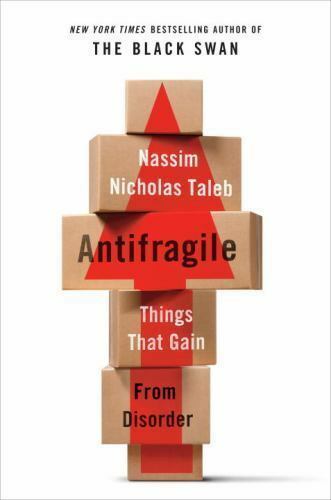
“Taleb opens the book with a poetic image that should speak to all parents. He notes that wind extinguishes a candle but energizes a fire. He advises us not to be like candles and not to turn our children into candles: “You want to be the fire and wish for the wind.”
“In the age of social media, cyber trolls, and fake news, it is a national and global crisis that people so readily follow their feelings to embrace outlandish stories about their enemies. A community in which members hold one another accountable for using evidence to substantiate their assertions is a community that can, collectively, pursue truth in the age of outrage.”
“While it is easy to see how this way of thinking, when brought to a college campus, could lead to requests for safe spaces, trigger warnings, microaggression training, and bias response teams, it is difficult to see how this way of thinking could produce well-educated, bold, and open-minded college graduates.”
“I don’t want you to be safe ideologically. I don’t want you to be safe emotionally. I want you to be strong. That’s different. I’m not going to pave the jungle for you. Put on some boots, and learn how to deal with adversity. I’m not going to take all the weights out of the gym; that’s the whole point of the gym. This is the gym.”
“Mobs can rob good people of their conscience, particularly when participants wear masks (in a real mob) or are hiding behind an alias or avatar (in an online mob). Anonymity fosters deindividuation—the loss of an individual sense of self—which lessens self-restraint and increases one’s willingness to go along with the mob.73”
The Coddling of the American Mind
About the Authors
Jonathan David Haidt

Jonathan David Haidt is an American social psychologist, Professor of Ethical Leadership at New York University Stern School of Business and author. His main areas of study are the psychology of morality and moral emotions.
Haidt’s main scientific contributions come from the psychological field of moral foundations theory, which attempts to explain the evolutionary origins of human moral reasoning on the basis of innate, gut feelings rather than logical reason. The theory was later extended to explain the different moral reasoning and how they relate to political ideology, with different political orientations prioritizing different sets of morals. The research served as a foundation for future books on various topics.
Haidt has written three books for general audiences, including: The Happiness Hypothesis: Finding Modern Truth in Ancient Wisdom (2006) explores the relationship between ancient philosophies and modern science; The Righteous Mind: Why Good People are Divided by Politics and Religion (2012) examines how morality is shaped by emotion and intuition more than by reasoning, and why differing political groups have different notions of right and wrong; and The Coddling of the American Mind: How Good Intentions and Bad Ideas Are Setting Up a Generation for Failure (2018), co-written with Greg Lukianoff, explores the rising political polarization and changing culture on college campuses, and its effects on mental health.
Haidt has attracted both support and criticism for his critique of the current state of universities and his interpretation of progressive values. He has been named one of the “top global thinkers” by Foreign Policy magazine, and one of the “top world thinkers” by Prospect magazine. He is among the most cited researchers in political and moral psychology, and is considered among the top 25 most influential living psychologists.
Greg Lukianoff

Gregory Christopher Lukianoff born in 1974 is the president of the Foundation for Individual Rights in Education (FIRE). He previously served as FIRE’s first director of legal and public advocacy until he was appointed president in 2006.
Born in Manhattan, New York City, in 1974, Lukianoff is a graduate of American University and Stanford Law School.
Lukianoff has published articles in the Los Angeles Times, The Boston Globe, The Chronicle of Higher Education, The Atlantic, Inside Higher Ed, and the New York Post. His article in The Atlantic, “The Coddling of the American Mind” laid the groundwork for a nationwide discussion of whether or not trigger warnings are harming college health. He is a blogger for The Huffington Post. He is a co-author of FIRE’s Guide to Free Speech on Campus. He testified before the United States Congress on the state of free speech on college campuses, and he appeared in the films Brainwashing 101 and Indoctrinate U on the same topic. He has made numerous appearances on nationally syndicated television shows.
Lukianoff and his co-author Jonathan Haidt were awarded the Hugh M. Hefner First Amendment Award in 2019 for their book The Coddling of the American Mind.
LAST ARTICLES:
6 Interesting Facts and Best 40 Quotes From Martin Luther King Jr.
60 Insightful Quotes From The Fifth Discipline by Peter Senge
100 Powerful Quotes From President Russell M. Nelson
The 90 Best Warren Buffett Quotes
38 Quotes From Start With No by Jim Camp
Top 50 Quotes From The Black Swan by Nassim Nicholas Taleb
Top 30 Quotes (and Tips) From Why We Sleep: The New Science of Sleep and Dreams by Matthew Walker
Success and Failure: What Bill Gates Learned and 23 Inspiring Quotes
80 Top Quotes From Antifragile: Things That Gain From Disorder by Nassim Nicholas Taleb
35 Best Quotes from Atomic Habits by James Clear
Top 26 Quotes from “Originals: How Non-Conformists Move the World” by Adam M. Grant
6 Interesting Facts and Best 40 Quotes From Martin Luther King Jr.

6 Things You May Not Know About Martin Luther King Jr.
1. King’s birth name was Michael, not Martin.
Martin Luther original name was Michael King Jr. In 1934, however, his father, a Baptist pastor, traveled to Germany and was inspired by the life of Protestant Reformation leader Martin Luther. He then changed his own name as well as that of his 5-year-old son.
2. George Washington is the only other American whose birthday is celebrated as a national holiday.
President Ronald Reagan instituted a federal holiday to honor King in 1983. The holiday, first commemorated in 1986, is celebrated on the third Monday in January, close to the civil rights leader’s January 15 birthday.
3. King’s ‘I Have a Dream’ speech was not his first at the Lincoln Memorial.
Six years before his famous speech at the March on Washington, King was among the civil rights leaders who spoke at the Lincoln Memorial during the Prayer Pilgrimage for Freedom on May 17, 1957. That day King delivered his first national address on the topic of voting rights. His speech drew strong reviews and positioned him at the forefront of the civil rights.
4. King was imprisoned nearly 30 times.
King went to jail 29 times. He was arrested for acts of civil disobedience and other false charges, such as when he was jailed in Montgomery, Alabama, in 1956 for driving 30 miles per hour in a 25-mile-per-hour zone.
5. King narrowly escaped an assassination attempt a decade before his death.
On September 20, 1958, King was in Harlem signing copies of his new book, “Stride Toward Freedom,” when he was approached by Izola Ware Curry. The woman asked if he was Martin Luther King Jr. After he said yes, Curry said, “I’ve been looking for you for five years,” and she plunged a seven-inch letter opener into his chest. The tip of the blade came to rest alongside his aorta. After hours of delicate emergency King survived, but surgeons later told him that just one sneeze could have punctured the aorta and killed him.
6. King’s last public speech foretold his death.
Martin Luther King, in a speech on the night before his assassination told an audience at Mason Temple Church: “Like anybody, I would like to live a long life. Longevity has its place. But I’m not concerned about that now … I’ve seen the Promised Land. I may not get there with you. But I want you to know tonight, that we, as a people, will get to the Promised Land. And I’m happy tonight. I’m not worried about anything. I’m not fearing any man. Mine eyes have seen the glory of the coming of the Lord.”
Best 40 Inspiring Quotes From Martin Luther King Jr.
“Darkness cannot drive out darkness: only light can do that. Hate cannot drive out hate: only love can do that.” ― Martin Luther King Jr.
I have decided to stick to love…Hate is too great a burden to bear.” ― Martin Luther King Jr.
“But I know, somehow, that only when it is dark enough can you see the stars.” ― Martin Luther King, Jr.
“Let no man pull you so low as to hate him.” ― Martin Luther King Jr.
“There comes a time when one must take a position that is neither safe, nor politic, nor popular, but he must take it because conscience tells him it is right.” ― Martin Luther King Jr.
“The ultimate measure of a man is not where he stands in moments of comfort and convenience, but where he stands at times of challenge and controversy.” ― Martin Luther King Jr.
“Everybody can be great…because anybody can serve. You don’t have to have a college degree to serve. You don’t have to make your subject and verb agree to serve. You only need a heart full of grace. A soul generated by love.” ― Martin Luther King Jr.
“We must come to see that the end we seek is a society at peace with itself, a society that can live with its conscience.” ― Martin Luther King Jr.
“No one really knows why they are alive until they know what they’d die for.” ― Martin Luther King Jr.

“Forgiveness is not an occasional act, it is a constant attitude.” ― Martin Luther King Jr.
If a man is called to be a street sweeper, he should sweep streets even as a Michaelangelo painted, or Beethoven composed music or Shakespeare wrote poetry. He should sweep streets so well that all the hosts of heaven and earth will pause to say, ‘Here lived a great street sweeper who did his job well.” ― Martin Luther King Jr.
“Those who are not looking for happiness are the most likely to find it, because those who are searching forget that the surest way to be happy is to seek happiness for others.” ― Martin Luther King Jr.
“We must accept finite disappointment, but never lose infinite hope.” ― Martin Luther King Jr.

“There is some good in the worst of us and some evil in the best of us. When we discover this, we are less prone to hate our enemies.” ― Martin Luther King Jr.
“Now there is a final reason I think that Jesus says, “Love your enemies.” It is this: that love has within it a redemptive power. And there is a power there that eventually transforms individuals. Just keep being friendly to that person. Just keep loving them, and they can’t stand it too long. Oh, they react in many ways in the beginning. They react with guilt feelings, and sometimes they’ll hate you a little more at that transition period, but just keep loving them. And by the power of your love they will break down under the load. That’s love, you see. It is redemptive, and this is why Jesus says love. There’s something about love that builds up and is creative. There is something about hate that tears down and is destructive. So love your enemies. (from “Loving Your Enemies”)” ― Martin Luther King Jr.
“There comes a time when silence is betrayal.” ― Martin Luther King Jr.
“I have a dream that my four little children will one day live in a nation where they will not be judged by the color of their skin but by the content of their character.” ― Martin Luther King Jr.
“I have a dream that one day little black boys and girls will be holding hands with little white boys and girls.” ― Martin Luther King Jr., I Have a Dream
“Never forget that everything Hitler did in Germany was legal.” ― Martin Luther King Jr.
“Science investigates; religion interprets. Science gives man knowledge, which is power; religion gives man wisdom, which is control. Science deals mainly with facts; religion deals mainly with values. The two are not rivals.” ― Martin Luther King, Jr
“We must live together as brothers or perish together as fools.” ― Martin Luther King Jr.
“As my sufferings mounted I soon realized that there were two ways in which I could respond to my situation — either to react with bitterness or seek to transform the suffering into a creative force. I decided to follow the latter course.” ― Martin Luther King Jr.
“People fail to get along because they fear each other; they fear each other because they don’t know each other; they don’t know each other because they have not communicated with each other.” ― Martin Luther King Jr.
“One has a moral responsibility to disobey unjust laws.” ― Martin Luther King Jr.
“the time is always right to do the right thing” ― Martin Luther King Jr.
“There can be no deep disappointment where there is not deep love.” ― Martin Luther King Jr.
“Life’s most persistent and urgent question is, ‘What are you doing for others?” ― Martin Luther King Jr.
“Every man must decide whether he will walk in the light of creative altruism or in the darkness of destructive selfishness.” ― Martin Luther King, Jr.
“On some positions, cowardice asks the question, is it expedient? And then expedience comes along and asks the question, is it politic? Vanity asks the question, is it popular? Conscience asks the question, is it right? There comes a time when one must take the position that is neither safe nor politic nor popular, but he must do it because conscience tells him it is right.” ― Martin Luther King Jr.

“Returning violence for violence multiplies violence, adding deeper darkness to a night already devoid of stars… Hate cannot drive out hate: only love can do that.” ― Martin Luther King Jr.
“Let us not seek to satisfy our thirst for freedom by drinking from the cup of bitterness and hatred.” ― Martin Luther King Jr.
“Our scientific power has outrun our spiritual power. We have guided missiles and misguided men.” ― Martin Luther King Jr.
“Power without love is reckless and abusive, and love without power is sentimental and anemic. Power at its best is love implementing the demands of justice, and justice at its best is power correcting everything that stands against love.” ― Martin Luther King Jr.
“Lightning makes no sound until it strikes.” ― Martin Luther King Jr.
“Hatred paralyzes life; love releases it. Hatred confuses life; love harmonizes it. Hatred darkens life; love illuminates it.” ― Martin Luther King, Jr.
“If I cannot do great things, I can do small things in a great way” ― Martin Luther King Jr.
“The choice is not between violence and nonviolence but between nonviolence and nonexistence.” ― Martin Luther King Jr.
“Love is the only force capable of transforming an enemy to a friend.” ― Martin Luther King Jr.
“The first question which the priest and the Levite asked was: ‘If I stop to help this man, what will happen to me?’ But…the good Samaritan reversed the question: ‘If I do not stop to help this man, what will happen to him?” ― Martin Luther King Jr.
“We must rapidly begin the shift from a “thing-oriented” society to a “person-oriented” society. When machines and computers, profit motives and property rights are considered more important than people, the giant triplets of racism, materialism, and militarism are incapable of being conquered.” ― Martin Luther King Jr.
LAST ARTICLES:
60 Insightful Quotes From The Fifth Discipline by Peter Senge
100 Powerful Quotes From President Russell M. Nelson
The 90 Best Warren Buffett Quotes
38 Quotes From Start With No by Jim Camp
Top 50 Quotes From The Black Swan by Nassim Nicholas Taleb
Top 30 Quotes (and Tips) From Why We Sleep: The New Science of Sleep and Dreams by Matthew Walker
Success and Failure: What Bill Gates Learned and 23 Inspiring Quotes
80 Top Quotes From Antifragile: Things That Gain From Disorder by Nassim Nicholas Taleb
35 Best Quotes from Atomic Habits by James Clear
Top 26 Quotes from “Originals: How Non-Conformists Move the World” by Adam M. Grant
60 Insightful Quotes From The Fifth Discipline by Peter Senge

Peter Senge is an American scientist, teacher and director of the Center for Organizational Learning at de MIT Sloan School of Management.
Peter Senge is the author of the book “The Fifth Discipline: The Art and Practice of the Learning Organization.” The Fifth Discipline is focused on group problem solving using the systems thinking method to convert companies into learning organizations.
Peter Senge was named “Strategist of the Century” by the Journal of Business Strategy, which said that he was one of a very few people who “had the greatest impact on the way we conduct business today.”
Peter Senge is the founding chairman of the Society for Organizational Learning (SoL), an organization that provides advice about the communication of ideas between large organizations.
The Fifth Discipline: The Art and Practice of the Learning Organization
Senge’s five disciplines represent approaches theories and methods for developing three core learning capabilities: fostering aspiration, developing reflective conversation, and understanding complexity. The five disciplines of a “learning organization” are:
- “Personal Mastery: The discipline of continually clarifying and deepening our vision, of focusing our energies, of developing patience, and of seeing reality objectively.
- Mental Models: Mental models are deeply ingrained assumptions and generalizations that influence how we understand the world and how we take action.
- Shared Vision: Building a shared vision is a practice of unearthing shared pictures of the future that foster genuine commitment and enrollment rather than compliance.
- Team Learning: Starts with ‘dialogue,’ the capacity of members of a team to suspend assumptions and enter into genuine ‘thinking together.’
- “Systems Thinking: The Fifth Discipline that integrates the other four disciplines.
Learning Disabilities
Deleterious habits or mindsets, which create “learning disabilities,” in an organization include:
- I am my position
- The enemy is out there
- The Illusion of Taking Charge
- The Fixation on Events
- The Parable of the Boiling frog
- The Delusion of Learning from Experience
- The Myth of the Management Team
60 Inspiring Quotes by Peter Senge
“Scratch the surface of most cynics and you find a frustrated idealist — someone who made the mistake of converting his ideals into expectations.”
“People don’t resist change. They resist being changed.”
“Systems thinking is a discipline for seeing wholes. It is a framework for seeing interrelationships rather than things, for seeing ‘patterns of change’ rather than static ‘snapshots.’”
“The committed person doesn’t play by the rules of the game. He is responsible for the game. If the rules of the game stand in the way of achieving the vision, he will find ways to change the rules.”
“Through learning we re-create ourselves. Through learning, we become able to do something we never were able to do. Through learning, we reperceive the world and our relationship to it. Through learning, we extend our capacity to create, to be part of the generative process of life”
“Personal mastery is the discipline of continually clarifying and deepening our personal vision, of focusing our energies, of developing patience, and of seeing reality objectively.”
“You cannot force commitment, what you can do…You nudge a little here, inspire a little there, and provide a role model. Your primary influence is the environment you create.”
“Don’t push growth; remove the factors limiting growth.”
“The organizations that will truly excel in the future will be the organizations that discover how to tap people’s commitment and capacity to learn at all levels in an organization.”
“Sharing knowledge is not about giving people something, or getting something from them. That is only valid for information sharing.”
“Sharing knowledge occurs when people are genuinely interested in helping one another develop new capacities for action; it is about creating learning processes.”
“I believe benchmarking best practices can open people’s eyes as to what is possible, but it can also do more harm than good, leading to piecemeal copying and playing catch-up.”
“the bad leader is he who the people despise; the good leader is he who the people praise; the great leader is he who the people say, “We did it ourselves!”
“The most effective people are those who can “hold” their vision while remaining committed to seeing current reality clearly.”
“Business and human endeavours are systems…we tend to focus on snapshots of isolated parts of the system. And wonder why our deepest problems never get solved.”
“Collaboration is vital to sustain what we call profound or really deep change, because without it, organizations are just overwhelmed by the forces of the status quo. “
“Courage is simply doing whatever is needed in pursuit of the vision.”
“The world is made of Circles. And we think in straight Lines.”
“Vision is an idle dream at best and a cynical delusion at worst – but not an achievable end.”
“In the presence of greatness, pettiness disappears. In the absence of a great dream, pettiness prevails.”
“Leadership is about creating new realities.”
“A learning organization is an organization that is continually expanding its capacity to create its future.”
“It is not the absence of defensiveness that characterizes learning teams but the way defensiveness is faced”
“Our prevailing system of management has destroyed our people. People are born with intrinsic motivation, self-respect, dignity, curiosity to learn, joy in learning. The forces of destruction begin with toddlers—a prize for the best Halloween costume, grades in school, gold stars—and on up through the university. On the job, people, teams, and divisions are ranked, reward for the top, punishment for the bottom. Management by Objectives, quotas, incentive pay, business plans, put together separately, division by division, cause further loss, unknown and unknowable.”
“taking in information is only distantly related to real learning. It would be nonsensical to say, “I just read a great book about bicycle riding—I’ve now learned that.”
“people “shift the burden” of their problem to other solutions—well-intentioned, easy fixes which seem extremely efficient.”
“The practice of shared vision involves the skills of unearthing shared “pictures of the future” that foster genuine commitment and enrollment rather than compliance. In mastering this discipline, leaders learn the counterproductiveness of trying to dictate a vision, no matter how heartfelt.”
“Mental models are deeply ingrained assumptions, generalizations, or even pictures of images that influence how we understand the world and how we take action.”
“People with high levels of personal mastery…cannot afford to choose between reason and intuition, or head and heart, any more than they would choose to walk on one leg or see with one eye.”
“Vision without systems thinking ends up painting lovely pictures of the future with no deep understanding of the forces that must be mastered to move from here to there.”
“To listen fully means to pay close attention to what is being said beneath the words. You listen not only to the ‘music,’ but to the essence of the person speaking.”
“I believe benchmarking best practices can open people’s eyes as to what is possible, but it can also do more harm than good, leading to piecemeal copying and playing catch-up. As one seasoned Toyota manager commented after hosting over a hundred tours for visiting executives, “They always say ‘Oh yes, you have a Kan-Ban system, we do also. You have quality circles, we do also. Your people fill out standard work descriptions, ours do also.’ They all see the parts and have copied the parts. What they do not see is the way all the parts work together.” I do not believe great organizations have ever been built by trying to emulate another, any more than individual greatness is achieved by trying to copy another “great person.”
“When young people develop basic leadership and collaborative learning skills, they can be a formidable force for change.”
“That is why the discipline of managing mental models—surfacing, testing, and improving our internal pictures of how the world works—promises to be a major breakthrough for building learning organizations.”
“When people in organizations focus only on their position, they have little sense of responsibility for the results produced when all positions interact. Moreover, when results are disappointing, it can be very difficult to know why. All you can do is assume that “someone screwed up.”
“the journey is the reward.”
“Advocacy without inquiry begets more advocacy.”
“To empower people in an unaligned organization can be counterproductive.”
“When asked what they want, many adults will say what they want to get rid of.”
“In fact, most of the time, things do not turn out as we expect. But the potential value of unexpected developments is rarely tapped. Instead, when things turn out contrary to our expectations, we go immediately into problem-solving mode and react, or just try harder—without taking the time to see whether this unexpected development is telling us something important about our assumptions. “This more prepared mental state is really where a lot of the longer-term payoff is,” says Galloway.”
“We say, “That’s a very interesting idea,” when we have no intention of taking the idea seriously.”
“If I learned anything … it is the notion that we need to be working on all different parts of the system in order to successfully change the whole system,”
“The Japanese believe building a great organization is like growing a tree; it takes twenty-five to fifty years.”
“You cannot have a learning organization without shared vision. Without a pull toward some goal which people truly want to achieve, the forces in support of the status quo can be overwhelming.”
“One forceful CEO recently lamented to me about the absence of “real leaders” in his organization. He felt his company was full of compliant people, not committed visionaries. This was especially frustrating to a man who regards himself as a skilled communicator and risk taker. In fact, he is so brilliant at articulating his vision that he intimidates everyone around him. Consequently, his views rarely get challenged publicly. People have learned not to express their own views and visions around him. While he would not see his own forcefulness as a defensive strategy, if he looked carefully, he would see that it functions in exactly that way.”
“I believe that, the prevailing system of management is, at its core, dedicated to mediocrity. It forces people to work harder and harder to compensate for failing to tap the spirit and collective intelligence that characterizes working together at their best. Deming saw this clearly,”
“It’s just not possible any longer to figure it out from the top, and have everyone else following the orders of the “grand strategist.” The organizations that will truly excel in the future will be the organizations that discover how to tap people’s commitment and capacity to learn at all levels in an organization.”
“Learning organizations are possible because, deep down, we are all learners. No one has to teach an infant to learn. In fact, no one has to teach infants anything. They are intrinsically inquisitive, masterful learners who learn to walk, speak, and pretty much run their households all on their own.”
“The core leadership strategy is simple: be a model.”
“When there is a genuine vision (as opposed to the all-too-familiar “vision statement”), people excel and learn, not because they are told to, but because they want to. But many leaders have personal visions that never get translated into shared visions that galvanize an organization. All too often, a company’s shared vision”
“leaders’ work as teachers often starts with their recognition of an important capacity that is lacking in an organization.”
“Great teachers create space for learning and invite people into that space.”
“We will never transform the prevailing system of management without transforming our prevailing system of education. They are the same system.”
“In my view the greatest evil in the world today is ever-increasing power and wealth in ever-fewer hands,”
“Organizations learn only through individuals who learn.”
“It is a testament to our naïveté about culture that we think that we can change it by simply declaring new values. Such declarations usually produce only cynicism.”
“When executives lead as teachers, stewards, and designers, they fill roles that are much more subtle and long-term than those of power-wielding hierarchical leaders.”
“Over the long run, superior performance depends on superior learning.”
“Collaboration is vital to sustaining what we call profound or really deep change because, without it, organizations are just overwhelmed by the forces of the status quo. ”
“When you ask people what it is like being part of a great team, what is most striking is the meaningfulness of the experience.”
“A shared vision is not an idea…it is rather, a force in people’s hearts…at its simplest level, a shared vision is the answer to the question ‘What do we want to create?”
“Trusting people to be creative and constructive when given more freedom does not imply an overly optimistic belief in the perfectibility of human nature.”
LAST ARTICLES:
6 Interesting Facts and Best 40 Quotes From Martin Luther King Jr.
60 Insightful Quotes From The Fifth Discipline by Peter Senge
100 Powerful Quotes From President Russell M. Nelson
The 90 Best Warren Buffett Quotes
38 Quotes From Start With No by Jim Camp
Top 50 Quotes From The Black Swan by Nassim Nicholas Taleb
Top 30 Quotes (and Tips) From Why We Sleep: The New Science of Sleep and Dreams by Matthew Walker
Success and Failure: What Bill Gates Learned and 23 Inspiring Quotes
80 Top Quotes From Antifragile: Things That Gain From Disorder by Nassim Nicholas Taleb
35 Best Quotes from Atomic Habits by James Clear
Top 26 Quotes from “Originals: How Non-Conformists Move the World” by Adam M. Grant
100 Powerful Quotes From President Russell M. Nelson

All Talks by President Russell M. Nelson
“Be patient with yourself. Perfection comes not in this life, but in the next life. Don’t demand things that are unreasonable, but demand of yourself improvement. As you let the Lord help you through that, He will make the difference.” — Russell M. Nelson
“We should not be discouraged or depressed by our shortcomings. No one is without weakness. As part of the divine plan, we are tested to see whether we master weakness or let weakness master us. Proper diagnosis is essential to proper treatment. The Lord gave us this remarkable assurance: “Because thou hast seen thy weakness thou shalt be made strong” (Ether 12:37). But wishing for strength won’t make us strong. It takes faith and work to shore up a weakened cord of integrity.” – Russell M. Nelson
“Over my nine and a half decades of life, I have concluded that counting our blessings is far better than recounting our problems.” – Russell M. Nelson
“The wise use of your freedom to make your own decisions is crucial to your spiritual growth, now and for eternity. You are never too young to learn, never too old to change. Your yearnings to learn and change come from a divinely instilled striving for eternal progression. Each day brings opportunity for decisions for eternity.” – Russell M. Nelson
“Who are we? We are children of God. Our potential is unlimited. Our inheritance is sacred. May we always honor that heritage – in every thought and deed.”- Russell M. Nelson
“Keep studying the scriptures, keep doing the things that build your faith in Jesus Christ and then notice the wise choices you are naturally drawn to make.” – Russell M. Nelson
“Each day is a day of decision, and our decisions determine our destiny.” – Russell M. Nelson
“Act by inspiration, motivated by love.” – Russell M. Nelson
All Talks by President Russell M. Nelson
“God is the same yesterday, today, and forever, but we are not. Each day, ours is the challenge to access the power of the Atonement so that we can truly change, become more Christlike, and qualify for the gift of exaltation and live eternally with God, Jesus Christ, and our families. For these powers, privileges, and gospel gifts, thanks be to God!” – Russell M. Nelson
“The living Lord leads His living church.” – Russell M. Nelson
“When we love somebody, we show it by doing something nice. So learn to serve: find a need and fulfill a need. Surprise people with a good deed they hadn’t planned on. We have that opportunity at home, at school, and at church.” – Russell M. Nelson
“Have faith to keep all the commandments of God, knowing that they are given to bless His children and bring them joy. [You] will encounter people who pick which commandments they will keep and ignore others that they choose to break. I call this the cafeteria approach to obedience. This practice of picking and choosing will not work. It will lead to misery. To prepare to meet God, one keeps all of His commandments. It takes faith to obey them, and keeping His commandments will strengthen that faith.” – Russell M. Nelson
“While we are free to choose, once we have made those choices, we are tied to the consequences of those choices.” – Russell M. Nelson
“We were born to die and we die to live. As seedlings of God, we barely blossom on earth; we fully flower in heaven.” – Russell M. Nelson
“We live in a time of turmoil. Earthquakes and tsunamis wreak devastation, governments collapse, economic stresses are severe, the family is under attack,and divorce rates are rising. We have great cause for concern. But we do not need to let our fears displace our faith. We can combat those fears by strengthening our faith.” – Russell M. Nelson
“When our hearts turn to our ancestors, something changes inside us. We feel part of something greater than ourselves. Our inborn yearnings for family connections are fulfilled when we are linked to our ancestors.” – Russell M. Nelson
“Men are that they might have joy . . . not guilt trips.” – Russell M. Nelson
“Danger lurks when we divide ourselves with expressions such as “my private life,” “my professional life,” or even “my best behavior.” Living life in separate compartments can lead to internal conflict and exhausting tension….Inner peace comes only as we maintain the integrity of truth in all aspects of our lives. When we covenant to follow the Lord and obey His commandments, we accept His standards in every thought, action, and deed.” – Russell M. Nelson
“Sweet serenity is found in fervent prayer. Then, we forget ourselves and remember the reaching hands of the Savior, who said, “Come unto me, all ye that are heavy laden, and I will give you rest.” As our burdens are shared with Him, they do become lighter.” – Russell M. Nelson
“Unfinished business is our worst business. Perpetual procrastination must yield to perceptive preparation. Today we have a little more time to bless others-time to be kinder, more compassionate, quicker to thank and slower to scold, more generous in sharing, more gracious in caring. – Russell M. Nelson
“I urge you to choose companions well and cherish those friends who lift you and make you better in their presence. And be such friends to one another.”- Russell M. Nelson
“A covenant made with God should be regarded not as restrictive but as protective.” – Russell M. Nelson
“Love for family and friends, great as it may be, is much more profound when anchored in the love of Jesus Christ. Parental love for children has more meaning here and hereafter because of Him. All loving relationships are elevated in Him. Love of our Heavenly Father and Jesus Christ provides the illumination, inspiration, and motivation to love others in a loftier way.” – Russell M. Nelson
“The temple is the house of the Lord. The basis for every temple ordinance and covenant…is the Atonement of Jesus Christ. Every activity, every lesson, all we do in the Church, point to the Lord and His holy house.” – Russell M. Nelson
“You can change. You can ‘come unto Christ, and be perfected in him.”– Russell M. Nelson
“Be patient with yourself. Perfection comes not in this life, but in the next life. Don’t demand things that are unreasonable, but demand of yourself improvement. As you let the Lord help you through that, He will make the difference.”– Russell M. Nelson
“We were born to die and we die to live. As seedlings of God, we barely blossom on earth; we fully flower in heaven.”– Russell M. Nelson
“The temple is the house of the Lord. The basis for every temple ordinance and covenant…is the Atonement of Jesus Christ. Every activity, every lesson, all we do in the Church, point to the Lord and His holy house.”– Russell M. Nelson
“When we ponder His voluntary atonement, any sense of sacrifice on our part becomes completely overshadowed by a profound sense of gratitude for the privilege of serving Him.”– Russell M. Nelson
“The Lord’s way is the only way for us to experience enduring happiness. His way brings sustained comfort to our souls and perennial peace to our homes.”– Russell M. Nelson
“Truth, covenants, and ordinances enable us to overcome fear and face the future with faith.”– Russell M. Nelson
“Who are we? We are children of God. Our potential is unlimited. Our inheritance is sacred. May we always honor that heritage – in every thought and deed.”– Russell M. Nelson
“Make the Sabbath a delight by rendering service to others.”– Russell M. Nelson
“Increase your faith. Proclaim your faith. Let your faith show.”– Russell M. Nelson
“God is the same yesterday, today, and forever, but we are not. Each day, ours is the challenge to access the power of the Atonement so that we can truly change, become more Christlike, and qualify for the gift of exaltation and live eternally with God, Jesus Christ, and our families. For these powers, privileges, and gospel gifts, thanks be to God!”– Russell M. Nelson
“Even if everyone is doing it, wrong is never right”– Russell M. Nelson “How much better it would be if all could be more aware of God’s providence and love and express that gratitude to him. Ammon taught, ‘Let us give thanks to (God), for he doth work righteousness forever.’ Our degree of gratitude is a measure of our love for him.”– Russell M. Nelson
“Be we reminded that the gathering of Israel is not the ultimate endpoint. It is but the beginning. The true endpoint is eternal life. It is that God’s children, in a covenant relationship with Him either by lineage or by adoption, will be able to dwell with Him and their families forever. That is God’s glory-eternal life for His children!”– Russell M. Nelson
“It really matters what you listen to. . . . Select music that will strengthen your spirit.”– Russell M. Nelson
“When we love somebody, we show it by doing something nice. So learn to serve: find a need and fulfill a need. Surprise people with a good deed they hadn’t planned on. We have that opportunity at home, at school, and at church.”– Russell M. Nelson
“Through all of our various Christmas traditions, I hope that we are focused first upon the Lord Jesus Christ. Wise men still adore Him.”– Russell M. Nelson
“Jesus suffered deeply because He loves us deeply! He wants us to repent and be converted so that He can fully heal us.”– Russell M. Nelson
“Each day is a day of decision.”– Russell M. Nelson
“I honor women who are not mothers. They know that motherhood is but one of the realms of womankind. The virtue and intelligence of women are uniquely applicable to other realms as well, such as compassionate service and teaching.”– Russell M. Nelson
“Obedience allows God’s blessings to flow without constraint. He will bless His obedient children with freedom from bondage and misery. And He will bless them with more light.”– Russell M. Nelson
“Faith is the antidote for fear.”– Russell M. Nelson
“We should not be discouraged or depressed by our shortcomings. No one is without weakness. As part of the divine plan, we are tested to see whether we master weakness or let weakness master us. Proper diagnosis is essential to proper treatment. The Lord gave us this remarkable assurance: “Because thou hast seen thy weakness thou shalt be made strong” (Ether 12:37). But wishing for strength won’t make us strong. It takes faith and work to shore up a weakened cord of integrity.”– Russell M. Nelson
“Danger lurks when we divide ourselves with expressions such as “my private life,” “my professional life,” or even “my best behavior.” Living life in separate compartments can lead to internal conflict and exhausting tension….Inner peace comes only as we maintain the integrity of truth in all aspects of our lives. When we covenant to follow the Lord and obey His commandments, we accept His standards in every thought, action, and deed.”– Russell M. Nelson
“The living Lord leads His living church.”– Russell M. Nelson
“No matter your situation, you can make family history a part of your life right now. Primary children can draw a family tree. Youth can participate in proxy baptisms. They can also help the older generation work with computers. Parents can relate stories of their lives to their posterity. Worthy adult members can hold a temple recommend and perform temple ordinances for their own kin.”– Russell M. Nelson
“A strong human spirit with control over appetites of the flesh is master over emotions and passions and not a slave to them. That kind of freedom is as vital to the spirit as oxygen is to the body! Freedom from self-slavery is true liberation!”– Russell M. Nelson
“Each holy temple stands as a symbol of our membership in the Church, as a sign of our faith in life after death, and as a sacred step toward eternal glory for us and our families.”– Russell M. Nelson
“Keeping divine commandments brings blessings, every time! Breaking divine commandments brings a loss of blessings, every time!”– Russell M. Nelson
“Each day is a day of decision, and our decisions determine our destiny.”– Russell M. Nelson
“Inner peace comes only as we maintain the integrity of truth in all aspects of our lives.”– Russell M. Nelson
“When we speak of faith—the faith that can move mountains—we are not speaking of faith in general but of faith in the Lord Jesus Christ. Faith in the Lord Jesus Christ can be bolstered as we learn about Him and live our religion. The doctrine of Jesus Christ was designed by the Lord to help us increase our faith.”– Russell M. Nelson
“Sweet serenity is found in fervent prayer. Then, we forget ourselves and remember the reaching hands of the Savior, who said, “Come unto me, all ye that are heavy laden, and I will give you rest.” As our burdens are shared with Him, they do become lighter.”– Russell M. Nelson
“Some of the sweetest spirits are housed in frail frames. Great spiritual strength is often developed by those with physical challenges precisely because they are challenged. Such individuals are entitled to all the blessings that God has in store for His faithful and obedient children.”– Russell M. Nelson
“Remember: sin, even if legalized by man, is still sin in the eyes of God.”– Russell M. Nelson
“There is mounting concern worldwide over the consumption of alcohol. The U.S. government estimates that 10.6 million adults are alcoholics and that one family in four is troubled by alcohol. It is a factor in half of all the nation’s traffic deaths.”– Russell M. Nelson
“Our busy lives force us to focus on things we do from day to day. But the development of character comes only as we focus on who we really are.”– Russell M. Nelson
“An unprecedented wave of enthusiasm for missionary work is sweeping the entire earth. It is not man-made! It comes from the Lord, who said, “I will hasten my work in its time” (D&C 88:73).”– Russell M. Nelson
“Act by inspiration, motivated by love.”– Russell M. Nelson
“From the holy scriptures, heaven-sent lift will be found for heaven-sent duties.”– Russell M. Nelson
“Because of our sacred regard for each human intellect, we consider the obtaining of an education to be a religious responsibility.”– Russell M. Nelson
“Love for family and friends, great as it may be, is much more profound when anchored in the love of Jesus Christ. Parental love for children has more meaning here and hereafter because of Him. All loving relationships are elevated in Him. Love of our Heavenly Father and Jesus Christ provides the illumination, inspiration, and motivation to love others in a loftier way.”– Russell M. Nelson
“Ask the missionaries, they can help you”– Russell M. Nelson
“The Savior’s way of life is good.”– Russell M. Nelson
“Feelings of worth come when a woman follows the example of the Master. Her sense of infinite worth comes from her own Christlike yearning to reach out with love, as He does.”– Russell M. Nelson
“No other work transcends that of righteous, intentional parenting.”– Russell M. Nelson
“Recently I was tenderly hugging one of our precious little five-year-old granddaughters and said to her, “I love you, sweetheart.” She responded rather blandly: “I know.” I asked, “How do you know that I love you?” Because! You’re my grandfather!”– Russell M. Nelson
“Unfinished business is our worst business. Perpetual procrastination must yield to perceptive preparation. Today we have a little more time to bless others-time to be kinder, more compassionate, quicker to thank and slower to scold, more generous in sharing, more gracious in caring.”– Russell M. Nelson
“Fasting gives you confidence to know that your spirit can master appetite . . . and helps to protect against later uncontrolled cravings and gnawing habits.”– Russell M. Nelson
“Focusing on the Lord and everlasting life can help us not only at Christmas, but through all the challenges of mortality.”– Russell M. Nelson
“Now is the time to align our goals with God’s goals.”– Russell M. Nelson
“Integrity safeguards love, and love makes family life rich and zestful-now and forever.”– Russell M. Nelson
“It matters not that giants of tribulation torment you. Your prayerful access to help is just as real as when David battled his Goliath. see 1 Samuel 17.”– Russell M. Nelson
“How you deal with life’s trials is part of the development of your faith. Strength comes when you remember that you have a divine nature, an inheritance of infinite worth.”– Russell M. Nelson
“To those who feel defeated and downtrodden, look to the early hours of the day for your rescue…Shadows of yesterday’s grief melt in the rays of early morn’s opportunity.”– Russell M. Nelson
“The wise use of your freedom to make your own decisions is crucial to your spiritual growth, now and for eternity. You are never too young to learn, never too old to change. Your yearnings to learn and change come from a divinely instilled striving for eternal progression. Each day brings opportunity for decisions for eternity.”– Russell M. Nelson
“When priorities are in place, one can more patiently tolerate unfinished business.”– Russell M. Nelson
All Talks by President Russell M. Nelson
“Physical conditioning from regular exercise is important. And we can do so much more to keep our bodies strong.”– Russell M. Nelson
“A pivotal spiritual attribute is that of self-mastery – the strength to place reason over appetite. Self-mastery builds a strong conscience. And your conscience determines your moral responses in difficult, tempting, and trying situations.”– Russell M. Nelson
“As we go through life, even through very rough waters, a father’s instinctive impulse to cling tightly to his wife or to his children may not be the best way to accomplish his objective. Instead, if he will lovingly cling to the Savior and the iron rod of the gospel, his family will want to cling to him and to the Savior.”– Russell M. Nelson
“From trial comes habit, from habit comes addiction, from addiction comes dependency.”― Russell M. Nelson
“For each of you to receive revelation unique to your own needs and responsibilities, certain guidelines prevail. The Lord asks you to develop ‘faith, hope, charity and love, with an eye single to the glory of God.’ Then with your firm ‘faith, virtue, knowledge, temperance, patience, brotherly kindness, godliness, charity, humility, [and] diligence,’ you may ask, and you will receive; you may knock, and it will be opened unto you (D&C 4:5–6; emphasis added).”― Russell M. Nelson
“You are God’s agents in the care of children He has entrusted to you. Let His divine influence remain in your hears as you teach and persuade.”― Russell M. Nelson
“Unfailing faith is fortified through prayer. Your heartfelt pleadings are important to Him. Think of the intense and impassioned prayers of the Prophet Joseph Smith during his dreadful days of incarceration in Liberty Jail. The Lord responded by changing the Prophet’s perspective. He said, ‘Know thou, my son, that all these things shall give thee experience, and shall be for thy good.”― Russell M. Nelson
“Obedience allows God’s blessings to flow without constraint. He will bless His obedient children with freedom from bondage and misery. And He will bless them with more light.”― Russell M. Nelson
“A temple is literally the House of the Lord, reserved for ordinances of eternal significance. Those ordinances include baptisms, marriage, endowments, and sealings. Each temple is symbolic of our faith in God and an evidence of our faith in life after death. The temple is the object of every activity, every lesson, every progressive step in the Church. All of our efforts in proclaiming the gospel, perfecting the Saints, and redeeming the dead lead to the holy temple. Ordinances of the temple are absolutely crucial. We cannot return to God’s glory without them.”― Russell M. Nelson 1
“We live in a time of turmoil. Earthquakes and tsunamis wreak devastation, governments collapse, economic stresses are severe, the family is under attack,and divorce rates are rising. We have great cause for concern. But we do not need to let our fears displace our faith. We can combat those fears by strengthening our faith.”― Russell M. Nelson
“Have faith to keep all the commandments of God, knowing that they are given to bless His children and bring them joy. [You] will encounter people who pick which commandments they will keep and ignore others that they choose to break. I call this the cafeteria approach to obedience. This practice of picking and choosing will not work. It will lead to misery. To prepare to meet God, one keeps all of His commandments. It takes faith to obey them, and keeping His commandments will strengthen that faith.”― Russell M. Nelson
“Danger lurks when we divide ourselves with expressions such as “my private life,” “my professional life,” or even “my best behavior.” Living life in separate compartments can lead to internal conflict and exhausting tension….Inner peace comes only as we maintain the integrity of truth in all aspects of our lives. When we covenant to follow the Lord and obey His commandments, we accept His standards in every thought, action, and deed.”― Russell M. Nelson
“Truth is truth! It is not divisible, and any part of it cannot be set aside.”― Russell M. Nelson
“Marriage is sanctified when it is cherished and honored in holiness. That union is not merely between husband and wife; it embraces a partnership with God (see Matt. 19:6).”― Russell M. Nelson
“How you deal with life’s trials is part of the development of your faith. Strength comes when you remember that you have a divine nature, an inheritance of infinite worth. The Lord has reminded you, your children, and your grandchildren that you are lawful heirs, that you have been reserved in heaven for your specific time and place to be born, to grow and become His standard bearers and covenant people. As you walk in the Lord’s path of righteousness, you will be blessed to continue in His goodness and be a light and a savior unto His people.”― Russell M. Nelson
“Difficult days are ahead. Sin is on the increase. Paul foresaw that members of the Church would endure persecution (see 2 Timothy 3:1–13; D&C 112:24–26). Peter counseled, ‘If any man suffer as a Christian, let him not be ashamed; but let him glorify God on this behalf’ (1 Peter 4:16). As Jesus descended below all things in order to rise above all things, He expects us to follow His example. Yoked with Him, each of us can rise above all of our challenges, no matter how difficult they may be (see Matthew 11:29–30).”― Russell M. Nelson
“Jesus Christ frequently expressed gratitude. Before raising Lazarus from the dead, before miraculously multiplying loaves and fishes, and before passing the cup to His disciples at the Last Supper, the Savior prayed and gave thanks to God. No wonder the Apostle Paul later declared, ‘In every thing give thanks’ (1 Thessalonians 5:18).” – Russell M. Nelson
“No matter our situation, showing gratitude for our privileges is a fast-acting and long-lasting spiritual prescription. Does gratitude spare us from sorrow, sadness, grief, and pain? No, but it does soothe our feelings. It provides us with a greater perspective on the very purpose and joy of life.” -Russell M. Nelson
“We can all give thanks for the beauties of the earth and the majesty of the heavens that give us an inkling of the vastness of eternity.” – Russell M. Nelson
“We can give thanks for the gift of life, for our amazing bodies and minds that allow us to grow and learn. We can give thanks for art, literature, and music that nurture our souls. We can give thanks for the opportunity to repent, start over, make amends, and build character.” – Russell M. Nelson
“We can give thanks for our families, friends, and loved ones. We can give thanks for the opportunity to help, cherish, and serve one another, which makes life so much more meaningful. We can even give thanks for our trials, from which we learn things we would not know otherwise.”- Russell M. Nelson
All Talks by President Russell M. Nelson
LAST ARTICLES:
6 Interesting Facts and Best 40 Quotes From Martin Luther King Jr.
60 Insightful Quotes From The Fifth Discipline by Peter Senge
100 Powerful Quotes From President Russell M. Nelson
The 90 Best Warren Buffett Quotes
38 Quotes From Start With No by Jim Camp
Top 50 Quotes From The Black Swan by Nassim Nicholas Taleb
Top 30 Quotes (and Tips) From Why We Sleep: The New Science of Sleep and Dreams by Matthew Walker
Success and Failure: What Bill Gates Learned and 23 Inspiring Quotes
80 Top Quotes From Antifragile: Things That Gain From Disorder by Nassim Nicholas Taleb
35 Best Quotes from Atomic Habits by James Clear
Top 26 Quotes from “Originals: How Non-Conformists Move the World” by Adam M. Grant
The 90 Best Warren Buffett Quotes

Warren Edward Buffett is considered one of the most successful investors in the world and has a net worth of over US $78.9 billion as of August 2020, making him the world’s fourth-wealthiest person.
Buffett was born in Omaha, Nebraska. He developed an interest in business and investing in his youth, eventually entering the Wharton School of the University of Pennsylvania in 1947 before transferring to and graduating from the University of Nebraska at 19. He went on to graduate from Columbia Business School, where he molded his investment philosophy around the concept of value investing pioneered by Benjamin Graham.
He created Buffett Partnership, Ltd in 1956 and his firm eventually acquired a textile manufacturing firm called Berkshire Hathaway, assuming its name to create a diversified holding company. In 1978, Charlie Munger joined Buffett as vice-chairman.
Buffett has been the chairman and largest shareholder of Berkshire Hathaway since 1970. He has been referred to as the “Oracle” or “Sage” of Omaha by global media. He is noted for his adherence to value investing, and his personal frugality despite his immense wealth.
Buffett is a notable philanthropist, having pledged to give away 99 percent[13] of his fortune to philanthropic causes, primarily via the Bill & Melinda Gates Foundation. He founded The Giving Pledge in 2009 with Bill Gates, whereby billionaires pledge to give away at least half of their fortunes.
Over his 54-year tenure at Berkshire Hathaway (NYSE:BRK-A) (NYSE:BRK-B), Buffett has generated 20.5% annualized returns for shareholders — more than double the rate of return achieved by the S&P 500. To put this in perspective, consider that a $1,000 investment in Berkshire when Buffett took the reins would have been worth a staggering $24.7 million today.
In addition to being one of the most successful investors, Buffett is also one of the most quotable.
The Top 90 Warren Buffett Quotes
“Rule No. 1 is never lose money. Rule No. 2 is never forget Rule No. 1.”
“Price is what you pay. Value is what you get.”
“Opportunities come infrequently. When it rains gold, put out the bucket, not the thimble.”
“I just sit in my office and read all day”

“Widespread fear is your friend as an investor because it serves up bargain purchases.”
“Whether we’re talking about socks or stocks, I like buying quality merchandise when it is marked down.”
“We simply attempt to be fearful when others are greedy and to be greedy only when others are fearful.”
“The best thing that happens to us is when a great company gets into temporary trouble…We want to buy them when they’re on the operating table.”
“It’s far better to buy a wonderful company at a fair price than a fair company at a wonderful price.”
“For the investor, a too-high purchase price for the stock of an excellent company can undo the effects of a subsequent decade of favorable business developments.”
“The key to investing is not assessing how much an industry is going to affect society, or how much it will grow, but rather determining the competitive advantage of any given company and, above all, the durability of that advantage.”
“On the margin of safety, which means, don’t try and drive a 9,800-pound truck over a bridge that says it’s, you know, capacity: 10,000 pounds. But go down the road a little bit and find one that says, capacity: 15,000 pounds.”
“You can’t produce a baby in one month by getting nine women pregnant.”
“Someone’s sitting in the shade today because someone planted a tree a long time ago”
“If you aren’t willing to own a stock for ten years, don’t even think about owning it for ten minutes.”
“When we own portions of outstanding businesses with outstanding managements, our favorite holding period is forever.”
“An investor should act as though he had a lifetime decision card with just twenty punches on it.”
“Since I know of no way to reliably predict market movements, I recommend that you purchase Berkshire shares only if you expect to hold them for at least five years. Those who seek short-term profits should look elsewhere.”
“Buy a stock the way you would buy a house. Understand and like it such that you’d be content to own it in the absence of any market.”
“All there is to investing is picking good stocks at good times and staying with them as long as they remain good companies.”

“Do not take yearly results too seriously. Instead, focus on four or five-year averages.”
“I never attempt to make money on the stock market. I buy on the assumption that they could close the market the next day and not reopen it for five years.”
“Should you find yourself in a chronically leaking boat, energy devoted to changing vessels is likely to be a more productive than energy devoted to patching leaks.”
“The most important thing to do if you find yourself in a hole is to stop digging.”
“It takes 20 years to build a reputation and five minutes to ruin it. If you think about that, you’ll do things differently.”
“Lose money for the firm, and I will be understanding. Lose a shred of reputation for the firm, and I will be ruthless.”
“The most important quality for an investor is temperament, not intellect. You need a temperament that neither derives great pleasure from being with the crowd or against the crowd.”
Success in investing doesn’t correlate with IQ … what you need is the temperament to control the urges that get other people into trouble in investing.
“You don’t need to be a rocket scientist. Investing is not a game where the guy with the 160 IQ beats the guy with 130 IQ.”
“When trillions of dollars are managed by Wall Streeters charging high fees, it will usually be the managers who reap outsized profits, not the clients.”
“Wall Street is the only place that people ride to in a Rolls Royce to get advice from those who take the subway.”
“If returns are going to be 7 or 8 percent and you’re paying 1 percent for fees, that makes an enormous difference in how much money you’re going to have in retirement.”
“Only when the tide goes out do you discover who’s been swimming naked.”
“The years ahead will occasionally deliver major market declines — even panics — that will affect virtually all stocks. No one can tell you when these traumas will occur.”
Predicting rain doesn’t count, building the ark does.
“This does not bother Charlie [Munger] and me. Indeed, we enjoy such price declines if we have funds available to increase our positions.”
“The best chance to deploy capital is when things are going down.”
“It’s been an ideal period for investors: A climate of fear is their best friend. Those who invest only when commentators are upbeat end up paying a heavy price for meaningless reassurance.”
“Too-big-to-fail is not a fallback position at Berkshire. Instead, we will always arrange our affairs so that any requirements for cash we may conceivably have will be dwarfed by our own liquidity.”
“We never want to count on the kindness of strangers in order to meet tomorrow’s obligations. When forced to choose, I will not trade even a night’s sleep for the chance of extra profits.”
“Cash … is to a business as oxygen is to an individual: never thought about when it is present, the only thing in mind when it is absent”
“If you like spending six to eight hours per week working on investments, do it. If you don’t, then dollar-cost average into index funds.”
“Buy into a company because you want to own it, not because you want the stock to go up.”
“Never invest in a business you cannot understand.”
“Risk comes from not knowing what you’re doing.”
“If you don’t feel comfortable making a rough estimate of the asset’s future earnings, just forget it and move on.”
“Buy companies with strong histories of profitability and with a dominant business franchise.”
“We want products where people feel like kissing you instead of slapping you.”
“In the business world, the rearview mirror is always clearer than the windshield.”
“I insist on a lot of time being spent, almost every day, to just sit and think. That is very uncommon in American business.”
“The most important investment you can make is in yourself.”
“One can best prepare themselves for the economic future by investing in your own education. If you study hard and learn at a young age, you will be in the best circumstances to secure your future.”
“Read 500 pages like this every day. That’s how knowledge works. It builds up, like compound interest. All of you can do it, but I guarantee not many of you will do it.”
“In the 54 years (Charlie Munger and I) have worked together, we have never forgone an attractive purchase because of the macro or political environment, or the views of other people. In fact, these subjects never come up when we make decisions.”
“In the 20th century, the United States endured two world wars and other traumatic and expensive military conflicts; the Depression; a dozen or so recessions and financial panics; oil shocks; a flu epidemic; and the resignation of a disgraced president. Yet the Dow rose from 66 to 11,497.”
“We’ve long felt that the only value of stock forecasters is to make fortune tellers look good. Even now, Charlie and I continue to believe that short-term market forecasts are poison and should be kept locked up in a safe place, away from children and also from grown-ups who behave in the market like children.”
“Most people get interested in stocks when everyone else is. The time to get interested is when no one else is. You can’t buy what is popular and do well.”
“Don’t get caught up with what other people are doing. Being a contrarian isn’t the key but being a crowd follower isn’t either. You need to detach yourself emotionally.”
“You are neither right nor wrong because the crowd disagrees with you. You are right because your data and reasoning are right.”
“For 240 years it’s been a terrible mistake to bet against America, and now is no time to start.”
“After 25 years of buying and supervising a great variety of businesses, Charlie and I have not learned how to solve difficult business problems. What we have learned is to avoid them.”
“Speculation is most dangerous when it looks easiest.”
“Investors should remember that excitement and expenses are their enemies.”
“Keep things simple and don’t swing for the fences. When promised quick profits, respond with a quick “no.”
“Half of all coin-flippers will win their first toss; none of those winners has an expectation of profit if he continues to play the game.”
“What we learn from history is that people don’t learn from history.”
“There is nothing wrong with a ‘know nothing’ investor who realizes it. The problem is when you are a ‘know nothing’ investor but you think you know something.”
“You only have to be able to evaluate companies within your circle of competence. The size of that circle is not very important; knowing its boundaries, however, is vital.”
“We believe that a policy of portfolio concentration may well decrease risk if it raises, as it should, both the intensity with which an investor thinks about a business and the comfort-level he must feel with its economic characteristics before buying into it.”
“Diversification is a protection against ignorance. It makes very little sense for those who know what they’re doing.”
“I believe in giving my kids enough so they can do anything, but not so much that they can do nothing.”
“If you’re smart, you’re going to make a lot of money without borrowing.”
“If you buy things you do not need, soon you will have to sell things you need.”
“You can’t borrow money at 18 or 20 percent and come out ahead.”
“If you’re in the luckiest 1% of humanity, you owe it to the rest of humanity to think about the other 99%.”
“We have learned to turn out lots of goods and services, but we haven’t learned as well how to have everybody share in the bounty. The obligation of a society as prosperous as ours is to figure out how nobody gets left too far behind.”
“Bitcoin has no unique value at all,”
“You’re just hoping the next guy pays more. And you only feel you’ll find the next guy to pay more if he thinks he’s going to find someone that’s going to pay more. You aren’t investing when you do that, you’re speculating.”
“Stay away from it. It’s a mirage, basically…The idea that it has some huge intrinsic value is a joke in my view.”
“The difference between successful people and really successful people is that really successful people say no to almost everything.”
“It’s better to hang out with people better than you. Pick out associates whose behavior is better than yours and you’ll drift in that direction.”
“When you have able managers of high character running businesses about which they are passionate, you can have a dozen or more reporting to you and still have time for an afternoon nap. Conversely, if you have even one person reporting to you who is deceitful, inept or uninterested, you will find yourself with more than you can handle.”
“And so the important thing we do with managers, generally, is to find the .400 hitters and then not tell them how to swing.”
“When stock can be bought below a business’s value it is probably the best use of cash.”
“What is smart at one price is stupid at another.”
“I have no views as to where it (gold) will be, but the one thing I can tell you is it won’t do anything between now and then except look at you. Whereas, you know, Coca-Cola will be making money, and I think Wells Fargo will be making a lot of money, and there will be a lot — and it’s a lot — it’s a lot better to have a goose that keeps laying eggs than a goose that just sits there and eats insurance and storage and a few things like that.”
“You could take all the gold that’s ever been mined, and it would fill a cube 67 feet in each direction. For what it’s worth at current gold prices, you could buy — not some — all of the farmland in the United States. Plus, you could buy 10 ExxonMobils, plus have $1 trillion of walking-around money. Or you could have a big cube of metal. Which would you take? Which is going to produce more value?”
“Among the various propositions offered to you, if you invested in a very low cost index fund — where you don’t put the money in at one time, but average in over 10 years — you’ll do better than 90% of people who start investing at the same time.”
“Just pick a broad index like the S&P 500. Don’t put your money in all at once; do it over a period of time.”
“It is not necessary to do extraordinary things to get extraordinary results.”
LAST ARTICLES:
6 Interesting Facts and Best 40 Quotes From Martin Luther King Jr.
60 Insightful Quotes From The Fifth Discipline by Peter Senge
100 Powerful Quotes From President Russell M. Nelson
The 90 Best Warren Buffett Quotes
38 Quotes From Start With No by Jim Camp
Top 50 Quotes From The Black Swan by Nassim Nicholas Taleb
Top 30 Quotes (and Tips) From Why We Sleep: The New Science of Sleep and Dreams by Matthew Walker
Success and Failure: What Bill Gates Learned and 23 Inspiring Quotes
80 Top Quotes From Antifragile: Things That Gain From Disorder by Nassim Nicholas Taleb
35 Best Quotes from Atomic Habits by James Clear
Top 26 Quotes from “Originals: How Non-Conformists Move the World” by Adam M. Grant
Top 45 Quotes From “Range: Why Generalists Triumph in a Specialized World” by David Epstein
Top 60 Quotes From “Flow: The Psychology of Optimal Experience” by Mihaly Csikszentmihalyi
Top 22 Quotes from When: The Scientific Secrets of Perfect Timing By Daniel H. Pink
Top 32 Quotes from Drive: The Surprising Truth About What Motivates Us by Daniel H. Pink
34 Best Quotes From Thinking, Fast and Slow by Daniel Kahneman
30 Great Quotes From The Power of Habit by Charles Duhigg
Top 27 Franklin D. Roosevelt Quotes
Top 25 Quotes From the Alchemist by Paulo Coelho
Top 60 Quotes From Ralph Waldo Emerson
18 Insightful Quotes and Brief Summary of “The Myths of Innovation” by Scott Berkun
20 Best Quotes From Melinda Gates’ New Book “The Moment of Lift”
28 Inspiring Quotes From “How Will You Measure Your Life?” by Clayton M. Christensen
Best 10 Quotes and Review of “Never Split the Difference” by Chris Voss and Tahl Raz
The Infinite Game by Simon Sinek: Videos and 10 Great Quotes
Top 37 Quotes From The Element: How Finding Your Passion Changes Everything by Sir Ken Robinson
38 Quotes From Start With No by Jim Camp

“We’re all professional negotiators. Most of us don’t think of ourselves that way, but we’re all trying to make agreements every day. We’re negotiating. Some of us do so haphazardly, maybe even lackadaisically, while some of us realize that since we’re always negotiating, the more skillfully we do so, the better off we’ll be.” – Jim Camp
Start with with No: The Negotiating Tools that the Pros Don’t Want You to Know offers a contrarian, counterintuitive system for negotiating any kind of deal in any kind of situation—the purchase of a new house, a multimillion-dollar business deal, or where to take the kids for dinner.
Think a win-win solution is the best way to make the deal?
For years win-win has been the paradigm for business negotiation. But according to Jim Camp win-win is just the seductive mantra used by the toughest negotiators to get the other side to compromise unnecessarily, early, and often. Win-win negotiations play to your emotions and take advantage of your instinct and desire to make the deal.
Start with No introduces a system of decision-based negotiation that teaches you how to understand and control these emotions. It teaches you how to ignore the siren call of the final result, which you can’t really control, and how to focus instead on the activities and behavior that you can and must control in order to successfully negotiate with the pros.
The best negotiators:
* aren’t interested in “yes”—they prefer “no”
* never, ever rush to close, but always let the other side feel comfortable and secure
* are never needy; they take advantage of the other party’s neediness
* create a “blank slate” to ensure they ask questions and listen to the answers, to make sure they have no assumptions and expectations
* always have a mission and purpose that guides their decisions
* don’t send so much as an e-mail without an agenda for what they want to accomplish
* know the four “budgets” for themselves and for the other side: time, energy, money, and emotion
* never waste time with people who don’t really make the decision
Top 38 Quotes from START WITH NO
“In a negotiation, decisions are 100-percent emotional. Yes, 100-percent. Research psychologists have proved this beyond any doubt. Our so-called rational minds kick in only after we’ve made the decision, in order to justify it after the fact. Your job as a negotiator is to see emotions clearly and overcome them with precise decision making. Your job is even to use emotions to your advantage with precise decision making.” – Jim Camp
“I like to provoke new clients and folks in seminars and workshops by stating the best ‘yes’ in a negotiation is by way of ‘no’. The negotiation really does start with ‘no’ – not with ‘maybe’, definitely not with ‘yes’, but with a firm, clear ‘no’. In any negotiation, this is the key word I want to hear. Everything that precedes it is mere window dressing. How can this be? Because ‘no’ is a real decision that induces the party across the table into actually thinking about why they’ve just said ‘no’. The responsibility of making a clear decision helps the adversary focus on the real issues of the negotiation.” – Jim Camp
“I cannot emphasize this point too strongly: ‘Maybe’ is the kiss of death for a successful negotiation. If you can’t quickly get past ‘maybe’ – and it comes in infinite varieties, of course – start walking, because you’re wasting your time (especially when dealing with the Japanese, who will drive the untrained negotiator crazy with ‘maybe’).” – Jim Camp
“The trained negotiator is more than happy to let the adversary show off in almost any way he wants to, because the adversary’s greatest strength will eventually become his greatest weakness.” – Jim Camp
“The study and practice of negotiation is extraordinarily complicated. Every negotiation is different, and every human being is a handful, so to speak. How long before you feel a lot more comfortable about negotiating that you feel right now? It could be six months, it could be longer. It depends on your native talent and how hard you work. All I know is this: Every day, you’ll become a better negotiator than you were yesterday and one day you’ll start to achieve at a level approaching your potential.” – Jim Camp
The “budget” in any negotiation is more than just money. The real budget has three components: time-and-energy, money and emotional investment. And not all of these factors are of equal importance – if time has a value of x, then energy will be calculated as 2x, money as 3x and emotion as 4x. Your job as a negotiator is to be certain you know both your own real budget and that of the other party. – Jim Camp
Not only are the best negotiators good note takers, they also have a blank mental state. In other words, they consciously play a mind game to rid themselves of expectations, needs, fears and assumptions. They do this by visualizing a scene from nature that is inspiring – like a sunrise – or by reliving a pleasant experience from their past – like a sporting success while growing up. Revisiting those scenes mentally before a negotiation clears their minds, allowing them to treat the facts as they are presented rather than the way they hope to find them. Creating a blank mental state is a tremendous advantage for professional negotiators and it is something aspiring negotiators can work on. – Jim Camp
In-depth research of the facts can overcome the inherent problems with expectations and assumptions but most people aren’t in the habit of doing much basic research. With that in mind, a more accessible tool is to take great notes about what the other person says. This is very simple. As they say something, write it down in your notes. That alone will enhance your focus on what is being discussed. In any negotiation, the most successful negotiators block out their own thoughts and concentrate on what the other person has to say. Taking notes helps you do that. It also helps you make the distinction between what’s being said and what they mean. – Jim Camp
If I were a beginner in the study of decision-based negotiation (as opposed to emotion- and compromise-based negotiation), my initial goals would be to focus at all times on my mission and purpose, to control my neediness and never demonstrate neediness, to always allow my adversary to be okay, to have no fear of saying or hearing ‘no’. Right there you have four very straightforward, obtainable, valid goals that, if carefully followed, would make you an excellent negotiator relative to the field. But the real point I want to get across here is the distinction between a goal and a result (or an objective as it is commonly labeled). Goals you can control, objectives you cannot. By following your behavioral goals, you get to your objectives. – Jim Camp
Successful negotiators work hard to increase the amount of time spent on activities that relate directly to the negotiation at hand rather than administrative tasks that support those negotiations. They try and act as far as possible in a disciplined, systematic way rather than chasing vague dreams of huge deals. One effective way to become better at this is to keep a written daily record which identifies their strengths and highlights their weaknesses. This regular self-examination and assessment allows them to monitor their behavior and emotions, and to track their impact on the results they achieve. Weaknesses are pinpointed, strengths are identified for further work in the future and self-esteem grows as a rigorous daily record is kept. The discipline of doing this also encourages the person to think about how their time is used. – Jim Camp
Too many aspiring negotiators make the mistake of focusing on what they cannot control – the outcome of the negotiation – rather than what they can control – their own behavior and actions. Never fall into that trap. Set goals only in the one area you can have any lasting influence – how you as a negotiator act. – Jim Camp
A good negotiator understands the other party cannot reject them personally. The worst they can do is to say no to the proposed deal. Therefore, they don’t worry about being liked, thought of as smart or important. Instead, a good negotiator spends energy on the task at hand – putting together the best business deal possible. And if any particular deal doesn’t come together, a good negotiator doesn’t lose sleep over it. He or she knows there will be many more opportunities to put deals together with others in the future. – Jim Camp
Creating a blank mental state is a tremendous advantage for professional negotiators and it is something aspiring negotiators can work on. – Jim Camp
By taking notes: You end up doing less talking – which is good.
You are forced to listen to what the other person has to say – which is what you want.
You relax a little more – which helps you make less emotional and more rational decisions.
You have a permanent record of the key points agreed to.
There is less chance you’ll blurt out something useless – like a price concession.
You will have less opportunity to spill the beans – about your internal cost structure.
You become less likely to fall for traps – like promises of future global alliances or huge pending purchases. – Jim Camp
“Think behavior, forget results.” – Jim Camp
“Winning isn’t everything, but the will to prepare to win is everything.”– Vince Lombardi
Your adversary in any negotiation must have vision before they will ever take action. I’ve said it before, I’ll say it again: no vision, no action. No vision, no decision. No vision, no deal that sticks. This is Human Nature 101.” – Jim Camp
In a negotiation, decisions are 100-percent emotional. Yes, 100-percent. Research psychologists have proved this beyond any doubt. Our so-called rational minds kick in only after we’ve made the decision, in order to justify it after the fact. Your job as a negotiator is to see emotions clearly and overcome them with precise decision making. Your job is even to use emotions to your advantage with precise decision making. – Jim Camp
Small businesses always tend to feel like they are needier than large corporations who can pull off large mega-deals. Negotiators use this perceived imbalance to extract more and more concessions from the small business, more than they need to give. – Jim Camp
In essence, when you think win-win, you set yourself up to make compromises before it is certain they are needed. You enter into a negotiation with a defeatist mind-set which states before this deal can be completed, you’ll have to make numerous concessions. And thus, you’ll most often find what you had hoped will be a win-win agreement ends up becoming win-lose with you on the wrong side of the equation. – Jim Camp
Your greatest weakness, when negotiating, is how much you need to do a deal. The more you need to get the deal done, the weaker your negotiating position is. And conversely, the less any specific deal means to you, the better you’ll be positioned to negotiate a deal which is in your favor. Thus, the first rule in becoming a better negotiator is to overcome your neediness. – Jim Camp
With that in mind, the way to become better at negotiating is to distinguish between what you can control and what you can’t. Win-win is an outcome, and the outcome is beyond your direct control for a host of various reasons. In any negotiation, the only thing you can control is the means by which the outcome is decided. So focus on your behavior and actions, and let the end result take care of itself instead of endlessly obsessing over win-win scenarios. – Jim Camp
In summary, when negotiating, it’s good to be a little less okay than your adversary. Put them in the position of power. Give them every opportunity to say no. Display a little ineptness. You’ll be amazed at how much better the negotiation will flow when the other party feels superior to you. – Jim Camp
But what happens if the other party in a negotiation are simply using our desire to think win-win to get us to agree to unnecessary compromises? – Jim Camp
For example, you might say: “OK folks, now I ask you to be a little patient with me here. Maybe I misunderstand the situation, and everything I say may be wide of the mark, but with your permission, I’d like to tell you what I see here. Maybe by working together, we can come up with something that makes sense.” – Jim Camp
Feed the blocker’s ego– by telling him you’re happy to get his okay first before making a presentation to the key decision makers so long as you make that presentation to the key decision makers in person. Then go ahead and make your full presentation. Sell the blocker on the idea first, and enlist the blocker as your ally in figuring out how to sell the real decision makers.
Coach the blocker– by telling him the points he needs to present to the key decision maker for them to understand the proposal. Offer to wait in the hall or in their office while he or she makes the presentation in case there are questions that arise. This option gives you a chance to build the blocker’s role in the entire process so if the decision works out well, they will be positioned to take all the credit. – Jim Camp
Most people like to appear smart, and the best way to look smart is to answer the questions other people ask. Good negotiators, by contrast, ask good questions so as to learn about the world where the other person lives.
Effective questions:
Serve as a catalyst– encouraging the other person to think about their own vision and to make a decision.
Are short– no more than nine or ten words.
Come one at a time– so each point discussed can be absorbed and considered. – Jim Camp
Along the way, you’ll come across “blockers” – people in the other organization who specialize in telling you they are the decision makers when in reality they have nothing to do with it. – Jim Camp
JAs a rule-of-thumb, there will generally be multiple decision makers. Your job will be to unearth them and negotiate with each and every one of them. You never know who will hold the veto power. – Jim Camp
It’s critically important that you know who’s actually calling the shots and making a decision for the other party in any negotiation. – Jim Camp
Whoever manages to keep their emotional budget in control is positioned to extract a better deal from the other party in the negotiation. – Jim Camp
Two things that can stop negotiations dead in their tracks are expectations and assumptions. Successful negotiators avoid both – by creating a mental “blank state”. Doing this consistently enables the negotiator to learn what’s really going on in this negotiation – what’s holding things up. – Jim Camp
By avoiding the temptation to burn bridges behind you, you avoid showing any neediness to do the deal. – Jim Camp
if you’re into the win-win thing, you very likely end up making a classic win-win mistake: the unnecessary compromise in the course of chasing an invalid goal. – Jim Camp
The worst possible outcome for any negotiation is to end up with “maybe” – Jim Camp
What does it mean to pay-forward? This simply involves doing good things for others without any likelihood of them being able to reciprocate. It means contributing to society. It means doing what you can to make the world a better place. – Jim Camp
To succeed long-term as a negotiator, you need to have high self-esteem. There is always a direct link between your self-image and how you perform. And the best way to generate and sustain high levels of self-esteem is to regularly pay-forward to others. Consistently search out opportunities to do good things for other people and not only will you be a better negotiator but a better human being as well. – Jim Camp
To deal with blockers:
Try starting at the top – and approach the CEO. If he has the time to talk with you, the usual blockers will respect that and do likewise.
Feed the blocker’s ego – by telling him you’re happy to get his okay first before making a presentation to the key decision makers so long as you make that presentation to the key decision makers in person. Then go ahead and make your full presentation. Sell the blocker on the idea first, and enlist the blocker as your ally in figuring out how to sell the real decision makers.
Coach the blocker – by telling him the points he needs to present to the key decision maker for them to understand the proposal. Offer to wait in the hall or in their office while he or she makes the presentation in case there are questions that arise. This option gives you a chance to build the blocker’s role in the entire process so if the decision works out well, they will be positioned to take all the credit. – Jim Camp
About the Author
JIM CAMP is the founder of Coach2100 Inc., a coaching clinic for senior business managers and teams. He currently serves as a negotiation coach and runs negotiating clinics and group coaching sessions for more than 150 corporations. Mr. Camp has experience in negotiation strategies in a wide variety of industries and government administration.
Start with with No: The Negotiating Tools that the Pros Don’t Want You to Know
LAST ARTICLES:
6 Interesting Facts and Best 40 Quotes From Martin Luther King Jr.
60 Insightful Quotes From The Fifth Discipline by Peter Senge
100 Powerful Quotes From President Russell M. Nelson
The 90 Best Warren Buffett Quotes
38 Quotes From Start With No by Jim Camp
Top 50 Quotes From The Black Swan by Nassim Nicholas Taleb
Top 30 Quotes (and Tips) From Why We Sleep: The New Science of Sleep and Dreams by Matthew Walker
Success and Failure: What Bill Gates Learned and 23 Inspiring Quotes
80 Top Quotes From Antifragile: Things That Gain From Disorder by Nassim Nicholas Taleb
35 Best Quotes from Atomic Habits by James Clear
Top 26 Quotes from “Originals: How Non-Conformists Move the World” by Adam M. Grant
Top 45 Quotes From “Range: Why Generalists Triumph in a Specialized World” by David Epstein
Top 60 Quotes From “Flow: The Psychology of Optimal Experience” by Mihaly Csikszentmihalyi
Top 22 Quotes from When: The Scientific Secrets of Perfect Timing By Daniel H. Pink
Top 32 Quotes from Drive: The Surprising Truth About What Motivates Us by Daniel H. Pink
34 Best Quotes From Thinking, Fast and Slow by Daniel Kahneman
30 Great Quotes From The Power of Habit by Charles Duhigg
Top 27 Franklin D. Roosevelt Quotes
Top 25 Quotes From the Alchemist by Paulo Coelho
Top 60 Quotes From Ralph Waldo Emerson
18 Insightful Quotes and Brief Summary of “The Myths of Innovation” by Scott Berkun
20 Best Quotes From Melinda Gates’ New Book “The Moment of Lift”
28 Inspiring Quotes From “How Will You Measure Your Life?” by Clayton M. Christensen
Best 10 Quotes and Review of “Never Split the Difference” by Chris Voss and Tahl Raz
The Infinite Game by Simon Sinek: Videos and 10 Great Quotes
Top 37 Quotes From The Element: How Finding Your Passion Changes Everything by Sir Ken Robinson
Top 30 Quotes From Start With Why by Simon Sinek
.
Top 50 Quotes From The Black Swan by Nassim Nicholas Taleb

The Black Swan: The Impact of the Highly Improbable is a 2007 book by author and former options trader Nassim Nicholas Taleb. The book focuses on the extreme impact of rare and unpredictable outlier events—and the human tendency to find simplistic explanations for these events, retrospectively. Taleb calls this the Black Swan theory.
The book is part of Taleb’s five volume series, titled the Incerto, including Fooled by Randomness (2001), The Black Swan (2007–2010), The Bed of Procrustes (2010–2016), Antifragile (2012), and Skin in the Game (2018).
A central idea in Taleb’s book is not to attempt to predict Black Swan events, but to build robustness to negative events and an ability to exploit positive events. Taleb contends that banks and trading firms are vulnerable to hazardous Black Swan events and are exposed to losses beyond those predicted by their defective financial models.
The book asserts that a “Black Swan” event depends on the observer: for example, what may be a Black Swan surprise for a turkey is not a Black Swan surprise for its butcher. Hence the objective should be to “avoid being the turkey”, by identifying areas of vulnerability in order to “turn the Black Swans white”.
The book has been described by The Sunday Times as one of the twelve most influential books since World War II. As of 2019, it has been cited approximately 10,000 times, 9,000 of which are for the English-language edition. The book spent 36 weeks on the New York Times Best Seller List;17 as hardcover and 19 weeks as paperback. It was published in 32 languages.
The Nobel Prize–winning psychologist Daniel Kahneman wrote “The Black Swan changed my view of how the world works” and explains the influence in his own 2011 book Thinking, Fast and Slow.
Top 50 Best Quotes From The Black Swan: The Impact of the Highly Improbable
“Before the discovery of Australia, people in the old world were convinced that all swans were white, an unassailable belief as it seemed completely confirmed by empirical evidence. […] It illustrates a severe limitation to our learning from observations or experience and the fragility of our knowledge. One single observation can invalidate a general statement derived from millennia of confirmatory sightings of millions of white swans. All you need is one single (and, I am told, quite ugly) black bird.” – ― Nassim Nicholas Taleb, The Black Swan: The Impact of the Highly Improbable
“A Black Swan […] is an event with the following three attributes. First, it is an outlier, as it lies outside the realm of regular expectations, because nothing in the past can convincingly point to its possibility. Second, it carries an extreme impact. Third, in spite of its outlier status, human nature makes us concoct explanations for its occurrence after the fact, making it explainable and predictable.” ― Nassim Nicholas Taleb, The Black Swan: The Impact of the Highly Improbable
“Consider a turkey that is fed every day. Every single feeding will firm up the bird’s belief that it is the general rule of life to be fed every day by friendly members of the human race “looking out for its best interests,” as a politician would say. On the afternoon of the Wednesday before Thanksgiving, something unexpected will happen to the turkey. It will incur a revision of belief.*” ― Nassim Nicholas Taleb, The Black Swan: The Impact of the Highly Improbable
“Missing a train is only painful if you run after it! Likewise, not matching the idea of success others expect from you is only painful if that’s what you are seeking.” ― Nassim Nicholas Taleb, The Black Swan: The Impact of the Highly Improbable
“It has been more profitable for us to bind together in the wrong direction than to be alone in the right one. Those who have followed the assertive idiot rather than the introspective wise person have passed us some of their genes. This is apparent from a social pathology: psychopaths rally followers.” ― Nassim Nicholas Taleb, The Black Swan: The Impact of the Highly Improbable
“When you develop your opinions on the basis of weak evidence, you will have difficulty interpreting subsequent information that contradicts these opinions, even if this new information is obviously more accurate.” ― Nassim Nicholas Taleb, The Black Swan: The Impact of the Highly Improbable
“It is my great hope someday, to see science and decision makers rediscover what the ancients have always known. Namely that our highest currency is respect.” ― Nassim Nicholas Taleb, The Black Swan: The Impact of the Highly Improbable
“The problem with experts is that they do not know what they do not know”
― Nassim Nicholas Taleb, The Black Swan: The Impact of the Highly Improbable
“Read books are far less valuable than unread ones. The library should contain as much of what you do not know as your financial means, mortgage rates, and the currently tight real-estate market allow you to put there.” ― Nassim Nicholas Taleb, The Black Swan: The Impact of the Highly Improbable
“If you hear a “prominent” economist using the word ‘equilibrium,’ or ‘normal distribution,’ do not argue with him; just ignore him, or try to put a rat down his shirt.” ― Nassim Nicholas Taleb, The Black Swan: The Impact of the Highly Improbable
“We tend to use knowledge as therapy.” ― Nassim Nicholas Taleb, The Black Swan: The Impact of the Highly Improbable
“Ideas come and go, stories stay.” ― Nassim Nicholas Taleb, The Black Swan: The Impact of the Highly Improbable
“The writer Umberto Eco belongs to that small class of scholars who are encyclopedic, insightful, and nondull. He is the owner of a large personal library (containing thirty thousand books), and separates visitors into two categories: those who react with “Wow! Signore, professore dottore Eco, what a library you have ! How many of these books have you read?” and the others – a very small minority – who get the point that a private library is not an ego-boosting appendage but a research tool. Read books are far less valuable than unread ones. The library should contain as much of what you don’t know as your financial means, mortgage rates and the currently tight real-estate market allows you to put there. You will accumulate more knowledge and more books as you grow older, and the growing number of unread books on the shelves will look at you menancingly. Indeed, the more you know, the larger the rows of unread books. Let us call this collection of unread books an antilibrary.” ― Nassim Nicholas Taleb, The Black Swan: The Impact of the Highly Improbable
“The inability to predict outliers implies the inability to predict the course of history” ― Nassim Nicholas Taleb, The Black Swan: The Impact of the Highly Improbable
“Categorizing is necessary for humans, but it becomes pathological when the category is seen as definitive, preventing people from considering the fuzziness of boundaries,” ― Nassim Nicholas Taleb, The Black Swan: The Impact of the Highly Improbable
“If you survive until tomorrow, it could mean that either a) you are more likely to be immortal or b) that you are closer to death.” ― Nassim Nicholas Taleb, The Black Swan: The Impact of the Highly Improbable
“I will repeat the following until I am hoarse: it is contagion that determines the fate of a theory in social science, not its validity.” ― Nassim Nicholas Taleb, The Black Swan: The Impact of the Highly Improbable
“Prediction, not narration, is the real test of our understanding of the world.” ― Nassim Nicholas Taleb, The Black Swan: The Impact of the Highly Improbable
“I am most often irritated by those who attack the bishop but somehow fall for the securities analyst–those who exercise their skepticism against religion but not against economists, social scientists, and phony statisticians. Using the confirmation bias, these people will tell you that religion was horrible for mankind by counting deaths from the Inquisition and various religious wars. But they will not show you how many people were killed by nationalism, social science, and political theory under Stalin or during the Vietnam War. Even priests don’t go to bishops when they feel ill: their first stop is the doctor’s. But we stop by the offices of many pseudoscientists and “experts” without alternative. We no longer believe in papal infallibility; we seem to believe in the infallibility of the Nobel, though….” ― Nassim Nicholas Taleb, The Black Swan: The Impact of the Highly Improbable
“I don’t run for trains.” Snub your destiny. I have taught myself to resist running to keep on schedule. This may seem a very small piece of advice, but it registered. In refusing to run to catch trains, I have felt the true value of elegance and aesthetics in behavior, a sense of being in control of my time, my schedule, and my life. Missing a train is only painful if you run after it! Likewise, not matching the idea of success others expect from you is only painful if that’s what you are seeking. You stand above the rat race and the pecking order, not outside of it, if you do so by choice.” ― Nassim Nicholas Taleb, The Black Swan: The Impact of the Highly Improbable
“If you want to get an idea of a friend’s temperament, ethics, and personal elegance, you need to look at him under the tests of severe circumstances, not under the regular rosy glow of daily life.” ― Nassim Nicholas Taleb, The Black Swan: The Impact of the Highly Improbable
“I propose that if you want a simple step to a higher form of life, as distant from the animal as you can get, then you may have to denarrate, that is, shut down the television set, minimize time spent reading newspapers, ignore the blogs. Train your reasoning abilities to control your decisions; nudge System 1 (the heuristic or experiential system) out of the important ones. Train yourself to spot the difference between the sensational and the empirical. This insulation from the toxicity of the world will have an additional benefit: it will improve your well-being.” ― Nassim Nicholas Taleb, The Black Swan: The Impact of the Highly Improbable
“The strategy for the discoverers and entrepreneurs is to rely less on top-down planning and focus on maximum tinkering and recognizing opportunities when they present themselves. So I disagree with the followers of Marx and those of Adam Smith: the reason free markets work is because they allow people to be lucky, thanks to aggressive trial and error, not by giving rewards or “incentives” for skill. The strategy is, then, to tinker as much as possible and try to collect as many Black Swan opportunities as you can.” ― Nassim Nicholas Taleb, The Black Swan: The Impact of the Highly Improbable
“You need a story to displace a story.” ― Nassim Nicholas Taleb, The Black Swan: The Impact of the Highly Improbable
“We grossly overestimate the length of the effect of misfortune on our lives. You think that the loss of your fortune or current position will be devastating, but you are probably wrong. More likely, you will adapt to anything, as you probably did after past misfortunes.”― Nassim Nicholas Taleb, The Black Swan: The Impact of the Highly Improbable
“This idea that in order to make a decision you need to focus on the consequences (which you can know) rather than the probability (which you can’t know) is the central idea of uncertainty.” ― Nassim Nicholas Taleb, The Black Swan: The Impact of the Highly Improbable
“The next time someone pesters you with unneeded advice, gently remind him of the fate of the monk whom Ivan the Terrible put to death for delivering uninvited (and moralizing) advice. It works as a short-term cure.” ― Nassim Nicholas Taleb, The Black Swan: The Impact of the Highly Improbable
“Humans will believe anything you say provided you do not exhibit the smallest shadow of diffidence; like animals, they can detect the smallest crack in your confidence before you express it. The trick is to be as smooth as possible in personal manners. It is much easier to signal self-confidence if you are exceedingly polite and friendly; you can control people without having to offend their sensitivity.” ― Nassim Nicholas Taleb, The Black Swan: The Impact of the Highly Improbable
“We humans are the victims of an asymmetry in the perception of random events. We attribute our successes to our skills, and our failures to external events outside our control, namely to randomness.”― Nassim Nicholas Taleb, The Black Swan: The Impact of the Highly Improbable
“The Black Swan asymmetry allows you to be confident about what is wrong, not about what you believe is right.” ― Nassim Nicholas Taleb, The Black Swan: The Impact of the Highly Improbable
“When you walk the walk, whether successful or not, you feel more indifferent and robust to people’s opinion, freer, more real.” ― Nassim Nicholas Taleb, The Black Swan: The Impact of the Highly Improbable
“I know that history is going to be dominated by an improbable event, I just don’t know what that event will be.” ― Nassim Nicholas Taleb, The Black Swan: The Impact of the Highly Improbable
“A life saved is a statistic; a person hurt is an anecdote. Statistics are invisible; anecdotes are salient.” ― Nassim Nicholas Taleb, The Black Swan: The Impact of the Highly Improbable
“Living on our planet, today, requires a lot more imagination than we are made to have. We lack imagination and repress it in others.” ― Nassim Nicholas Taleb, The Black Swan: The Impact of the Highly Improbable
“Our human race is affected by a chronic underestimation of the possibility of the future straying from the course initially envisioned (in addition to other biases that sometimes exert a compounding effect). To take an obvious example, think about how many people divorce. Almost all of them are acquainted with the statistic that between one-third and one-half of all marriages fail, something the parties involved did not forecast while tying the knot. Of course, “not us,” because “we get along so well” (as if others tying the knot got along poorly).” ― Nassim Nicholas Taleb, The Black Swan: The Impact of the Highly Improbable
“Look into your own existence. Count the significant events, the technological changes, and the inventions that have taken place in our environment since you were born and compare them to what was expected before their advent. How many of them came on a schedule? Look into your own personal life, to your choice of profession, say, or meeting your mate, your exile from your country of origin, the betrayals you faced, your sudden enrichment or impoverishment. How often did these things occur according to plan?” ― Nassim Nicholas Taleb, The Black Swan: The Impact of the Highly Improbable
“So you become numb to insults, particularly if you teach yourself to imagine that the person uttering them is a variant of a noisy ape with little personal control. Just keep your composure, smile, focus on analyzing the speaker not the message, and you’ll win the argument. An ad hominem attack against an intellectual, not against an idea, is highly flattering. It indicates that the person does not have anything intelligent to say about your message.” ― Nassim Nicholas Taleb, The Black Swan: The Impact of the Highly Improbable
“One useful trick, I discovered, is to avoid listening to the question of the interviewer, and answer with whatever I have been thinking about recently. Remarkably, neither the interviewers nor the public notices the absence of correlation between question and answer.” ― Nassim Nicholas Taleb, The Black Swan: The Impact of the Highly Improbable
“Pasteur said, like all great discoverers, he knew something about accidental discoveries. The best way to get maximal exposure is to keep researching. Collect opportunities–” ― Nassim Nicholas Taleb, The Black Swan: The Impact of the Highly Improbable
“We favor the sensational and the extremely visible. This affects the way we judge heroes. There is little room in our consciousness for heroes who do not deliver visible results—or those heroes who focus on process rather than results.”― Nassim Nicholas Taleb, The Black Swan: The Impact of the Highly Improbable
“History is opaque. You see what comes out, not the script that produces events, the generator of history.” ― Nassim Nicholas Taleb, The Black Swan: The Impact of the Highly Improbable
“The problem is that our ideas are sticky: once we produce a theory, we are not likely to change our minds….” ― Nassim Nicholas Taleb, The Black Swan: The Impact of the Highly Improbable
“Hunger (or episodic energy deficit) strengthens the body and the immune system and helps rejuvenate brain cells, weaken cancer cells , and prevent diabetes.” ― Nassim Nicholas Taleb, The Black Swan: The Impact of the Highly Improbable
“Evidence shows that we do much less thinking than we believe we do—except, of course, when we think about it.” ― Nassim Nicholas Taleb, The Black Swan: The Impact of the Highly Improbable
“It is not what you are telling people, it is how you are saying it.” ― Nassim Nicholas Taleb, The Black Swan: The Impact of the Highly Improbable
“One death is a tragedy; a million is a statistic.” Statistics stay silent in us.” ― Nassim Nicholas Taleb, The Black Swan: The Impact of the Highly Improbable
“Just as we tend to underestimate the role of luck in life in general, we tend to overestimate it in games of chance.” ― Nassim Nicholas Taleb, The Black Swan: The Impact of the Highly Improbable
“Those who believe in the unconditional benefits of past experience should consider this pearl of wisdom allegedly voiced by a famous ship’s captain: But in all my experience, I have never been in any accident… of any sort worth speaking about. I have seen but one vessel in distress in all my years at sea. I never saw a wreck and never have been wrecked nor was I ever in any predicament that threatened to end in disaster of any sort.”– E. J. Smith, 1907, Captain, RMS Titanic Captain Smith’s ship sank in 1912 in what became the most talked-about shipwreck in history.*” ― Nassim Nicholas Taleb, The Black Swan: The Impact of the Highly Improbable
“What is surprising is not the magnitude of our forecast errors, but our absence of awareness of it. This is all the more worrisome when we engage in deadly conflicts: wars are fundamentally unpredictable (and we do not know it). Owing to this misunderstanding of the causal chains between policy and actions, we can easily trigger Black Swans thanks to aggressive ignorance-like a child playing with a chemistry kit.” ― Nassim Nicholas Taleb, The Black Swan: The Impact of the Highly Improbable
“Prediction requires knowing about technologies that will be discovered in the future. But that very knowledge would almost automatically allow us to start developing those technologies right away. Ergo, we do not know what we will know.” ― Nassim Nicholas Taleb, The Black Swan: The Impact of the Highly Improbable
On AMAZON: The Black Swan: The Impact of the Highly Improbable
LAST ARTICLES:
6 Interesting Facts and Best 40 Quotes From Martin Luther King Jr.
60 Insightful Quotes From The Fifth Discipline by Peter Senge
100 Powerful Quotes From President Russell M. Nelson
The 90 Best Warren Buffett Quotes
38 Quotes From Start With No by Jim Camp
Top 50 Quotes From The Black Swan by Nassim Nicholas Taleb
Top 30 Quotes (and Tips) From Why We Sleep: The New Science of Sleep and Dreams by Matthew Walker
Success and Failure: What Bill Gates Learned and 23 Inspiring Quotes
80 Top Quotes From Antifragile: Things That Gain From Disorder by Nassim Nicholas Taleb
35 Best Quotes from Atomic Habits by James Clear
Top 26 Quotes from “Originals: How Non-Conformists Move the World” by Adam M. Grant
Top 45 Quotes From “Range: Why Generalists Triumph in a Specialized World” by David Epstein
Top 60 Quotes From “Flow: The Psychology of Optimal Experience” by Mihaly Csikszentmihalyi
Top 22 Quotes from When: The Scientific Secrets of Perfect Timing By Daniel H. Pink
Top 32 Quotes from Drive: The Surprising Truth About What Motivates Us by Daniel H. Pink
34 Best Quotes From Thinking, Fast and Slow by Daniel Kahneman
30 Great Quotes From The Power of Habit by Charles Duhigg
Top 27 Franklin D. Roosevelt Quotes
Top 25 Quotes From the Alchemist by Paulo Coelho
Top 60 Quotes From Ralph Waldo Emerson
18 Insightful Quotes and Brief Summary of “The Myths of Innovation” by Scott Berkun
20 Best Quotes From Melinda Gates’ New Book “The Moment of Lift”
28 Inspiring Quotes From “How Will You Measure Your Life?” by Clayton M. Christensen
Best 10 Quotes and Review of “Never Split the Difference” by Chris Voss and Tahl Raz
The Infinite Game by Simon Sinek: Videos and 10 Great Quotes
Top 37 Quotes From The Element: How Finding Your Passion Changes Everything by Sir Ken Robinson
Top 30 Quotes (and Tips) From Why We Sleep: The New Science of Sleep and Dreams by Matthew Walker

Does we really need seven or eight hours of sleep a night? The answer is that we do, even if we have convinced ourselves that we don’t. According to Dr. Thomas Roth, of the Henry Ford Hospital in Detroit, “The number of people who can survive on five hours of sleep or less without impairment, and rounded to a whole number, is zero.”
Why We Sleep: The New Science of Sleep and Dreams is a popular science book about sleep by the neuroscientist and sleep researcher, Matthew Walker. Walker is a professor of neuroscience and psychology and the director of the Center for Human Sleep Science at the University of California, Berkeley.
In Why We Sleep, Walker asserts that sleep enhances our ability to learn, memorize, and make logical decisions. It also recalibrates our emotions, strengthen our immune system, improve our metabolism, and even regulates our appetite, while lack of sleep is associated with higher rates of depression, anxiety, immune system failure, dementia, stroke, heart failure, cancer, and overeating.
The book became an international bestseller, including a #1 Sunday Times Bestseller in the UK, and a New York Times Bestseller.
Why We Sleep tips for healthy sleep
1. Stick to a sleep schedule. Go to bed and wake up at the same time each day. As creatures of habits, people have a hard time adjusting to changes in sleep patterns.
2. Exercise is great, but not too late in the day. Try to exercise at least thirty minutes on most days but not later than two to three hours before your bedtime.
3. Avoid caffeine and nicotine. Coffee, colas, certain teas, and chocolate contain the stimulant caffeine, and its effects can take as long as eight hours to wear off fully.
4. Avoid alcoholic drinks before bed. Having a nightcap or alcoholic beverage before sleep may help some people relax, but heavy use robs you of REM sleep, keeping you in the lighter stages of sleep. Heavy alcohol ingestion also may contribute to impairment in breathing at night.
5. Avoid large meals and beverages late at night. A light snack is okay, but a large meal can cause indigestion, which interferes with sleep.
6. If possible, avoid medications that delay or disrupt your sleep. Some commonly prescribed heart, blood pressure, or asthma medications, as well as some over-the-counter and herbal remedies for coughs, colds, or allergies, can disrupt sleep patterns.
7. Don’t take naps after 3 p.m. Naps can help make up for lost sleep, but late afternoon naps can make it harder to fall asleep at night.
8. Relax before bed. Don’t overschedule your day so that no time is left for unwinding. A relaxing activity, such as reading or listening to music, should be part of your bedtime ritual.
9. Take a hot bath before bed. The drop in body temperature after getting out of the bath may help you feel sleepy, and the bath can help you relax and slow down so you’re more ready to sleep.
10. Dark bedroom, cool bedroom, gadget-free bedroom. Get rid of anything in your bedroom that might distract you from sleep, such as noises, bright lights, an uncomfortable bed, or warm temperatures. You sleep better if the temperature in the room is kept on the cool side. A TV, cell phone, or computer in the bedroom can be a distraction and deprive you of needed sleep.
11. Have the right sunlight exposure. Daylight is key to regulating daily sleep patterns. Try to get outside in natural sunlight for at least thirty minutes each day. If possible, wake up with the sun or use very bright lights in the morning.
12. Don’t lie in bed awake. If you find yourself still awake after staying in bed for more than twenty minutes or if you are starting to feel anxious or worried, get up and do some relaxing activity until you feel sleepy.

Top 30 Quotes From Why We Sleep
“The best bridge between despair and hope is a good night’s sleep.”
― Matthew Walker
“Inadequate sleep—even moderate reductions for just one week—disrupts blood sugar levels so profoundly that you would be classified as pre-diabetic.” ― Matthew Walker
“Humans are not sleeping the way nature intended. The number of sleep bouts, the duration of sleep, and when sleep occurs has all been comprehensively distorted by modernity.” ― Matthew Walker
“Practice does not make perfect. It is practice, followed by a night of sleep, that leads to perfection.” ― Matthew Walker
“Insufficient sleep does not, therefore, push the brain into a negative mood state and hold it there. Rather, the under-slept brain swings excessively to both extremes of emotional valence, positive and negative.” – ― Matthew Walker
“After thirty years of intensive research, we can now answer many of the questions posed earlier. The recycle rate of a human being is around sixteen hours. After sixteen hours of being awake, the brain begins to fail. Humans need more than seven hours of sleep each night to maintain cognitive performance. After ten days of just seven hours of sleep, the brain is as dysfunctional as it would be after going without sleep for twenty-four hours. Three full nights of recovery sleep (i.e., more nights than a weekend) are insufficient to restore performance back to normal levels after a week of short sleeping. Finally, the human mind cannot accurately sense how sleep-deprived it is when sleep-deprived.” ― Matthew Walker
“the shorter your sleep, the shorter your life. The leading causes of disease and death in developed nations—diseases that are crippling health-care systems, such as heart disease, obesity, dementia, diabetes, and cancer—all have recognized causal links to a lack of sleep.” ― Matthew Walker
“Sleep is the single most effective thing we can do to reset our brain and body health each day — Mother Nature’s best effort yet at contra-death.” ― Matthew Walker
“Routinely sleeping less than six or seven hours a night demolishes your immune system, more than doubling your risk of cancer.” ― Matthew Walker
“It is disquieting to learn that vehicular accidents caused by drowsy driving exceed those caused by alcohol and drugs combined.” ― Matthew Walker
“Caffeine has an average half-life of five to seven hours. Let’s say that you have a cup of coffee after your evening dinner, around 7:30 p.m. This means that by 1:30 a.m., 50 percent of that caffeine may still be active and circulating throughout your brain tissue. In other words, by 1:30 a.m., you’re only halfway to completing the job of cleansing your brain of the caffeine you drank after dinner.” ― Matthew Walker
“In the Northern Hemisphere, the switch to daylight savings time in March results in most people losing an hour of sleep opportunity. Should you tabulate millions of daily hospital records, as researchers have done, you discover that this seemingly trivial sleep reduction comes with a frightening spike in heart attacks the following day. Impressively, it works both ways. In the autumn within the Northern Hemisphere, when the clocks move forward and we gain an hour of sleep opportunity time, rates of heart attacks plummet the day after. A similar rise-and-fall relationship can be seen with the number of traffic accidents, proving that the brain, by way of attention lapses and microsleeps, is just as sensitive as the heart to very small perturbations of sleep. Most people think nothing of losing an hour of sleep for a single night, believing it to be trivial and inconsequential. It is anything but.” ― Matthew Walker
“if you don’t sleep the very first night after learning, you lose the chance to consolidate those memories, even if you get lots of “catch-up” sleep thereafter. In terms of memory, then, sleep is not like the bank. You cannot accumulate a debt and hope to pay it off at a later point in time. Sleep for memory consolidation is an all-or-nothing event.” ― Matthew Walker
“…our lack of sleep is a slow form of self-euthanasia…” ― Matthew Walker
“Under-slept employees are not, therefore, going to drive your business forward with productive innovation. Like a group of people riding stationary exercise bikes, everyone looks like they are pedaling, but the scenery never changes. The irony that employees miss is that when you are not getting enough sleep, you work less productively and thus need to work longer to accomplish a goal. This means you often must work longer and later into the evening, arrive home later, go to bed later, and need to wake up earlier, creating a negative feedback loop. Why try to boil a pot of water on medium heat when you could do so in half the time on high? People often tell me that they do not have enough time to sleep because they have so much work to do. Without wanting to be combative in any way whatsoever, I respond by informing them that perhaps the reason they still have so much to do at the end of the day is precisely because they do not get enough sleep at night.” ― Matthew Walker
“From this cascade comes a prediction: getting too little sleep across the adult life span will significantly raise your risk of developing Alzheimer’s disease. Precisely this relationship has now been reported in numerous epidemiological studies, including those individuals suffering from sleep disorders such as insomnia and sleep apnea.VIII Parenthetically, and unscientifically, I have always found it curious that Margaret Thatcher and Ronald Reagan—two heads of state that were very vocal, if not proud, about sleeping only four to five hours a night—both went on to develop the ruthless disease. The current US president, Donald Trump—also a vociferous proclaimer of sleeping just a few hours each night—may want to take note.” ― Matthew Walker
“we estimate that more than 50 percent of all children with an ADHD diagnosis actually have a sleep disorder, yet a small fraction know of their sleep condition and its ramifications. A major public health awareness campaign by governments—perhaps without influence from pharmaceutical lobbying groups—is needed on this issue.” ― Matthew Walker
“They discovered that naps as short as twenty-six minutes in length still offered a 34 percent improvement in task performance and more than a 50 percent increase in overall alertness.” ― Matthew Walker
“The physical and mental impairments caused by one night of bad sleep dwarf those caused by an equivalent absence of food or exercise.” ― Matthew Walker
“More specifically, the coolheaded ability to regulate our emotions each day—a key to what we call emotional IQ—depends on getting sufficient REM sleep night after night. (If your mind immediately jumped to particular colleagues, friends, and public figures who lack these traits, you may well wonder about how much sleep, especially late-morning REM-rich sleep, they are getting.)” ― Matthew Walker
“Ten days of six hours of sleep a night was all it took to become as impaired in performance as going without sleep for twenty-four hours straight.” ― Matthew Walker
“Insufficient sleep is only one among several risk factors associated with Alzheimer’s disease. Sleep alone will not be the magic bullet that eradicates dementia. Nevertheless, prioritizing sleep across the lifespan is clearly becoming a significant factor for lowering Alzheimer’s disease risk.” – ― Matthew Walker
“new report has discovered that medical errors are the third-leading cause of death among Americans after heart attacks and cancer. Sleeplessness undoubtedly plays a role in those lives lost.” ― Matthew Walker
“Adults forty-five years or older who sleep fewer than six hours a night are 200 percent more likely to have a heart attack or stroke during their lifetime, as compared with those sleeping seven to eight hours a night.” ― Matthew Walker

“During deep NREM sleep specifically, the brain communicates a calming signal to the fight-or-flight sympathetic branch of the body’s nervous system, and does so for long durations of the night. As a result, deep sleep prevents an escalation of this physiological stress that is synonymous with increased blood pressure, heart attack, heart failure, and stroke.” ― Matthew Walker
“Without sufficient sleep, amyloid plaques build up in the brain, especially in deep-sleep-generating regions, attacking and degrading them. The loss of deep NREM sleep caused by this assault therefore lessens the ability to remove amyloid from the brain at night, resulting in greater amyloid deposition. More amyloid, less deep sleep, less deep sleep, more amyloid, and so on and so forth.” ― Matthew Walker
“After thirty years of intensive research, we can now answer many of the questions posed earlier. The recycle rate of a human being is around sixteen hours. After sixteen hours of being awake, the brain begins to fail. Humans need more than seven hours of sleep each night to maintain cognitive performance. After ten days of just seven hours of sleep, the brain is as dysfunctional as it would be after going without sleep for twenty-four hours. Three full nights of recovery sleep (i.e., more nights than a weekend) are insufficient to restore performance back to normal levels after a week of short sleeping.” ― Matthew Walker
“The second evolutionary contribution that the REM-sleep dreaming state fuels is creativity. NREM sleep helps transfer and make safe newly learned information into long-term storage sites of the brain. But it is REM sleep that takes these freshly minted memories and begins colliding them with the entire back catalog of your life’s autobiography. These mnemonic collisions during REM sleep spark new creative insights as novel links are forged between unrelated pieces of information. Sleep cycle by sleep cycle, REM sleep helps construct vast associative networks of information within the brain. REM sleep can even take a step back, so to speak, and divine overarching insights and gist: something akin to general knowledge—that is, what a collection of information means as a whole, not just an inert back catalogue of facts. We can awake the next morning with new solutions to previously intractable problems” ― Matthew Walker
“Why did we ever force doctors to learn their profession in this exhausting, sleepless way? The answer originates with the esteemed physician William Stewart Halsted, MD, who was also a helpless drug addict.” ― Matthew Walker
“After all, absence of evidence is not evidence of absence.” ― Matthew Walker
About the Author
Matthew Paul Walker is an English scientist and professor of neuroscience and psychology at the University of California, Berkeley. He is one of the most high-profile public intellectuals focused on the subject of sleep.
As an academic, Walker has focused on the impact of sleep on human health. He has contributed to over 100 scientific research studies.
BUY ON AMAZON: Why We Sleep
LAST ARTICLES:
6 Interesting Facts and Best 40 Quotes From Martin Luther King Jr.
60 Insightful Quotes From The Fifth Discipline by Peter Senge
100 Powerful Quotes From President Russell M. Nelson
The 90 Best Warren Buffett Quotes
38 Quotes From Start With No by Jim Camp
Top 50 Quotes From The Black Swan by Nassim Nicholas Taleb
Top 30 Quotes (and Tips) From Why We Sleep: The New Science of Sleep and Dreams by Matthew Walker
Success and Failure: What Bill Gates Learned and 23 Inspiring Quotes
80 Top Quotes From Antifragile: Things That Gain From Disorder by Nassim Nicholas Taleb
35 Best Quotes from Atomic Habits by James Clear
Top 26 Quotes from “Originals: How Non-Conformists Move the World” by Adam M. Grant
Top 45 Quotes From “Range: Why Generalists Triumph in a Specialized World” by David Epstein
Top 60 Quotes From “Flow: The Psychology of Optimal Experience” by Mihaly Csikszentmihalyi
Top 22 Quotes from When: The Scientific Secrets of Perfect Timing By Daniel H. Pink
Top 32 Quotes from Drive: The Surprising Truth About What Motivates Us by Daniel H. Pink
34 Best Quotes From Thinking, Fast and Slow by Daniel Kahneman
30 Great Quotes From The Power of Habit by Charles Duhigg
Top 27 Franklin D. Roosevelt Quotes
Top 25 Quotes From the Alchemist by Paulo Coelho
Top 60 Quotes From Ralph Waldo Emerson
18 Insightful Quotes and Brief Summary of “The Myths of Innovation” by Scott Berkun
20 Best Quotes From Melinda Gates’ New Book “The Moment of Lift”
28 Inspiring Quotes From “How Will You Measure Your Life?” by Clayton M. Christensen
Best 10 Quotes and Review of “Never Split the Difference” by Chris Voss and Tahl Raz
The Infinite Game by Simon Sinek: Videos and 10 Great Quotes
Top 37 Quotes From The Element: How Finding Your Passion Changes Everything by Sir Ken Robinson
Success and Failure: What Bill Gates Learned and 23 Inspiring Quotes

Failure isn’t the opposite of success. Take Bill Gates, for example. It would be hard to argue that he hasn’t experienced success. But before launching Microsoft, Bill Gates dropped out of college and co-owned a failed business called Traf-O-Data.
A business that, according to Paul Allen, as reported in a Newsweek piece, “was a good idea with a flawed business model. It hadn’t occurred to us to do any market research, and we had no idea how hard it would be to get capital commitments from municipalities. Between 1974 and 1980, Traf-O-Data totaled net losses of $3,494. We closed shop shortly thereafter.”
Bill Gates didn’t give up and according to an article in Inc.com, a lot of Bill Gates’ accomplishments came “from a simple lesson Bill Gates learned early on in his life” and this is that success isn’t binary.
Most of us assume that it is, which means everything that isn’t success must be failure. But the opposite of success isn’t failure. Or, it doesn’t have to be…
Most people measure success by whatever the equivalent is in their job of shooting an arrow and hitting the center of the target. There’s very little margin for error: you either hit it or you didn’t. If that’s the case, everything else is a failure. That belief is often what makes us afraid to try, because success is narrowly defined as only the best possible outcome.
In most cases, though, success is incremental. You try something and it works, you take a step forward. You try something else, and it doesn’t work, so you learn something and look for more things like the first attempt. Eventually, you get to wherever you were headed.
Even more important, it is basically impossible to know beforehand what constitutes the best possible outcome, and how things will evolve over time.
When Bill Gates and Paul Allen started Microsoft there was no way of knowing that it would become what it is today: it could have been another Traf-O-Data. Also, Gates dropping out of college could have been seen as a failure, but it did actually help Bill Gates to reach his goals faster.
23 Inspiring Quotes about Overcoming Failure
- “It’s fine to celebrate success, but it is more important to heed the lessons of failure.” – Bill Gates
2. “Everything you want is on the other side of fear.” – Jack Canfield
3. “It is hard to fail, but it is worse never to have tried to succeed.” –Theodore Roosevelt
4. “Only those who dare to fail greatly can ever achieve greatly.” – Robert F. Kennedy
5. “The phoenix must burn to emerge.” – Janet Fitch

6. “If you’re not prepared to be wrong, you’ll never come up with anything original.” – Ken Robinson
7. “Giving up is the only sure way to fail.” – Gena Showalter
8. “Failure isn’t fatal, but failure to change might be” – John Wooden
9. “Forget about the consequences of failure. Failure is only a temporary change in direction to set you straight for your next success.” Denis Waitley
10. “You build on failure. You use it as a stepping stone. Close the door on the past. You don’t try to forget the mistakes, but you don’t dwell on it. You don’t let it have any of your energy, or any of your time, or any of your space.” Johnny Cash
11. “What would life be if we had no courage to attempt anything? “- Vincent van Gogh
12. “No man ever achieved worth-while success who did not, at one time or other, find himself with at least one foot hanging well over the brink of failure.” Napoleon Hill
13. “If you don’t try at anything, you can’t fail… it takes back bone to lead the life you want” – Richard Yates
14. “Do one thing every day that scares you.” – Eleanor Roosevelt
15. “There is no failure except in no longer trying.” – Elbert Hubbard
16. “A person who doubts himself is like a man who would enlist in the ranks of his enemies and bear arms against himself. He makes his failure certain by himself being the first person to be convinced of it.” – Ambrose Bierce
17. “Don’t be afraid of missing opportunities. Behind every failure is an opportunity somebody wishes they had missed.” – Lily Tomlin
18. “Our greatest glory is not in never falling, but in rising every time we fall.” – Confucius
19. “Try a thing you haven’t done three times. Once, to get over the fear of doing it. Twice, to learn how to do it. And a third time to figure out whether you like it or not.” – Virgil Thomson
20. “Failure happens all the time. It happens every day in practice. What makes you better is how you react to it.” – Mia Hamm
21. “One does not discover new lands without consenting to lose sight of the shore for a very long time.” – Andre Gide
22. “Fear is only as deep as the mind allows.” – Japanese Proverb
23. “If you’re doing your best, you won’t have any time to worry about failure.” – H. Jackson Brown, Jr.
LAST ARTICLES:
6 Interesting Facts and Best 40 Quotes From Martin Luther King Jr.
60 Insightful Quotes From The Fifth Discipline by Peter Senge
100 Powerful Quotes From President Russell M. Nelson
The 90 Best Warren Buffett Quotes
38 Quotes From Start With No by Jim Camp
Top 50 Quotes From The Black Swan by Nassim Nicholas Taleb
Top 30 Quotes (and Tips) From Why We Sleep: The New Science of Sleep and Dreams by Matthew Walker
Success and Failure: What Bill Gates Learned and 23 Inspiring Quotes
80 Top Quotes From Antifragile: Things That Gain From Disorder by Nassim Nicholas Taleb
35 Best Quotes from Atomic Habits by James Clear
Top 26 Quotes from “Originals: How Non-Conformists Move the World” by Adam M. Grant
Top 45 Quotes From “Range: Why Generalists Triumph in a Specialized World” by David Epstein
Top 60 Quotes From “Flow: The Psychology of Optimal Experience” by Mihaly Csikszentmihalyi
Top 22 Quotes from When: The Scientific Secrets of Perfect Timing By Daniel H. Pink
Top 32 Quotes from Drive: The Surprising Truth About What Motivates Us by Daniel H. Pink
34 Best Quotes From Thinking, Fast and Slow by Daniel Kahneman
30 Great Quotes From The Power of Habit by Charles Duhigg
Top 27 Franklin D. Roosevelt Quotes
Top 25 Quotes From the Alchemist by Paulo Coelho
Top 60 Quotes From Ralph Waldo Emerson
18 Insightful Quotes and Brief Summary of “The Myths of Innovation” by Scott Berkun
20 Best Quotes From Melinda Gates’ New Book “The Moment of Lift”
28 Inspiring Quotes From “How Will You Measure Your Life?” by Clayton M. Christensen
Best 10 Quotes and Review of “Never Split the Difference” by Chris Voss and Tahl Raz
The Infinite Game by Simon Sinek: Videos and 10 Great Quotes
Top 37 Quotes From The Element: How Finding Your Passion Changes Everything by Sir Ken Robinson
80 Top Quotes From Antifragile: Things That Gain From Disorder by Nassim Nicholas Taleb

Just as human bones get stronger when subjected to stress and tension, many things in life benefit from stress, volatility, and turmoil. What Nicholas Taleb identified and called antifragile are things that not only gain from chaos but need it in order to survive and flourish.
In The Black Swan, Taleb had explained how highly improbable and unpredictable events underlie almost everything about our world. In Antifragile: Things That Gain From Disorder, Taleb shows how uncertainty can be desirable, even necessary. The antifragile is beyond the resilient or robust. The resilient resists shocks and stays the same; the antifragile gets better and better.
Nassim Nicholas Taleb

Nassim Nicholas Taleb (born 1960) is a Lebanese-American essayist, scholar, mathematical statistician, and former option trader and risk analyst, whose work concerns problems of randomness, probability, and uncertainty. His 2007 book The Black Swan has been described by The Sunday Times as one of the twelve most influential books since World War II.[2]
Taleb is the author of the Incerto, a five volume philosophical essay on uncertainty published between 2001 and 2018 (of which the most known books are The Black Swan and Antifragile). He has been a professor at several universities, serving as a Distinguished Professor of Risk Engineering at the New York University Tandon School of Engineering since September 2008. He has been co-editor-in-chief of the academic journal Risk and Decision Analysis since September 2014. He has also been a practitioner of mathematical finance, a hedge fund manager, and a derivatives trader.
He criticized the risk management methods used by the finance industry and warned about financial crises, subsequently profiting from the late-2000s financial crisis. He advocates what he calls a “black swan robust” society, meaning a society that can withstand difficult-to-predict events. He proposes antifragility in systems, that is, an ability to benefit and grow from a certain class of random events, errors, and volatility as well as “convex tinkering” as a method of scientific discovery, by which he means that decentralized experimentation outperforms directed research. (From Wikipedia)
80 Quotes from Antifragile: Things That Gain From Disorder
1 – Nature likes to over-insure itself. Layers of redundancy are the central risk management property of natural systems. We humans have two kidneys–this may even include accountants…
2 – Some things benefit from shocks; they thrive and grow when exposed to volatility, randomness, disorder, and stressors and love adventure, risk, and uncertainty. Yet, in spite of the ubiquity of the phenomenon, there is no word for the exact opposite of fragile. Let us call it antifragile. Antifragility is beyond resilience or robustness. The resilient resists shocks and stays the same; the antifragile gets better.
3 – We can almost always detect antifragility (and fragility) using a simple test of asymmetry: anything that has more upside than downside from random events (or certain shocks) is antifragile; the reverse is fragile.
4 – Injecting some confusion stabilizes the system.
5 – This is the central illusion in life: that randomness is a risk, that it is a bad thing.
6 – Much of modern life is preventable chronic stress injury.”
7 – The fragile wants tranquility, the antifragile grows from disorder, and the robust doesn’t care too much.”
8 – Simply, people need to be blinded by knowledge—we are made to follow leaders who can gather people together because the advantages of being in groups trump the disadvantages of being alone. It has been more profitable for us to bind together in the wrong direction than to be alone in the right one. Those who have followed the assertive idiot rather than the introspective wise person have passed us some of their genes. This is apparent from a social pathology: psychopaths rally followers.
9 – Don’t cross a river if it is four feet deep on average.
10 – But it remains the case that you know what is wrong with a lot more confidence than you know what is right.
11 – If you want to get an idea of a friend’s temperament, ethics, and personal elegance, you need to look at him under the tests of severe circumstances, not under the regular rosy glow of daily life.
12 – Unlike a well-defined, precise game like Russian roulette, where the risks are visible to anyone capable of multiplying and dividing by six, one does not observe the barrel of reality.”
13 – At no point in history have so many non risk takers–that is, those with no personal exposure, exerted so much control.
14 – Technology is the result of antifragility, exploited by risk takers in the form of tinkering and trial and error, with nerd driven design confined to the back stage. Engineers and tinkerers develop things, while history books are written by academics.
15 – Less is more and usually more effective…but simplicity is not so simple to attain. Steve Jobs figured out that you have to work hard, to get your thinking clean, to make it simple.
16 – This so called ‘worst case event,’ when it happened, exceeded the worst case at the time.
17 – Well nature, unlike fragilista Greenspan, prepares for what has not happened before, assuming worse harm is possible.
18 – When you don’t have debt, you don’t care about your reputation in economic circles. And, somehow, it is only when you don’t care your reputation that you tend to have a good one.
19 – You pick up a language best thanks to situational difficulty, from error to error, when you need to communicate under more or less straining circumstances.
20 – If nature ran the economy, it would not continuously bail out its living members to make them live forever, nor would it have permanent administrations and forecasting departments that try to outsmart the future.
21 – When you are fragile, you depend on things following the exact planned course, with as little deviation as possible, for deviations are more harmful than helpful. This is why the fragile needs to be very predictive in its approach, and conversely, predictive systems cause fragility. When you want deviations and you don’t care about the possible dispersion of outcomes that the future can bring, since most will be helpful, you are antifragile.
22 – Good systems, such as airlines, are setup to have small errors, independent from each other. Or, in effect, negatively correlated with each other, since mistakes lower the odds of future mistakes.
23 – It is easy to assess iatrogenics when the surgeon amputates the wrong leg, or operates on the wrong kidney, or when the patient dies of a drug reaction. But when you medicate a child for an imagined or invented psychiatric disease, say, ADHD or depression, instead of letting him out of the cage, the long term harm is largely unaccounted for.
24 – An agency problem, for instance, is present with the stock broker and medical doctor, whose ultimate interest is their own checking account, not your financial or medical health, respectively, and who gives you advice that is geared to benefit themselves.
25 – Entrepreneurs are selected to be just doers, not thinkers, and doers do–they don’t talk. And it would be unfair, wrong and down right insulting to measure them in the talk department.
26 – Corporations are in love with the idea of the strategic plan…it makes the corporation option blind, as it gets locked into a non-opportunistic course of action. Almost everything theoretical in management, from Taylorism to all productivity stories, upon empirical testing, has been exposed as pseudo-science.
27 – Perhaps, thus, he should have asked himself ‘what is not intelligible to me is not necessarily unintelligent? Perhaps there is a realm of wisdom from which the logician is exiled?’ Nietzsche
28 – …exposure is more important than knowledge. Decision effects supersede logic. Textbook knowledge misses a dimension: the hidden asymmetry of benefits, just like the notion of average. The need to focus on the payoff from your actions instead of studying the structure of the world, or understanding the true and the false, has been largely missed in intellectual history.
29 – It’s simple. I just remove everything that is not David. Michaelangelo
30 – People think focus means saying yes to the thing you’ve got to focus on. But that’s not what it means at all. It means saying no to the hundred other good ideas that there are. You have to pick carefully. I am actually as proud of the things we haven’t done as the things I have done. Innovation is saying no to a thousand things. – Steve Jobs
31 – A half man, or rather half person, is not someone who does not have an opinion, just someone who does not take risks for it.
32 – A blatant manifestation of the agency problem is the following: there is a difference between a manager running a company that is not his own and an owner-operated business, in which the manager does not need to report numbers to anyone but himself, and for which he has a downside. Corporate managers have incentives without disincentives.
33 – ..and marketing beyond conveying information is insecurity.
34 – My major hobby is teasing people who take themselves and the quality of their knowledge too seriously.
35 – We should reward people, not ridicule them, for thinking the impossible.
36 – We are witnessing the rise of a new class of inverse heroes, that is, bureaucrats, bankers, Davos-attending members and academics with too much power and no real downside and/or accountability. They game the system while citizens pay the price.
37 – You need perfect robustness for a crack not to end up crashing the system. Given the unattainability of perfect robustness, we need a mechanism by which the system regenerates itself continuously by using, rather than suffering from, random events, unpredictable shocks, stressors, and volatility.
38 – You cannot say with any reliability that a certain remote event or shock is more likely than another, but you can state with a lot more confidence that an object or a structure is more fragile than another should a certain event happen.
39 – Modernity has replaced ethics with legalese, and the law can be gamed with a good lawyer.
40 – If you see fraud and do not say fraud, you are a fraud.
41 – The sword of Damocles represents the side effect of power and success: you cannot rise and rule without facing this continuous danger – someone out there will be actively working to topple you.
42 – Fiscal deficits have proven to be a prime source of fragility in social and economic systems.
43 – For society, the richer we become, the harder it gets to live within our means. Abundance is harder for us to handle than scarcity.
44 – When I was a pit trader, I learned that the noise produced by the person is inverse to the pecking order: as with mafia dons, the most powerful traders were the least audible. One should have enough self-control to make the audience work hard to listen, which causes them to switch into intellectual overdrive.
45 – Much of modern life is preventable chronic stress injury.”
46 – When you are fragile, you depend on things following the exact planned course, with as little deviation as possible – for deviations are more harmful than helpful. This is why the fragile needs to be very predictive in its approach, and, conversely, predictive systems cause fragility.
47 – A loser is someone who, after making a mistake, doesn’t introspect, doesn’t exploit it, feels embarrassed and defensive rather than enriched with a new piece of information, and tries to explain why he made the mistake rather than moving on.
48 – This is the central illusion in life: that randomness is risky, that it is a bad thing – and that eliminating randomness is done by eliminating randomness.
49 – The problem is that by creating bureaucracies, we put civil servants in a position to make decisions based on abstract and theoretical matters, with the illusion that they will be making them in a rational, accountable way.
50 – Stability is not good for the economy: firms become very weak during long periods of steady prosperity devoid of setbacks, and hidden vulnerabilities accumulate silently under the surface – so delaying the crises is not a very good idea.
51 – In a computer simulation, Alessandro Pluchino and his colleagues showed how adding a certain number of randomly selected politicians to the process can improve the functioning of the parliamentary system.”
52 – Absence of political instability, even war, lets explosive material and tendencies accumulate under the surface.
53 – The problem with artificially suppressed volatility is not just that the system tends to become extremely fragile; it is that, at the same time, it exhibits no visible risks.
54 – It’s much easier to sell “Look what I did for you” than “Look what I avoided for you.” Of course a bonus system based on “performance” exacerbates the problem.
55 – The more data you get, the less you know what’s going on.
56 – Political and economic “tail events” are unpredictable, and their probabilities are not scientifically measurable. No matter how many dollars are spent on research, predicting revolutions is not the same as counting cards; humans will never be able to turn politics and economics into the tractable randomness of blackjack.
57 – Warren Buffett tries to invest in businesses that are “so wonderful that an idiot can run them. Because sooner or later, one will.”
58 – To become a successful philosopher king, it is much better to start as a king than as a philosopher.
59 – Success brings an asymmetry: you now have a lot more to lose than to gain.
60 – For my last job, I wrote my resignation letter before starting the new position, locked it up in a drawer, and felt free while I was there.
61 – Yogi Berra said, “In theory there is no difference between theory and practice; in practice there is.”
62 – We don’t put theories into practice. We create theories out of practice.”
63 – Do not invest in business plans but in people.
64 – In spite of what is studied in business schools concerning “economies of scale,” size hurts you at times of stress; it is not a good idea to be large during difficult times.
65 – I once testified in Congress against a project to fund a crisis forecasting project. The people involved were blind to the paradox that we have never had more data than we have now, yet have less predictability than ever.
66 – As shown from the track record of prophets: Before you are proven right, you will be reviled; after you are proven right, you will be hated for a while, or what’s worse, your ideas will appear to be “trivial” thanks to retrospective distortion.
67 – We confuse the necessary and the causal: because all surviving technologies have some obvious benefits, we are led to believe that all technologies offering obvious benefits will survive.”
68 – A writer with arguments can harm more people than any serial criminal.”
69 – Never ask anyone for their opinion, forecast, or recommendation. Just ask them what they have – or don’t have – in their portfolio.”
70 – Never ask the doctor what you should do. Ask him what he would do if he were in your place. You would be surprised at the difference.
71 – Myles Burnyeat provides the example of a philosopher who puzzles about the reality of time, but who nonetheless applies for a research grant to work on the philosophical problem of time during next year’s sabbatical – without doubting the reality of next year’s arrival.”
72 – We accept that people who boast are boastful and turn people off. How about companies? Why aren’t we turned off by companies that advertise how great they are?”
73 – If you have more than one reason to do something (choose a doctor or veterinarian, hire a gardener or an employee, marry a person, go on a trip), just don’t do it. It does not mean that one reason is better than two, just that by invoking more than one reason you are trying to convince yourself to do something. Obvious decisions (robust to error) require no more than a single reason.
74 – If there is something in nature you don’t understand, odds are it makes sense in a deeper way that is beyond your understanding. So there is a logic to natural things that is much superior to our own. Just as there is a dichotomy in law: ‘innocent until proven guilty’ as opposed to ‘guilty until proven innocent’, let me express my rule as follows: what Mother Nature does is rigorous until proven otherwise; what humans and science do is flawed until proven otherwise.”
75 – Trial and error is freedom.
76 – Difficulty is what wakes up the genius”
77 – The irony of the process of thought control: the more energy you put into trying to control your ideas and what you think about, the more your ideas end up controlling you.
78 – I want to live happily in a world I don’t understand.
79 – This is the tragedy of modernity: as with neurotically overprotective parents, those trying to help are often hurting us the most.
80 – The best way to verify that you are alive is by checking if you like variations. Remember that food would not have a taste if it weren’t for hunger; results are meaningless without effort, joy without sadness, convictions without uncertainty, and an ethical life isn’t so when stripped of personal risks.
35 Best Quotes from Atomic Habits by James Clear

Atomic Habits: An Easy & Proven Way to Build Good Habits & Break Bad Ones by James Clear, is a book about practical strategies to form good habits, break bad ones, and master the tiny behaviors that lead to improved results. Atomic Habits is meant to help you reshape the way we think about progress and success, and to provide the tools and strategies we need to transform our habits.
The author, James Clears, in the beginning of the book introduces his discussion about habits by sharing personal strategies he implemented to recover from a serious accident in high school, an event that forced him to improve the quality of his routine to get his life in order. That experience taught him that “we all deal with setbacks, but in the long run, the quality of our lives often depends on the quality of our habits. With the same habits, you will end up with the same results. But with better habits, anything is possible.”
35 Best Quotes from Atomic Habits by James Clear
“Every action you take is a vote for the type of person you wish to become. No single instance will transform your beliefs, but as the votes build up, so does the evidence of your new identity.”― James Clear
“All big things come from small beginnings. The seed of every habit is a single, tiny decision.”― James Clear
“You do not rise to the level of your goals. You fall to the level of your systems.” ― James Clear
“The task of breaking a bad habit is like uprooting a powerful oak within us” ― James Clear
“When you fall in love with the process rather than the product, you don’t have to wait to give yourself permission to be happy. You can be satisfied anytime your system is running.” ― James Clear
“You should be far more concerned with your current trajectory than with your current results.” ― James Clear
“The task of building a good habit is like cultivating a delicate flower one day at a time“― James Clear
“Be the designer of your world and not merely the consumer of it“― James Clear
“Goals are good for setting a direction, but systems are best for making progress.” ― James Clear
“Habits are the compound interest of self-improvement” ― James Clear
“In fact, the tendency for one purchase to lead to another one has a name: the Diderot Effect. The Diderot Effect states that obtaining a new possession often creates a spiral of consumption.“― James Clear
“When nothing seems to help, I go and look at a stonecutter hammering away at his rock, perhaps a hundred times without as much as a crack showing in it. Yet at the hundred and first blow it will split in two, and I know it was not that last blow that did it—but all that had gone before.” ― James Clear
“All big things come from small beginnings. The seed of every habit is a single, tiny decision. But as that decision is repeated, a habit sprouts and grows stronger. Roots entrench themselves and branches grow. The task of breaking a bad habit is like uprooting a powerful oak within us. And the task of building a good habit is like cultivating a delicate flower one day at a time.” ― James Clear
“Once your pride gets involved, you’ll fight tooth and nail to maintain your habits. ― James Clear
“The greatest threat to success is not failure but boredom. We get bored with habits because they stop delighting us. The outcome becomes expected. And as our habits become ordinary, we start derailing our progress to seek novelty. ― James Clear
“The more pride you have in a particular aspect of your identity, the more motivated you will be to maintain the habits associated with it.“― James Clear
“This is why remaining part of a group after achieving a goal is crucial to maintaining your habits. It’s friendship and community that embed a new identity and help behaviors last over the long run.”
― James Clear
“We imitate the habits of three groups in particular: The close. The many. The powerful.“― James Clear
“When you can’t win by being better, you can win by being different.“― James Clear
“With outcome-based habits, the focus is on what you want to achieve. With identity-based habits, the focus is on who you wish to become.“― James Clear
“Problem #1: Winners and losers have the same goals.” ― James Clear
“The more pride you have in a particular aspect of your identity, the more motivated you will be to maintain the habits associated with it. If you’re proud of how your hair looks, you’ll develop all sorts of habits to care for and maintain it. If you’re proud of the size of your biceps, you’ll make sure you never skip an upper-body workout. If you’re proud of the scarves you knit, you’ll be more likely to spend hours knitting each week. Once your pride gets involved, you’ll fight tooth and nail to maintain your habits.” ― James Clear
“The purpose of setting goals is to win the game. The purpose of building systems is to continue playing the game. True long-term thinking is goal-less thinking. It’s not about any single accomplishment. It is about the cycle of endless refinement and continuous improvement. Ultimately, it is your commitment to the process that will determine your progress.” ― James Clear
“Some people spend their entire lives waiting for the time to be right to make an improvement.” ― James Clear
“When you can’t win by being better, you can win by being different.” ― James Clear
“If you want better results, then forget about setting goals. Focus on your system instead.” ― James Clear
“Professionals stick to the schedule; amateurs let life get in the way.” ― James Clear
“The ultimate form of intrinsic motivation is when a habit becomes part of your identity. It’s one thing to say I’m the type of person who wants this. It’s something very different to say I’m the type of person who is this.” ― James Clear
“Success is the product of daily habits—not once-in-a-lifetime transformations.” ― James Clear
“When scientists analyze people who appear to have tremendous self-control, it turns out those individuals aren’t all that different from those who are struggling. Instead, “disciplined” people are better at structuring their lives in a way that does not require heroic willpower and self-control. In other words, they spend less time in tempting situations.” ― James Clear
“You don’t have to be the victim of your environment. You can also be the architect of it.” ― James Clear
“It is easy to get bogged down trying to find the optimal plan for change: the fastest way to lose weight, the best program to build muscle, the perfect idea for a side hustle. We are so focused on figuring out the best approach that we never get around to taking action. As Voltaire once wrote, “The best is the enemy of the good.” ― James Clear
“Good habits can make rational sense, but if they conflict with your identity, you will fail to put them into action.” ― James Clear
“Your actions reveal how badly you want something. If you keep saying something is a priority but you never act on it, then you don’t really want it. It’s time to have an honest conversation with yourself. Your actions reveal your true motivations.” ― James Clear
“Over the long run, however, the real reason you fail to stick with habits is that your self-image gets in the way. This is why you can’t get too attached to one version of your identity. Progress requires unlearning. Becoming the best version of yourself requires you to continuously edit your beliefs, and to upgrade and expand your identity.” ― James Clear
James Clear
James Clear writes at JamesClear.com, where he shares self-improvement tips based on scientific research.
LAST ARTICLES:
6 Interesting Facts and Best 40 Quotes From Martin Luther King Jr.
60 Insightful Quotes From The Fifth Discipline by Peter Senge
100 Powerful Quotes From President Russell M. Nelson
The 90 Best Warren Buffett Quotes
38 Quotes From Start With No by Jim Camp
Top 50 Quotes From The Black Swan by Nassim Nicholas Taleb
Top 30 Quotes (and Tips) From Why We Sleep: The New Science of Sleep and Dreams by Matthew Walker
Success and Failure: What Bill Gates Learned and 23 Inspiring Quotes
80 Top Quotes From Antifragile: Things That Gain From Disorder by Nassim Nicholas Taleb
35 Best Quotes from Atomic Habits by James Clear
Top 26 Quotes from “Originals: How Non-Conformists Move the World” by Adam M. Grant
Top 45 Quotes From “Range: Why Generalists Triumph in a Specialized World” by David Epstein
Top 60 Quotes From “Flow: The Psychology of Optimal Experience” by Mihaly Csikszentmihalyi
Top 22 Quotes from When: The Scientific Secrets of Perfect Timing By Daniel H. Pink
Top 32 Quotes from Drive: The Surprising Truth About What Motivates Us by Daniel H. Pink
34 Best Quotes From Thinking, Fast and Slow by Daniel Kahneman
30 Great Quotes From The Power of Habit by Charles Duhigg
Top 27 Franklin D. Roosevelt Quotes
Top 25 Quotes From the Alchemist by Paulo Coelho
Top 60 Quotes From Ralph Waldo Emerson
18 Insightful Quotes and Brief Summary of “The Myths of Innovation” by Scott Berkun
20 Best Quotes From Melinda Gates’ New Book “The Moment of Lift”
28 Inspiring Quotes From “How Will You Measure Your Life?” by Clayton M. Christensen
Best 10 Quotes and Review of “Never Split the Difference” by Chris Voss and Tahl Raz
The Infinite Game by Simon Sinek: Videos and 10 Great Quotes
Top 37 Quotes From The Element: How Finding Your Passion Changes Everything by Sir Ken Robinson
Top 26 Quotes from “Originals: How Non-Conformists Move the World” by Adam M. Grant

“Originals: How Non-Conformists Move the World” by Adam M. Grant.
How do creative people come up with great ideas? Organizational psychologist Adam Grant studies “originals”: thinkers who dream up new ideas and take action to put them into the world. In this talk, learn three unexpected habits of originals — including embracing failure. “The greatest originals are the ones who fail the most, because they’re the ones who try the most,” Grant says. “You need a lot of bad ideas in order to get a few good ones.”
Top 26 “Originals” Quotes
“In the deepest sense of the word, a friend is someone who sees more potential in you than you see in yourself, someone who helps you become the best version of yourself.” ― Adam M. Grant
“Argue like you’re right and listen like you’re wrong.” ― Adam M. Grant
“Practice makes perfect, but it doesn’t make new.” ― Adam M. Grant
“Being original doesn’t require being first. It just means being different and better.” ― Adam M. Grant
“Procrastination may be the enemy of productivity, but it can be a resource for creativity.” ― Adam M. Grant
“The reasonable man adapts himself to the world; the unreasonable one persists in trying to adapt the world to himself. Therefore all progress depends on the unreasonable man.” George Bernard Shaw” ― Adam M. Grant
“To become original, you have to try something new, which means accepting some measure of risk.” ― Adam M. Grant
“Creativity is allowing yourself to make mistakes. Art is knowing which ones to keep.” ― Adam Grant
“This explains why we often undercommunicate our ideas. They’re already so familiar to us that we underestimate how much exposure an audience needs to comprehend and buy into them. When” ― Adam M. Grant
“The greatest shapers don’t stop at introducing originality into the world. They create cultures that unleash originality in others.” ― Adam M. Grant
“In these pages, I learned that great creators don’t necessarily have the deepest expertise but rather seek out the broadest perspectives.” ― Adam M. Grant
“Shapers” are independent thinkers: curious, non-conforming, and rebellious. They practice brutal, nonhierarchical honesty. And they act in the face of risk, because their fear of not succeeding exceeds their fear of failing.” ― Adam M. Grant
“I arise in the morning torn between a desire to improve the world and a desire to enjoy the world,” E. B. White once wrote. “This makes it difficult to plan the day.” ― Adam M. Grant
“If we communicate the vision behind our ideas, the purpose guiding our products, people will flock to us.” ― Adam M. Grant
“When we use the logic of consequence, we can always find reasons not to take risks.” ― Adam M. Grant
“Having a sense of security in one realm gives us the freedom to be original in another.” ― Adam M. Grant
“The least favorite students were the non-conformists who made up their own rules. Teachers tend to discriminate against highly creative students, labeling them as troublemakers. ” ― Adam M. Grant,
“Passionate people don’t wear their passion on their sleeves; they have it in their hearts.” ― Adam M. Grant
“People who suffer the most from a given state of affairs are paradoxically the least likely to question, challenge, reject, or change it.” ― Adam M. Grant
“Timing accounted for forty-two percent of the difference between success and failure.” ― Adam M. Grant
“If you’re going to build a strong culture, it’s paramount to make diversity one of your core values. This is what separates Bridgewater’s strong culture from a cult: The commitment is to promoting dissent. In hiring, instead of using similarity to gauge cultural fit, Bridgewater assesses cultural contribution.* Dalio wants people who will think independently and enrich the culture. By holding them accountable for dissenting, Dalio has fundamentally altered the way people make decisions. In a cult, core values are dogma. At Bridgewater, employees are expected to challenge the principles themselves. During training, when employees learn the principles, they’re constantly asked: Do you agree? “We have these standards that are stress tested over time, and you have to either operate by them or disagree with them and fight for better ones,” explains Zack Wieder, who works with Dalio on codifying the principles. Rather than deferring to the people with the greatest seniority or status, as was the case at Polaroid, decisions at Bridgewater are based on quality. The goal is to create an idea meritocracy, where the best ideas win. To get the best ideas on the table in the first place, you need radical transparency. ” ― Adam M. Grant
“If originals aren’t reliable judges of the quality of their ideas, how do they maximize their odds of creating a masterpiece? They come up with a large number of ideas. Simonton finds that on average, creative geniuses weren’t qualitatively better in their fields than their peers. They simply produced a greater volume of work, which gave them more variation and a higher chance of originality. “The odds of producing an influential or successful idea,” Simonton notes, are “a positive function of the total number of ideas generated.” ― Adam M. Grant
“When our commitment is wavering, the best way to stay on track is to consider the progress we’ve already made. As we recognize what we’ve invested and attained, it seems like a waste to give up, and our confidence and commitment surge.” ― Adam M. Grant
“At its core, comedy is an act of rebellion. Evidence shows that compared to the norms in the population, comedians tend to be more original and rebellious—and the higher they score on these dimensions, the more professional success they attain. ” ― Adam M. Grant
“When we’re determined to reach an objective, it’s the gap between where we are and where we aspire to be that lights a fire under us.” ― Adam M. Grant
“It’s widely assumed that there’s a tradeoff between quantity and quality—if you want to do better work, you have to do less of it—but this turns out to be false. In fact, when it comes to idea generation, quantity is the most predictable path to quality. “Original thinkers,” Stanford professor Robert Sutton notes, “will come up with many ideas that are strange mutations, dead ends, and utter failures. The cost is worthwhile because they also generate a larger pool of ideas—especially novel ideas.” ― Adam M. Grant
Originals Review
In Originals the author addresses the challenge of improving the world from the perspective of becoming original: choosing to champion novel ideas and values that go against the grain, battle conformity, and buck outdated traditions. How can we originate new ideas, policies, and practices without risking it all?
Using surprising studies and stories spanning business, politics, sports, and entertainment, Grant explores how to recognize a good idea, speak up without getting silenced, build a coalition of allies, choose the right time to act, and manage fear and doubt; how parents and teachers can nurture originality in children; and how leaders can build cultures that welcome dissent. Learn from an entrepreneur who pitches his start-ups by highlighting the reasons not to invest, a woman at Apple who challenged Steve Jobs from three levels below, an analyst who overturned the rule of secrecy at the CIA, a billionaire financial wizard who fires employees for failing to criticize him, and a TV executive who didn’t even work in comedy but saved Seinfeld from the cutting-room floor. The payoff is a set of groundbreaking insights about rejecting conformity and improving the status quo.
Adam M. Grant

Adam M. Grant (born August 13, 1981) is an American psychologist and author who is currently a professor at the Wharton School of the University of Pennsylvania specializing in organizational psychology. He received academic tenure aged 28, making him the youngest tenured professor at the Wharton School.
AMAZON: “Originals: How Non-Conformists Move the World” by Adam M. Grant
LAST ARTICLES:
6 Interesting Facts and Best 40 Quotes From Martin Luther King Jr.
60 Insightful Quotes From The Fifth Discipline by Peter Senge
100 Powerful Quotes From President Russell M. Nelson
The 90 Best Warren Buffett Quotes
38 Quotes From Start With No by Jim Camp
Top 50 Quotes From The Black Swan by Nassim Nicholas Taleb
Top 30 Quotes (and Tips) From Why We Sleep: The New Science of Sleep and Dreams by Matthew Walker
Success and Failure: What Bill Gates Learned and 23 Inspiring Quotes
80 Top Quotes From Antifragile: Things That Gain From Disorder by Nassim Nicholas Taleb
35 Best Quotes from Atomic Habits by James Clear
Top 26 Quotes from “Originals: How Non-Conformists Move the World” by Adam M. Grant
Top 45 Quotes From “Range: Why Generalists Triumph in a Specialized World” by David Epstein
Top 60 Quotes From “Flow: The Psychology of Optimal Experience” by Mihaly Csikszentmihalyi
Top 22 Quotes from When: The Scientific Secrets of Perfect Timing By Daniel H. Pink
Top 32 Quotes from Drive: The Surprising Truth About What Motivates Us by Daniel H. Pink
34 Best Quotes From Thinking, Fast and Slow by Daniel Kahneman
30 Great Quotes From The Power of Habit by Charles Duhigg
Top 27 Franklin D. Roosevelt Quotes
Top 25 Quotes From the Alchemist by Paulo Coelho
Top 60 Quotes From Ralph Waldo Emerson
18 Insightful Quotes and Brief Summary of “The Myths of Innovation” by Scott Berkun
20 Best Quotes From Melinda Gates’ New Book “The Moment of Lift”
28 Inspiring Quotes From “How Will You Measure Your Life?” by Clayton M. Christensen
Best 10 Quotes and Review of “Never Split the Difference” by Chris Voss and Tahl Raz
The Infinite Game by Simon Sinek: Videos and 10 Great Quotes
Top 37 Quotes From The Element: How Finding Your Passion Changes Everything by Sir Ken Robinson
Top 45 Quotes From “Range: Why Generalists Triumph in a Specialized World” by David Epstein

Range: Why Generalists Triumph in a Specialized World by David Epstein is a research-driven study about learning, education and jobs.
Range is a book about the value of being a generalist rather than a specialist. Epstein argues that many of the most effective people in sports, art, and scientific research find success in that particular field after pursuing other endeavors first.
Epstein opens Range comparing the stories of Tiger Woods and Roger Federer. Tiger Woods was pushed by his father to focus exclusively on golf since his early childhood, while tennis player Roger Federer took a more indirect path to success, trying first many other sports, including skiing, wrestling, swimming, basketball, and badminton before finally focusing on tennis. Federer was initially more focused on the ball than on a specific sport. Though his mother was a tennis coach, she did not coach him, to let him free to choose what to pursue.
Range contains a message for parents. For Epstein, they should encourage their children to develop a broad set of skills and not focus too early on just one narrow pursuit.
Range Quotes
“You have people walking around with all the knowledge of humanity on their phone, but they have no idea how to integrate it. We don’t train people in thinking or reasoning.”― David Epstein
“The challenge we all face is how to maintain the benefits of breadth, diverse experience, interdisciplinary thinking, and delayed concentration in a world that increasingly incentivizes, even demands, hyperspecialization” ― David Epstein
“Like chess masters and firefighters, premodern villagers relied on things being the same tomorrow as they were yesterday. They were extremely well prepared for what they had experienced before, and extremely poorly equipped for everything else. Their very thinking was highly specialized in a manner that the modern world has been telling us is increasingly obsolete. They were perfectly capable of learning from experience, but failed at learning without experience. And that is what a rapidly changing, wicked world demands—conceptual reasoning skills that can connect new ideas and work across contexts. Faced with any problem they had not directly experienced before, the remote villagers were completely lost. That is not an option for us. The more constrained and repetitive a challenge, the more likely it will be automated, while great rewards will accrue to those who can take conceptual knowledge from one problem or domain and apply it in an entirely new one.” ― David Epstein
“If we treated careers more like dating, nobody would settle down so quickly.” ― David Epstein
“breadth of training predicts breadth of transfer. That is, the more contexts in which something is learned, the more the learner creates abstract models, and the less they rely on any particular example. Learners become better at applying their knowledge to a situation they’ve never seen before, which is the essence of creativity.” ― David Epstein
“Whether chemists, physicists, or political scientists, the most successful problem solvers spend mental energy figuring out what type of problem they are facing before matching a strategy to it, rather than jumping in with memorized procedures.” ― David Epstein
“The labs in which scientists had more diverse professional backgrounds were the ones where more and more varied analogies were offered, and where breakthroughs were more reliably produced when the unexpected arose.” ― David Epstein
“everyone needs habits of mind that allow them to dance across disciplines.” ― David Epstein
“The more confident a learner is of their wrong answer, the better the information sticks when they subsequently learn the right answer. Tolerating big mistakes can create the best learning opportunities.*” ― David Epstein
“Our work preferences and our life preferences do not stay the same, because we do not stay the same.” ― David Epstein
“Overspecialization can lead to collective tragedy even when every individual separately takes the most reasonable course of action.” ― David Epstein
“Learning stuff was less important than learning about oneself. Exploration is not just a whimsical luxury of education; it is a central benefit.” ― David Epstein
“Their findings about who these people are should sound familiar by now: “high tolerance for ambiguity”; “systems thinkers”; “additional technical knowledge from peripheral domains”; “repurposing what is already available”; “adept at using analogous domains for finding inputs to the invention process”; “ability to connect disparate pieces of information in new ways”; “synthesizing information from many different sources”; “they appear to flit among ideas”; “broad range of interests”; “they read more (and more broadly) than other technologists and have a wider range of outside interests”; “need to learn significantly across domains”; “Serial innovators also need to communicate with various individuals with technical expertise outside of their own domain.” ― David Epstein
“As each man amassed more information for his own view, each became more dogmatic, and the inadequacies in their models of the world more stark.” ― David Epstein
“Almost none of the students in any major showed a consistent understanding of how to apply methods of evaluating truth they had learned in their own discipline to other areas.” ― David Epstein
“In a wicked world, relying upon experience from a single domain is not only limiting, it can be disastrous.”― David Epstein
“My inclination is to attack a problem by building a narrative. I figure out the fundamental questions to ask, and if you ask those questions of the people who actually do know their stuff, you are still exactly where you would be if you had all this other knowledge inherently.” ― David Epstein
“mental meandering and personal experimentation are sources of power, and head starts are overrated” ― David Epstein
“Whether or not experience inevitably led to expertise, they agreed, depended entirely on the domain in question. Narrow experience made for better chess and poker players and firefighters, but not for better predictors of financial or political trends, or of how employees or patients would perform.” ― David Epstein
“First act and then think…We discover the possibilities by doing, by trying new activities, building new networks, finding new role models.” We learn who we are in practice, not in theory.” ― David Epstein
“Seeding the soil for generalists and polymaths who integrate knowledge takes more than money. It takes opportunity.” ― David Epstein
“While it is undoubtedly true that there are areas that require individuals with Tiger’s precocity and clarity of purpose, as complexity increases—as technology spins the world into vaster webs of interconnected systems in which each individual only sees a small part—we also need more Rogers: people who start broad and embrace diverse experiences and perspectives while they progress. People with range.” ― David Epstein
“Instead of asking whether someone is gritty, we should ask when they are. “If you get someone into a context that suits them,” Ogas said, “they’ll more likely work hard and it will look like grit from the outside.” ― David Epstein
“Compared to the Tiger Mother’s tome, a parenting manual oriented toward creative achievement would have to open with a much shorter list of rules. In offering advice to parents, psychologist Adam Grant noted that creativity may be difficult to nurture, but it is easy to thwart. He pointed to a study that found an average of six household rules for typical children, compared to one in households with extremely creative children. The parents with creative children made their opinions known after their kids did something they didn’t like, they just did not proscribe it beforehand. Their households were low on prior restraint.” ― David Epstein
“AI systems are like savants.” They need stable structures and narrow worlds.” ― David Epstein
“Modern work demands knowledge transfer: the ability to apply knowledge to new situations and different domains. Our most fundamental thought processes have changed to accommodate increasing complexity and the need to derive new patterns rather than rely only on familiar ones. ― David Epstein
“Everyone is digging deeper into their own trench and rarely standing up to look in the next trench over, even though the solution to their problem happens to reside there.” ― David Epstein
“it is difficult to accept that the best learning road is slow, and that doing poorly now is essential for better performance later. It is so deeply counterintuitive that it fools the learners themselves,” ― David Epstein
“the study suggested that “admonitions such as ‘winners never quit and quitters never win,’ while well-meaning, may actually be extremely poor advice.”― David Epstein
“Struggling to retrieve information primes the brain for subsequent learning,” ― David Epstein
“Exposure to the modern world has made us better adapted to complexity, and that has manifested in flexibility, with profound implications for the breadth of our intellectual world. In every cognitive direction, the minds of premodern citizens were severely constrained by the concrete world before them.” ― David Epstein
“This must change, he argues, if students are to capitalize on their unprecedented capacity for abstract thought. They must be taught to think before being taught what to think about. Students come prepared with scientific spectacles, but do not leave carrying a scientific-reasoning Swiss Army knife.” ― David Epstein
“Mostly, though, students get what economist Bryan Caplan called narrow vocational training for jobs few of them will ever have. Three-quarters of American college graduates go on to a career unrelated to their major—a trend that includes math and science majors—after having become competent only with the tools of a single discipline. One good tool is rarely enough in a complex, interconnected, rapidly changing world. As the historian and philosopher Arnold Toynbee said when he described analyzing the world in an age of technological and social change, “No tool is omnicompetent.” ― David Epstein
“The ultimate lesson of the question was that detailed prior knowledge was less important than a way of thinking.” ― David Epstein
“…he preferred to view his crew leadership not as decision making, but as sensemaking. “If I make a decision, it is a possession, I take pride in it. I tend to defend it and not listen to those who question it…If I make sense, then this is more dynamic and I listen and I can change it.” ― David Epstein
“The world is not golf, and most of it isn’t even tennis. As Robin Hogarth put it, much of the world is “Martian tennis.” You can see the players on a court with balls and rackets, but nobody has shared the rules. It is up to you to derive them, and they are subject to change without notice.” ― David Epstein
“It’s easier for a jazz musician to learn to play classical literature than for a classical player to learn how to play jazz,” he said. “The jazz musician is a creative artist, the classical musician is a re-creative artist.” ― David Epstein
“Specialization is obvious: keep going straight. Breadth is trickier to grow.” ― David Epstein
“The sampling period is not incidental to the development of great performers—something to be excised in the interest of a head start—it is integral.” ― David Epstein
“A team or organization that is both reliable and flexible, according to Weick, is like a jazz group. There are fundamentals—scales and chords—that every member must overlearn, but those are just tools for sensemaking in a dynamic environment. There are no tools that cannot be dropped, reimagined, or repurposed in order to navigate an unfamiliar challenge.”
― David Epstein
“Don’t end up a clone of your thesis adviser,’” he [Oliver Smithies] told me. ‘Take your skills to a place that’s not doing the same sort of thing. Take your skills and apply them to a new problem, or take your problem and try completely new skills.” ― David Epstein
“Ukrainian boxer Vasyl Lomachenko set a record for the fewest fights needed to win world titles in three different weight classes. Lomachenko, who took four years off boxing as a kid to learn traditional Ukrainian dance, reflected, “I was doing so many different sports as a young boy—gymnastics, basketball, football, tennis—and I think, ultimately, everything came together with all those different kinds of sports to enhance my footwork.” ― David Epstein
“cognitive psychologists I spoke with led me to an enormous and too often ignored body of work demonstrating that learning itself is best done slowly to accumulate lasting knowledge, even when that means performing poorly on tests of immediate progress. That is, the most effective learning looks inefficient; it looks like falling behind.” ― David Epstein
“I propose instead that you don’t commit to anything in the future, but just look at the options available now, and choose those that will give you the most promising range of options afterward.” ― David Epstein
“Compared to other scientists, Nobel laureates are at least twenty-two times more likely to partake as an amateur actor, dancer, magician, or other type of performer. Nationally recognized scientists are much more likely than other scientists to be musicians, sculptors, painters, printmakers, woodworkers, mechanics, electronics tinkerers, glassblowers, poets, or writers, of both fiction and nonfiction. And, again, Nobel laureates are far more likely still.” ― David Epstein
David Epstein
David Epstein is an investigative reporter at ProPublica. He is the author of 2 books: Range: Why Generalists Triumph in a Specialized World, a #1 New York Times best seller; and The Sports Gene: Inside the Science of Extraordinary Athletic Performance, a New York Times best seller.
AMAZON: Range: Why Generalists Triumph in a Specialized World
LAST ARTICLES:
6 Interesting Facts and Best 40 Quotes From Martin Luther King Jr.
60 Insightful Quotes From The Fifth Discipline by Peter Senge
100 Powerful Quotes From President Russell M. Nelson
The 90 Best Warren Buffett Quotes
38 Quotes From Start With No by Jim Camp
Top 50 Quotes From The Black Swan by Nassim Nicholas Taleb
Top 30 Quotes (and Tips) From Why We Sleep: The New Science of Sleep and Dreams by Matthew Walker
Success and Failure: What Bill Gates Learned and 23 Inspiring Quotes
80 Top Quotes From Antifragile: Things That Gain From Disorder by Nassim Nicholas Taleb
35 Best Quotes from Atomic Habits by James Clear
Top 26 Quotes from “Originals: How Non-Conformists Move the World” by Adam M. Grant
Top 45 Quotes From “Range: Why Generalists Triumph in a Specialized World” by David Epstein
Top 60 Quotes From “Flow: The Psychology of Optimal Experience” by Mihaly Csikszentmihalyi
Top 22 Quotes from When: The Scientific Secrets of Perfect Timing By Daniel H. Pink
Top 32 Quotes from Drive: The Surprising Truth About What Motivates Us by Daniel H. Pink
34 Best Quotes From Thinking, Fast and Slow by Daniel Kahneman
30 Great Quotes From The Power of Habit by Charles Duhigg
Top 27 Franklin D. Roosevelt Quotes
Top 25 Quotes From the Alchemist by Paulo Coelho
Top 60 Quotes From Ralph Waldo Emerson
18 Insightful Quotes and Brief Summary of “The Myths of Innovation” by Scott Berkun
20 Best Quotes From Melinda Gates’ New Book “The Moment of Lift”
28 Inspiring Quotes From “How Will You Measure Your Life?” by Clayton M. Christensen
Best 10 Quotes and Review of “Never Split the Difference” by Chris Voss and Tahl Raz
The Infinite Game by Simon Sinek: Videos and 10 Great Quotes
Top 37 Quotes From The Element: How Finding Your Passion Changes Everything by Sir Ken Robinson
Top 60 Quotes From “Flow: The Psychology of Optimal Experience” by Mihaly Csikszentmihalyi
On AMAZON: Flow: The Psychology of Optimal Experience
Mihaly Csikszentmihalyi
Csikszentmihalyi was born on 29 September 1934 in Fiume, then part of the Kingdom of Italy. His family name derives from the village of Csíkszentmihály in Transylvania. He was the third son of a career diplomat at the Hungarian Consulate in Fiume.
His father was appointed Hungarian Ambassador to Italy shortly after the Second World War, moving the family to Rome. When Communists took over Hungary in 1949, Csikszentmihalyi’s father resigned rather than work for the regime; the Communist regime responded by expelling his father and stripping the family of their Hungarian citizenship. To earn a living, his father opened a restaurant in Rome, and Mihaly Csikszentmihalyi dropped out of school to help with the family income. At this time, the young Csikszentmihalyi, then travelling in Switzerland, saw Carl Jung give a talk on the psychology of UFO sightings.
Csikszentmihalyi emigrated to the United States at the age of 22, working nights to support himself while studying at the University of Chicago. He received his B.A. in 1959 and his PhD in 1965, both from the University of Chicago. He then taught at Lake Forest College, before becoming a professor at the University of Chicago in 1969.
His Work
Csikszentmihalyi is noted for his work in the study of happiness and creativity, but is best known as the architect of the notion of flow and for his years of research and writing on the topic. He is the author of many books and over 290 articles or book chapters. Martin Seligman, former president of the American Psychological Association, described Csikszentmihalyi as the world’s leading researcher on positive psychology. Csikszentmihalyi once said: “Repression is not the way to virtue. When people restrain themselves out of fear, their lives are by necessity diminished. Only through freely chosen discipline can life be enjoyed and still kept within the bounds of reason.”
Flow

In his seminal work, Flow: The Psychology of Optimal Experience, Csíkszentmihályi outlines his theory that people are happiest when they are in a state of flow—a state of concentration or complete absorption with the activity at hand and the situation. It is a state in which people are so involved in an activity that nothing else seems to matter. The idea of flow is identical to the feeling of being in the zone or in the groove. The flow state is an optimal state of intrinsic motivation, where the person is fully immersed in what they are doing. This is a feeling everyone has at times, characterized by a feeling of great absorption, engagement, fulfillment, and skill—and during which temporal concerns (time, food, ego-self, etc.) are typically ignored.
In an interview with Wired magazine, Csíkszentmihályi described flow as “being completely involved in an activity for its own sake. The ego falls away. Time flies. Every action, movement, and thought follows inevitably from the previous one, like playing jazz. Your whole being is involved, and you’re using your skills to the utmost.”
Csikszentmihályi characterized nine component states of achieving flow including “challenge-skill balance, merging of action and awareness, clarity of goals, immediate and unambiguous feedback, concentration on the task at hand, paradox of control, transformation of time, loss of self-consciousness, and autotelic experience”.
To achieve a flow state, a balance must be struck between the challenge of the task and the skill of the performer. If the task is too easy or too difficult, flow cannot occur. Both skill level and challenge level must be matched and high; if skill and challenge are low and matched, then apathy results.
60 Quotes From Flow: The Psychology of Optimal Experience
“Control of consciousness determines the quality of life.”
― Mihaly Csikszentmihalyi
“If you are interested in something, you will focus on it, and if you focus attention on anything, it is likely that you will become interested in it. Many of the things we find interesting are not so by nature, but because we took the trouble of paying attention to them.”
― Mihaly Csikszentmihalyi
“To overcome the anxieties and depressions of contemporary life, individuals must become independent of the social environment to the degree that they no longer respond exclusively in terms of its rewards and punishments. To achieve such autonomy, a person has to learn to provide rewards to herself. She has to develop the ability to find enjoyment and purpose regardless of external circumstances.” ― Mihaly Csikszentmihalyi
“Most enjoyable activities are not natural; they demand an effort that initially one is reluctant to make. But once the interaction starts to provide feedback to the person’s skills, it usually begins to be intrinsically rewarding.” ― Mihaly Csikszentmihalyi
“A joyful life is an individual creation that cannot be copied from a recipe.”
― Mihaly Csikszentmihalyi
“Enjoyment appears at the boundary between boredom and anxiety, when the challenges are just balanced with the person’s capacity to act.”
― Mihaly Csikszentmihalyi
“…It is when we act freely, for the sake of the action itself rather than for ulterior motives, that we learn to become more than what we were.”
― Mihaly Csikszentmihalyi,
“Of all the virtues we can learn no trait is more useful, more essential for survival, and more likely to improve the quality of life than the ability to transform adversity into an enjoyable challenge.” ― Mihaly Csikszentmihalyi,
“Few things are sadder than encountering a person who knows exactly what he should do, yet cannot muster enough energy to do it. “He who desires but acts not,” wrote Blake with his accustomed vigor, “Breeds pestilence.” ― Mihaly Csikszentmihalyi
“The task is to learn how to enjoy everyday life without diminishing other people’s chances to enjoy theirs.” Mihaly Csikszentmihalyi
“It is by being fully involved with every detail of our lives, whether good or bad, that we find happiness, not by trying to look for it directly.” ― Mihaly Csikszentmihalyi
“the self expands through acts of self forgetfulness.” ― Mihaly Csikszentmihalyi
“It is better to look suffering straight in the eye, acknowledge and respect it’s presence, and then get busy as soon as possible focusing on things we choose to focus on.” ― Mihaly Csikszentmihalyi
“The psychic entropy peculiar to the human condition involves seeing more to do than one can actually accomplish and feeling able to accomplish more than what conditions allow.” ― Mihaly Csikszentmihalyi
“…success, like happiness, cannot be pursued; it must ensue…as the unintended side-effect of one’s personal dedication to a course greater than oneself.” ― Mihaly Csikszentmihalyi
“The mystique of rock climbing is climbing; you get to the top of a rock glad it’s over but really wish it would go on forever. The justification of climbing is climbing, like the justification of poetry is writing; you don’t conquer anything except things in yourself…. The act of writing justifies poetry. Climbing is the same: recognizing that you are a flow. The purpose of the flow is to keep on flowing, not looking for a peak or utopia but staying in the flow. It is not a moving up but a continuous flowing; you move up to keep the flow going. There is no possible reason for climbing except the climbing itself; it is a self-communication.” ― Mihaly Csikszentmihalyi
“On the job people feel skillful and challenged, and therefore feel more happy, strong, creative, and satisfied. In their free time people feel that there is generally not much to do and their skills are not being used, and therefore they tend to feel more sad, weak, dull, and dissatisfied. Yet they would like to work less and spend more time in leisure.
What does this contradictory pattern mean? There are several possible explanations, but one conclusion seems inevitable: when it comes to work, people do not heed the evidence of their senses. They disregard the quality of immediate experience, and base their motivation instead on the strongly rooted cultural stereotype of what work is supposed to be like. They think of it as an imposition, a constraint, an infringement of their freedom, and therefore something to be avoided as much as possible.” ― Mihaly Csikszentmihalyi

“It is not the skills we actually have that determine how we feel but the ones we think we have.” ― Mihaly Csikszentmihalyi
“It is when we act freely, for the sake of the action itself rather than for ulterior motives, that we learn to become more than what we were. When we choose a goal and invest ourselves in it to the limits of concentration, whatever we do will be enjoyable. And once we have tasted this joy, we will redouble our efforts to taste it again. This is the way the self grows.” ― Mihaly Csikszentmihalyi
“People who learn to control inner experience will be able to determine the quality of their lives, which is as close as any of us can come to being happy.” ― Mihaly Csikszentmihalyi
“These examples suggest what one needs to learn to control attention. In principle any skill or discipline one can master on one’s own will serve: meditation and prayer if one is so inclined; exercise, aerobics, martial arts for those who prefer concentrating on physical skills. Any specialization or expertise that one finds enjoyable and where one can improve one’s knowledge over time. The important thing, however, is the attitude toward these disciplines. If one prays in order to be holy, or exercises to develop strong pectoral muscles, or learns to be knowledgeable, then a great deal of the benefit is lost. The important thing is to enjoy the activity for its own sake, and to know that what matters is not the result, but the control one is acquiring over one’s attention.” ― Mihaly Csikszentmihalyi,
“Few things are sadder than encountering a person who knows exactly what he should do, yet cannot muster enough energy to do it.”
― Mihaly Csikszentmihalyi
“Attention is like energy in that without it no work can be done, and in doing work is dissipated. We create ourselves by how we use this energy. Memories, thoughts and feelings are all shaped by how use it. And it is an energy under control, to do with as we please; hence attention is our most important tool in the task of improving the quality of experience.”
― Mihaly Csikszentmihalyi
“Repression is not the way to virtue. When people restrain themselves out of fear, their lives are by necessity diminished. Only through freely chosen discipline can life be enjoyed and still kept within the bounds of reason.”
― Mihaly Csikszentmihalyi
“Pain and pleasure occur in consciousness and exist only there”
― Csikszentmihaly
“It is how we choose what we do, and how we approach it, that will determine whether the sum of our days adds up to a formless blur, or to something resembling a work of art.” ― Mihaly Csikszentmihalyi
“But it is impossible to enjoy a tennis game, a book, or a conversation unless attention is fully concentrated on the activity.” ― Csikszentmihaly
“it’s a wise parent who allows her children to give up the things of childhood in their own time.” ― Mihaly Csikszentnihalyi
”Contrary to what we usually believe, moments like these, the best moments in our lives, are not the passive, receptive, relaxing times—although such experiences can also be enjoyable, if we have worked hard to attain them. The best moments usually occur when a person’s body or mind is stretched to its limits in a voluntary effort to accomplish something difficult and worthwhile. Optimal experience is thus something that we make happen. For a child, it could be placing with trembling fingers the last block on a tower she has built, higher than any she has built so far; for a swimmer, it could be trying to beat his own record; for a violinist, mastering an intricate musical passage. For each person there are thousands of opportunities, challenges to expand ourselves.”
― Mihaly Csikszentmihalyi
”The primary reason it is so difficult to achieve happiness centers on the fact that, contrary to the myths mankind has developed to reassure itself, the universe was not created to answer our needs. Frustration is deeply woven into the fabric of life. And whenever some of our needs are temporarily met, we immediately start wishing for more. This chronic dissatisfaction is the second obstacle that stands in the way of contentment.”― Mihaly Csikszentmihalyi
”When people try to achieve happiness on their own, without the support of a faith, they usually seek to maximize pleasures that are either biologically programmed in their genes or are out as attractive by the society in which they live. Wealth, power, and sex become the chief goals that give direction to their strivings. But the quality of life cannot be improved this way. Only direct control of experience, the ability to derive moment-by-moment enjoyment from everything we do, can overcome the obstacles to fulfillment.”― Mihaly Csikszentmihalyi
”When people start believing that progress is inevitable and life easy, they may quickly lose courage and determination in the face of the first signs of adversity.” ― Mihaly Csikszentmihalyi
”Unlike so many other nations in the contemporary world, we can’t blame our problems on a harsh environment, on widespread poverty, or on the oppression of a foreign occupying army. The roots of the discontent are internal, and each person must untangle them personally, with his or her own power.”― Mihaly Csikszentmihalyi
”But if a person does take the time out to reflect, the disillusionment returns: after each success it becomes clearer that money, power, status, and possessions do not, by themselves, necessarily add one iota to the quality of life.” ― Mihaly Csikszentmihalyi
”The person who cannot resist food or alcohol, or whose mind is constantly focused on sex, is not free to direct his or her psychic energy.” ― Mihaly Csikszentmihalyi
”One must particularly achieve control over instinctual drives to achieve a healthy independence of society, for as long as we respond predictably to what feels good and what feels bad, it is easy for others to exploit our preferences for their own ends.” ― Mihaly Csikszentmihalyi
”We all know individuals who can transform hopeless situations into challenges to be overcome, just through the force of their personalities. This ability to persevere despite obstacles and setbacks is the quality people most admire in others, and justly so; it is probably the most important trait not only for succeeding in life, but for enjoying it as well.”― Mihaly Csikszentmihalyi
”The mind has enormous untapped potential that we desperately need to learn how to use.” ― Mihaly Csikszentmihalyi
”The information we allow into consciousness becomes extremely important; it is, in fact, what determines the content and the quality of life.”
― Mihaly Csikszentmihalyi
On AMAZON: Flow: The Psychology of Optimal Experience
”The mark of a person who is in control of consciousness is the ability to focus attention at will, to be oblivious to distractions, to concentrate for as long as it takes to achieve a goal, and not longer. And the person who can do this usually enjoys the normal course of everyday life.”― Mihaly Csikszentmihalyi
”The shape and content of life depend on how attention has been used. Entirely different realities will emerge depending on how it is invested. The names we use to describe personality traits —such as extrovert, high achiever, or paranoid—refer to the specific patterns people have used to structure their attention. At the same party, the extrovert will seek out and enjoy interactions with others, the high achiever will look for useful business contacts, and the paranoid will be on guard for signs of danger he must avoid. Attention can be invested in innumerable ways, ways that can make life either rich or miserable.”― Mihaly Csikszentmihalyi
”Whenever information disrupts consciousness by threatening its goals we have a condition of inner disorder, or psychic entropy, a disorganization of the self that impairs its effectiveness.Prolonged experiences of this kind can weaken the self to the point that it is no longer able to invest attention and pursue its goals.”― Mihaly Csikszentmihalyi
”Every piece of information we process gets evaluated for its bearing on the self. Does it threaten our goals, does it support them, or is it neutral? News of the fall of the stock market will upset the banker, but it might reinforce the sense of self of the political activist. A new piece of information will either create disorder in consciousness, by getting us all worked up to face the threat, or it will reinforce our goals, thereby freeing up psychic energy [attention].” ― Mihaly Csikszentmihalyi
”THERE ARE TWO MAIN STRATEGIES we can adopt to improve the quality of life. The first is to try making external conditions match our goals. The second is to change how we experience external conditions to make them fit our goals better. For instance, feeling secure is an important component of happiness. The sense of security can be improved by buying a gun, installing strong locks on the front door, moving to a safer neighborhood, exerting political pressure on city hall for more police protection, or helping the community to become more conscious of the importance of civil order. All these different responses are aimed at bringing conditions in the environment more in line with our goals. The other method by which we can feel more secure involves modifying what we mean by security. If one does not expect perfect safety, recognizes that risks are inevitable, and succeeds in enjoying a less than ideally predictable world, the threat of insecurity will not have as great a chance of marring happiness.”― Mihaly Csikszentmihalyi
”The waiting rooms of psychiatrists are filled with rich and successful patients who, in their forties or fifties, suddenly wake up to the fact that a plush suburban home, expensive cars, and even an Ivy League education are not enough to bring peace of mind. Yet people keep hoping that changing the external conditions of their lives will provide a solution. If only they could earn more money, be in better physical shape, or have a more understanding partner, they would really have it made. Even though we recognize that material success may not bring happiness, we engage in an endless struggle to reach external goals, expecting that they will improve life.” ― Mihaly Csikszentmihalyi
”Wealth, status, and power have become in our culture all too powerful symbols of happiness. When we see people who are rich, famous, or good-looking, we tend to assume that their lives are rewarding, even though all the evidence might point to their being miserable. And we assume that if only we could acquire some of those same symbols, we would be much happier.”― Mihaly Csikszentmihalyi
”If we do actually succeed in becoming richer, or more powerful, we believe, at least for a time, that life as a whole has improved. But symbols can be deceptive: they have a tendency to distract from the reality they are supposed to represent. And the reality is that the quality of life does not depend directly on what others think of us or on what we own. The bottom line is, rather, how we feel about ourselves and about what happens to us. To improve life one must improve the quality of experience.”― Mihaly Csikszentmihalyi
“Money can increase or decrease happiness, depending on how it is used.”
― Mihaly Csikszentmihalyi
”Instead of worrying about how to make a million dollars or how to win friends and influence people, it seems more beneficial to find out how everyday life can be made more harmonious and more satisfying, and thus achieve by a direct route what cannot be reached through the pursuit of symbolic goals.” ― Mihaly Csikszentmihalyi
”Pleasure is an important component of the quality of life, but by itself it does not bring happiness. Sleep, rest, food, and sex provide restorative homeostatic experiences that return consciousness to order after the needs of the body intrude and cause psychic entropy to occur. But they do not produce psychological growth. They do not add complexity to the self. Pleasure helps to maintain order, but by itself cannot create new order in consciousness.”― Mihaly Csikszentmihalyi
‘’Enjoyment is characterized by this forward movement: by a sense of novelty, of accomplishment. Playing a close game of tennis that stretches one’s ability is enjoyable, as is reading a book that reveals things in a new light, as is having a conversation that leads us to express ideas we didn’t know we had. Closing a contested business deal, or any piece of work well done, is enjoyable. None of these experiences may be particularly pleasurable at the time they are taking place, but afterward we think back on them and say, ‘That really was fun’ and wish they would happen again.After an enjoyable event we know that we have changed, that our self has grown: in some respect, we have become more complex as a result of it.’’― Mihaly Csikszentmihalyi
”A person can feel pleasure without any effort, if the appropriate centers in his brain are electrically stimulated, or as a result of the chemical stimulation of drugs. But it is impossible to enjoy a tennis game, a book, or a conversation unless attention is fully concentrated on the activity.”― Mihaly Csikszentmihalyi
”Without enjoyment life can be endured, and it can even be pleasant. But it can be so only precariously, depending on luck and the cooperation of the external environment. To gain personal control over the quality of experience, however, one needs to learn how to build enjoyment into what happens day in, day out.”― Mihaly Csikszentmihalyi
”Sometimes a person reports having an experience of extreme joy, a feeling of ecstasy for no apparent good reason: a bar of haunting music may trigger it, or a wonderful view, or even less—just a spontaneous sense of well-being. But by far the overwhelming proportion of optimal experiences are reported to occur within sequences of activities that are goal-directed and bounded by rules—activities that require the investment of psychic energy, and that could not be done without the appropriate skills.”― Mihaly Csikszentmihalyi
”How enjoyable an activity is depends ultimately on its complexity. The small automatic games woven into the fabric of everyday life help reduce boredom, but add little to the positive quality of experience. For that one needs to face more demanding challenges, and use higher-level skills.”― Mihaly Csikszentmihalyi
”In all the activities people in our study reported engaging in, enjoyment comes at a very specific point: whenever the opportunities for action perceived by the individual are equal to his or her capabilities. Playing tennis, for instance, is not enjoyable if the two opponents are mismatched. The less skilled player will feel anxious, and the better player will feel bored. The same is true of every other activity: a piece of music that is too simple relative to one’s listening skills will be boring, while music that is too complex will be frustrating. Enjoyment appears at the boundary between boredom and anxiety, when the challenges are just balanced with the person’s capacity to act.”― Mihaly Csikszentmihalyi
”When all a person’s relevant skills are needed to cope with the challenges of a situation, that person’s attention is completely absorbed by the activity. There is no excess psychic energy left over to process any information but what the activity offers. All the attention is concentrated on therelevant stimuli.As a result, one of the most universal and distinctive features of optimal experience takes place: people become so involved in what they are doing that the activity becomes spontaneous, almost automatic; they stop being aware of themselves as separate from the actions they are performing.A dancer describes how it feels when a performance is going well: ‘Your concentration is very complete. Your mind isn’t wandering, you are not thinking of something else; you are totally involved in what you are doing….Your energy is flowing very smoothly. You feel relaxed, comfortable, and energetic.’A rock climber explains how it feels when he is scaling a mountain: ‘You are so involved in what you are doing [that] you aren’t thinking of yourself as separate from the immediate activity….’’
― Mihaly Csikszentmihalyi
‘’Although the flow experience appears to be effortless, it is far from being so. It often requires strenuous physical exertion, or highly disciplined mental activity. It does not happen without the application of skilled performance. Any lapse in concentration will erase it. And yet while it lasts consciousness works smoothly, action follows action seamlessly. In normal life, we keep interrupting what we do with doubts and questions. ‘Why am I doing this? Should I perhaps be doing something else?’ Repeatedly we question the necessity of our actions, and evaluate critically the reasons for carrying them out. But in flow there is no need to reflect, because the action carries us forward as if by magic.’’― Mihaly Csikszentmihalyi
‘’In some creative activities, where goals are not clearly set in advance, a person must develop a strong personal sense of what she intends to do. The artist might not have a visual image of what the finished painting should look like, but when the picture has progressed to a certain point, she should know whether this is what she wanted to achieve or not. And a painter who enjoys painting must have internalized criteria for ‘good’ or ‘bad’ so that after each brush stroke she can say: ‘Yes, this works; no, this doesn’t.’ Without such internal guidelines, it is impossible to experience flow.’’― Mihaly Csikszentmihalyi
”In normal everyday existence, we are the prey of thoughts and worries intruding unwanted in consciousness. Because most jobs, and home life in general, lack the pressing demands of flow experiences, concentration is rarely so intense that preoccupations and anxieties can be automatically ruled out. Consequently the ordinary state of mind involves unexpected and frequent episodes of entropy interfering with the smooth run of psychic energy. This is one reason why flow improves the quality of experience: the clearly structured demands of the activity impose order, and exclude the interference of disorder in consciousness.”― Mihaly Csikszentmihalyi
On AMAZON: Flow: The Psychology of Optimal Experience
LAST ARTICLES:
6 Interesting Facts and Best 40 Quotes From Martin Luther King Jr.
60 Insightful Quotes From The Fifth Discipline by Peter Senge
100 Powerful Quotes From President Russell M. Nelson
The 90 Best Warren Buffett Quotes
38 Quotes From Start With No by Jim Camp
Top 50 Quotes From The Black Swan by Nassim Nicholas Taleb
Top 30 Quotes (and Tips) From Why We Sleep: The New Science of Sleep and Dreams by Matthew Walker
Success and Failure: What Bill Gates Learned and 23 Inspiring Quotes
80 Top Quotes From Antifragile: Things That Gain From Disorder by Nassim Nicholas Taleb
35 Best Quotes from Atomic Habits by James Clear
Top 26 Quotes from “Originals: How Non-Conformists Move the World” by Adam M. Grant
Top 45 Quotes From “Range: Why Generalists Triumph in a Specialized World” by David Epstein
Top 60 Quotes From “Flow: The Psychology of Optimal Experience” by Mihaly Csikszentmihalyi
Top 22 Quotes from When: The Scientific Secrets of Perfect Timing By Daniel H. Pink
Top 32 Quotes from Drive: The Surprising Truth About What Motivates Us by Daniel H. Pink
34 Best Quotes From Thinking, Fast and Slow by Daniel Kahneman
30 Great Quotes From The Power of Habit by Charles Duhigg
Top 27 Franklin D. Roosevelt Quotes
Top 25 Quotes From the Alchemist by Paulo Coelho
Top 60 Quotes From Ralph Waldo Emerson
18 Insightful Quotes and Brief Summary of “The Myths of Innovation” by Scott Berkun
20 Best Quotes From Melinda Gates’ New Book “The Moment of Lift”
28 Inspiring Quotes From “How Will You Measure Your Life?” by Clayton M. Christensen
Best 10 Quotes and Review of “Never Split the Difference” by Chris Voss and Tahl Raz
The Infinite Game by Simon Sinek: Videos and 10 Great Quotes
Top 37 Quotes From The Element: How Finding Your Passion Changes Everything by Sir Ken Robinson