TOP QUOTES

Top 28 Best Quotes from “Open” by Andre Agassi


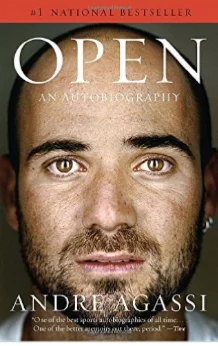
 Open: An Autobiography” by Andre Agassi

Andre Agassi had his life mapped out for him before he left the crib. Groomed to be a tennis champion by his moody and demanding father, by the age of twenty-two Agassi had won the first of his eight grand slams and achieved wealth, celebrity, and the game’s highest honors. But as he reveals in this searching autobiography, off the court he was often unhappy and confused, unfulfilled by his great achievements in a sport he had come to resent. Agassi writes candidly about his early success and his uncomfortable relationship with fame, his marriage to Brooke Shields, his growing interest in philanthropy, and—described in haunting, point-by-point detail—the highs and lows of his celebrated career.” (Open: An Autobiography by Andre Agassi – #Ad)

Top 28 best Quotes From “Open” by Andre Agassi

“It’s no accident, I think, that tennis uses the language of life. Advantage, service, fault, break, love, the basic elements of tennis are those of everyday existence, because every match is a life in miniature. Even the structure of tennis, the way the pieces fit inside one another like Russian nesting dolls, mimics the structure of our days. Points become games become sets become tournaments, and it’s all so tightly connected that any point can become the turning point. It reminds me of the way seconds become minutes become hours, and any hour can be our finest. Or darkest. It’s our choice.” ― Andre Agassi

“Remember this. Hold on to this. This is the only perfection there is, the perfection of helping others. This is the only thing we can do that has any lasting meaning. This is why we’re here. To make each other feel safe.” ― Andre Agassi

“Life is a tennis match between polar opposites. Winning and losing, love and hate, open and closed. It helps to recognize that painful fact early. Then recognize the polar opposites within yourself, and if you can’t embrace them, or reconcile them, at least accept them and move on. The only thing you cannot do is ignore them.” ― Andre Agassi

“Now that I’ve won a slam, I know something very few people on earth are permitted to know. A win doesn’t feel as good as a loss feels bad, and the good feeling doesn’t last long as the bad. Not even close.” ― Andre Agassi

“Only boxers can understand the loneliness of tennis players – and yet boxers have their corner men and managers. Even a boxer’s opponent provides a kind of companionship, someone he can grapple with and grunt at. In tennis you stand face-to-face with the enemy, trade blows with him, but never touch him or talk to him, or anyone else. The rules forbid a tennis player from even talking to his coach while on the court. People sometimes mention the track-and-field runner as a comparably lonely figure, but I have to laugh. At least the runner can feel and smell his opponents. They’re inches away. In tennis you’re on an island. Of all the games men and women play, tennis is the closest to solitary confinement….” ― Andre Agassi

“It took me twenty-two years to discover my talent, to win my first slam – and only two years to lose it.” ― Andre Agassi

“Life will throw everything but the kitchen sink in your path, and then it will throw the kitchen sink. It’s your job to avoid the obstacles. If you let them stop you or distract you, you’re not doing your job, and failing to do your job will cause regrets that paralyze you more than a bad back.” ― Andre Agassi

“What you feel doesn’t matter in the end; it’s what you do that makes you brave.” ― Andre Agassi

“There are many ways of getting strong, sometimes talking is the best way.” ― Andre Agassi

“There’s a lot of good waiting for you on the other side of tired. Get yourself tired..” ― Andre Agassi

“If I’ve learned nothing else, it’s that time and practice equal achievement.” ― Andre Agassi

“I play and keep playing because I choose to play. Even if it’s not your ideal life, you can always choose it. No matter what your life is, choosing it changes everything.” ― Andre Agassi

“To be inspired – that’s the secret.” ― Andre Agassi

“How lovely it is to dream while you are awake.” ― Andre Agassi

“I tell the players: You’ll hear a lot of applause in your life, fellas, but none will mean more to you than that applause-from your peers. I hope each of you hears that at the end.” ― Andre Agassi

“Big dreams, are so damn tiring.” ― Andre Agassi

“This is why we’re here. To fight through the pain and, when possible, to relieve the pain of others. So simple. So hard to see.” ― Andre Agassi

“That’s where you’re going to know yourself. On the other side of tired.” ― Andre Agassi

“Older people make this mistake all the time with younger people, treating them as a finished product when in fact they are in process.” ― Andre Agassi

“When you chase perfection, when you make perfection the ultimate goal, do you know what you’re doing? You’re chasing something that doesn’t exist. You’re making everyone around you miserable. You’re making yourself miserable. Perfection? There’s about five times a year you wake up perfect, when you can’t lose to anybody, but it’s not those five times a year that make a tennis player. Or a human being, for that matter. It’s the other times. It’s all about your head, man. -Brad Gilbert” ― Andre Agassi

“Few of us are granted the grace to know ourselves, and until we do, maybe the best we can do is be consistent.” ― Andre Agassi

“Walking to the net, I’m certain that I’ve lost to the better man, the Everest of the next generation. I pity the young players who will have to contend with him. I feel for the man who is fated to play Agassi to his Sampras. Though I don’t mention Pete by name, I have him uppermost in my mind when I tell reporters: It’s real simple. Most people have weaknesses. Federer has none.” ― Andre Agassi

“My father says that if I hit 2,500 balls each day, I’ll hit 17,500 balls each week, and at the end of one year I’ll have hit nearly one million balls. He believes in math. Numbers, he says, don’t lie. A child who hits one million balls each year will be unbeatable.” ― Andre Agassi

“Control what you can control.” ― Andre Agassi

“great things begin at the end of the comfort zone. It is all about exploring the bleeding edge in your own time or with someone who will not judge you for it being beyond your comfort zone” ― Andre Agassi

“we must all care for one another—this is our task in life. But also we must care for ourselves, which means we must be careful in our decisions, careful in our relationships, careful in our statements. We must manage our lives carefully, in order to avoid becoming victims.” ― Andre Agassi

“You know everything you need to know about people when you see their faces at the moments of your greatest triumph.” ― Andre Agassi

“You don’t have to be the best in the world every time you go out there. You just have to be better than one guy.” ― Andre Agassi

(Ad#) Open: An Autobiography” by Andre Agassi

About Andre Agassi

Andre Kirk Agassi is an American former world No. 1 tennis player. He is an eight-time major champion and an Olympic gold medalist, as well as a runner-up in seven other majors. Agassi is the second of five men to achieve the career Grand Slam in the Open Era and the fifth of eight overall to make the achievement. (Wikipedia)

Born: April 29, 1970, Las Vegas, NV

Height: 5′ 11″

Spouse: Steffi Graf (m. 2001), Brooke Shields (m. 1997–1999)

Other Top Quotes Posts

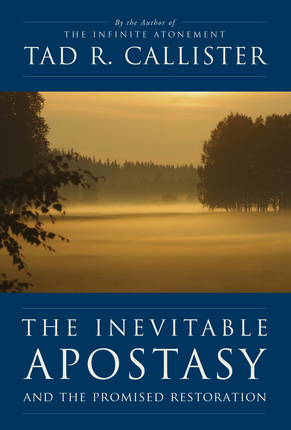
10 Interesting Quotes from “The Inevitable Apostasy and the Promised Restoration” by Tad R. Callister

What happened to Christ’s Church? Did it survive Christ’s death? Or was it lost, and if so, is it present on earth today?

AuthorTad R. Callister, in (#Ad) The Inevitable Apostasy and the Promised Restoration has delved deeply into the writings of both early Christian writers and Latter-day Saint leaders to present thirteen evidences that Christ’s Church fell into apostasy, including the loss of the apostles, revelation, priesthood, miracles, scriptures, and gifts of the Spirit, and the corruption of the doctrinal teachings and holy ordinances. But beyond just presenting the evidence of a great apostasy and the need for a heavenly restoration, the author explores the equally important questions of why?

10 Quotes from the first chapters

Introduction

“On one occasion a friend asked me if Mormons believed they were better than other people. I responded that I thought there were many people of other faiths better than I was, including him, but I did believe he would be an even better man if he had the truths I had, and I should be less of a man if they were absent from my life. Hopefully, this book can add to the light and truth which my non-LDS friends already possess in part.” (Intro XIII)

Chapter 1: Thinking the Unthinkable— Could Christ’s Church Have Been Lost?

“Elder Orson F. Whitney, an apostle of the restored Church, once told of a learned Catholic theologian who spoke to him as follows: You Mormons are all ignoramuses. You don’t even know the strength of your own position. It is so strong that there is only one other tenable in the whole Christian world, and that is the position of the Catholic Church. The issue is between Catholicism and Mormonism. If we are right, you are wrong; if you are right, we are wrong; and that’s all there is to it. The Protestants haven’t a leg to stand on. For, if we are wrong, they are wrong with us, since they were a part of us and went out from us; while if we are right, they are apostates whom we cut off long ago. If we have the apostolic succession from St. Peter, as we claim, there is no need ofJoseph Smith and Mormonism; but if we have not that succession, then such a man as Joseph Smith was necessary, and Mormonism’s attitude is the only consistent one. It is either the perpetuation of the gospel from ancient times, or the restoration of the gospel in latter days.” (p. 4)

chapter 5: The True Cause of the Apostasy

The Enemy Within
“External persecution of the early Christians was intense. Such persecution, however, did not cause the demise of Christ’s Church any more than the crucifixion of the Savior ended Christianity. It was not external evil or persecution that destroyed Christ’s Church, but rather internal wickedness—the enemy within. That is what proved its downfall.” (p.24)

“There is no external force, however powerful it may be, that can destroy Christ’s Church. Ultimately, destruction comes only from within.5 Elder James E. Talmage taught this confirming principle: The question as to whether persecution is to be regarded as an element tending to produce apostasy is worthy of present consideration. Opposition is not always destructive; on the contrary it may contribute to growth. . . . Undoubtedly the persistent persecution to which the early Church was subjected caused many of its adherents to renounce the faith they had professed and to return to their former allegiances, whether Judaistic or pagan. Church membership was thus diminished; but such instances of apostasy from the Church may be regarded as individual desertions and of comparatively little importance in its effect upon the Church as a body. The dangers that affrighted some would arouse the determination of others; the ranks deserted by disaffected weaklings would be replenished by zealous converts. Let it be repeated that apostasy from the Church is insignificant as compared with apostasy of the Church as an institution.” (p. 25)

“Hugh Nibley spoke similarly: “The apostasy described in the New Testament is not desertion of the cause, but perversion of it, a process by which ‘the righteous are removed, and none perceives it.’ The Christian masses do not realize what is happening to them; they are ‘bewitched’ by a thing that comes as softly and insidiously as the slinging of a noose.'” Durant made this astute observation with regards to the fall of the Roman Empire: “A great civilization is not conquered from without until it has destroyed itself within.”” (p. 25)

“LDS scholar Kent P. Jackson explained that the root meaning of apostasy comes from the original Greek word apostasía and “means ‘rebellion,’ ‘mutiny,’ ‘revolt,’ or ‘revolution,’ and it is used in ancient contexts with reference to uprisings against established authority. The idea of a gentle drifting that comes to mind with the phrase ‘a falling away’ is not one of its meanings.”68 It was indeed rebellion that was taking place within the Church.” (p.43)

“This apostasy was triggered by widespread disobedience and by a proliferation of heresies. Accordingly, the martyrdom of the apostles was not the source of the apostasy; rather, it was a consequence of the apostasy. The seeds of apostasy were planted and springing up during the ministry of the apostles. Thereafter they nurtured into full bloom when no apostles remained to weed them out. No doubt if there had been significant righteousness among the Saints, the Quorum of the Twelve Apostles would have continued. The apostasy did not happen because the apostles were gone; the apostles were taken because the apostasy was in effect.” (p. 46)

“The death of the apostles did not mean that no institutionalized church continued, but rather that a different church evolved—one without revelation and without priesthood authority. While there existed for a time many competing philosophies and would-be claimants to Christ’s ongoing church, eventually one composite doctrine prevailed among a majority of the people who called themselves Christians” [.47)

Chapter 8: Evidences of the Apostasy

“While there existed isolated goodness on the earth, (during the apostasy) there was not an organized, priesthood-centered church. Some of the evidences of this apostasy, as discussed in succeeding chapters, are as follows:

  • First, the apostles were killed and revelation ceased, thus undermining the foundation of Christ’s Church.
  • Second, the scriptures are a historical witness that the apostasy was in progress and a prophetic witness that it would be consummated before Christ’s second coming.
  • Third, the Bible ended. If the Church had continued, revelation would have continued, and the Bible would have been an ongoing book.
  • Fourth, the gifts of the Spirit were lost.
  • Fifth, the dark ages became a historical fact, symbolizing that the light of Christ’s gospel had been extinguished. If the Church had been on the earth and the predominant force in western civilization, those years would have been a period of light ages, not dark ages.
  • Sixth, many teachings became perverted, some were lost, and new ones were invented.
  • Seventh, many gospel ordinances were perverted, some were lost, and new ones were invented.
  • Eighth, the simple mode of prayer was changed, which diluted man’s efforts to communicate with God.
  • Ninth, the scriptures were removed from the hands of the lay membership and retained solely in the hands of clergy, often in a language the common man could not understand.
  • Tenth, the wickedness sanctioned by the ongoing church was so prolonged and so egregious that no spiritually minded person could believe that Christ’s Church, if on the earth, would condone such behavior.
  • Eleventh, there was a discernible decline in the moral standards and church discipline of the ongoing church.
  • Twelfth, the church no longer bore Christ’s name.
  • Thirteenth, the priesthood was lost, and thus no one on the earth was authorized to perform the saving ordinances.” (p. 56-57)

Chapter 9: First Evidence: Loss of the Apostles and Revelation

“The Jews suffered from the same malady as certain modern churches, who believe that revelation is confined to the ages of the past. In essence, those who treat revelation as a thing of the past have capped the well that quenches their spiritual thirst. (p.76)

Tad R. Callister

Tad R. Callister

Tad Richards Callister (born December 17, 1945) was the 21st Sunday School General President of The Church of Jesus Christ of Latter-day Saints (LDS Church) from 2014 to 2019. He served previously in the church as a general authority from 2008 to 2014, including as a member of the Presidency of the Seventy from 2011 to 2014.

Bibliography

  • Callister, Tad R. (2000), The Infinite Atonement, Salt Lake City, Utah
  • Callister, Tad R. (2006), The Inevitable Apostasy and the Promised Restoration, Salt Lake City, Utah: Deseret Book
  • Callister, Tad R. (2015), The Blueprint of Christ’s Church, Salt Lake City, Utah: Deseret Book
  • Callister, Tad R. (2019), A Case for the Book of Mormon, Salt Lake City, Utah: Deseret Book
  • Callister, Tad R. (2021), America’s Choice: A Nation Under God or Without God?, Meadville, PA: Fulton Books

Top 40 Best Quotes from “Effortless” by Greg McKeown

Not everything has to be so hard.  

In our modern world we try to be high-achievers because we have been conditioned to believe that the path to success is paved with relentless work. If we want to overachieve, we have to overexert, overthink, and overdo. If we aren’t perpetually exhausted, it means that we are not doing enough.

But the more exhausted we are, the harder it is to make progress. We end up working twice as hard to achieve half as much.

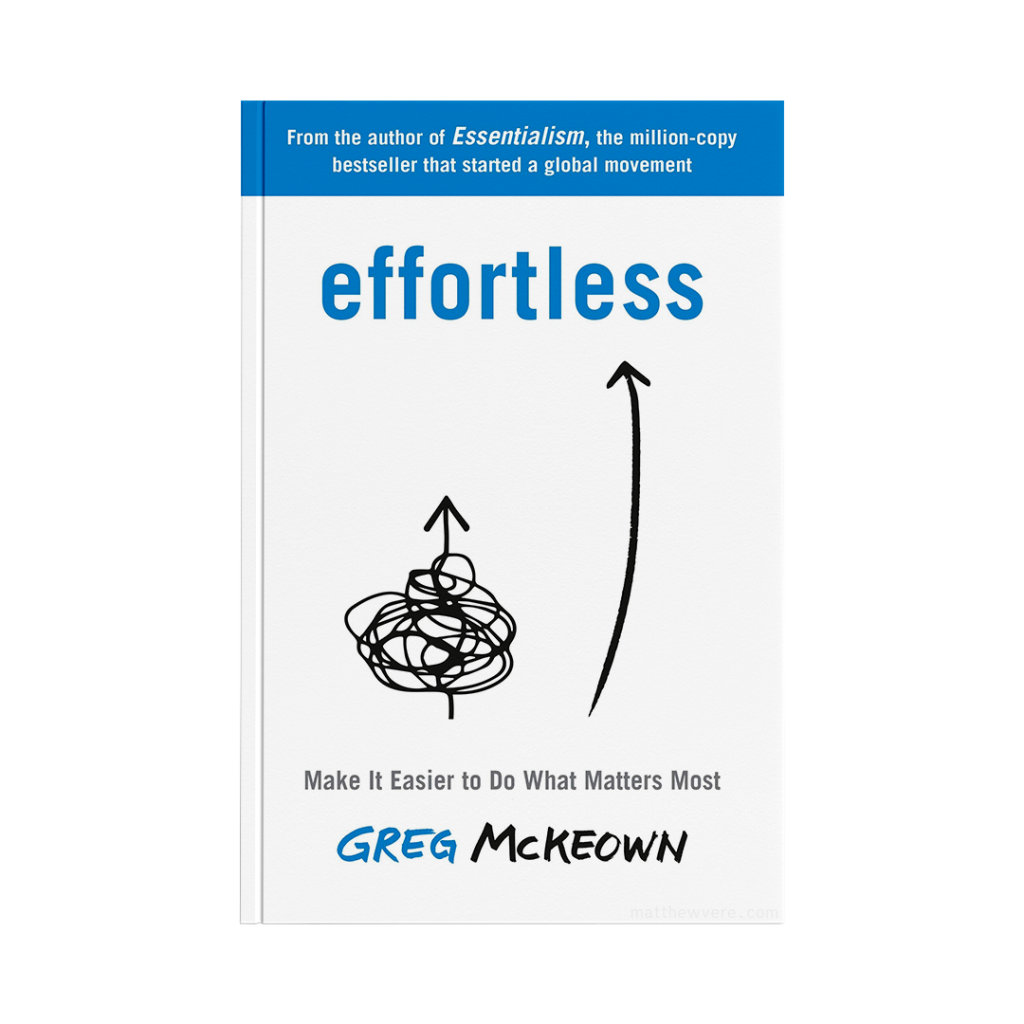
In (#AD) Effortless: Make It Easy to Get the Right Things Done, Greg McKeown explains that getting ahead doesn’t have to be as hard as we make it. No matter what challenges or obstacles we face, there is a better way: instead of pushing ourselves harder, we can find an easier path. Effortless offers actionable advice for making the most essential activities the easiest ones, so that we can achieve the results we want, without burning out.   

Top 40 Best Quotes from “Effortless”

“Perfectionism makes essential projects hard to start, self-doubt makes them hard to finish, and trying to do too much, too fast, makes it hard to sustain momentum.” ― Greg McKeown, Effortless: Make It Easy to Get the Right Things Done

“Strangely, some of us respond to feeling exhausted and overwhelmed by vowing to work even harder and longer. It doesn’t help that our culture glorifies burnout as a measure of success and self-worth. The implicit message is that if we aren’t perpetually exhausted, we must not be doing enough. That great things are reserved for those who bleed, for those who almost break. Crushing volume is somehow now the goal. Burnout is not a badge of honor.” ― Greg McKeown, Effortless: Make It Easy to Get the Right Things Done

“the complexity of modern life has created a false dichotomy between things that are “essential and hard” and things that are “easy and trivial.” ― Greg McKeown, Effortless: Make It Easy to Get the Right Things Done

“Life doesn’t have to be as hard and complicated as we make it. Each of us has — as Robert Frost wrote — “Promises to keep and miles to go before I sleep.” No matter what challenges, obstacles or hardships we encounter along the way, we can always look for the easier, simpler path.” ― Greg McKeown, Effortless: Make It Easier to Do What Matters Most

“Past a certain point, more effort doesn’t produce better performance. It sabotages our performance. Economists call this the law of diminishing returns:” ― Greg McKeown, Effortless: Make It Easy to Get the Right Things Done

“If you want to make something hard, indeed truly impossible, to complete, all you have to do is make the end goal as vague as possible.” ― Greg McKeown, Effortless: Make It Easy to Get the Right Things Done

“By pairing essential activities with enjoyable ones, we can make tackling even the most tedious and overwhelming tasks more effortless.” ― Greg McKeown, Effortless: Make It Easy to Get the Right Things Done

“Do not do more today than you can completely recover from today. Do not do more this week than you can completely recover from this week.” ― Greg McKeown, Effortless: Make It Easy to Get the Right Things Done

“To avoid diminishing returns on your time and effort, establish clear conditions for what “done” looks like, get there, then stop.” ― Greg McKeown, Effortless: Make It Easy to Get the Right Things Done

“A Done for the Day list is not a list of everything we theoretically could do today, or a list of everything we would love to get done. These things will inevitably extend far beyond the limited time available. Instead, this is a list of what will constitute meaningful and essential progress.” ― Greg McKeown, Effortless: Make It Easy to Get the Right Things Done

“What if, rather than fighting our preprogrammed instinct to seek the easiest path, we could embrace it, even use it to our advantage? What if, instead of asking, “How can I tackle this really hard but essential project?,” we simply inverted the question and asked, “What if this essential project could be made easy?” ― Greg McKeown, Effortless: Make It Easy to Get the Right Things

“There is no such thing as an effortless relationship. But there are ways we can make it easier to keep a relationship strong. We don’t need to agree with the other person on everything. But we do need to be present with them, to really notice them, to give them our full attention—maybe not always, but as frequently as we can.” ― Greg McKeown, Effortless: Make It Easy to Get the Right Things Done

“What is the Effortless State? The Effortless State is an experience many of us have had when we are physically rested, emotionally unburdened, and mentally energized. You are completely aware, alert, present, attentive, and focused on what’s important in this moment. You are able to focus on what matters most with ease.” ― Greg McKeown, Effortless: Make It Easy to Get the Right Things Done

“Getting more sleep may be the single greatest gift we can give our bodies, our minds, and even, it turns out, our bottom lines.” ― Greg McKeown, Effortless: Make It Easy to Get the Right Things Done

(#AD) Effortless: Make It Easy to Get the Right Things Done,

“What job have I hired this grudge to do?” ― Greg McKeown, Effortless: Make It Easier to Do What Matters Most

“Even if we manage a full night’s sleep, unless enough of that sleep is in a deep state, we’ll suffer from sleep deprivation. Unlike in rapid eye movement (REM) sleep, in the deep sleep stage, your body and brain waves slow down. This is the stage where information is stored in long-term memory, learning and emotions are processed, the immune system is energized, and the body recovers. Healthy adults spend an average of 13 to 23 percent of their night in deep sleep. So if you sleep for seven hours, that translates to just fifty to one hundred minutes in a deep state. Each minute, in other words, is precious.” ― Greg McKeown, Effortless: Make It Easy to Get the Right Things Done

“Reading a book is among the most high-leverage activities on earth.” ― Greg McKeown, Effortless: Make It Easy to Get the Right Things Done

“Gaining unique knowledge takes time, dedication, and effort. But invest in it once, and you’ll attract opportunities for the rest of your life.” ― Greg McKeown, Effortless: Make It Easy to Get the Right Things Done

“Remember: When you focus on what you lack, you lose what you have. When you focus on what you have, you get what you lack” ― Greg McKeown, Effortless: Make It Easy to Get the Right Things Done

“In recent years neuroscientists and psychologists have found that the “now” we experience lasts only 2.5 seconds.” ― Greg McKeown, Effortless: Make It Easy to Get the Right Things Done

“Looking at that first step or action through the lens of 2.5 seconds is the change that makes every other change possible. It is the habit of habits.” ― Greg McKeown, Effortless: Make It Easy to Get the Right Things Done

“Producing a great result is good. Producing a great result with ease is better. Producing a great result with ease again and again is best.” ― Greg McKeown

“Why would we simply endure essential activities when we can enjoy them instead?” ― Greg McKeown

“What if the biggest thing keeping us from doing what matters is the false assumption that it has to take tremendous effort? What if, instead, we considered the possibility that the reason something feels hard is that we haven’t yet found the easier way to do it?” ― Greg McKeown

“essential work can be enjoyable once we put aside the Puritan notion that anything worth doing must entail backbreaking effort.” ― Greg McKeown

“We are conditioned over the course of our lifetimes to believe that in order to overachieve we must also overdo. As a result, we make things harder for ourselves than they need to be.” ― Greg McKeown

“Essentialism was about doing the right things; Effortless is about doing them in the right way.” ― Greg McKeown

“Overachievers tend to struggle with the notion of starting with rubbish; they hold themselves to a high standard of perfection at every stage in the process. But the standard to which they hold themselves is neither realistic nor productive.” ― Greg McKeown

“He teaches his language students to imagine they have a bag full of one thousand beads. Every time they make a mistake talking to someone else in the language they take out one bead. When the bag is empty they will have achieved level 1 mastery. The faster they make those mistakes, the faster they will progress.” ― Greg McKeown

“Holding back when you still have steam in you might seem like a counterintuitive approach to getting important things done, but in fact, this kind of restraint is key to breakthrough productivity.” ― Greg McKeown

“Whether it’s “miles per day” or “words per day” or “hours per day,” there are few better ways to achieve effortless pace than to set an upper bound.” ― Greg McKeown

“One study found that by training our attentional muscles we can improve our processing of complex information moving at great speed.” ― Greg McKeown

“Listening isn’t hard; it’s stopping our mind from wandering that’s hard. Being in the moment isn’t hard; not thinking about the past and future all the time is hard. It’s not the noticing itself that’s hard. It’s ignoring all the noise in our environment that is hard.” ― Greg McKeown

“Arianna Huffington used to buy into the notion that anything worth doing required superhuman effort. But she has since said that she didn’t become truly successful until she stopped overworking herself. “It’s also our collective delusion that overwork and burnout are the price we must pay in order to succeed,” she says.” ― Greg McKeown

“Have you ever found that the more you complain—and the more you read and hear other people complain—the easier it is to find things to complain about? On the other hand, have you ever found that the more grateful you are, the more you have to be grateful for?” ― Greg McKeown

“We can do the following: Dedicate mornings to essential work. Break down that work into three sessions of no more than ninety minutes each. Take a short break (ten to fifteen minutes) in between sessions to rest and recover.” ― Greg McKeown

“People who sleep less than seven hours a night are more likely to suffer from cardiovascular disease, heart attack, stroke, asthma, arthritis, depression, and diabetes and are almost eight times more likely to be overweight.” ― Greg McKeown

“Simplicity—the art of maximizing the steps not taken—is essential.” ― Greg McKeown

“Each of us has an inner teacher, a voice of truth, that offers the guidance and power we need to deal with our problems.” ― Greg McKeown

“to get an important project done it’s absolutely necessary to define what “done” looks like.” ― Greg McKeown

About Greg McKeown

Greg McKeown is the author of the new book  (#AD) Effortless: Make It Easy to Get the Right Things Done, and a previous book, Essentialism: The Disciplined Pursuit of Less, which hit The New York Times bestseller list and has sold more than a million copies. He is also a speaker and the host of the popular podcast What’s Essential.

Greg has been covered by The New York Times, The New Yorker, Fast Company, Fortune, Politico, and Inc., has been interviewed by NPR, NBC, Fox, and The Steve Harvey Show, and is among the most popular bloggers for LinkedIn. He is also a Young Global Leader for the World Economic Forum. Originally from London, England, he now resides in California with his wife, Anna, and their four children. He is a Bishop in The Church of Jesus Christ of Latter-day Saints.

Other Top Quotes Posts

Quotes From Your Brain Is Always Listening By Daniel G. Amen

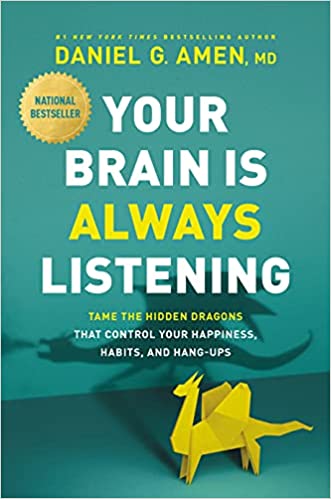
According to Dr. Daniel G. Amen, in the book (#Ad) Your Brain Is Always Listening: Tame the Hidden Dragons That Control Your Happiness, Habits, and Hang-Ups, our brain is always listening and responding to the hidden influences (dragons) that breathe fire on our emotional brain. Unless we recognize and deal with them, they can steal our happiness, ruin our relationships, and damage our health.

Quotes from Your Brain Is Always Listening

“Self-esteem is the difference between where you believe you are and where you think you should be compared to others. If they match, you tend to feel good about yourself. If they don’t match, you feel inferior.” ― Daniel G. Amen, Your Brain Is Always Listening: Tame the Hidden Dragons That Control Your Happiness, Habits, and Hang-Ups

“Before I got serious about being healthy, I gave in to my urge for bread, especially freshly made bread dripping in butter. Yet when I fell in love with my brain, I realized I love being healthy, having energy and cognitive clarity, and being able to get into the same size jeans I wore in high school much more than the momentary pleasure of unhealthy food. The new benefits were so much better than the old ones. I now see free bread as a “weapon of mass destruction,” and I feel badly when I give in to a behavior that does not serve my health.” ― Daniel G. Amen, Your Brain Is Always Listening: Tame the Hidden Dragons That Control Your Happiness, Habits, and Hang-Ups

“People who deny the existence of dragons are often eaten by dragons from within” — Ursula K. Le Guin, cited in Daniel G. Amen, Your Brain Is Always Listening: Tame the Hidden Dragons That Control Your Happiness, Habits, and Hang-Ups

(#Ad) Your Brain Is Always Listening: Tame the Hidden Dragons That Control Your Happiness, Habits, and Hang-Ups

“All of us have Dragons from the Past influencing our present feelings and actions.” Unless you recognize and tame them, and consciously calm and protect your amygdala from overfiring, these dragons will haunt your unconscious mind and drive emotional pain for the rest of your life. What blows from an ember, or a small action of another, can turn into a destructive fire of anxiety and rage. After learning from Dr. May, I started using this concept with my patients, including Jimmy. Over time I identified 13 Dragons from the Past, including their origins, triggers that make them overpowering, and how they cause us to react. All of us have more than one Dragon from the Past driving our behavior, and they are always interacting with the Dragons from the Past of others, causing both internal and external battles—a modern-day Game of Thrones. All of us have primary and secondary dragons driving our behavior. Primary ones are present most of the time, while secondary ones come out during times of stress, such as the COVID-19 pandemic that began in 2020.” ― Daniel G. Amen, Your Brain Is Always Listening: Tame the Hidden Dragons That Control Your Happiness, Habits, and Hang-Ups

“When the Parent Dragons are triggered, you feel like you’ve done something wrong, you are not good enough or supported, and you are motivated to work harder.” ― Daniel G. Amen, Your Brain Is Always Listening: Tame the Hidden Dragons That Control Your Happiness, Habits, and Hang-Ups

“Dr. May said, “All of us have Dragons from the Past influencing our present feelings and actions.”[1] Unless you recognize and tame them, and consciously calm and protect your amygdala from overfiring, these dragons will haunt your unconscious mind and drive emotional pain for the rest of your life.” ― Daniel G. Amen, Your Brain Is Always Listening: Tame the Hidden Dragons That Control Your Happiness, Habits, and Hang-Ups

:

About the book Your Brain Is Always Listening

New York Times bestselling author Dr. Daniel Amen equips you with powerful weapons to battle the inner dragons that are breathing fire on your brain, driving unhealthy behaviors, and robbing you of joy and contentment.

Your brain is always listening and responding to these hidden influences and unless you recognize and deal with them, they can steal your happiness, spoil your relationships, and sabotage your health. This book will teach you to tame the:

1. Dragons from the Past that ignite your most painful emotions;
2. Negative Thought Dragons that attack you, fueling anxiety and depression;
3. They and Them Dragons, people in your life whose own dragons do battle with yours;
4. Bad Habit Dragons that increase the chances you’ll be overweight, overwhelmed, and an underachiever;
5. Addicted Dragons that make you lose control of your health, wealth, and relationships;
6. Scheming Dragons, advertisers and social media sites that steal your attention.

In Your Brain Is Always Listening, Dr. Daniel Amen shows you how to recognize harmful dragons and gives you the weapons to vanquish them. With these practical tools, you can stop feeling sad, mad, nervous, or out of control and start being happier, calmer, and more in control of your own destiny. (Publisher’s Summary)

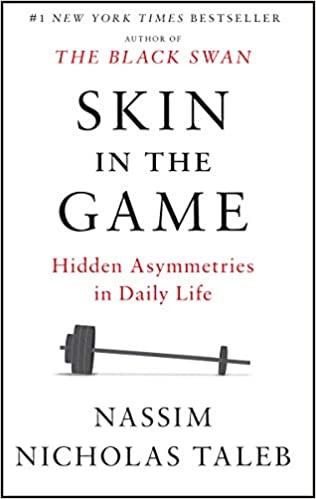
Best 85 Quotes from Skin in the Game: The Hidden Asymmetries in Daily Life by Nassim Nicholas Taleb

(#Ad) Skin in the Game: The Hidden Asymmetries in Daily Life is Nassim Nicholas Taleb’s fifth book.

The basic argument of the book is that if you have no skin in the game, you shouldn’t be in the game. “If you give an opinion, and someone follows it, you are morally obligated to be, yourself, exposed to its consequences.” 

In Skin in the Game Taleb challenges many long-held beliefs about the values of those who spearhead military interventions, make financial investments, and propagate religious faiths.

Taleb discusses what it means for him to understand the world, succeed in a profession, contribute to a fair and just society, detect nonsense, and influence others. Citing examples ranging from Hammurabi to Seneca, Antaeus the Giant to Donald Trump, Nassim Nicholas Taleb shows how the willingness to accept one’s own risks is an essential attribute of heroes, saints, and flourishing people in all walks of life.

85 TOP QUOTES FROM SKIN IN THE GAME

“The curse of modernity is that we are increasingly populated by a class of people who are better at explaining than understanding, or better at explaining than doing.” ― Nassim Nicholas Taleb

“What matters isn’t what a person has or doesn’t have; it is what he or she is afraid of losing.” ― Nassim Nicholas Taleb

“Those who talk should do and only those who do should talk.” ― Nassim Nicholas Taleb

“Courage is the only virtue you cannot fake.” ― Nassim Nicholas Taleb

“The difference between successful people and really successful people is that really successful people say no to almost everything,” ― Nassim Nicholas Taleb

“Bureaucracy is a construction by which a person is conveniently separated from the consequences of his or her actions.” ― Nassim Nicholas Taleb

“If you do not take risks for your opinion, you are nothing.” ― Nassim Nicholas Taleb

“For studying courage in textbooks doesn’t make you any more courageous than eating cow meat makes you bovine. By some mysterious mental mechanism, people fail to realize that the principal thing you can learn from a professor is how to be a professor—and the chief thing you can learn from, say, a life coach or inspirational speaker is how to become a life coach or inspirational speaker. So remember that the heroes of history were not classicists and library rats, those people who live vicariously in their texts. They were people of deeds and had to be endowed with the spirit of risk taking” ― Nassim Nicholas Taleb

“You do not want to win an argument. You want to win.” ― Nassim Nicholas Taleb

“Don’t tell me what you think, tell me what you have in your portfolio.” ― Nassim Nicholas Taleb

“Start by being nice to every person you meet. But if someone tries to exercise power over you, exercise power over him.” ― Nassim Nicholas Taleb

“Finally, when young people who “want to help mankind” come to me asking, “What should I do? I want to reduce poverty, save the world,” and similar noble aspirations at the macro-level, my suggestion is: 1) Never engage in virtue signaling; 2) Never engage in rent-seeking; 3) You must start a business. Put yourself on the line, start a business.” ― Nassim Nicholas Taleb

“Beware of the person who gives advice, telling you that a certain action on your part is “good for you” while it is also good for him, while the harm to you doesn’t directly affect him.” ― Nassim Nicholas Taleb

“Let us return to pathemata mathemata (learning through pain) and consider its reverse: learning through thrills and pleasure. People have two brains, one when there is skin in the game, one when there is none. Skin in the game can make boring things less boring. When you have skin in the game, dull things like checking the safety of the aircraft because you may be forced to be a passenger in it cease to be boring. If you are an investor in a company, doing ultra-boring things like reading the footnotes of a financial statement (where the real information is to be found) becomes, well, almost not boring.” ― Nassim Nicholas Taleb

“Entrepreneurs are heroes in our society. They fail for the rest of us.” ― Nassim Nicholas Taleb

“How much you truly “believe” in something can be manifested only through what you are willing to risk for it.” ― Nassim Nicholas Taleb

“Scars signal skin in the game.” ― Nassim Nicholas Taleb

“Alexander said that it was preferable to have an army of sheep led by a lion than an army of lions led by a sheep.” ― Nassim Nicholas Taleb

“It is no secret that large corporations prefer people with families; those with downside risk are easier to own, particularly when they are choking under a large mortgage.” ― Nassim Nicholas Taleb

“No person in a transaction should have certainty about the outcome while the other one has uncertainty.” ― Nassim Nicholas Taleb

“The only definition of rationality that I’ve found that is practically, empirically, and mathematically rigorous is the following: what is rational is that which allows for survival. Unlike modern theories by psychosophasters, it maps to the classical way of thinking. Anything that hinders one’s survival at an individual, collective, tribal, or general level is, to me, irrational.” ― Nassim Nicholas Taleb

“People who are bred, selected, and compensated to find complicated solutions do not have an incentive to implement simplified ones.” ― Nassim Nicholas Taleb

“If you want to study classical values such as courage or learn about stoicism, don’t necessarily look for classicists. One is never a career academic without a reason. Read the texts themselves: Seneca, Caesar, or Marcus Aurelius, when possible. Or read commentators on the classics who were doers themselves, such as Montaigne—people who at some point had some skin in the game, then retired to write books. Avoid the intermediary, when possible. Or fuhgetaboud the texts, just engage in acts of courage.” ― Nassim Nicholas Taleb

“But never engage in detailed overexplanations of why something is important: one debases a principle by endlessly justifying it.” ― Nassim Nicholas Taleb

“making some types of errors is the most rational thing to do, when the errors are of little cost, as they lead to discoveries. For instance, most medical “discoveries”are accidental to something else. An error-free world would have no penicillin, no chemotherapy…almost no drugs, and most probably no humans. This is why I have been against the state dictating to us what we “should”be doing: only evolution knows if the “wrong”thing is really wrong, provided there is skin in the game to allow for selection.” ― Nassim Nicholas Taleb

“what you learn from the intensity and the focus you had when under the influence of risk stays with you. You may lose the sharpness, but nobody can take away what you’ve learned. This is the principal reason I am now fighting the conventional educational system, made by dweebs for dweebs. Many kids would learn to love mathematics if they had some investment in it, and, more crucially, they would build an instinct to spot its misapplications.” ― Nassim Nicholas Taleb

“You will never fully convince someone that he is wrong; only reality can.” ― Nassim Nicholas Taleb

“Silver Rule (negative golden rule): Do not do to others what you would not like them to do to you. Note the difference from the Golden Rule, as the silver one prevents busybodies from attempting to run your life.” ― Nassim Nicholas Taleb

“It is much more immoral to claim virtue without fully living with its direct consequences.” ― Nassim Nicholas Taleb
“English “manners” were imposed on the middle class as a way of domesticating them, along with instilling in them the fear of breaking rules and violating social norms.” ― Nassim Nicholas Taleb

“Having an assistant (except for the strictly necessary) removes your soul from the game.” ― Nassim Nicholas Taleb

“Things designed by people without skin in the game tend to grow in complication (before their final collapse). There is absolutely no benefit for someone in such a position to propose something simple: when you are rewarded for perception, not results, you need to show sophistication. Anyone who has submitted a “scholarly” paper to a journal knows that you usually raise the odds of acceptance by making it more complicated than necessary. Further, there are side effects for problems that grow nonlinearly with such branching-out complications. Worse: Non-skin-in-the-game people don’t get simplicity.” ― Nassim Nicholas Tale

“The principle of intervention, like that of healers, is first do no harm (primum non nocere); even more, we will argue, those who don’t take risks should never be involved in making decisions.” ― Nassim Nicholas Taleb

“Silver Rule in intellectual debates. You can criticize either what a person said or what a person meant. The former is more sensational, hence lends itself more readily to dissemination. The mark of a charlatan—say the writer and pseudo-rationalist Sam Harris—is to defend his position or attack a critic by focusing on some specific statement (“look at what he said”) rather than blasting his exact position (“look at what he means” or, more broadly, “look at what he stands for”)—for the latter requires an extensive grasp of the proposed idea. Note that the same applies to the interpretation of religious texts, often extracted from their broader circumstances.” ― Nassim Nicholas Taleb

“Alexander the Magnus was once called to solve the following challenge in the Phrygian city of Gordium (as usual with Greek stories, in modern-day Turkey). When he entered Gordium, he found an old wagon, its yoke tied with a multitude of knots, all so tightly entangled that it was impossible to figure out how they were fastened. An oracle had declared that he who would untie the knot would rule all of what was then called “Asia,” that is, Asia Minor, the Levant, and the Middle East. After wrestling with the knot, the Magnus drew back from the lump of gnarled ropes, then made a proclamation that it didn’t matter for the prophecy how the tangle was to be unraveled. He then drew his sword and, with a single stroke, cut the knot in half. No “successful” academic could ever afford to follow such a policy. And no Intellectual Yet Idiot. It took medicine a long time to realize that when a patient shows up with a headache, it is much better to give him aspirin or recommend a good night’s sleep than do brain surgery, although the latter appears to be more “scientific.” But most “consultants” and others paid by the hour are not there yet.” ― Nassim Nicholas Taleb

“we have evidence that collectively society doesn’t advance with organized education, rather the reverse: the level of (formal) education in a country is the result of wealth.” ― Nassim Nicholas Taleb

“No, businessmen as risk takers are not subjected to the judgment of other businessmen, only to that of their personal accountant.” ― Nassim Nicholas Taleb

“Yes, an intolerant minority can control and destroy democracy. Actually, it will eventually destroy our world. So, we need to be more than intolerant with some intolerant minorities. Simply, they violate the Silver Rule. It is not permissible to use “American values” or “Western principles” in treating intolerant Salafism (which denies other peoples’ right to have their own religion). The West is currently in the process of committing suicide.” ― Nassim Nicholas Taleb

“If your private life conflicts with your intellectual opinion, it cancels your intellectual ideas, not your private life.” ― Nassim Nicholas Taleb

“Because what matters in life isn’t how frequently one is “right” about outcomes, but how much one makes when one is right. Being wrong, when it is not costly, doesn’t count—in a way that’s similar to trial-and-error mechanisms of research.” ― Nassim Nicholas Taleb

“The ethical is always more robust than the legal. Over time, it is the legal that should converge to the ethical, never the reverse.” ― Nassim Nicholas Taleb

“Freedom is always associated with risk taking, whether it leads to it or comes from it.” ― Nassim Nicholas Taleb

“Learning is rooted in repetition and convexity, meaning that the reading of a single text twice is more profitable than reading two different things once.” ― Nassim Nicholas Taleb

“The heuristic here would be to use education in reverse: hire, conditional on an equal set of skills, the person with the least label-oriented education. It means that the person had to succeed in spite of the credentialization of his competitors and overcome more serious hurdles. In addition, people who didn’t go to Harvard are easier to deal with in real life.” ― Nassim Nicholas Taleb

“No muscles without strength, friendship without trust, opinion without consequence, change without aesthetics, age without values, life without effort, water without thirst, food without nourishment, love without sacrifice, power without fairness, facts without rigor, statistics without logic, mathematics without proof, teaching without experience, politeness without warmth, values without embodiment, degrees without erudition, militarism without fortitude, progress without civilization, friendship without investment, virtue without risk, probability without ergodicity, wealth without exposure, complication without depth, fluency without content, decision without asymmetry, science without skepticism, religion without tolerance, and, most of all: nothing without skin in the game.” ― Nassim Nicholas Taleb

“But things are even worse: in real life, every single bit of risk you take adds up to reduce your life expectancy. If you climb mountains and ride a motorcycle and hang around the mob and fly your own small plane and drink absinthe, and smoke cigarettes, and play parkour on Thursday night, your life expectancy is considerably reduced, although no single action will have a meaningful effect. This idea of repetition makes paranoia about some low-probability events, even that deemed “pathological,” perfectly rational.” ― Nassim Nicholas Taleb

“An honest person will never commit criminal acts, but a criminal will readily engage in legal acts.” ― Nassim Nicholas Taleb

“Give me a few lines written by any man and I will find enough to get him hung” goes the saying attributed to Richelieu, Voltaire, Talleyrand (a vicious censor during the French revolution phase of terror), and a few others.” ― Nassim Nicholas Taleb

“Someone who has been employed for a while is giving you strong evidence of submission.” ― Nassim Nicholas Taleb

“It is when you break a fast that you understand religion” ― Nassim Nicholas Taleb

“The various modes of worship, which prevailed in the Roman world, were all considered by the people, as equally true; by the philosopher, as equally false; and by the magistrate, as equally useful. And thus tolerance produced not only mutual indulgence, but even religious concord.”― Nassim Nicholas Taleb

“Two people can be using the same word, meaning different things, yet continue the conversation, which is fine for coffee, but not when making decisions, particularly policy decisions affecting others. But is is easy to trip them, as Socrates did, simply by asking them what they think they mean by what they said — hence philosophy was born as rigor in discourse and disentanglement of mixed up notions, in precise opposition to the sophist’s promotion of rhetoric”― Nassim Nicholas Taleb

“Sticking out for the truth when it is unpopular is far more of a virtue, because it costs you something–your reputation. If you are a journalist and in a way that risks ostracism, you are virtuous. Some people only express their opinions as part of mob shaming, when it is safe to do so, and, in the bargain, think that they are displaying virtue. This is not virtue but vice, a mixture of bullying and cowardice”― Nassim Nicholas Taleb

“The only way we have left to control suicide-terrorists would be precisely to convince them that blowing themselves up is not the worst-case scenario for them, nor the end scenario at all. Making their families and loved ones bear a financial burden—just as Germans still pay for war crimes—would immediately add consequences to their actions. The penalty needs to be properly calibrated to be a true disincentive, without imparting any sense of heroism or martyrdom to the families in question.” ― Nassim Nicholas Taleb

“Virtue is not something you advertise. It is not an investment strategy. It is not a cost-cutting scheme. It is not a bookselling (or, worse, concert-ticket-selling) strategy.” ― Nassim Nicholas Taleb

“So you can scam the world for a billion; all you need to do is spend part of it, say, a million or two, to enter the section of paradise reserved for the “givers”. ― Nassim Nicholas Taleb

“Isocrates wrote, “Deal with weaker states as you think it appropriate for stronger states to deal with you.”” ― Nassim Nicholas Taleb

“Isocrates managed a rare dynamic version of the Golden Rule: “Conduct yourself toward your parents as you would have your children conduct themselves toward you.” … More effective, of course, is the reverse direction, to treat one’s children the way one wished to be treated by one’s parents.” ― Nassim Nicholas Taleb

“Yogi Berra said, “I go to other people’s funerals so they come to mine.”” ― Nassim Nicholas Taleb

“Avoid taking advice from someone who gives advice for a living, unless there is a penalty for their advice.” ― Nassim Nicholas Taleb

“Every single person I know who has chronically failed in business shares that mental block, the failure to realize that if something stupid works (and makes money), it cannot be stupid.” ― Nassim Nicholas Taleb

“As a Spartan mother tells her departing son: “With it or on it,” meaning either return with your shield or don’t come back alive (the custom was to carry the dead body flat on it); only cowards throw away their shields to run faster.” ― Nassim Nicholas Taleb

“There is actually an argument in favor of duels: they prevent conflicts from engaging broader sets of people, that is, wars, by confining the problem to those with direct skin in the game.” ― Nassim Nicholas Taleb

“This form of entrepreneurship (selling the company or going public) is the equivalent of bringing great-looking and marketable children into the world with the sole aim of selling them at age four.” ― Nassim Nicholas Taleb

“If you can’t put your soul into something, give it up and leave that stuff to someone else.” ― Nassim Nicholas Taleb

“Whenever the “we” becomes too large a club, things degrade, and each one starts fighting for his own interest.” ― Nassim Nicholas Taleb

“A saying by the brothers Geoff and Vince Graham summarizes the ludicrousness of scale-free political universalism.
I am, at the Fed level, libertarian;
At the state level, Republican;
At the local level, Democrat;
And at the family and friends level, a socialist.” ― Nassim Nicholas Taleb

“No amount of advertising will match the credibility of a genuine user.” ― Nassim Nicholas Taleb

“Legend has it that three high-ranking delegations (bishops, rabbis, and sheikhs) cae to make the sales pitch. The Khazar lords asked the Christians: if you were forced to choose between Judaism and Islam, which one would you pick? Judaism, they replied. Then the lords asked the Muslims: which of the two, Christianity or Judaism? Judaism, the Muslims said. Judaism it was; and the tribe converted.” ― Nassim Nicholas Taleb

“Roman pagans were initially tolerant of Christians, as the tradition was to share gods with other members of the empire. But they wondered why these Nazarenes didn’t want to give and take gods and offer that Jesus fellow to the Roman pantheon in exchange for some other gods. What, our gods aren’t good enough for them? But Christians were intolerant of Roman paganism. The “persecution” of the Christians had vastly more to do with the intolerance of the Christians for the pantheon of local gods than the reverse. What we read is history written by the Christian side, not the Greco-Roman one.” ― Nassim Nicholas Taleb

“The dog boasts to the wolf all the contraptions of comfort and luxury he has, almost prompting the wolf to enlist. Until the wolf asks the dog about his collar and is terrified when he understands its use. “Of all your meals, I want nothing.” He ran away and is still running.
The question is: what would you like to be, a dog or a wolf?
The original Aramaic version had a wild ass, instead of a wolf, showing off his freedom. But the wild ass ends up eaten by the lion. Freedom entails risks – real skin the game. Freedom is never free.” ― Nassim Nicholas Taleb

“Whatever you do, just don’t be a dog claiming to be a wolf.” ― Nassim Nicholas Taleb

“It is much easier to do business with the owner of the business than some employee who is likely to lose his job next year; likewise it is easier to trust the word of an autocrat than a fragile elected official.” ― Nassim Nicholas Taleb

“Jean de La Bruyere wrote that jealousy is to be found within the same art, talent, and condition.” ― Nassim Nicholas Taleb

“A good rule for society is to oblige those who start in public office to pledge never subsequently to earn from the private sector more than a set amount; the rest should go to the taxpayer. This will ensure sincerity in, literally, “service” – where employees are supposedly underpaid because of their emotional reward from serving society. It would prove that they are not in the public sector as an investment strategy.” ― Nassim Nicholas Taleb

“You can define a free person precisely as someone whose fate is not centrally or directly dependent on peer assessment.” ― Nassim Nicholas Taleb

“As an essayist, I am not judged by other writers, book editors, and book reviews, but by readers. Readers? Maybe, but wait a minute… not today’s readers. Only those of tomorrow, and the day after tomorrow. So, my only real judge being time, it is the stability and robustness of the readership (that is, future readers) that counts.” ― Nassim Nicholas Taleb

“Being reviewed or assessed by others matters if and only if one is subjected to the judgement of future – not just present – others.” ― Nassim Nicholas Taleb

“Contemporary peers are valuable collaborators, not final judges.” ― Nassim Nicholas Taleb

“I learned to avoid honors and prizes partly because, given that they are awarded by the wrong judges, they are likely to hit you at the peak (you’d rather be ignore, or, better, disliked by the general media.)” ― Nassim Nicholas Taleb

“Showing off is reasonable; it is human. As long as the substance exceeds the showoff, you are fine.” ― Nassim Nicholas Taleb

“Consider the chief executive officers of corporations: they don’t just look the part, they even look the same. And, worse, when you listen to them talk, they sound the same, down to the same vocabulary and metaphors. But that’s their job: as I will keep reminding the reader, counter to the common belief, executives are different from entrepreneurs and are supposed to look like actors.” ― Nassim Nicholas Taleb

“Journalists worry considerably more about the opinion of other journalists than the judgment of their readers. Compare this to a healthy system, say, that of restaurants. Restaurant owners worry about the opinion of their customers, not those of other restaurant owners, which keeps them in check and prevents the business from straying collectively away from its interests. Further, skin in the game creates diversity, not monoculture.” ― Nassim Nicholas Taleb

“Reading a history book, without putting its events in perspective, offers a similar bias to reading an account of life in New York seen from an emergency room at Bellevue Hospital.” ― Nassim Nicholas Taleb

“Religions such as Christianity, Judaism, and, to some extent Shiite Islam, evolved (or, rather, let their members evolve in developing a sophisticated society) precisely by moving away from the literal. The literal doesn’t leave any room for adaptation.” ― Nassim Nicholas Taleb

“Most Christians, when it comes to central medical, ethical, and decision-making situations do not act any differently than atheists.” ― Nassim Nicholas Taleb

“Rationality resides in what you do, not in what you think or in what you “believe” (skin in the game), and rationality is about survival.” ― Nassim Nicholas Taleb

NASSIM NICHOLAS TALEB

Nassim Nicholas Taleb (born 1960) is a Lebanese-American essayist, scholar, mathematical statistician, and former option trader and risk analyst, whose work concerns problems of randomness, probability, and uncertainty. His 2007 book The Black Swan has been described by The Sunday Times as one of the twelve most influential books since World War II.

Taleb is the author of the Incerto, a five volume philosophical essay on uncertainty published between 2001 and 2018 (of which the most known books are The Black Swan and (#Ad Antifragile). He has been a professor at several universities, serving as a Distinguished Professor of Risk Engineering at the New York University Tandon School of Engineering since September 2008. He has been co-editor-in-chief of the academic journal Risk and Decision Analysis since September 2014. He has also been a practitioner of mathematical finance, a hedge fund manager, and a derivatives trader.

Buy on Amazon: Skin in the Game: The Hidden Asymmetries in Daily Life

OTHER POSTS ABOUT BOOKS BY NASSIM TALEB

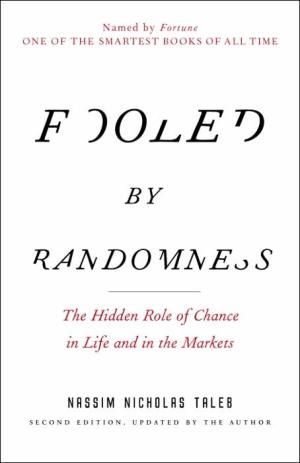
45 Best Quotes from Fooled by Randomness: The Hidden Role of Chance in Life and in the Markets

Everyone wants to succeed in life. But what causes some of us to be more successful than others? Is it really down to skill and strategy; or something altogether more unpredictable? This book is about the way you think about business and the world. It is all about…

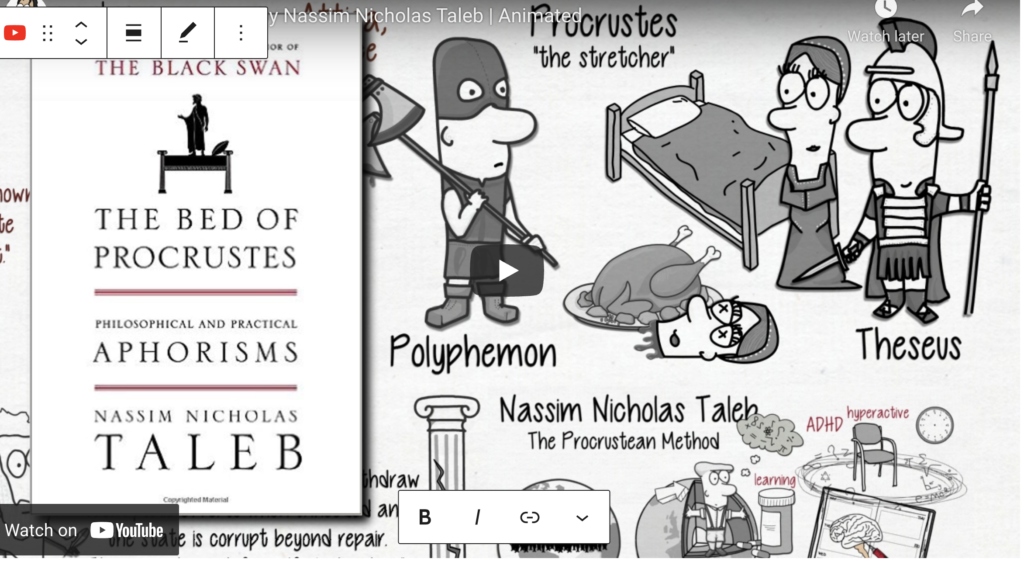
Quotes from “The Bed of Procrustes”: 35 Aphorisms by Nassim Taleb

The Bed of Procrustes: Philosophical and Practical Aphorisms is a philosophy book by Nassim Nicholas Taleb written in the aphoristic style.  The title refers to Procrustes, a figure from Greek mythology who abducted travelers and stretched or chopped…

Top 50 Quotes From The Black Swan by Nassim Nicholas Taleb

“Missing a train is only painful if you run after it! Likewise, not matching the idea of success others expect from you is only painful if that’s what you are seeking.”

80 Top Quotes From Antifragile: Things That Gain From Disorder by Nassim Nicholas Taleb

The antifragile is beyond the resilient or robust. The resilient resists shocks and stays the same; the antifragile gets better and better.

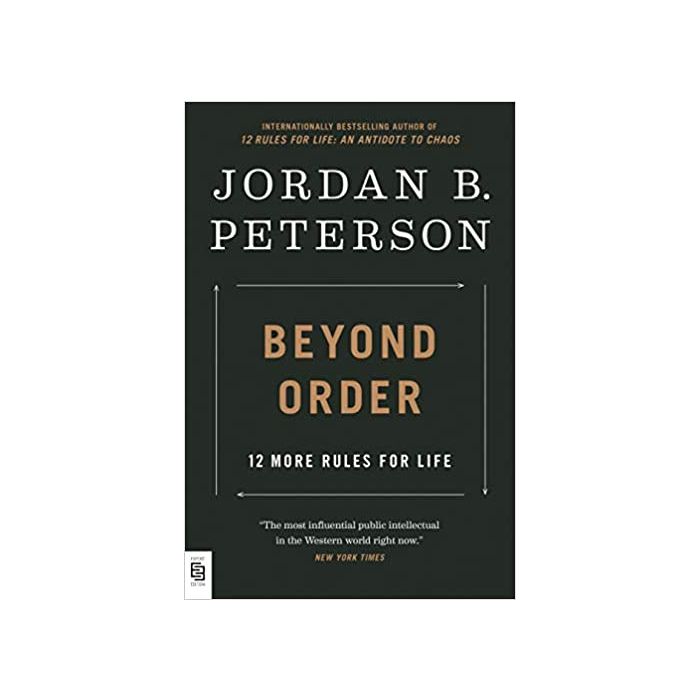
Best 70 Quotes from Beyond Order by Jordan Peterson

Overview

Peterson’s original interest in writing his last book, 12 Rules for Life: An Antidote to Chaos, grew out of a personal hobby of answering questions posted on Quora; one such question being, “What are the most valuable things everyone should know?”, to which his answer comprised 42 rules.

Essentially psychological in their intention, the rules in both books are told using particular episodes of Peterson’s clinical experience. Moreover, Peterson has stated that these rules were “explicitly formulated to aid in the development of the individual,” though they may also prove useful at “levels of social organisation that incorporate the individual.”

Peterson states that both books are predicated on the notion that chaos and order are “the two fundamental elements of reality”, and that “people find meaning in optimally balancing them”. The difference between the two books, according to Peterson, is that the first focuses “more on the dangers of an excess of chaos”, while the second is more concerned “with the dangers of too much structure”. Peterson says that 12 Rules “argues for the merits of a more conservative view of the world” while (#Ad) Beyond Order “argues for the merits of a more liberal view”. (from Wikipedia)

The 12 “More” Rules For Life List

  1. Do not carelessly denigrate social institutions or creative achievement.
  2. Imagine who you could be and then aim single-mindedly at that.
  3. Do you not hide unwanted things in the fog.
  4. Notice that opportunity lurks where responsibility has been abdicated.
  5. Do not do what you hate.
  6. Abandon ideology.
  7. Work as hard as you possibly can on at least one thing and see what happens.
  8. Try to make one room in your home as beautiful as possible.
  9. If old memories still upset you, write them down carefully and completely.
  10. Plan and work diligently to maintain the romance in your relationship.
  11. Do not allow yourself to become resentful, deceitful, or arrogant.
  12. Be grateful in spite of your suffering.

Quotes from Beyond Order: 12 More Rules for Life

From Rule I: Do Not Carelessly Denigrate Social Institutions or Creative Achievement

People depend on constant communication with others to keep their minds organized. We all need to think to keep things straight, but we mostly think by talking. We need to talk about the past, so we can distinguish the trivial, overblown concerns that otherwise plague our thoughts from the experiences that are truly important. We need to talk about the nature of the present and our plans for the future, so we know where we are, where we are going, and why we are going there.

People remain mentally healthy not merely because of the integrity of their own minds, but because they are constantly being reminded how to think, act, and speak by those around them.

FROM Rule II: Imagine Who You Could Be, and Then Aim Single-Mindedly at That

Who are you? And, more importantly, who could you be, if you were everything you could conceivably be?

When ignorance destroys culture, monsters will emerge.

Peace is the establishment of a shared hierarchy of divinity, of value.

That which you most need to find will be found where you least wish to look.

(#Ad) Beyond Order: 12 More Rules for Life

From Rule III: Do Not Hide Unwanted Things in the Fog

Life is what repeats, and it is worth getting what repeats right.

People generally believe that actively doing something bad (that is the sin of commission) is, on average, worse than passively not doing something good (that is the sin of omission). Perhaps this is because there are always good things we are not doing; some sins of omission are therefore inevitable.

If you make what you want clear and commit yourself to its pursuit, you may fail. But if you do not make what you want clear, then you will certainly fail. You cannot hit a target that you refuse to see. You cannot hit a target if you do not take aim. And, equally dangerously, in both cases: you will not accrue the advantage of aiming, but missing. You will not benefit from the learning that inevitably takes place when things do not go your way. Success at a given endeavor often means trying, falling short, recalibrating (with the new knowledge generated painfully by the failure), and then trying again and falling short—often repeated, ad nauseam.

What you need remains hidden where you least want to look.

From Rule IV: Notice That Opportunity Lurks Where Responsibility Has Been Abdicated

It appears that the meaning that most effectively sustains life is to be found in the adoption of responsibility. When people look back on what they have accomplished, they think, if they are fortunate: “Well, I did that, and it was valuable. It was not easy. But it was worth it.” It is a strange and paradoxical fact that there is a reciprocal relationship between the worth of something and the difficulty of accomplishing it. Imagine the following conversation: “Do you want difficulty?” “No, I want ease.” “In your experience, has doing something easy been worthwhile?” “Well, no, not very often.” “Then perhaps you really want something difficult.” I think that is the secret to the reason for Being itself: difficult is necessary.

Aim at something. Discipline yourself. Or suffer the consequence. And what is that consequence? All the suffering of life, with none of the meaning. Is there a better description of hell?

The mere fact that something makes you happy in the moment does not mean that it is in your best interest, everything considered. Life would be simple if that were the case. But there is the you now, and the you tomorrow, and the you next week, and next year, and in five years, and in a decade—and you are required by harsh necessity to take all of those “yous” into account. That is the curse associated with the human discovery of the future and, with it, the necessity of work—because to work means to sacrifice the hypothetical delights of the present for the potential improvement of what lies ahead.

There is in fact little difference between how you should treat yourself—once you realize that you are a community that extends across time—and how you should treat other people.

The sense of meaning is an indicator that you are on that path. It is an indication that all the complexity that composes you is lined up within you, and aimed at something worth pursuing—something that balances the world, something that produces harmony.

From Rule V: Do Not Do What You Hate

We do the things we do because we think those things important, compared to all the other things that could be important. We regard what we value as worthy of sacrifice and pursuit. That worthiness motivates us to act, despite the fact that action is difficult and dangerous.

From Rule VI: Abandon Ideology

The meaning that sustains life in all its tragedy and disappointment is to be found in shouldering a noble burden.

Have some humility. Clean up your bedroom. Take care of your family. Follow your conscience. Straighten up your life. Find something productive and interesting to do and commit to it. When you can do all that, find a bigger problem and try to solve that if you dare. If that works, too, move on to even more ambitious projects.

From Rule VII: Work as Hard as You Possibly Can on at Least One Thing and See What Happens

Without clear, well-defined, and noncontradictory goals, the sense of positive engagement that makes life worthwhile is very difficult to obtain. Clear goals limit and simplify the world, as well, reducing uncertainty, anxiety, shame, and the self-devouring physiological forces unleashed by stress. The poorly integrated person is thus volatile and directionless—and this is only the beginning. Sufficient volatility and lack of direction can rapidly conspire to produce the helplessness and depression characteristic of prolonged futility. This is not merely a psychological state. The physical consequences of depression, often preceded by excess secretion of the stress hormone cortisol, are essentially indistinguishable from rapid aging (weight gain, cardiovascular problems, diabetes, cancer, and Alzheimer’s).

The properly functioning and integrated individual tempers the desires of the present with the necessities of the future,

But proper discipline organizes rather than destroys.

(#Ad) Beyond Order: 12 More Rules for Life

From Rule VIII: Try to Make One Room in Your Home as Beautiful as Possible

A real piece of art is a window into the transcendent, and you need that in your life, because you are finite and limited and bounded by your ignorance. Unless you can make a connection to the transcendent, you will not have the strength to prevail when the challenges of life become daunting. You need to establish a link with what is beyond you, like a man overboard in high seas requires a life preserver, and the invitation of beauty into your life is one means by which that may be accomplished.

We live by beauty. We live by literature. We live by art. We cannot live without some connection to the divine—and beauty is divine—because in its absence life is too short, too dismal, and too tragic.

Artists are the people who stand on the frontier of the transformation of the unknown into knowledge. They make their voluntary foray out into the unknown, and they take a piece of it and transform it into an image.

The artists do not understand full well what they are doing. They cannot, if they are doing something genuinely new. Otherwise, they could just say what they mean and have done with it. They would not require expression in dance, music, and image. But they are guided by feel, by intuition—by their facility with the detection of patterns—and that is all embodied, rather than articulated, at least in its initial stages. When creating, the artists are struggling, contending, and wrestling with a problem—maybe even a problem they do not fully understand—and striving to bring something new into clear focus. Otherwise they are mere propagandists, reversing the artistic process, attempting to transform something they can already articulate into image and art for the purpose of rhetorical and ideological victory.

Artists must be contending with something they do not understand, or they are not artists. Instead, they are posers, or romantics (often romantic failures), or narcissists, or actors (and not in the creative sense).

Art is exploration. Artists train people to see.

From Rule IX: If Old Memories Still Upset You, Write Them Down Carefully and Completely

Learn from the past. Or repeat its horrors, in imagination, endlessly.

To orient ourselves in the world, we need to know where we are and where we are going. Where we are: that concept must optimally include a full account of our experience of the world to date. If you do not know what roads you have traversed, it is difficult to calculate where you are. Where we are going: that is the projection of our ultimate ideal—by no means simply a question, say, of accomplishment, love, wealth, or power, but development of the character that makes all fortunate outcomes more likely and all unfortunate outcomes less likely. We map the world so that we can make the move from where we are—from point A—to where we are going—to point B. We use our map to guide our movement, and we encounter successes and obstacles along the way.

We must recollect our experiences and derive from them their moral. Otherwise, we remain in the past, plagued by reminiscences, tormented by conscience, cynical for the loss of what might have been, unforgiving of ourselves, and unable to accept the challenges and tragedies facing us. We must recollect ourselves or suffer in direct proportion to our ignorance and avoidance. We must gather everything from the past that we avoided. We must rekindle every lost opportunity. We must repent for missing the mark, meditate on our errors, acquire now what we should have acquired then, and put ourselves back together.

There is all that is outside of you, waiting to inform and teach you.

If the past has not been ordered, the chaos it still constitutes haunts us.

There is information—vital information—resting in the memories that affect us negatively.

From Rule X: Plan and Work Diligently to Maintain the Romance in Your Relationship

If you allow yourself to know what you want, then you will also know precisely when you are failing to get it. You will benefit, of course, because you will also know when you have succeeded. But you might also fail, and you could well be frightened enough by the possibility of not getting what you need (and want) that you keep your desires vague and unspecified. And the chance that you will get what you want if you fail to aim for it is vanishingly small.

It is not that one must abide by what the other wants (or vice versa). Instead, it is that both should be oriented toward the most positive future possible, and agree that speaking the truth is the best pathway forward.

There are seven billion people in the world. At least a hundred million (let us say) might have made good partners for you. You certainly did not have time to try them out, and the probability that you found the theoretically optimal person approaches zero. But you do not find so much as make, and if you do not know that you are in real trouble.

Your life is, after all, mostly composed of what is repeated routinely.

Here is a rule: do not ever punish your partner for doing something you want them to continue doing.

Allow yourself to become aware of what you want and need, and have the decency to let your partner in on the secret. After all, who else are you going to tell?

Do not be naive, and do not expect the beauty of love to maintain itself without all-out effort on your part.

From Rule XI: Do Not Allow Yourself to Become Resentful, Deceitful, or Arrogant

If the map you are using is missing part of the world, you are going to be utterly unprepared when that absent element makes itself manifest.

Because the future and the present differ from the past, what worked before will not necessarily work now,

It is difficult for any of us to see what we are blinded to by the nature of our personalities. It is for this reason that we must continually listen to people who differ from us, and who, because of that difference, have the ability to see and to react appropriately to what we cannot detect.

We should always have enough sense to keep in mind, for example, that a great predator lurks beneath the thin ice of our constructed realities.

It is often the case that if something bad happens to you, you should ask yourself if there is something that you have done in the past that has increased the probability of the terrible event—as we have discussed at length—because it is possible that you have something to learn that would decrease the chances of its recurrence. But often that is not at all what we are doing.
I think the more voluntary confrontation is practiced, the more can be borne. I do not know what the upper limit is for that.

It is in our individual capacity to confront the potential of the future and to transform it into the actuality of the present. The way we determine what it is that the world transforms into is a consequence of our ethical, conscious choices. We wake up in the morning and confront the day, with all its possibilities and terrors. We chart a course, making decisions for better or worse. We understand full well that we can do evil and bring terrible things into Being. But we also know that we can do good, if not great, things. We have the best chance of doing the latter if we act properly, as a consequence of being truthful, responsible, grateful, and humble.

From Rule XII: Be Grateful in Spite of Your Suffering

If you fail to understand evil, then you have laid yourself bare to it. You are susceptible to its effects, or to its will. If you ever encounter someone who is malevolent, they have control over you in precise proportion to the extent that you are unwilling or unable to understand them. Thus, you look in dark places to protect yourself, in case the darkness ever appears, as well as to find the light. There is real utility in that.

More Quotes From Beyond Order

“We outsource the problem of sanity. People remain mentally healthy not merely because of the integrity of their own minds, but because they are constantly being reminded how to think, act, and speak by those around them.” ― Jordan B. Peterson

“A certain amount of creativity and rebellion must be tolerated – or welcomed, depending on your point of view – to maintain the process of regeneration. Every rule was once a creative act, breaking other rules.” ― Jordan B. Peterson

“I will trust you—I will extend my hand to you—despite the risk of betrayal, because it is possible, through trust, to bring out the best in you, and perhaps in me. So,” ― Jordan B. Peterson

“With careful searching, with careful attention, you might tip the balance toward opportunity and against obstacle sufficiently so that life is clearly worth living, despite its fragility and suffering. If you truly wanted, perhaps you would receive, if you asked. If you truly sought, perhaps you would find what you seek. If you knocked, truly wanting to enter, perhaps the door would open. But there will be times in your life when it will take everything you have to face what is in front of you, instead of hiding away from a truth so terrible that the only thing worse is the falsehood you long to replace it with. Do not hide unwanted things in the fog.” ― Jordan B. Peterson

“These individuals tend to be profoundly ignorant of the complex realities of the status quo, unconscious of their own ignorance, and ungrateful for what the past has bequeathed to them.” ― Jordan B. Peterson

“Have they been educated to the level of their intellectual ability or ambition? Is their use of free time engaging, meaningful, and productive? Have they formulated solid and well-articulated plans for the future? Are they (and those they are close to) free of any serious physical health or economic problems? Do they have friends and a social life? A stable and satisfying intimate partnership? Close and functional familial relationships? A career—or, at least, a job—that is financially sufficient, stable and, if possible, a source of satisfaction and opportunity? If the answer to any three or more of these questions is no, I consider that my new client is insufficiently embedded in the interpersonal world and is in danger of spiraling downward psychologically because of that.” ― Jordan B. Peterson

“The healthy, dynamic, and above all else truthful personality will admit to error. It will voluntarily shed—let die—outdated perceptions, thoughts, and habits, as impediments to its further success and growth. This is the soul that will let its old beliefs burn away, often painfully, so that it can live again, and move forward, renewed. This is also the soul that will transmit what it has learned during that process of death and rebirth, so that others can be reborn along with it. Aim at something. Pick the best target you can currently conceptualize. Stumble toward it. Notice your errors and misconceptions along the way, face them, and correct them. Get your story straight. Past, present, future—they all matter. You need to map your path. You need to know where you were, so that you do not repeat the mistakes of the past.” ― Jordan B. Peterson

“The Seeker—in real life, as well as in Rowling’s Potter series and its Quidditch game—is he or she who takes that sense of significance more seriously than anything else. The Seeker is therefore the person who is playing the game that everyone else is playing (and who is disciplined and expert at the game), but who is also playing an additional, higher-order game: the pursuit of what is of primary significance” ― Jordan B. Peterson

“Familiarize yourself with the collected wisdom of our civilization. This is a very good idea—a veritable necessity—because people have been working out how to live for a long time. What they have produced is strange but also rich beyond comparison, so why not use it as a guide? Your vision will be grander and your plans more comprehensive.” ― Jordan B. Peterson

“Your failure to specify your desires means your unfortunate lover will have to guess what would please and displease you, and is likely to be punished in some manner for getting it wrong. Furthermore, given all the things you could want—and do not want—it is virtually certain that your lover will get it wrong. In consequence, you will be motivated to blame them, at least implicitly, or nonverbally, or unconsciously, for not caring enough to notice what you are unwilling even to notice yourself. “If you really loved me,” you will think—or feel, without thinking—“I would not have to tell you what would make me happy.” ― Jordan B. Peterson

“We are all human. That means there is something about our experience that is the same. Otherwise, we would not all be human.” ― Jordan B. Peterson

“The moral of the story? Beware of intellectuals who make a monotheism out of their theories of motivation.” ― Jordan B. Peterson

“When you are visited by chaos and swallowed up; when nature curses you or someone you love with illness; or when tyranny rends asunder something of value that you have built, it is salutary to know the rest of the story. All of that misfortune is only the bitter half of the tale of existence, without taking note of the heroic element of redemption or the nobility of the human spirit requiring a certain responsibility to shoulder. We ignore that addition to the story at our peril, because life is so difficult that losing sight of the heroic part of existence could cost us everything.” ― Jordan B. Peterson

“There is no evidence that the importance of friendship declines in any manner with age.”
― Jordan B. Peterson,

“Aim. Point. All this is part of maturation and discipline, and something to be properly valued. If you aim at nothing, you become plagued by everything. If you aim at nothing, you have nowhere to go, nothing to do, and nothing of high value in your life, as value requires the ranking of options and sacrifice of the lower to the higher. Do you really want to be anything you could be? Is that not too much? Might it not be better to be something specific (and then, perhaps, to add to that)? Would that not come as a relief—even though it is also a sacrifice?” ― Jordan B. Peterson

“An artist constantly risks falling fully into chaos, instead of transforming it.” ― Jordan B. Peterson

“I have been searching for decades for certainty. It has not been solely a matter of thinking, in the creative sense, but of thinking and then attempting to undermine and destroy those thoughts, followed by careful consideration and conservation of those that survive. It is identification of a path forward through a swampy passage, searching for stones to stand on safely below the murky surface. However, even though I regard the inevitability of suffering and its exaggeration by malevolence as unshakable truths, I believe even more deeply that people have the ability to transcend their suffering, psychologically, and practically, and to constrain their own malevolence, as well as the evils that characterise the social and the natural worlds.” ― Jordan B. Peterson

“Your life becomes meaningful in precise proportion to the depths of the responsibility you are willing to shoulder. That is because you are now genuinely involved in making things better.” ― Jordan B. Peterson

“Who is subordinate to whom in a marriage?” After all, each might reason, as people commonly do, that such an arrangement is a zero-sum game, with one winner and one loser. But a relationship does not have to be and should not be a question of one or the other as winner, or even each alternating in that status, in an approximation of fairness. Instead, the couple can decide that each and both are subordinate to a principle, a higher-order principle, which constitutes their union in the spirit of illumination and truth. That ghostly figure, the ideal union of what is best in both personalities, should be constantly regarded as the ruler of the marriage—and, indeed, as something as close to divine as might be practically approached by fallible individuals” ― Jordan B. Peterson

“The beginner, the fool, is continually required to be patient and tolerant—with himself and, equally, with others. His displays of ignorance, inexperience, and lack of skill may still sometimes be rightly attributed to irresponsibility and condemned, justly, by others. But the insufficiency of the fool is often better regarded as an inevitable consequence of each individual’s essential vulnerability, rather than as a true moral failing. Much that is great starts small, ignorant, and useless. This lesson permeates popular as well as classical or traditional culture.” ― Jordan B. Peterson

“The world is a very strange place, and there are times when the metaphorical or narrative description characteristic of culture and the material representation so integral to science appear to touch, when everything comes together—when life and art reflect each other equally.” ― Jordan B. Peterson

“What is the moral of the story? Make yourself colorful, stand out, and the lions will take you down. And the lions are always there.” ― Jordan B. Peterson

“Drama—formalized imitation, enacted upon a stage—is precisely behavior portraying behavior, but distilled ever closer to the essence. Literature takes that transmission one more difficult step, portraying action in the imagination of the writer and the reader, in the complete absence of both real actors and a material stage.” ― Jordan B. Peterson

45 Best Quotes from Fooled by Randomness: The Hidden Role of Chance in Life and in the Markets

Everyone wants to succeed in life. But what causes some of us to be more successful than others? Is it really down to skill and strategy; or something altogether more unpredictable? This book is about the way you think about business and the world. It is all about luck: how we perceive luck in our personal and professional experiences. Nowhere is this more obvious than in the markets: we hear an entrepreneur has vision or a trader is talented, but all too often their performance is down to chance rather than skill. It is only because we fail to understand probability that we continue to believe events are non-random, finding reasons where none exist.

(#Ad) Fooled by Randomness: The Hidden Role of Chance in Life and in the Markets deals with the fallibility of human knowledge. It was first published in 2001. Updated editions were released a few years later. The book is the first part of Taleb’s multi-volume philosophical essay on uncertainty, titled the Incerto, which also includes The Black Swan (2007–2010), The Bed of Procrustes (2010–2016), Antifragile (2012), and Skin in the Game (2018).

45 BEST QUOTES FROM FOOLED BY RANDOMNESS

“Heroes are heroes because they are heroic in behavior, not because they won or lost.” ― Nassim Nicholas Taleb, quote from Fooled by Randomness: The Hidden Role of Chance in Life and in the Markets

“Charm is the ability to insult people without offending them; nerdiness the reverse” ― Nassim Nicholas Taleb, quote from Fooled by Randomness: The Hidden Role of Chance in Life and in the Markets

“Reality is far more vicious than Russian roulette. First, it delivers the fatal bullet rather infrequently, like a revolver that would have hundreds, even thousands of chambers instead of six. After a few dozen tries, one forgets about the existence of a bullet, under a numbing false sense of security. Second, unlike a well-defined precise game like Russian roulette, where the risks are visible to anyone capable of multiplying and dividing by six, one does not observe the barrel of reality. One is capable of unwittingly playing Russian roulette – and calling it by some alternative “low risk” game.” ― Nassim Nicholas Taleb, quote from Fooled by Randomness: The Hidden Role of Chance in Life and in the Markets

“Probability is not a mere computation of odds on the dice or more complicated variants; it is the acceptance of the lack of certainty in our knowledge and the development of methods for dealing with our ignorance.” ― Nassim Nicholas Taleb, quote from Fooled by Randomness: The Hidden Role of Chance in Life and in the Markets

“When you develop your opinions on the basis of weak evidence, you will have difficulty interpreting subsequent information that contradicts these opinions, even if this new information is obviously more accurate “― Nassim Nicholas Taleb, quote from Fooled by Randomness: The Hidden Role of Chance in Life and in the Markets

“Those who were unlucky in life in spite of their skills would eventually rise. The lucky fool might have benefited from some luck in life; over the longer run he would slowly converge to the state of a less-lucky idiot. Each one would revert to his long-term properties.” ― Nassim Nicholas Taleb, quote from Fooled by Randomness: The Hidden Role of Chance in Life and in the Markets

“Never ask a man if he is from Sparta: If he were, he would have let you know such an important fact – and if he were not, you could hurt his feelings.” ― Nassim Nicholas Taleb, quote from Fooled by Randomness: The Hidden Role of Chance in Life and in the Markets

“A mistake is not something to be determined after the fact, but in light of the information available until that point” ― Nassim Nicholas Taleb, quote from Fooled by Randomness: The Hidden Role of Chance in Life and in the Markets

“No matter how sophisticated our choices, how good we are at dominating the odds, randomness will have the last word.” ― Nassim Nicholas Taleb, quote from Fooled by Randomness: The Hidden Role of Chance in Life and in the Markets

“There is asymmetry. Those who die do so very early in the game, while those who live go on living very long. Whenever there is asymmetry in outcomes, the average survival has nothing to do with the median survival.” ― Nassim Nicholas Taleb, quote from Fooled by Randomness: The Hidden Role of Chance in Life and in the Markets

“When things go our way we reject the lack of certainty.” ― Nassim Nicholas Taleb, quote from Fooled by Randomness: The Hidden Role of Chance in Life and in the Markets

(#Ad) Fooled by Randomness: The Hidden Role of Chance in Life and in the Markets

“The observation of the numerous misfortunes that attend all conditions forbids us to grow insolent upon our present enjoyments, or to admire a man’s happiness that may yet, in course of time, suffer change. For the uncertain future has yet to come, with all variety of future; and to him only to whom the divinity has [guaranteed] continued happiness until the end we may call happy.” ― Nassim Nicholas Taleb, quote from Fooled by Randomness: The Hidden Role of Chance in Life and in the Markets

“If the past, by bringing surprises, did not resemble the past previous to it (what I call the past’s past), then why should our future resemble our current past?” ― Nassim Nicholas Taleb, quote from Fooled by Randomness: The Hidden Role of Chance in Life and in the Markets

“My lesson from Soros is to start every meeting at my boutique by convincing everyone that we are a bunch of idiots who know nothing and are mistake-prone, but happen to be endowed with the rare privilege of knowing it.” ― Nassim Nicholas Taleb, quote from Fooled by Randomness: The Hidden Role of Chance in Life and in the Markets

“There is a simple test to define path dependence of beliefs (economists have a manifestation of it called the endowment effect). Say you own a painting you bought for $20,000, and owing to rosy conditions in the art market, it is now worth $40,000. If you owned no painting, would you still acquire it at the current price? If you would not, then you are said to be married to your position. There is no rational reason to keep a painting you would not buy at its current market rate—only an emotional investment. Many people get married to their ideas all the way to the grave. Beliefs are said to be path dependent if the sequence of ideas is such that the first one dominates.” ― Nassim Nicholas Taleb, quote from Fooled by Randomness: The Hidden Role of Chance in Life and in the Markets

“Bullish or bearish are terms used by people who do not engage in practicing uncertainty, like the television commentators, or those who have no experience in handling risk. Alas, investors and businesses are not paid in probabilities; they are paid in dollars. Accordingly, it is not how likely an event is to happen that matters, it is how much is made when it happens that should be the consideration.” ― Nassim Nicholas Taleb, quote from Fooled by Randomness: The Hidden Role of Chance in Life and in the Markets

“Mathematics is principally a tool to meditate, rather than to compute.” ― Nassim Nicholas Taleb, quote from Fooled by Randomness: The Hidden Role of Chance in Life and in the Markets

“Too much success is the enemy, too much failure is demoralizing.” ― Nassim Nicholas Taleb, quote from Fooled by Randomness: The Hidden Role of Chance in Life and in the Markets

“Mild success can be explainable by skills and labor. Wild success is attributable to variance.” ― Nassim Nicholas Taleb, quote from Fooled by Randomness: The Hidden Role of Chance in Life and in the Markets

“The epiphany I had in my career in randomness came when I understood that I was not intelligent enough, nor strong enough, to even try to fight my emotions.” ― Nassim Nicholas Taleb, quote from Fooled by Randomness: The Hidden Role of Chance in Life and in the Markets

“I will set aside the point that I see no special heroism in accumulating money, particularly if, in addition, the person is foolish enough to not even try to derive any tangible benefit from the wealth (aside from the pleasure of regularly counting the beans).” ― Nassim Nicholas Taleb, quote from Fooled by Randomness: The Hidden Role of Chance in Life and in the Markets

“People do not realize that the media is paid to get your attention. For a journalist, silence rarely surpasses any word.” ― Nassim Nicholas Taleb, quote from Fooled by Randomness: The Hidden Role of Chance in Life and in the Markets

“We favor the visible, the embedded, the personal, the narrated, and the tangible; we scorn the abstract.“ ― Nassim Nicholas Taleb, quote from Fooled by Randomness: The Hidden Role of Chance in Life and in the Markets

“Clearly, an open mind is a necessity when dealing with randomness. Popper believed that any idea of Utopia is necessarily closed owing to the fact that it chokes its own refutations. The simple notion of a good model for society that cannot be left open for falsification is totalitarian. I learned from Popper, in addition to the difference between an open and a closed society, that between an open and a closed mind.” ― Nassim Nicholas Taleb, quote from Fooled by Randomness: The Hidden Role of Chance in Life and in the Markets

“This high-yield market resembles a nap on a railway track.” ― Nassim Nicholas Taleb, quote from Fooled by Randomness: The Hidden Role of Chance in Life and in the Markets

“It certainly takes bravery to remain skeptical; it takes inordinate courage to introspect, to confront oneself, to accept one’s limitations–Scientists are seeing more and more evidence that we are specifically designed by mother nature to fool ourselves.” ― Nassim Nicholas Taleb, quote from Fooled by Randomness: The Hidden Role of Chance in Life and in the Market

“Many amateurs believe that plants and animals reproduce on a one-way route toward perfection. Translating the idea in social terms, they believe that companies and organizations are, thanks to competition (and the discipline of the quarterly report), irreversibly heading toward betterment. The strongest will survive; the weakest will become extinct. As to investors and traders, they believe that by letting them compete, the best will prosper and the worst will go learn a new craft (like pumping gas or, sometimes, dentistry). Things are not as simple as that. We will ignore the basic misuse of Darwinian ideas in the fact that organizations do not reproduce like living members of nature—Darwinian ideas are about reproductive fitness, not about survival.” ― Nassim Nicholas Taleb, quote from Fooled by Randomness: The Hidden Role of Chance in Life and in the Markets

“we are not made to view things as independent from each other. When viewing two events A and B, it is hard not to assume that A causes B, B causes A, or both cause each other. Our bias is immediately to establish a causal link.” ― Nassim Nicholas Taleb, quote from Fooled by Randomness: The Hidden Role of Chance in Life and in the Market

“Veteran trader Marty O’Connell calls this the firehouse effect. He had observed that firemen with much downtime who talk to each other for too long come to agree on many things that an outside, impartial observer would find ludicrous (they develop political ideas that are very similar). Psychologists give it a fancier name, but my friend Marty has no training in behavioral sciences.” ― Nassim Nicholas Taleb, quote from Fooled by Randomness: The Hidden Role of Chance in Life and in the Markets

“The formation of our beliefs is fraught with superstitions—even today (I might say, especially today). Just as one day some primitive tribesman scratched his nose, saw rain falling, and developed an elaborate method of scratching his nose to bring on the much-needed rain, we link economic prosperity to some rate cut by the Federal Reserve Board, or the success of a company with the appointment of the new president “at the helm.” ― Nassim Nicholas Taleb, quote from Fooled by Randomness: The Hidden Role of Chance in Life and in the Markets

(#Ad) Fooled by Randomness: The Hidden Role of Chance in Life and in the Markets

“Wittgenstein’s ruler: “Unless you have confidence in the ruler’s reliability, if you use a ruler to measure a table you may also be using the table to measure the ruler.”“ ― Nassim Nicholas Taleb, quote from Fooled by Randomness: The Hidden Role of Chance in Life and in the Markets

“Lucky fools do not bear the slightest suspicion that they may be lucky fools – by definition, they do not know that they belong to such a category.“ ― Nassim Nicholas Taleb, quote from Fooled by Randomness: The Hidden Role of Chance in Life and in the Markets

“I always remind myself that what one observes is at best a combination of variance and returns, not just returns.“ ― Nassim Nicholas Taleb, quote from Fooled by Randomness: The Hidden Role of Chance in Life and in the Markets

“I try to make money infrequently, as infrequently as possible simply because I believe that rare events are not fairly valued, and that the rarer the event, the more undervalued it will be in price.“ ― Nassim Nicholas Taleb, quote from Fooled by Randomness: The Hidden Role of Chance in Life and in the Markets

“Unlike a well-defined, precise game like Russian roulette, where the risks are visible to anyone capable of multiplying and dividing by six, one does not observe the barrel of reality.“ ― Nassim Nicholas Taleb, quote from Fooled by Randomness: The Hidden Role of Chance in Life and in the Markets

“[E]conomists are evaluated on how intelligent they sound, not on a scientific measure of their knowledge of reality.“ ― Nassim Nicholas Taleb, quote from Fooled by Randomness: The Hidden Role of Chance in Life and in the Markets

“The more data we have, the more likely we are to drown in it.“ ― Nassim Nicholas Taleb, quote from Fooled by Randomness: The Hidden Role of Chance in Life and in the Markets

“Probability is not about the odds, but about the belief in the existence of an alternative outcome, cause, or motive.“ ― Nassim Nicholas Taleb, quote from Fooled by Randomness: The Hidden Role of Chance in Life and in the Markets

“It does not matter how frequently something succeeds if failure is too costly to bear.“ ― Nassim Nicholas Taleb, quote from Fooled by Randomness: The Hidden Role of Chance in Life and in the Markets

[E]conomics is a narrative discipline, and explanations are easy to fit retrospectively.“ ― Nassim Nicholas Taleb, quote from Fooled by Randomness: The Hidden Role of Chance in Life and in the Markets

“Trading forces someone to think hard; those who merely work hard generally lose their focus and intellectual energy. In addition, they end up drowning in randomness; work ethics draw people to focus on noise rather than the signal.“ ― Nassim Nicholas Taleb, quote from Fooled by Randomness: The Hidden Role of Chance in Life and in the Markets

“[In] economics… you can disguise charlatanism under the weight of equations and nobody can catch you since there is no such thing as a controlled experiment. Now the spirit of such methods, called scientism by its detractors, continued into the discipline of finance as a few technicians thought their mathematical knowledge could lead them to understand markets. The practice of financial engineering came along with massive doses of pseudoscience.“ ― Nassim Nicholas Taleb, quote from Fooled by Randomness: The Hidden Role of Chance in Life and in the Markets

“There is a saying that bad traders divorce their spouse sooner than abandon their positions. Loyalty to ideas is not a good thing for traders, scientists – or anyone.“ ― Nassim Nicholas Taleb, quote from Fooled by Randomness: The Hidden Role of Chance in Life and in the Markets

“Delivering advice assumes that our cognitive apparatus rather than our emotional machinery exerts some meaningful control over our actions.“ ― Nassim Nicholas Taleb, quote from Fooled by Randomness: The Hidden Role of Chance in Life and in the Markets

“The observation of the numerous misfortunes that attend all conditions forbids us to grow insolent upon our present enjoyments, or to admire a man’s happiness that may yet, in course of time, suffer change. For the uncertain future has yet to come, with all variety of future; and to him only to whom the divinity has [guaranteed] continued happiness until the end we may call happy.” ― Nassim Nicholas Taleb, quote from Fooled by Randomness: The Hidden Role of Chance in Life and in the Markets

Nassim Nicholas Taleb

Nassim Nicholas Taleb (born 1960) is a Lebanese-American essayist, scholar, mathematical statistician, and former option trader and risk analyst, whose work concerns problems of randomness, probability, and uncertainty. His 2007 book The Black Swan has been described by The Sunday Times as one of the twelve most influential books since World War II.

Taleb is the author of the Incerto, a five volume philosophical essay on uncertainty published between 2001 and 2018 (of which the most known books are The Black Swan and (#Ad Antifragile). He has been a professor at several universities, serving as a Distinguished Professor of Risk Engineering at the New York University Tandon School of Engineering since September 2008. He has been co-editor-in-chief of the academic journal Risk and Decision Analysis since September 2014. He has also been a practitioner of mathematical finance, a hedge fund manager, and a derivatives trader.

Other posts about books by Nassim Taleb

Quotes from “The Bed of Procrustes”: 35 Aphorisms by Nassim Taleb

The Bed of Procrustes: Philosophical and Practical Aphorisms is a philosophy book by Nassim Nicholas Taleb written in the aphoristic style.  The title refers to Procrustes, a figure from Greek mythology who abducted travelers and stretched or chopped…

Top 50 Quotes From The Black Swan by Nassim Nicholas Taleb

“Missing a train is only painful if you run after it! Likewise, not matching the idea of success others expect from you is only painful if that’s what you are seeking.”

80 Top Quotes From Antifragile: Things That Gain From Disorder by Nassim Nicholas Taleb

The antifragile is beyond the resilient or robust. The resilient resists shocks and stays the same; the antifragile gets better and better.

Quotes from “The Bed of Procrustes”: 35 Aphorisms by Nassim Taleb

The Bed of Procrustes: Philosophical and Practical Aphorisms is a philosophy book by Nassim Nicholas Taleb written in the aphoristic style. 

The title refers to Procrustes, a figure from Greek mythology who abducted travelers and stretched or chopped their bodies to fit the length of his bed.

For Taleb, the story of Procrustes is a metaphor for our modern age. It “contrasts the classical values of courage, elegance, and erudition against the modern diseases of nerdiness, philistinism, and phoniness.”

This book can be consider a synthesized version of Taleb’s other works: Fooled by Randomness, The Black Swan, and Antifragile, which deal with how to live in a world we don’t quite understand.

Every aphorism … is about a Procrustean bed of sorts—we humans, facing limits of knowledge, and things we do not observe, the unseen and the unknown, resolve the tension by squeezing life and the world into crisp commoditized ideas, reductive categories, specific vocabularies, and prepackaged narratives, which, on the occasion, has explosive consequences. Further, we seem unaware of this backward fitting, much like tailors who take great pride in delivering the perfectly fitting suit—but do so by surgically altering the limbs of their customers. For instance few realize that we are changing the brains of schoolchildren through medication in order to make them adjust to the curriculum, rather than the reverse. (Nassim Taleb)

35 AphorismS from “the Bed of Procrustes”

Love

Love without sacrifice is like theft.

Influence

You know you have influence when people start noticing your absence more than the presence of others.

Education

Education makes the wise slightly wiser, but it makes the fool vastly more dangerous.

Being funny

Some people are only funny when they try to be serious.

Revenge

The best revenge on a liar is to convince him that you believe what he said.

The originality test

The test of originality for an idea is not the absence of one single predecessor but the presence of multiple but incompatible ones.

Erudite

An erudite is someone who displays less than he knows; a journalist or consultant the opposite.

Advice

When we want to do something while unconsciously certain to fail, we seek advice so we can blame someone else for the failure.

Winning Arguments

You never win an argument until they attack your person.

Envy

They will envy you for your success, your wealth, for your intelligence, for your looks, for your status – but rarely for your wisdom.

Turning on creativity

Your brain is most intelligent when you don’t instruct it on what to do — something people who take showers discover on occasion.

Listening

Usually, what we call a “good listener” is someone with a skillfully polished indifference.

Fooling yourself

Over the long term, you are more likely to fool yourself than others

On Our Need For Stimulation

Most people fear being without audiovisual stimulation because they are too repetitive when they think and imagine things on their own.

Newspapers

To be completely cured of newspapers, spend a year reading the previous week’s newspapers.

Apologize

People usually apologize so they can do it again.

Technology

Technology is at its best when it is invisible.

Freedom

You don’t become completely free by just avoiding to be a slave; you also need to avoid becoming a master.

Modernity

Modernity: we created youth without heroism, age without wisdom, and life without grandeur.

Meditation

Meditation is a way to be narcissistic without hurting anyone

Inversion

People focus on role models; it is more effective to find antimodels—people you don’t want to resemble when you grow up.

Reading books

If you want people to read a book, tell them it is overrated.

Debates

In most debates, people seem to be trying to convince once another; but all they can hope for is new arguments to convince themselves.

Knowledge

The problem of knowledge is that there are many more books on birds written by ornithologists than books on birds written by birds and books on ornithologists written by birds

(#Ad) The Bed of Procrustes: Philosophical and Practical Aphorisms

Addiction

The three most harmful addictions are heroin, carbohydrates, and a monthly salary.

Writing

Writing is the art of repeating oneself without anyone noticing.

Modernity

My biggest problem with modernity may lie in the growing separation of the ethical and the legal

Book Reviews

It is much harder to write a book review for a book you’ve read than for a book you haven’t read.

Information age

The calamity of the information age is that the toxicity of data increases much faster than its benefits.

Via negativa

Most info-Web-media-newspaper types have a hard time swallowing the idea that knowledge is reached (mostly) by removing junk from people’s heads.

Convincing Others

You can only convince people who think they can benefit from being convinced.

Information

To bankrupt a fool, give him information.

When nobody is looking

The difference between magnificence and arrogance is in what one does when nobody is looking.

Illogical

Upon arriving at the hotel in Dubai, the businessman had a porter carry his luggage; I later saw him lifting free weights in the gym.

Employment

Those who do not think that employment is systemic slavery are either blind or employed.

Top 70 Best Quotes from Principles by Ray Dalio

7 November 2018; Ray Dalio, Founder, Co-Chief Investment Officer & Co-Chairman, Bridgewater Associates

“To be principled means to consistently operate with principles that can be clearly explained,” writes Ray Dalio, one of the world’s most successful investors and entrepreneurs.

Dalio has written and shared the principles that guide him in life and business in his best-selling book, Principles: Life & Work. He believes that writing down your principles helps you clarify them, builds trust, lets others know what you stand for, and increases effectiveness. He attributes his own achievements to his principles, which allowed him to build a unique culture of “radical truth and radical transparency”.

Ray Dalio is an American billionaire investor, hedge fund manager, and philanthropist. Dalio is the founder of investment firm Bridgewater Associates, one of the world’s largest hedge funds. In 2012, Dalio was featured in the Times 100 list of 100 most influential people in the world.

BEST 70 TOP QUOTES FROM PRINCIPLES BY RAY DALIO

“If you’re not failing, you’re not pushing your limits, and if you’re not pushing your limits, you’re not maximizing your potential” ― Ray Dalio

“Having the basics, a good bed to sleep in, good relationships, good food – is most important, and those things don’t get much better when you have a lot of money or much worse when you have less. And the people one meets at the top aren’t necessarily more special than those one meets at the bottom or in between.” ― Ray Dalio

“I learned that if you work hard and creatively, you can have just about anything you want, but not everything you want. Maturity is the ability to reject good alternatives in order to pursue even better ones.” ― Ray Dalio

“Look for people who have lots of great questions. Smart people are the ones who ask the most thoughtful questions, as opposed to thinking they have all the answers. Great questions are a much better indicator of future success than great answers.” ― Ray Dalio

“the happiest people discover their own nature and match their life to it.” ― Ray Dalio

I just want to be right—I don’t care if the right answer comes from me.” ― Ray Dalio

“Most of life’s greatest opportunities come out of moments of struggle; it’s up to you to make the most of these tests of creativity and character.” ― Ray Dalio

“Listening to uninformed people is worse than having no answers at all.” ― Ray Dalio

“Every time you confront something painful, you are at a potentially important juncture in your life—you have the opportunity to choose healthy and painful truth or unhealthy but comfortable delusion.” ― Ray Dalio

“If you can’t successfully do something, don’t think you can tell others how it should be done” ― Ray Dalio

“I saw that to do exceptionally well you have to push your limits and that, if you push your limits, you will crash and it will hurt a lot. You will think you have failed—but that won’t be true unless you give up.” ― Ray Dalio

“Imagine that in order to have a great life you have to cross a dangerous jungle. You can stay safe where you are and have an ordinary life, or you can risk crossing the jungle to have a terrific life. How would you approach that choice? Take a moment to think about it because it is the sort of choice that, in one form or another, we all have to make.” ― Ray Dalio

“Because our educational system is hung up on precision, the art of being good at approximations is insufficiently valued. This impedes conceptual thinking.” ― Ray Dalio

“The greatest gift you can give someone is the power to be successful. Giving people the opportunity to struggle rather than giving them the things they are struggling for will make them stronger.” ― Ray Dalio

“It’s more important to do big things well than to do the small things perfectly.” ― Ray Dalio

“Unattainable goals appeal to heroes,” ― Ray Dalio

“first principle: • Think for yourself to decide 1) what you want, 2) what is true, and 3) what you should do to achieve #1 in light of #2 . . . . . . and do that with humility and open-mindedness so that you consider the best thinking available to you.” ― Ray Dalio

“To be effective you must not let your need to be right be more important than your need to find out what’s true. If you are too proud of what you know or of how good you are at something you will learn less, make inferior decisions, and fall short of your potential.” ― Ray Dalio

“I also feared boredom and mediocrity much more than I feared failure. For me, great is better than terrible, and terrible is better than mediocre, because terrible at least gives life flavor. The high school yearbook quote my friends chose for me was from Thoreau: “If a man does not keep pace with his companions, perhaps it is because he hears a different drummer. Let him step to the music which he hears, however measured or far away.” ― Ray Dalio

“The most valuable habit I’ve acquired is using pain to trigger quality reflections. If you can acquire this habit yourself, you will learn what causes your pain and what you can do about it, and it will have an enormous impact on your effectiveness.” ― Ray Dalio

“Remember that most people are happiest when they are improving and doing the things that suit them naturally and help them advance. So learning about your people’s weaknesses is just as valuable (for them and for you) as is learning their strengths.” ― Ray Dalio

“Remember that in great partnerships, consideration and generosity are more important than money.” ― Ray Dalio

“Time is like a river that carries us forward into encounters with reality that require us to make decisions. We can’t stop our movement down this river and we can’t avoid those encounters. We can only approach them in the best possible way.” ― Ray Dalio

“Principles are fundamental truths that serve as the foundations for behavior that gets you what you want out of life. They can be applied again and again in similar situations to help you achieve your goals.” ― Ray Dalio

“Remember that the only purpose of money is to get you what you want, so think hard about what you value and put it above money. How much would you sell a good relationship for? There’s not enough money in the world to get you to part with a valued relationship.” ― Ray Dalio

“Thoughtful disagreement is not a battle; its goal is not to convince the other party that he or she is wrong and you are right, but to find out what is true and what to do about it.” ― Ray Dalio

“Managers who do not understand people’s different thinking styles cannot understand how the people working for them will handle different situations.” ― Ray Dalio

“My approach was to hire, train, test, and then fire or promote quickly, so that we could rapidly identify the excellent hires and get rid of the ordinary ones, repeating the process again and again until the percentage of those who were truly great was high enough to meet our needs.” ― Ray Dalio

“Pay for the person, not the job. Look at what people in comparable jobs with comparable experience and credentials make, add some small premium over that, and build in bonuses or other incentives so they will be motivated to knock the cover off the ball. Never pay based on the job title alone.” ― Ray Dalio

“When a problem occurs, conduct the discussion at two levels: 1) the machine level (why that outcome was produced) and 2) the case-at-hand level (what to do about it).” ― Ray Dalio

“The most important thing is that you develop your own principles and ideally write them down, especially if you are working with others.” ― Ray Dalio

“Choose your habits well. Habit is probably the most powerful tool in your brain’s toolbox.” ― Ray Dalio

“in most companies people are doing two jobs: their actual job and the job of managing others’ impressions of how they’re doing their job.” ― Ray Dalio

“What you will be will depend on the perspective you have.” ― Ray Dalio

“Having nothing to hide relieves stress and builds trust.” ― Ray Dalio

“Never say anything about someone that you wouldn’t say to them directly and don’t try people without accusing them to their faces.” ― Ray Dalio

“While I used to get angry and frustrated at people because of the choices they made, I came to realize that they weren’t intentionally acting in a way that seemed counterproductive; they were just living out things as they saw them, based on how their brains worked.” ― Ray Dalio

“Because most people are more emotional than logical, they tend to overreact to short-term results; they give up and sell low when times are bad and buy too high when times are good. I find this is just as true for relationships as it is for investments—wise people stick with sound fundamentals through the ups and downs, while flighty people react emotionally to how things feel, jumping into things when they’re hot and abandoning them when they’re not.” ― Ray Dalio

“Find the most believable people possible who disagree with you and try to understand their reasoning. Having open-minded conversations with believable people who disagree with you is the quickest way to get an education and to increase your probability of being right.” ― Ray Dalio

“Every leader must decide between 1) getting rid of liked but incapable people to achieve their goals and 2) keeping the nice but incapable people and not achieving their goals. Whether or not you can make these hard decisions is the strongest determinant of your own success” ― Ray Dalio

“It’s senseless to have making money as your goal as money has no intrinsic value—its value comes from what it can buy, and it can’t buy everything. It’s smarter to start with what you really want, which are your real goals, and then work back to what you need to attain them. Money will be one of the things you need, but it’s not the only one and certainly not the most important one once you get past having the amount you need to get what you really want.” ― Ray Dalio

“If you can think for yourself while being open-minded in a clearheaded way to find out what is best for you to do, and if you can summon up the courage to do it, you will make the most of your life.” ― Ray Dalio

“beneficial change begins when you can acknowledge and even embrace your weaknesses.” ― Ray Dalio

“Any damn fool can make it complex. It takes a genius to make it simple” ― Ray Dalio

“If you don’t look on yourself and think, ‘Wow how stupid I was a year ago,’ then you must not have learned much in the last year.” ― Ray Dalio

“Don’t just pay attention to your job; pay attention to how your job will be done if you are no longer around.” ― Ray Dalio

“Some people go through life collecting all kinds of observations and opinions like pocket lint, instead of just keeping what they need. They have ‘detail anxiety’, worrying about unimportant things.” ― Ray Dalio

“The people who work for you should constantly challenge you. Don’t hire people just to fit the first job they will do; hire people you want to share your life with.” ― Ray Dalio

“Don’t mistake possibilities for probabilities. Anything is possible. It’s the probabilities that matter. Everything must be weighed in terms of its likelihood and prioritized.Believe it or not, your pain will fade and you will have many other opportunities ahead of you.” ― Ray Dalio

“If you don’t own gold, you know neither history nor economics.” ― Ray Dalio

“There are two broad approaches to decision making: evidence/logic-based (which comes from the higher-level brain) and subconscious/emotion-based (which comes from the lower-level animal brain).” ― Ray Dalio

“Recognize that having an effective idea meritocracy requires that you understand the merit of each person’s ideas.” ― Ray Dalio

“Experience taught me how invaluable it is to reflect on and write down my decision-making criteria whenever I made a decision, so I got in the habit of doing that.” ― Ray Dalio

“I believe that all organizations basically have two types of people: those who work to be part of a mission, and those who work for a paycheck.” ― Ray Dalio

“I came to see that people’s greatest weaknesses are the flip sides of their greatest strengths.” ― Ray Dalio

“Great people are hard to find so make sure you think about how to keep them.” ― Ray Dalio

“Making a handful of good uncorrelated bets that are balanced and leveraged well is the surest way of having a lot of upside without being exposed to unacceptable downside.” ― Ray Dalio

“I believe one of the most valuable things you can do to improve your decision making is to think through your principles for making decisions, write them out in both words and computer algorithms, back-test them if possible, and use them on a real-time basis to run in parallel with your brain’s decision making.” ― Ray Dalio

“To be ‘good’ something must operate consistently with the laws of reality and contribute to the evolution of the whole; that is what is most rewarded.” ― Ray Dalio

“If you are not aggressive, you are not going to make money, and if you are not defensive, you are not going to keep money.” ― Ray Dalio

“Idealists who are not well grounded in reality create problems, not progress.” ― Ray Dalio

“Remember that weaknesses don’t matter if you find solutions.” ― Ray Dalio

“Almost nothing can stop you from succeeding if you have flexibility and self-accountability.” ― Ray Dalio

“Most fundamental work principle: Make your passion and your work one and the same and do it with people you want to be with.” ― Ray Dalio

 “School typically doesn’t prepare young people for real life – unless their lives are spent following instructions and pleasing others. In my opinion, that’s why so many students who succeed in school fail in life.” ― Ray Dalio

“More than anything else, what differentiates people who live up to their potential from those who don’t is a willingness to look at themselves and others objectively.” ― Ray Dalio

“Don’t worry about looking good – worry about achieving your goals.” ― Ray Dalio

“Every game has principles that successful players master to achieve winning results. So does life.” ― Ray Dalio

“If your objective is to be as good, as you can be, then you’re going to want criticism.” ― Ray Dalio

“Treat your life like a game.” ― Ray Dalio

On Amazon: Principles: Life & Work by Ray Dalio

OTHER TOP QUOTES POSTS

Top 30 Best Quotes from “The Organized Mind”

The Organized Mind: Thinking Straight in the Age of Information Overload is a bestselling popular science book written by the McGill University neuroscientist Daniel J. Levitin, PhD, and first published in the United States and Canada in 2014. It is…

Top 40 Best Quotes from “Together: The Healing Power of Human Connection in a Sometimes Lonely World”

In his book, Together: The Healing Power of Human Connection in a Sometimes Lonely World, former Surgeon General of the United States, Vivek Murthy argues that loneliness is the basis of the current crisis in mental wellness and is responsible for the increase in…

Top 50 Best Quotes from “Permanent Record” by Edward Snowden

Permanent Record, Book by Edward Snowden Revealing state secrets is hard, but revealing yourself in a memoir might be even harder. As Edward Snowden writes in the preface of “Permanent Record”: “The decision to come forward with evidence of government wrongdoing was…

Top 25 Quotes From The Ride of a Lifetime by Robert Iger

Robert Iger’s book The Ride of a Lifetime is a memoir of his career, leadership and success. It became the #1 New York Times Bestseller. Throughout the book, The Ride of a Lifetime, Iger shares the ideas and values he embraced during his fifteen years as Disney CEO, leading its 200,000 employees, while reinventing one of the world’s most beloved companies. Robert Iger was nominated Time’s 2019 businessperson of the year.

John P. Kotter’s Top 48 Best Quotes

“Most US corporations today are over-managed and under-led. They need to develop their capacity to exercise leadership.”

Top 85 Best Quotes from “Quiet: The Power of Introverts”

In her book Quiet: The Power of Introverts in a World That Can’t Stop Talking, Susan Cain argues that we dramatically undervalue introverts and shows how much we lose in doing so

Top 40 Quotes from The Coddling of the American Mind

In The Coddling of the American Mind: How Good Intentions and Bad Ideas Are Setting Up a Generation for Failure by Jonathan Haidt and Greg Lukianoff, the authors make the case that our culture has embraced three Great Untruths in the past ten years or so: The Untruth…

6 Interesting Facts and Best 40 Quotes From Martin Luther King Jr.

6 Things You May Not Know About Martin Luther King Jr. 1. King’s birth name was Michael, not Martin. Martin Luther original name was Michael King Jr. In 1934, however, his father, a Baptist pastor, traveled to Germany and was inspired by the life of…

60 Insightful Quotes From The Fifth Discipline by Peter Senge

Peter Senge is the author of the book “The Fifth Discipline: The Art and Practice of the Learning Organization.” The Fifth Discipline is focused on group problem solving using the systems thinking method to convert companies into learning organizations.

100 Powerful Quotes From President Russell M. Nelson

“Over my nine and a half decades of life, I have concluded that counting our blessings is far better than recounting our problems.” – Russell M. Nelson

The 90 Best Warren Buffett Quotes

Warren Edward Buffett is considered one of the most successful investors in the world and has a net worth of over US $78.9 billion as of August 2020, making him the world’s fourth-wealthiest person. Buffett was born…

ALL TOP QUOTES POSTS

95 Best Quotes From The Laws of Human Nature

The Laws of Human Nature by Robert Greene, is “the definitive book on decoding the behavior of the people around you“.

Even though we are all human, we often don’t understand what drives people to feel and behave the way they do. In The Laws of Human Nature Robert Greene looks at several laws that explain certain irrational behaviors, like why we self-sabotage, behave differently in groups, want the wrong things, and so on.

Drawing from the ideas and examples of Pericles, Queen Elizabeth I, Martin Luther King Jr, and many others, Greene shows how to detach ourselves from our own emotions and master self-control, how to develop the empathy that leads to insight, how to look behind people’s masks, and how to resist conformity to develop our singular sense of purpose. Whether at work, in relationships, or in shaping the world around you, The Laws of Human Nature offers brilliant tactics for success, self-improvement, and self-defense.

Robert Greene is the #1 New York Times-bestselling author of The 48 Laws of Power.

95 BEST QUOTES FROM THE LAWS OF HUMAN NATURE by Robert Greene

“In nineteenth-century India, under British colonial rule, authorities decided there were too many venomous cobras in the streets of Delhi, making life uncomfortable for the British residents and their families. To solve this they offered a reward for every dead cobra residents would bring in. Soon enterprising locals began to breed cobras in order to make a living from the bounty. The government caught on to this and canceled the program. The breeders, resentful of the rulers and angered by their actions, decided to release their cobras back on the streets, thereby tripling the population from before the government program.” ― Robert Greene

“we tend to think of our behavior as largely conscious and willed. To imagine that we are not always in control of what we do is a frightening thought, but in fact it is the reality.” ― Robert Greene

“The ability to gauge people’s true worth, their degree of loyalty and conscientiousness, is one of the most important skills you can possess, helping you avoid the bad hires, partnerships, and relationships that can make your life miserable. ” ― Robert Greene

“We have a continual desire to communicate our feelings and yet at the same time the need to conceal them for proper social functioning.” ― Robert Greene

“Like everyone, you think you are rational, but you are not. Rationality is not a power you are born with but one you acquire through training and practice. ” ― Robert Greene

“Feeling superior and beyond it is a sure sign that the irrational is at work.” ― Robert Greene

“In the end, people want to hear their own ideas and preferences confirmed by an expert opinion. They will interpret what you say in light of what they want to hear; and if your advice runs counter to their desires, they will find some way to dismiss your opinion, you so-called expertise. The more powerful the person, the more they are subject to this form of the confirmation bias. ” ― Robert Greene

“Man will only become better when you make him see what he is like. —Anton Chekhov” ― Robert Greene

“Whenever you experience unusual gains or losses, that is precisely the time to step back and counterbalance them with some necessary pessimism or optimism. Be extra wary of sudden success and attention–they are not built on anything that lasts and they have an addictive pull. And the fall is always painful.” ― Robert Greene

“He increasingly spoke of himself in the third person, as if he had become an impersonal revolutionary force, and as such he was infallible. If he happened to mispronounce a word in a speech, every subsequent speaker from then on would have to pronounce it that way. “If I’d said it right,” confessed one of his top lieutenants, “Stalin would have felt I was correcting him.” And that could prove suicidal.” ― Robert Greene

“Because we are not really relating to women and men as they are, but rather to our projections, we will eventually feel disappointed in them, as if they are to blame for not being what we had imagined. The relationship will often tend to fall apart from the misreading and miscommunications on both sides, and not aware of the source of this, we will go through precisely the same cycle with the next person.” ― Robert Greene

“Throughout history we witness continual cycles of rising and falling levels of the irrational. The great golden age of Pericles, with its philosophers and its first stirrings of the scientific spirit, was followed by an age of superstition, cults, and intolerance. This same phenomenon happened after the Italian Renaissance. That this cycle is bound to recur again and again is part of human nature.” ― Robert Greene

“Your eyes must be on the larger trends that govern events, on that which is not immediately visible. Never lose sight of your long-term goals. With an elevated perspective, you will have the patience and clarity to reach almost any objective.” ― Robert Greene

“In the backgrounds of almost all deep narcissists we find either abandonment or enmeshment. The result is that they have no self to retreat to, no foundation for self-esteem, and are completely dependent on the attention they can get from others to make them feel alive and worthy. ” ― Robert Greene

“when people overtly display some trait, such as confidence or hypermasculinity, they are most often concealing the contrary reality.” ― Robert Greene

“Nonverbal communication cannot be experienced simply through thinking and translating thoughts into words but must be felt physically as one engages with the facial expressions or locked positions of other people. It is a different form of knowledge, one that connects with the animal part of our nature and involves our mirror neurons. ” ― Robert Greene

“If people with natural gifts also possess a good work ethic and have some luck in life, envy will follow them wherever they go.” ― Robert Greene

“Take notice of people who praise or flatter you without their eyes lighting up. This could be a sign of hidden envy. ” ― Robert Greene

“It is impossible to not have our inclinations and feelings somehow involved in what we think. Rational people are aware of this and through introspection and effort are able, to some extent, to subtract emotions from their thinking and counteract their effect. Irrational people have no such awareness. They rush into action without carefully considering the ramifications and consequences.” ― Robert Greene

“People with consummate acting skills can better navigate our complex social environments and get ahead.” ― Robert Greene

“We often notice a similar sensation of confusion and helplessness when it comes to ourselves and our own behavior. For instance, we suddenly say something that offends our boss or colleague or friend—we are not quite sure where it came from, but we are frustrated to find that some anger and tension from within has leaked out in a way that we regret.” ― Robert Greene

“People will tend to leak out more of their true feelings, and certainly hostile ones, when they are drunk, sleepy, frustrated, angry, or under stress. They will later tend to excuse this, as if they weren’t themselves for the moment, but in fact they are actually being more themselves than ever. ” ― Robert Greene

“We are continually judging other people. We want others to think and act a certain way. Usually, the way we think and act. Because this is impossible, we continually get upset. Instead, we should see other people as phenomena, as neutral as comets or planets. They come in all varieties, which makes like rich and interesting.” ― Robert Greene

“Since your success depends on the people you work with and for, make their character the primary object of your attention. You will spare yourself the misery of discovering their character when it is too late. ” ― Robert Greene

“In knowing yourself, you accept your limits. You are simply one person among many in the world, and not naturally superior to anyone.” ― Robert Greene

“Nobody likes to believe that they are operating under some kind of compulsion beyond their control. It is too disturbing a thought. ” ― Robert Greene

“The Relentless Rebel: At first glance such people can seem quite exciting. They hate authority and love the underdog. Almost all of us are secretly attracted to such an attitude; it appeals to the adolescent within us, the desire to snub our nose at the teacher. They don’t recognize rules or precedents. Following conventions is for those who are weak and stodgy. These types will often have a biting sense of humor, which they might turn on you, but that is part of their authenticity, their need to deflate everyone, or so you think. But if you happen to associate with this type more closely, you will see that it is something they cannot control; it is a compulsion to feel superior, not some higher moral quality.” ― Robert Greene

“But it would be wise to practice instead the opposite, what the philosopher Friedrich Nietzsche called Mitfreude—“joying with.” As he wrote, “The serpent that stings us means to hurt us and rejoices as it does so; the lowest animal can imagine the pain of others. But to imagine the joy of others and to rejoice at it is the highest privilege of the highest animals.” ― Robert Greene

“The quality of attachment that we had in our earliest years will create deep tendencies within us, in particular the way we use relationships to handle or modulate our stress. ” ― Robert Greene

“As Abraham Lincoln said, “I don’t like that man. I must get to know him better.” ― Robert Greene

“People will never do something just once. They might try to excuse themselves, to say they lost their heads in the moment, but you can be sure they will repeat whatever foolishness they did on another occasion, compelled by their character and habits. In fact, they will often repeat actions when it is completely against their self-interest, revealing the compulsive nature of their weaknesses. ” ― Robert Greene

“It is estimated that over 65 percent of all human communication is nonverbal but that people pick up and internalize only about 5 percent of this information.” ― Robert Greene

“So often we think that power has changed people, when in fact it simply reveals more of who they are. ” ― Robert Greene

“What if we could find out what causes us to lie about who we are, or to inadvertently push people away?” ― Robert Greene

“Another realm to examine is how people behave in moments away from work. In a game or sport they might reveal a competitive nature that they cannot turn off. They have a fear of being overtaken in anything, even when they are driving. They must be ahead, out in front. This can be channeled functionally into their work, but in off hours it reveals deep layers of insecurities. ” ― Robert Greene

“Everything we’ve got, or so we think, comes from natural talent and hard work. But with other people, we are quick to ascribe to them all kinds of Machiavellian tactics. This allows us to justify whatever we do, no matter the results.” ― Robert Greene

“Once you understand you are dealing with someone of the other variety than yourself, you must reassess their character and not foist your own preferences on them. ” ― Robert Greene

“We imagine we’re acting of our own free will, unaware of how deeply our susceptibility to the emotions of others in the group is affecting what we do and how we respond.” ― Robert Greene

“People of real strength are as rare as gold, and if you find them, you should respond as if you had discovered a treasure. ” ― Robert Greene

“Our continual connection to social media makes us prone to new forms of viral emotional effects. These are not media designed for calm reflection.” ― Robert Greene

“Instead of focusing on what you want and covet in the world, you must train yourself to focus on others, on their repressed desires and unmet fantasies. ” ― Robert Greene

“Be extra careful in the work environment with those who like to maintain their position through charm and being political, rather than by getting things done.” ― Robert Greene

“More and more people have come to believe that others should simply desire them for who they are. This means revealing as much as they can about themselves, exposing all of their likes and dislikes, and making themselves as familiar as possible. They leave no room for imagination or fantasy, and when the man or woman they want loses interest in them, they go online to rant at the superficiality of men or the fecklessness of women. ” ― Robert Greene

“If they come from another culture, it is all the more important to understand this culture from within their experience.” ― Robert Greene

“If you are observing someone you naturally dislike, or who reminds you of someone unpleasant in your past, you will tend to see almost any cue as unfriendly or hostile. You will do the opposite for people you like. In these exercises you must strive to subtract your personal preferences and prejudices about people.” ― Robert Greene

“Instead of constantly chasing after the latest trends and modeling our desires on what others find exciting, we should spend our time getting to know our own tastes and desires better, so that we can distinguish what is something we truly need or want from that which has been manufactured by advertisers or viral effects. ” ― Robert Greene

“Related to this is what is known as Othello’s error. In the play Othello by Shakespeare, the main character, Othello, assumes that his wife, Desdemona, is guilty of adultery based on her nervous response when questioned about some evidence. In truth Desdemona is innocent, but the aggressive, paranoid nature of Othello and his intimidating questions make her nervous, which he interprets as a sign of guilt. What happens in such cases is that we pick up certain emotional cues from the other person—nervousness, for instance—and we assume they come from a certain source. We rush to the first explanation that fits what we want to see. But the nervousness could have several explanations, could be a temporary reaction to our questioning or the overall circumstances. The error is not in the observing but in the decoding.” ― Robert Greene

“Avoid deep contact with those whose time frame is narrow, who are in continual react mode, and strive to associate with those with an expanded awareness of time. ” ― Robert Greene

“Keep in mind that there are generally more extroverts than introverts in the world.” ― Robert Greene

“Put the focus on others. Let them do the talking. Let them be the stars of the show. Their opinions and values are worth emulating. The causes they support are the noblest. Such attention is so rare in this world, and people are so hungry for it, that giving them such validation will tower their defenses and open their minds to whatever ideas you want to insinuate. ” ― Robert Greene

“Ït is always better to praise people for their effort, not their talent. ” ― Robert Greene

“Pay attention to those above you for signs of insecurity and envy. They will inevitably have a track record of firing people for strange reasons. They will not seem particularly happy with that excellent report you turned in. Always play it safe by deferring to bosses, making them look better, and earning their trust. Couch your brilliant ideas as their ideas. Let them get all the credit for your hard work. Your time to shine will come,” ― Robert Greene

“People often won’t do what others ask them to do, because they simply want to assert their will. ” ― Robert Greene

“Our continual connection to social media makes us prone to new forms of viral emotional effects. These are not media designed for calm reflection. With their constant presence, we have less and less mental space to step back and think.” ― Robert Greene

“When it comes to the ideas and opinions you hold, see them as toys or building blocks that you are playing with. Some you will keep, others you will knock down, but your spirit remains flexible and playful. ” ― Robert Greene

“After all, you might argue, we are now so sophisticated and technologically advanced, so progressive and enlightened; we have moved well beyond our primitive roots; we are in the process of rewriting our nature. But the truth is in fact the opposite—we have never been more in the thrall of human nature and its destructive potential than now. And by ignoring this fact, we are playing with fire.” ― Robert Greene

“The world simply exists as it is–things or events are not good or bad, right or wrong, ugly or beautiful. It is we with our particular perspectives who add color to or subtract it from things and people. ” ― Robert Greene

‘You are not a pawn in a game controlled by others; you are an active player who can move the pieces at will and even rewrite the rules. ” ― Robert Greene

“To this day, we humans remain highly susceptible to the moods and emotions of those around us, compelling all kinds of behavior on our part—unconsciously imitating others, wanting what they have, getting swept up in viral feelings of anger or outrage.” ― Robert Greene

‘How to view the world: See yourself as an explorer. With the gift of consciousness, you stand before a vast and unknown universe that we humans have just begun to investigate. ” ― Robert Greene

“Although adversity and pain are generally beyond your control, you have the power to determine your response and the fate that comes from that. ” ― Robert Greene

“The first step toward becoming rational is to understand our fundamental irrationality. There are two factors that should render this more palatable to our egos: nobody is exempt from the irresistible effect of emotions on the mind, not even the wisest among us; and to some extent irrationality is a function of the structure of our brains and is wired into our very nature by the way we process emotions. Being irrational is almost beyond our control.” ― Robert Greene

“We want to learn the lesson and not repeat the experience. But in truth, we do not like to look too closely at what we did; our introspection is limited. Our natural response is to blame others, circumstances, or a momentary lapse of judgment.” ― Robert Greene

“In order for enviers to feel entitled to take harmful action, they must create a narrative: everything the other person does reveals some negative trait; they do not deserve their superior positions. ” ― Robert Greene

“Gratitude is the best antidote to envy. ” ― Robert Greene

“We want to feel significant in some way, to protest against our natural smallness, to expand our sense of self. What we experienced at the age of three or four unconsciously haunts us our entire lives. We alternate between moments of sensing our smallness and trying to deny it. This makes us prone to finding ways to imagine our superiority. ” ― Robert Greene

“On the internet, it is easy to find studies that support both sides of an argument. In general, you should never accept the validity of people’s ideas because they have supplied “evidence.” Instead, examine the evidence yourself in the cold light of day, with as much skepticism as you can muster. Your first impulse should always be to find the evidence that disconfirms your most cherished beliefs and those of others. That is true science.” ― Robert Greene

“Weakness comes from the inability to ask questions and to learn. Lower your self-opinion. You are not as great or skilled as you imagine. This will spur you to actually improve yourself. ” ― Robert Greene

“Experimenting with the skills and options related to your personality and inclinations is not only the single most essential step in developing a high sense of purpose, it is perhaps the most important step in life in general. ” ― Robert Greene

“If necessary, manufacture reasonably tight deadlines to intensify your sense of purpose. ” ― Robert Greene

“Always break tasks into smaller bites. Each day or week you must have microgoals. This will help you focus and avoid entanglements or detours that will waste your energy. ” ― Robert Greene

“No matter the type of culture, or how disruptive it might have been in its origins, the longer a group exists and the larger it grows, the more conservative it will become. This is an inevitable result of the desire to hold on to what people have made or built, and to rely on tried-and-true ways to maintain the status quo. This creeping conservatism will often be the death of the group, because it slowly loses the ability to adapt. ” ― Robert Greene

“We are all self-absorbed, locked in our own worlds. It is a therapeutic and liberating experience to be drawn outside ourselves and into the world of another.” ― Robert Greene

“Today, in our modern sophisticated world, you will notice this very ancient dynamic continually at play: any group will reflexively focus on some hated enemy, real or imagined, to help bring the tribe together. ” ― Robert Greene

“One faction to pay particular attention to is the one that is formed by those in the higher echelons, which we can identify as the elites in the group. Although elites themselves sometimes split into rival factions, more often than not, when push comes to shove, they will unite and work to preserve their elite status. The clan tends to look after its own, all the more so among the powerful. ” ― Robert Greene

“You can recognize deep narcissists by the following behavior patterns: If they are ever insulted or challenged, they have no defense, nothing internal to soothe them or validate their worth. They generally react with great rage, thirsting for vengeance, full of a sense of righteousness. This is the only way they know how to assuage their insecurities. In such battles, they will position themselves as the wounded victim, confusing others and even drawing sympathy. They are prickly and oversensitive. Almost everything is taken personally. They can become quite paranoid and have enemies in all directions to point to.” ― Robert Greene

“We must understand the fundamental task of any leader–to provide a far-reaching vision, to see the global picture, to work for the greater good of the group and maintain its unity. That is what people crave in their leaders. ” ― Robert Greene

“Learn to question yourself: Why this anger or resentment? Where does this incessant need for attention come from? Under such scrutiny, your emotions will lose their hold on you. You will begin to think for yourself instead of reacting to what others give you.” ― Robert Greene

“As the leader, you must be seen working as hard as or even harder than everyone else. You set the highest standards for yourself. You are consistent and accountable. If there are sacrifices that need to be made, you are the first to make them for the good of the group. This sets the proper tone. ” ― Robert Greene

“You have a responsibility to contribute to the culture and times you live in. ” ― Robert Greene

“We see people not as they are, but as they appear to us. And these appearances are usually misleading.” ― Robert Greene

“Human aggression stems from an underlying insecurity, as opposed to simply an impulse to hurt or take from others. ” ― Robert Greene

“If you come across any special trait of meanness or stupidity . . . you must be careful not to let it annoy or distress you, but to look upon it merely as an addition to your knowledge—a new fact to be considered in studying the character of humanity. Your attitude towards it will be that of the mineralogist who stumbles upon a very characteristic specimen of a mineral. —Arthur Schopenhauer” ― Robert Greene

“We must see this hypersensitivity to criticism as a sign of great inner weakness. A person who is truly strong from within can endure criticism and open discussion without feeling personally threatened. ” ― Robert Greene

“If you stop focusing on people’s words and the facade they present, and concentrate on their actions and their nonverbal cues, you can almost sense the level of aggressiveness they emanate. ” ― Robert Greene

“The denial is stronger than ever–it is always the other person, the other side, the other culture that is more aggressive and destructive. We must finally come to terms with the fact that it is not the other but ourselves, all of us, no matter the time or the culture. We must own this fact of our nature before we can even begin to consider moving beyond it. It is only in our awareness that we can start to think of progress. ” ― Robert Greene

“In general, be wary about people’s promises and never completely rely on them. With those who fail to deliver, it is more likely a pattern, and it is best to have nothing more to do with them. ” ― Robert Greene

“The more clearly you see what you want, the likelier you are to realize it. You ambitions may involve challenges, but they should not be so far above your capacity that you only set yourself up for failure. ” ― Robert Greene

“this is so important to the human animal, people will do almost anything to get attention, including committing a crime or attempting suicide. Look behind almost any action, and you will see this need as a primary motivation.” ― Robert Greene,

“What makes anger toxic is the degree to which it is disconnected from reality. People channel their natural frustrations into anger at some vague enemy or scapegoat, conjured up and spread by demagogues. They imagine grand conspiracies behind simply inescapable realities, such as taxes or globalism or the changes that are part of all historical periods. They believe that certain forces in the world are to blame for their lack of success or power, instead of their own impatience and lack of effort. There is no thought behind their anger, and so it leads nowhere or it becomes destructive. ” ― Robert Greene

“We think we are judging the younger generation in an objective manner, but we are merely succumbing to an illusion of perspective. It is also true that we are probably experiencing some hidden envy of their youth and mourning the loss of our own.” ― Robert Greene

“Think of yourself as the enemy of the status quo, whose proponents must view you in turn as dangerous. See this task as absolutely necessary for the revitalization of the human spirit and the culture at large, and master it. ” ― Robert Greene

“Some people have even come to entertain the idea that through technology we can somehow overcome death itself, the ultimate in human denial. In general, technology gives us the feeling that we have such godlike powers that we can prolong life and ignore the reality for quite a long time. In this sense, we are no stronger than our most primitive ancestors. We have simply found new ways to delude ourselves. ” ― Robert Greene

“You like to imagine yourself in control of your fate, consciously planning the course of your life as best you can. But you are largely unaware of how deeply your emotions dominate you. They make you veer toward ideas that soothe your ego. They make you look for evidence that confirms what you already want to believe. They make you see what you want to see, depending on your mood, and this disconnect from reality is the source of the bad decisions and negative patterns that haunt your life. Rationality is the ability to counteract these emotional effects, to think instead of react, to open your mind to what is really happening, as opposed to what you are feeling. It does not come naturally; it is a power we must cultivate, but in doing so we realize our greatest potential.” ― Robert Greene

“By connecting to the reality of death, we connect more profoundly to the reality and fullness of life. By separating death from life and repressing our awareness of it, we do the opposite. ” ― Robert Greene

“Let the awareness of the shortness of life clarify our daily actions. We have goals to reach, projects to get done, relationships to improve. This could be our last such project, our last battle on earth, given the uncertainties of life, and we must commit completely to what we do. ” ― Robert Greene

Robert Greene

Robert Greene (born May 14, 1959) is an American author known for his books on strategy, power, and seduction. He has written six international bestsellers: The 48 Laws of PowerThe Art of SeductionThe 33 Strategies of WarThe 50th Law (with rapper 50 Cent), Mastery, and The Laws of Human Nature.

BUY ON AMAZON: The Laws of Human Nature

OTHER TOP QUOTES POSTS

Top 30 Best Quotes from “The Organized Mind”

The Organized Mind: Thinking Straight in the Age of Information Overload is a bestselling popular science book written by the McGill University neuroscientist Daniel J. Levitin, PhD, and first published in the United States and Canada in 2014. It is…

Top 40 Best Quotes from “Together: The Healing Power of Human Connection in a Sometimes Lonely World”

In his book, Together: The Healing Power of Human Connection in a Sometimes Lonely World, former Surgeon General of the United States, Vivek Murthy argues that loneliness is the basis of the current crisis in mental wellness and is responsible for the increase in…

Top 50 Best Quotes from “Permanent Record” by Edward Snowden

Permanent Record, Book by Edward Snowden Revealing state secrets is hard, but revealing yourself in a memoir might be even harder. As Edward Snowden writes in the preface of “Permanent Record”: “The decision to come forward with evidence of government wrongdoing was…

Top 25 Quotes From The Ride of a Lifetime by Robert Iger

Robert Iger’s book The Ride of a Lifetime is a memoir of his career, leadership and success. It became the #1 New York Times Bestseller. Throughout the book, The Ride of a Lifetime, Iger shares the ideas and values he embraced during his fifteen years as Disney CEO, leading its 200,000 employees, while reinventing one of the world’s most beloved companies. Robert Iger was nominated Time’s 2019 businessperson of the year.

John P. Kotter’s Top 48 Best Quotes

“Most US corporations today are over-managed and under-led. They need to develop their capacity to exercise leadership.”

Top 85 Best Quotes from “Quiet: The Power of Introverts”

In her book Quiet: The Power of Introverts in a World That Can’t Stop Talking, Susan Cain argues that we dramatically undervalue introverts and shows how much we lose in doing so

Top 40 Quotes from The Coddling of the American Mind

In The Coddling of the American Mind: How Good Intentions and Bad Ideas Are Setting Up a Generation for Failure by Jonathan Haidt and Greg Lukianoff, the authors make the case that our culture has embraced three Great Untruths in the past ten years or so: The Untruth…

6 Interesting Facts and Best 40 Quotes From Martin Luther King Jr.

6 Things You May Not Know About Martin Luther King Jr. 1. King’s birth name was Michael, not Martin. Martin Luther original name was Michael King Jr. In 1934, however, his father, a Baptist pastor, traveled to Germany and was inspired by the life of…

60 Insightful Quotes From The Fifth Discipline by Peter Senge

Peter Senge is the author of the book “The Fifth Discipline: The Art and Practice of the Learning Organization.” The Fifth Discipline is focused on group problem solving using the systems thinking method to convert companies into learning organizations.

100 Powerful Quotes From President Russell M. Nelson

“Over my nine and a half decades of life, I have concluded that counting our blessings is far better than recounting our problems.” – Russell M. Nelson

The 90 Best Warren Buffett Quotes

Warren Edward Buffett is considered one of the most successful investors in the world and has a net worth of over US $78.9 billion as of August 2020, making him the world’s fourth-wealthiest person. Buffett was born…

ALL TOP QUOTES POSTS

Top 30 Best Quotes from “The Organized Mind”

Daniel Levitin The Organized Mind: Thinking Straight in the Age of Information Overload is a bestselling popular science book written by the McGill University neuroscientist Daniel J. Levitin, PhD, and first published in the United States and Canada in 2014. It is Levitin’s 3rd consecutive best-seller, debuting at #2 on the New York Times Best Seller List, #1 on the Canadian best-seller lists, #1 on Amazon, and #5 on The London Times bestseller list.

Problems identified in the book

#1 – We have too much actual stuff.
#2 – We have too much “cognitive” stuff
#3 – We have too much “digital” stuff.

Some overall organization principles proposed by Levitin:

  • Organization Rule 1: A mislabeled item or location is worse than an unlabeled item.
  • Organization Rule 2: If there is an existing standard, use it.
  • Organization Rule 3: Don’t keep what you can’t use.

Some takeaways:

1)  Information overload is a genuine problem that is growing rapidly.

2)  To survive information overload, we need a system that works for us, but whatever that system is, it needs to offload, “categorize,” and be easy to retrieve.

3)  To survive information overload, we can’t forget the basics, like: to-do lists; 3×5 cards. (And we need to beware of “technology” only).

4)  To survive information overload, we may have to become much more discerning at what we allow in. Not all input is worthy of being let in. We need to exercise control and discipline regarding our input choices. …

5)  To survive information overload, we need to give up on multi-tasking. Instead, become fanatical about focused work. We shouldn’t allow no distractions when we are in “focused work mode.”

6)  To survive information overload, we need to organize in all areas and facets of our life. “Too much stuff” is exhausting, no matter which part of our life has the “too much stuff” problem.

Top 30 best Quotes from “The Organized Mind”

“The most fundamental principle of the organized mind, the one most critical to keeping us from forgetting or losing things, is to shift the burden of organizing from our brains to the external world.” ― Daniel J. Levitin

“It’s as though our brains are configured to make a certain number of decisions per day and once we reach that limit, we can’t make any more, regardless of how important they are.” ― Daniel J. Levitin

“Multitasking has been found to increase the production of the stress hormone cortisol as well as the fight-or-flight hormone adrenaline, which can overstimulate your brain and cause mental fog or scrambled thinking. Multitasking creates a dopamine-addiction feedback loop, effectively rewarding the brain for losing focus and for constantly searching for external stimulation. To make matters worse, the prefrontal cortex has a novelty bias, meaning that its attention can be easily hijacked by something new—the proverbial shiny objects” ― Daniel J. Levitin

“As the old saying goes, a man with one watch always knows what time it is; a man with two watches is never sure.” ― Daniel J. Levitin

“No other species lives with regret over past events, or makes deliberate plans for future ones.” ― Daniel J. Levitin

“people who read literary fiction (as opposed to popular fiction or nonfiction) were better able to detect another person’s emotions, and the theory proposed was that literary fiction engages the reader in a process of decoding the characters’ thoughts and motives in a way that popular fiction and nonfiction, being less complex, do not.”― Daniel J. Levitin

“Make no mistake: E-mail, Facebook, and Twitter checking constitute a neural addiction.” ― Daniel J. Levitin

“The Roman philosopher Seneca the Younger (tutor to Nero) complained that his peers were wasting time and money accumulating too many books, admonishing that “the abundance of books is a distraction.” Instead, Seneca recommended focusing on a limited number of good books, to be read thoroughly and repeatedly.” ― Daniel J. Levitin

“Trying to figure out what you need to know and what you can ignore is exhausting, and at the same time, we are all doing more.” ― Daniel J. Levitin

“The standard account for many years was that working memory and attention hit a limit at around five to nine unrelated items. More recently, a number of experiments have shown that the number is realistically probably closer to four.”― Daniel J. Levitin

“One American household studied had more than 2,260 visible objects in just the living room and two bedrooms.” ― Daniel J. Levitin

“In 1976, the average supermarket stocked 9,000 unique products; today that number has ballooned to 40,000 of them, yet the average person gets 80%–85% of their needs in only 150 different supermarket items. That means that we need to ignore 39,850 items in the store.” ― Daniel J. Levitin

“a close friend is someone with whom we can allow ourselves to enter the daydreaming attentional mode, with whom we can switch in and out of different modes of attention without feeling awkward.)” ― Daniel J. Levitin

“The neurologist and writer Oliver Sacks goes one further: If you’re working on two completely separate projects, dedicate one desk or table or section of the house for each. Just stepping into a different space hits the reset” ― Daniel J. Levitin

“You’d think people would realize they’re bad at multitasking and would quit. But a cognitive illusion sets in, fueled in part by a dopamine-adrenaline feedback loop, in which multitaskers think they are doing great.” ― Daniel J. Levitin

“Wilson showed that the cognitive losses from multitasking are even greater than the cognitive losses from pot smoking.”
― Daniel J. Levitin

“Recent research in social psychology has shown that happy people are not people who have more; rather, they are people who are happy with what they already have. Happy people engage in satisficing all of the time, even if they don’t know it.” ― Daniel J. Levitin

“It turns out that having a best friend during adolescence is an important part of becoming a well-adjusted adult. Those without one are more likely to be bullied and marginalized and to carry these experiences into becoming disagreeable adults.” ― Daniel J. Levitin\

The amount of scientific information we’ve discovered in the last twenty years is more than all the discoveries up to that point, from the beginning of language.” ― Daniel J. Levitin

“After you have prioritized and you start working, knowing that what you are doing is the most important thing for you to be doing at that moment is surprisingly powerful.”― Daniel J. Levitin

“[Texting] discourages thoughtful discussion or any level of detail. And the addictive problems are compounded by texting’s hyperimmediacy. E-mails take some time to work their way through the Internet, through switches and routers and servers, and they require that you take the step of explicitly opening them. Text messages magically appear on the screen of your phone and demand immediate attention from you. Add to that the social expectation that an unanswered text feels insulting to the sender, and you’ve got a recipe for addiction: You receive a text, and that activates your novelty centers. You respond and feel rewarded for having completed a task (even though that task was entirely unknown to you fifteen seconds earlier). Each of those delivers a shot of dopamine as your limbic system cries out “More! More! Give me more!” ― Daniel J. Levitin

“the constant nagging in your mind of undone things pulls you out of the present—tethers you to a mind-set of the future so that you’re never fully in the moment and enjoying what’s now.” ― Daniel J. Levitin

“Neuroscientists have discovered that unproductivity and loss of drive can result from decision overload.” ― Daniel J. Levitin

“We live in a world of illusions. We think we’re aware of everything going on around us. We look out and see an uninterrupted, complete picture of the visual world, composed of thousands of little detailed images. We may know that each of us has a blind spot, but we go on day to day blissfully unaware of where it actually is because our occipital cortex does such a good job of filling in the missing information and hence hiding it from us. Laboratory demonstrations of inattentional blindness (like the gorilla video of the last chapter) underscore how little of the world we actually perceive, in spite of the overwhelming feeling that we’re getting it all.”― Daniel J. Levitin

“The first forms of writing emerged not for art, literature, or love, not for spiritual or liturgical purposes, but for business—all literature could be said to originate from sales receipts (sorry).” ― Daniel J. Levitin

“But there is a critical point about differences between individuals that exerts arguably more influence on worker productivity than any other. The factor is locus of control, a fancy name for how people view their autonomy and agency in the world. People with an internal locus of control believe that they are responsible for (or at least can influence) their own fates and life outcomes. They may or may not feel they are leaders, but they feel that they are essentially in charge of their lives. Those with an external locus of control see themselves as relatively powerless pawns in some game played by others; they believe that other people, environmental forces, the weather, malevolent gods, the alignment of celestial bodies– basically any and all external events– exert the most influence on their lives.” ― Daniel J. Levitin

“Thirty years ago, travel agents made our airline and rail reservations, salesclerks helped us find what we were looking for in stores, and professional typists or secretaries helped busy people with their correspondence. Now we do most of those things ourselves. The information age has off-loaded a great deal of the work previously done by people we could call information specialists onto all of the rest of us. We are doing the jobs of ten different people while still trying to keep up with our lives, our children and parents, our friends, our careers, our hobbies, and our favorite TV shows. It’s no wonder that sometimes one memory gets confounded with another, leading us to show up in the right place but on the wrong day, or to forget something as simple as where we last put our glasses or the remote.” ― Daniel J. Levitin

“It’s the central executive in your brain that notices that the floor is dirty. It forms an executive attentional set for “mop the floor” and then constructs a worker attentional set for doing the actual mopping.”― Daniel J. Levitin

Fondness for stories is just one of many artifacts, side effects of the way our brains work.“ —  Daniel Levitin

“Out of 30,000 edible plants thought to exist on earth, just eleven account for 93% of all that humans eat: oats, corn, rice, wheat, potatoes, yucca (also called tapioca or cassava), sorghum, millet, beans, barley, and rye.“ —  Daniel Levitin

Daniel Joseph Levitin

Daniel Joseph Levitin is an American-Canadian cognitive psychologist, neuroscientist, writer, musician, and record producer. An accomplished public speaker, his TED talk has been viewed more than 16 million times.

Levitin is the author of four New York Times best-selling books, This Is Your Brain on Music: The Science of a Human Obsession , The World in Six Songs: How the Musical Brain Created Human Nature , The Organized Mind: Thinking Straight in the Age of Information Overload , and Successful Aging, as well as the international best-seller A Field Guide to Lies: Critical Thinking in the Information Age. He has published scientific articles on absolute pitch, music cognition, and neuroscience. Levitin worked as a music consultant on albums by artists including Steely Dan, Stevie Wonder, and Michael Brook; and as a recording engineer for Santana, Jonathan Richman, O.J. and more. Records and CDs to which he has contributed have sold in excess of 30 million copies.

Buy: The Organized Mind: Thinking Straight in the Age of Information Overload

Other Top Quotes Posts

Top 40 Best Quotes from “Together: The Healing Power of Human Connection in a Sometimes Lonely World”

In his book, Together: The Healing Power of Human Connection in a Sometimes Lonely World, former Surgeon General of the United States, Vivek Murthy argues that loneliness is the basis of the current crisis in mental wellness and is responsible for the increase in…

Top 50 Best Quotes from “Permanent Record” by Edward Snowden

Permanent Record, Book by Edward Snowden Revealing state secrets is hard, but revealing yourself in a memoir might be even harder. As Edward Snowden writes in the preface of “Permanent Record”: “The decision to come forward with evidence of government wrongdoing was…

Top 25 Quotes From The Ride of a Lifetime by Robert Iger

Robert Iger’s book The Ride of a Lifetime is a memoir of his career, leadership and success. It became the #1 New York Times Bestseller. Throughout the book, The Ride of a Lifetime, Iger shares the ideas and values he embraced during his fifteen years as Disney CEO, leading its 200,000 employees, while reinventing one of the world’s most beloved companies. Robert Iger was nominated Time’s 2019 businessperson of the year.

John P. Kotter’s Top 48 Best Quotes

“Most US corporations today are over-managed and under-led. They need to develop their capacity to exercise leadership.”

Top 85 Best Quotes from “Quiet: The Power of Introverts”

In her book Quiet: The Power of Introverts in a World That Can’t Stop Talking, Susan Cain argues that we dramatically undervalue introverts and shows how much we lose in doing so

Top 40 Quotes from The Coddling of the American Mind

In The Coddling of the American Mind: How Good Intentions and Bad Ideas Are Setting Up a Generation for Failure by Jonathan Haidt and Greg Lukianoff, the authors make the case that our culture has embraced three Great Untruths in the past ten years or so: The Untruth…

6 Interesting Facts and Best 40 Quotes From Martin Luther King Jr.

6 Things You May Not Know About Martin Luther King Jr. 1. King’s birth name was Michael, not Martin. Martin Luther original name was Michael King Jr. In 1934, however, his father, a Baptist pastor, traveled to Germany and was inspired by the life of…

60 Insightful Quotes From The Fifth Discipline by Peter Senge

Peter Senge is the author of the book “The Fifth Discipline: The Art and Practice of the Learning Organization.” The Fifth Discipline is focused on group problem solving using the systems thinking method to convert companies into learning organizations.

100 Powerful Quotes From President Russell M. Nelson

“Over my nine and a half decades of life, I have concluded that counting our blessings is far better than recounting our problems.” – Russell M. Nelson

The 90 Best Warren Buffett Quotes

Warren Edward Buffett is considered one of the most successful investors in the world and has a net worth of over US $78.9 billion as of August 2020, making him the world’s fourth-wealthiest person. Buffett was born…

MORE

Top 40 Best Quotes from “Together: The Healing Power of Human Connection in a Sometimes Lonely World”

In his book, Together: The Healing Power of Human Connection in a Sometimes Lonely World, former Surgeon General of the United States, Vivek Murthy argues that loneliness is the basis of the current crisis in mental wellness and is responsible for the increase in suicide, the opioid epidemic, the overuse of psych meds, and more. However, according to Murthy, social connection is a cure for loneliness. In Together, the former Surgeon General explains the importance of community and connection and offer viable solutions to this overlooked epidemic.

When Dr. Vivek Murthy was surgeon general of the United States he went on a listening tour of America to hear firsthand about people’s health concerns.

That meant addressing opioid addiction, diabetes and heart disease. And one more thing — something he wasn’t really prepared for — the number of Americans suffering from a lack of human connection. Loneliness, he learned, was impacting them not only mentally but also physically.

“I found that people who struggle with loneliness, that that’s associated with an increased risk of heart disease, dementia, depression, anxiety, sleep disturbances and even premature death,” he told in an interview with NPR.

The lessons in Together have immediate relevance and application. These four key strategies will help us not only to weather this crisis, but also to heal our social world far into the future.

  1. Spend time each day with those you love. Devote at least 15 minutes each day to connecting with those you most care about.
  2. Focus on each other. Forget about multitasking and give the other person the gift of your full attention, making eye contact, if possible, and genuinely listening.
  3. Embrace solitude. The first step toward building stronger connections with others is to build a stronger connection with oneself. Meditation, prayer, art, music, and time spent outdoors can all be sources of solitary comfort and joy.
  4. Help and be helped. Service is a form of human connection that reminds us of our value and purpose in life. Checking on a neighbor, seeking advice, even just offering a smile to a stranger six feet away, all can make us stronger.

TOP 40 BEST QUOTES FROM “TOGETHER”

“Even as we live with increasing diversity, it’s easier than ever to restrict our contact, both online and off, to people who resemble us in appearance, views, and interests. That makes it easy to dismiss people for their beliefs or affiliations when we don’t know them as human beings. The result is a spiral of disconnection that’s contributing to the unraveling of civil society today”

“When I was Surgeon General, I spent a lot of time talking to people in living rooms and town halls all across the country, and one of the things I started to notice was that behind many of the stories of addiction, violence, depression and anxiety were threads of loneliness.”

“The values that dominate modern culture… elevate the narrative of the rugged individualist and the pursuit of self-determination. They tell us that we alone shape our destiny. Could these values be contributing to the undertow of loneliness”

“Social connection stands out as a largely unrecognized and underappreciated force for addressing many of the critical problems we’re dealing with, both as individuals and as a society. Overcoming loneliness and building a more connected future is an urgent mission that we can and must tackle together”

“People with strong social relationships are 50 percent less likely to die prematurely than people with weak social relationships… weak social connections can be a significant danger to our health”

“Few of us challenge our cultural norms, even when their influence leaves us feeling lonely and isolated”

“Building… bridges for connection may never have been more important than it is right now”

“If you ask people today what they value most in life, most will point to family and friends. Yet the way we spend our days is often at odds with that value. Our twenty-first-century world demands that we focus on pursuits that seem to be in constant competition for our time, attention, energy, and commitment. Many of these pursuits are themselves competitions. We compete for jobs and status. We compete over possessions, money, and reputation. We strive to stay afloat and to get ahead. Meanwhile, the relationships we claim to prize often get neglected in the chase”

“Social media… fosters a culture of comparison where we are constantly measuring ourselves against other users’ bodies, wardrobes, cooking, houses, vacations, children, pets, hobbies, and thoughts about the world”

“Many factors play into… polarization, social disconnection is an important root cause”

“When I think back on the patients I cared for in their dying days, the size of their bank accounts and their status in the eyes of society were never the yardsticks by which they measured a meaningful life. What they talked about were relationships. The ones that brought them great joy. The relationships they wish they’d been more present for. The ones that broke their hearts. In the final moments, when only the most meaningful strands of life remain, it’s the human connections that rise to the top”

“Loneliness is different than isolation and solitude. Loneliness is a subjective feeling where the connections we need are greater than the connections we have. In the gap, we experience loneliness. It’s distinct from the objective state of isolation, which is determined by the number of people around you.”

“Solitude It turns out that our ability to connect with other people is driven by our ability to connect deeply with ourselves. And that can be just a few minutes sitting on your porch feeling the breeze against your face. That can be a few moments spent in meditation or in prayer or remembering three things you’re grateful for. “

“I think sometimes in the focus on deep friendships and on romantic relationships, we can lose sight of how important the small connections we make are with strangers and with people that we may encounter for just a few seconds or a few minutes, whether it’s the barista at our coffee shop or the stranger next to us on the subway.”

“Giving and receiving kindness are easy ways to feel good and to help others feel good too. People, organizations, and societies thrive when they are grounded in a culture of kindness.”

“Kindness is more than a virtue. It is a source of strength.”

“Unlike many other illnesses, what I find profoundly empowering about addressing loneliness is that the ultimate solution to loneliness lies in each of us. We can be the medicine that each other needs. We can be the solution other people crave. We are all doctors and we are all healers.”

“Be very disciplined about dedicating some time – even if it is five minutes a day – to calling or talking to someone you love. That kind of consistency, even if it is just five minutes a day, helps to remind us that we have a well of connection in our lives.”

“We have to recognize that we can help increase happiness of other people by reaching out, and building connections. People have done that for me in my life. There have been many times that my family and friends have reached out to help support me and contributed to my emotional wellbeing, and ultimately to my health.”

“We forget some of the oldest medicines we have are love and compassion, and they can be deployed by everyone.”

“I have long believed that there are fundamentally two forces or emotions that drive our decisions – love and fear. Love has its many manifestations: compassion, gratitude, kindness, and joy. Fear often manifests in cynicism, anger, jealousy, and anxiety. I worry that many of our communities are being driven by fear. “

“Emotional well-being is more than the absence of a mental illness. It’s that resource within each of us which allows us to reach ever closer to our full potential, and which also enables us to be resilient in the face of adversity.”

“If you’ve ever had the experience of being in conversation with someone when they were fully present, listening deeply to you when you’re sharing with them, you know that five minutes of a fully present conversation like that can be more powerful than 30 minutes of distracted conversation.”

“What you quickly realize once you commit to getting more sleep is it can increase your productivity, it can improve your mood. And that doesn’t just help you at work, but it helps you be the kind of person you want to be with your family and your friends and that’s ultimately what matters most.

“Many people feel that if they’re lonely, that means that they’re not likable or that they’re broken in some way.

“I think of emotional well-being as a resource within each of us that allows us to do more and to perform better. That doesn’t mean just the absence of mental illness. It’s the presence of positive emotions that allows us to be resilient in the face of adversity.

“Anchors are those people in your life who remind you of who you are – your values, aspirations, and worth – even when you forget. Keep them close and always let them know how much they mean to you.

“We know that chronic loneliness has consequences. It certainly depresses our mood. And in terms of our health, people who struggle with loneliness also have an increased risk for cardiovascular disease, dementia, depression, and anxiety. Loneliness is also associated with a shorter lifespan.”

“Surgeon generals are appointed by presidents, but our work isn’t about politics. Our highest duty to to the public. Our true guide is science. Our job is to speak the truth about public health, even when it’s controversial or perceived as political.”

“A prevention-based society is one in which every institution, whether they’re a hospital or a clinic, or a school, an employer or a faith-based organization, recognizes and embraces the role that it can play in improving health.

“If you use that time where you’re alone in ways that bring you joy and peace, then that solitude can have a really positive effect on your life.

“Touch is incredibly important as part of the human experience. Our ancestors relied on human touch to form and strengthen bonds with each other. Touch can accelerate a feeling of connection and releases hormones in our body that engender trust and build connection.”

“If we approach other people understanding our own value, being confident in who we are, being centered and grounded, it’s actually easier for us to connect with them because we can listen more deeply and we can express ourselves more authentically without fear of being judged or not being enough.”

“We will not solve the addiction problem in America if we don’t address social connection.”

“Sometimes when you get sick and you go to the doctor, it can feel like you didn’t get your money’s worth if you don’t come away with a pill. I’ve had many, many conversations with patients who I’ve cared for over the years about why it’s actually in some cases better not to go home with antibiotics. “

“When I look at the patients that I’ve cared for with mental illness, I know that many of them took years to come forward and tell somebody that they were in pain and that they needed help.”

“Emotions are a source of power, and that’s what science tells us. But many people I encounter have been led to think of emotions as a source of weakness.”

“Whenever you have large numbers of people who are dying for preventable reasons, that constitutes a public health issue.”

“I trained in internal medicine, and I expected most of my time would be spent on diabetes or heart disease or cancer. What I didn’t expect was that so many people I saw would be struggling with loneliness.”

“While there are relatively few extreme introverts or extroverts, most of us lean in one direction or the other. If we lean more toward introversion, we’ll generally prefer less social activity than more extroverted people. One inclination is not ‘better’ than another, but our culture can make it seem as if extroverts have a social advantage. If you’re very introverted, you prefer to spend much of your time alone, and when you do connect, you’d rather get together with one or two close friends than face a crowd.”

Vivek Murthy

Vivek Hallegere Murthy (born July 10, 1977) is an American physician and a vice admiral in the U.S. Public Health Service Commissioned Corps who serves as the 21st surgeon general of the United States.

Other Top Quotes Posts

Top 50 Best Quotes from “Permanent Record” by Edward Snowden

Permanent Record, Book by Edward Snowden Revealing state secrets is hard, but revealing yourself in a memoir might be even harder. As Edward Snowden writes in the preface of “Permanent Record”: “The decision to come forward with evidence of government wrongdoing was…

Top 25 Quotes From The Ride of a Lifetime by Robert Iger

Robert Iger’s book The Ride of a Lifetime is a memoir of his career, leadership and success. It became the #1 New York Times Bestseller. Throughout the book, The Ride of a Lifetime, Iger shares the ideas and values he embraced during his fifteen years as Disney CEO, leading its 200,000 employees, while reinventing one of the world’s most beloved companies. Robert Iger was nominated Time’s 2019 businessperson of the year.

John P. Kotter’s Top 48 Best Quotes

“Most US corporations today are over-managed and under-led. They need to develop their capacity to exercise leadership.”

Top 85 Best Quotes from “Quiet: The Power of Introverts”

In her book Quiet: The Power of Introverts in a World That Can’t Stop Talking, Susan Cain argues that we dramatically undervalue introverts and shows how much we lose in doing so

Top 40 Quotes from The Coddling of the American Mind

In The Coddling of the American Mind: How Good Intentions and Bad Ideas Are Setting Up a Generation for Failure by Jonathan Haidt and Greg Lukianoff, the authors make the case that our culture has embraced three Great Untruths in the past ten years or so: The Untruth…

6 Interesting Facts and Best 40 Quotes From Martin Luther King Jr.

6 Things You May Not Know About Martin Luther King Jr. 1. King’s birth name was Michael, not Martin. Martin Luther original name was Michael King Jr. In 1934, however, his father, a Baptist pastor, traveled to Germany and was inspired by the life of…

60 Insightful Quotes From The Fifth Discipline by Peter Senge

Peter Senge is the author of the book “The Fifth Discipline: The Art and Practice of the Learning Organization.” The Fifth Discipline is focused on group problem solving using the systems thinking method to convert companies into learning organizations.

100 Powerful Quotes From President Russell M. Nelson

“Over my nine and a half decades of life, I have concluded that counting our blessings is far better than recounting our problems.” – Russell M. Nelson

The 90 Best Warren Buffett Quotes

Warren Edward Buffett is considered one of the most successful investors in the world and has a net worth of over US $78.9 billion as of August 2020, making him the world’s fourth-wealthiest person. Buffett was born…

Top 25 Quotes From The Ride of a Lifetime by Robert Iger

Robert Iger

Robert Iger’s book The Ride of a Lifetime is a memoir of his career, leadership and success. It became the #1 New York Times Bestseller. Throughout the book, The Ride of a LifetimeIger shares the ideas and values he embraced during his fifteen years as Disney CEO, leading its 200,000 employees, while reinventing one of the world’s most beloved companies. Robert Iger was nominated Time’s 2019 businessperson of the year.

Besides being recognized as the CEO of Disney, Robert Iger is a media executive, film producer, author, and businessman. In 2005, he became the CEO of The Walt Disney Company during a difficult time.

TOP 25 QUOTES FROM “THE RIDE OF A LIFETIME” BY ROBERT IGER

“Optimism. One of the most important qualities of a good leader is optimism, a pragmatic enthusiasm for what can be achieved. Even in the face of difficult choices and less than ideal outcomes, an optimistic leader does not yield to pessimism. Simply put, people are not motivated or energized by pessimists.” ― Robert Iger

“True authority and true leadership come from knowing who you are and not pretending to be anything else.” ― Robert Iger

“Don’t be in the business of playing it safe. Be in the business of creating possibilities for greatness.” ― Robert Iger

“If leaders don’t articulate their priorities clearly, then the people around them don’t know what their own priorities should be. Time and energy and capital get wasted.” ― Robert Iger

“And I tend to approach bad news as a problem that can be worked through and solved, something I have control over rather than something happening to me.” ― Robert Iger

“At its essence, good leadership isn’t about being indispensable; it’s about helping others be prepared to possibly step into your shoes—giving them access to your own decision making, identifying the skills they need to develop and helping them improve, and, as I’ve had to do, sometimes being honest with them about why they’re not ready for the next step up.” ― Robert Iger

“Empathy is a prerequisite to the sound management of creativity, and respect is critical.” ― Robert Iger

“When hiring, try to surround yourself with people who are good in addition to being good at what they do. Genuine decency—an instinct for fairness and openness and mutual respect—is a rarer commodity in business than it should be, and you should look for it in the people you hire and nurture it in the people who work for you.” ― Robert Iger

“If you approach and engage people with respect and empathy, the seemingly impossible can become real.” ― Robert Iger

“The path to innovation begins with curiosity” ― Robert Iger

“Don’t start negatively, and don’t start small. People will often focus on little details as a way of masking a lack of any clear, coherent, big thoughts. If you start petty, you seem petty.” ― Robert Iger

“Innovate or die, and there’s no innovation if you operate out of fear of the new or untested.” ― Robert Iger

“optimism in a leader, especially in challenging times, is so vital. Pessimism leads to paranoia, which leads to defensiveness, which leads to risk aversion. Optimism sets a different machine in motion. Especially in difficult moments, the people you lead need to feel confident in your ability to focus on what matters, and not to operate from a place of defensiveness and self-preservation. This isn’t about saying things are good when they’re not, and it’s not about conveying some innate faith that “things will work out.” It’s about believing you and the people around you can steer toward the best outcome, and not communicating the feeling that all is lost if things don’t break your way. The tone you set as a leader has an enormous effect on the people around you. No one wants to follow a pessimist.” ― Robert Iger

“You have to hear out other people’s problems and help find solutions. It’s all part of being a great manager.” ― Robert Iger

“PEOPLE SOMETIMES SHY AWAY from taking big swings because they assess the odds and build a case against trying something before they even take the first step. One of the things I’ve always instinctively felt—and something that was greatly reinforced working for people like Roone and Michael—is that long shots aren’t usually as long as they seem.” ― Robert Iger

“I learned from them that genuine decency and professional competitiveness weren’t mutually exclusive. In fact, true integrity, a sense of knowing who you are and being guided by your own clear sense of right and wrong is a kind of secret weapon. They trusted in their own instincts. They treated people with respect. And over time, the company came to represent the values they live by.” ― Robert Iger

“Chronic indecision is not only inefficient and counterproductive, but it is deeply corrosive to morale.” ― Robert Iger

“You have to ask the questions you need to ask, admit without apology what you don’t understand, and do the work to learn what you need to learn as quickly as you can. There’s nothing less confidence-inspiring than a person faking a knowledge they don’t possess. True authority and true leadership come from knowing who you are and not pretending to be anything else.” ― Robert Iger

“A few solid pros are more powerful than dozens of cons,” Steve said. “So what should we do next?” Another lesson: Steve was great at weighing all sides of an issue and not allowing negatives to drown out positives, particularly for things he wanted to accomplish. It was a powerful quality of his. ― Robert Iger

“It’s so simple that you might think it doesn’t warrant mentioning, but it’s surprisingly rare: Be decent to people. Treat everyone with fairness and empathy. This doesn’t mean that you lower your expectations or convey the message that mistakes don’t matter. It means that you create an environment where people know you’ll hear them out, that you’re emotionally consistent and fair-minded, and that they’ll be” ― Robert Iger

“Theodore Roosevelt’s “The Man in the Arena” speech, which has long been an inspiration: “It is not the critic who counts; not the man who points out how the strong man stumbles, or where the doer of deeds could have done them better. The credit belongs to the man who is actually in the arena, whose face is marred by dust and sweat and blood.”” ― Robert Iger

“Courage. The foundation of risk-taking is courage, and in ever-changing, disrupted businesses, risk-taking is essential, innovation is vital, and true innovation occurs only when people have courage. This is true of acquisitions, investments, and capital allocations, and it particularly applies to creative decisions. Fear of failure destroys creativity.” ― Robert Iger

“You don’t expect to develop such close friendships late in life, but when I think back on my time as CEO – at the things I’m most grateful for and surprised by – my relationship with Steve (Jobs) is one of them.” ― Robert Iger

“IN JUNE 2016 I made my fortieth trip to China in eighteen years, my eleventh in the past six months. I was there to oversee the final preparations before the opening of Shanghai Disneyland. I’d been CEO of the Walt Disney Company for eleven years at that point, and my plan was to open Shanghai and then retire. It had been a thrilling run, and the creation of this park was the biggest accomplishment of my career. It felt like the right time to move on, but life doesn’t always go the way you expect it will. Things happen that you can’t possibly anticipate. The fact that I’m still running the company as I write this is a testament to that.” ― Robert Iger

“We had endless negotiations over land deals and partnership splits and management roles, and considered things as significant as the safety and comfort of Chinese workers and as tiny as whether we could cut a ribbon on opening day. The creation of the park was an education in geopolitics, and a constant balancing act between the possibilities of global expansion and the perils of cultural imperialism. The overwhelming challenge, which I repeated to our team so often it became a mantra for everyone working on the project, was to create an experience that was “authentically Disney and distinctly Chinese.” ― Robert Iger

AMAZON: The Ride of a Lifetime

John P. Kotter’s Top 48 Best Quotes

“Most US corporations today are over-managed and under-led. They need to develop their capacity to exercise leadership.” — John P. Kotter

“Leadership is about setting a direction. It’s about creating a vision, empowering and inspiring people to want to achieve the vision, and enabling them to do so with energy and speed through an effective strategy. In its most basic sense, leadership is about mobilizing a group of people to jump into a better future.” — John P. Kotter

“Leaders establish the vision for the future and set the strategy for getting there.” — John P. Kotter

“The rate of change is not going to slow down anytime soon. If anything, competition in most industries will probably speed up even more in the next few decades.” — John P. Kotter

“Leadership is about coping with change” — John P. Kotter

“Effective leaders help others to understand the necessity of change and to accept a common vision of the desired outcome.” — John P. Kotter

“One of the most common ways to overcome resistance to change is to educate people about it beforehand. Communication of ideas helps people see the need for and the logic of a change. The education process can involve one-on-one discussions, presentations to groups, or memos and reports.” — John P. Kotter

Change Leadership: John Kotter’s 8-Step Model

“Leaders establish the vision for the future and set the strategy for getting there; they cause change. They motivate and inspire others to go in the right direction and they, along with everyone else, sacrifice to get there.” — John P. Kotter

silhouette of people standing on highland during golden hours

“Leadership defines what the future should look like, aligns people with that vision, and inspires them to make it happen despite the obstacles.” — John P. Kotter

“A leader needs enough understanding to fashion an intelligent strategy.” — John P. Kotter

“We know that leadership is very much related to change. As the pace of change accelerates, there is naturally a greater need for effective leadership.” — John P. Kotter

“Good communication does not mean that you have to speak in perfectly formed sentences and paragraphs. It isn’t about slickness. Simple and clear go a long way.” — John P. Kotter

“Because management deals mostly with the status quo and leadership deals mostly with change, in the next century we are going to have to try to become much more skilled at creating leaders.” — John P. Kotter

“Motivation and inspiration energize people, not by pushing them in the right direction as control mechanisms do but by satisfying basic human needs for achievement, a sense of belonging, recognition, self-esteem, a feeling of control over one’s life, and the ability to live up to one’s ideals. Such feelings touch us deeply and elicit a powerful response.” — John P. Kotter

“People are more inclined to be drawn in if their leader has a compelling vision. Great leaders help people get in touch with their own aspirations and then will help them forge those aspirations into a personal vision.” — John P. Kotter

“What’s really driving the boom in coaching, is this: as we move from 30 miles an hour to 70 to 120 to 180……as we go from driving straight down the road to making right turns and left turns to abandoning cars and getting motorcycles…the whole game changes, and a lot of people are trying to keep up, learn how not to fall.” — John P. Kotter

“Over the years I have become convinced that we learn best – and change – from hearing stories that strike a chord within us … Those in leadership positions who fail to grasp or use the power of stories risk failure for their companies and for themselves.” — John P. Kotter

“In terms of getting people to experiment more and take more risk, there are at least three things that immediately come to my mind. Number one, of course, is role-modeling it yourself. Number two is when people take intelligent, smart risks and yet it doesn’t work out, not shooting them. And number three, being honest with yourself. If the culture you have is radically different from an experiment and take-risk culture, then you have a big change you going to have to make—and no little gimmicks are going to do it for you.” — John P. Kotter

“In the final analysis, change sticks when it becomes the way we do things around here.” — John P. Kotter

“Many years ago, I think I got my first insight on how an incredibly diverse team can work together and do astonishing things, and not just misunderstand each other and fight.” — John P. Kotter

Change neon light signage

“Good communication is not just data transfer. You need to show people something that addresses their anxieties, that accepts their anger, that is credible in a very gut-level sense, and that evokes faith in the vision.” — John P. Kotter

“Great vision communication usually means heartfelt messages are coming from real human beings.” — John P. Kotter

“In a change effort, culture comes last, not first.” — John P. Kotter

“A culture truly changes only when a new way of operating has been shown to succeed over some minimum period of time.” — John P. Kotter

“Outsiders have the intuitive ability to continually view problems in fresh ways and to identify ineffective practices and traditions.” — John P. Kotter

“Overcoming complacency is crucial at the start of any change process, and it often requires a little bit of surprise, something that grabs attention at more than an intellectual level. You need to surprise people with something that disturbs their view that everything is perfect.” — John P. Kotter

“Anyone in a large organization who thinks major change is impossible should probably get out.” — John P. Kotter

“A higher rate of urgency does not imply ever-present panic, anxiety, or fear. It means a state in which complacency is virtually absent.” — John P. Kotter

“Changing behavior is less a matter of giving people analysis to influence their thoughts than helping them to see a truth to influence their feelings.” — John P. Kotter

“Effective leaders help others to understand the necessity of change and to accept a common vision of the desired outcome.” — John P. Kotter

“Great leaders understand that historical success tends to produce stable and inwardly focused organizations, and these outfits, in turn, reinforce a feeling of contentment with the status quo.” — John P. Kotter

“I’m impatient. Typically people think they know all about change and don’t need help. Their approach tends to be more management-oriented than leadership-oriented. It’s very frustrating.” — John P. Kotter

“In an ever changing world, you never learn it all, even if you keep growing into your 90s.” — John P. Kotter

“Leaders establish the vision for the future and set the strategy for getting there; they cause change. They motivate and inspire others to go in the right direction and they, along with everyone else, sacrifice to get there.” — John P. Kotter

“Leadership defines what the future should look like, aligns people with that vision, and inspires them to make it happen despite the obstacles.” — John P. Kotter

“Leadership is about setting a direction. It’s about creating a vision, empowering and inspiring people to want to achieve the vision, and enabling them to do so with energy and speed through an effective strategy.” — John P. Kotter

“Low lights signal to our senses that the workday may be over and it’s time for sleep, making it hard for an audience to pay careful attention.” — John P. Kotter

“Managers are trained to make incremental, programmatic improvements. They aren’t trained to lead large-scale change.” — John P. Kotter

“Neurologists say that our brains are programmed much more for stories than for abstract ideas. Tales with a little drama are remembered far longer than any slide crammed with analytics.” — John P. Kotter

“People change what they do less because they are given an analysis that shifts their thinking than because they are shown a truth that influences their feelings.” — John P. Kotter

“Producing major change in an organization is not just about signing up one charismatic leader. You need a group – a team – to be able to drive the change.” — John P. Kotter

“The central issue is never strategy, structure, culture, or systems. The core of the matter is always about changing the behavior of people.” — John P. Kotter

“The vast majority of large scale change efforts fail. Which means that the probability that you have actually experienced a failure, and your people know that and are pessimistic, therefore, about trying something again, is very high.” — John P. Kotter

“The world has 6 billion people and counting. We need to help 500 million people become better leaders so that billions can benefit.” — John P. Kotter

“Tradition is a very powerful force.”

“We are always creating new tools and techniques to help people, but the fundamental framework is remarkably resilient, which means it must have something to do with the nature of organizations or human nature.” — John P. Kotter

“We worry about appearing awkward in a presentation. But up to a point, most people seem to feel more comfortable with less-than-perfect speaking abilities.” — John P. Kotter

“Without credible communication, and a lot of it, the hearts and minds of others are never captured.” — John P. Kotter

READ OTHER TOP QUOTES POSTS

John Kotter

John Kotter.JPG

John Paul Kotter is the Konosuke Matsushita Professor of Leadership, Emeritus, at the Harvard Business School,  an author, and the founder of Kotter International, a management consulting firm based in Seattle and Boston. He is a thought leader in business, leadership, and change.

In 2008, he co-founded Kotter International where he currently serves as Chairman. The business consultancy firm applies Kotter’s research on leadership, strategy execution, transformation, and any form of large-scale change.

Since early in his career, Kotter has received numerous awards for his thought leadership in his field from Harvard Business ReviewBloomberg BusinessWeek, and others.

John Kotter’s books

Kotter has authored 19 books. Leading Change (Harvard Business School Press, 1996), which Time selected as one of the 25 most influential business management books ever written, The Heart of Change (with Dan S. Cohen; Harvard Business School Press, 2002), and A Sense of Urgency (Harvard Business Press, 2008) detail and explore his change leadership process.

Kotter also teamed up with Holger Rathgeber and wrote a business parable featuring penguins, Our Iceberg Is Melting (St. Martin’s Press, 2005). Kotter’s latest book, That’s Not How We Do It Here! (Penguin, 2016), is another parable written with Rathgeber.

Change Leadership: John Kotter’s 8-Step Model

Top 85 Best Quotes from “Quiet: The Power of Introverts”

In her book Quiet: The Power of Introverts in a World That Can’t Stop Talking, Susan Cain argues that we dramatically undervalue introverts and shows how much we lose in doing so. She charts the rise of the Extrovert Ideal throughout the twentieth century and explores how deeply it has come to permeate our culture.

Being an introvert is not a flaw, but a character trait like any other, and it should be respected as such, but this is not always the case, especially in the American society. Many people even blame themselves for being introverted, or are unaware that they are introverted and believe themselves to be shy.

INTROVERTS AND WORK SPACE: WHEN COLLABORATION MAY KILL CREATIVITY

6 Famous Introverts

It’s surprising for many to learn that many famous people are actually introverts. We may assume that to perform at a certain level we need an outgoing, extroverted personality, but this is not true. Read below, for example, about six well known introverts.

1. Albert Einstein

This image has an empty alt attribute; its file name is Albert_Einstein-1947.jpg

Albert Einstein is one of the most famous scientists in history, but he was also a known introvert. Leaning into his introverted nature, Einstein believed that his creativity and success came from keeping to himself. He said, “The monotony and solitude of a quiet life stimulates the creative mind.”

Top 52 Best Quotes from Albert Einstein

2. Bill Gates

This image has an empty alt attribute; its file name is 1080px-Bill_og_Melinda_Gates_2009-06-03-1024x683.jpeg

Bill Gates has said that introverts can be successful by recognizing and taking advantage of their specific strengths, like taking time to think and come up with ideas. Introvert entrepreneurs, for example, by combining their strengths with what they extroverts employees do best, can tap into both sets of skills to grow their business. It’s interesting to consider that Bill Gates is an introvert, but he’s not shy. Not all introverts are necessarily shy, and most people have some introvert and extrovert qualities that exist simultaneously.

Success and Failure: What Bill Gates Learned and 23 Inspiring Quotes

3. Eleanor Roosevelt

Eleanor Roosevelt portrait 1933.jpg

Eleanor Roosevelt was a public person, well known for her entertaining, lectures and press conferences, but she was actually an introvert. Roosevelt believed that you should be your best friend, because only then can you be a friend to others.

4. Elon Musk

Image result for elon musk

Elon Musk is another famous introvert. It took him a lot of time and practice to get comfortable with going up on stage and speaking clearly, but being the head of a company, he had to learn how to do it.

Bezos, Musk, & Buffett See The World Differently, Because They See Time Differently

5. J.K. Rowling

J.K. Rowling is a great example of the principle that introverts are often their most creative when left alone. J.K. Rowling dreamt up Harry Potter when taking a solo train trip. Also, her pen wouldn’t work, but she was too shy to ask a stranger to borrow one, and so she composed the story in her head.

6. Warren Buffet

This image has an empty alt attribute; its file name is Warren_Buffett_KU_Visit-1024x941.jpg

Warren Buffet, one of the richest people in the world, is a highly respected leader in the financial industry, but he had to put extra time and effort into learning how to connect with people. However, part of his success is due specifically to his preference for solitude, characteristic that has given him the focus needed to become an expert. Buffet’s ability to think clearly and act wisely when other people panic is what has kept him on top.

The 90 Best Warren Buffett Quotes

My Favorite 85 Quotes from “Quiet, The Power of Introverts”

“Introverts, in contrast, may have strong social skills and enjoy parties and business meetings, but after a while wish they were home in their pajamas. They prefer to devote their social energies to close friends, colleagues, and family. They listen more than they talk, think before they speak, and often feel as if they express themselves better in writing than in conversation. They tend to dislike conflict. Many have a horror of small talk, but enjoy deep discussions.” ― Susan Cain

“There’s zero correlation between being the best talker and having the best ideas.” ― Susan Cain

“Spend your free time the way you like, not the way you think you’re supposed to.” ― Susan Cain

“The highly sensitive [introverted] tend to be philosophical or spiritual in their orientation, rather than materialistic or hedonistic. They dislike small talk. They often describe themselves as creative or intuitive. They dream vividly, and can often recall their dreams the next day. They love music, nature, art, physical beauty. They feel exceptionally strong emotions–sometimes acute bouts of joy, but also sorrow, melancholy, and fear. Highly sensitive people also process information about their environments–both physical and emotional–unusually deeply. They tend to notice subtleties that others miss–another person’s shift in mood, say, or a lightbulb burning a touch too brightly.” ― Susan Cain

“Don’t think of introversion as something that needs to be cured.” ― Susan Cain

“The secret to life is to put yourself in the right lighting. For some, it’s a Broadway spotlight; for others, a lamplit desk. Use your natural powers — of persistence, concentration, and insight — to do work you love and work that matters. Solve problems. make art, think deeply.” ― Susan Cain,

“So stay true to your own nature. If you like to do things in a slow and steady way, don’t let others make you feel as if you have to race. If you enjoy depth, don’t force yourself to seek breadth. If you prefer single-tasking to multi-tasking, stick to your guns. Being relatively unmoved by rewards gives you the incalculable power to go your own way.” ― Susan Cain

“Introversion- along with its cousins sensitivity, seriousness, and shyness- is now a second-class personality trait, somewhere between a disappointment and a pathology. Introverts living in the Extrovert Ideal are like women in a man’s world, discounted because of a trait that goes to the core of who they are. Extroversion is an enormously appealing personality style, but we’ve turned it into an oppressive standard to which most of us feel we must conform.” ― Susan Cain

“Everyone shines, given the right lighting.” ― Susan Cain

“We have two ears and one mouth and we should use them proportionally.” ― Susan Cain

“I worry that there are people who are put in positions of authority because they’re good talkers, but they don’t have good ideas. It’s so easy to confuse schmoozing ability with talent. Someone seems like a good presenter, easy to get along with, and those traits are rewarded. Well, why is that? They’re valuable traits, but we put too much of a premium on presenting and not enough on substance and critical thinking.” ― Susan Cain

“Shyness is the fear of social disapproval or humiliation, while introversion is a preference for environments that are not overstimulating. Shyness is inherently painful; introversion is not.” ― Susan Cain

“If you’re an introvert, you also know that the bias against quiet can cause deep psychic pain. As a child you might have overheard your parents apologize for your shyness. Or at school you might have been prodded to come “out of your shell” -that noxious expression which fails to appreciate that some animals naturally carry shelter everywhere they go, and some humans are just the same.” ― Susan Cain

“Whoever you are, bear in mind that appearance is not reality. Some people act like extroverts, but the effort costs them energy, authenticity, and even physical health. Others seem aloof or self-contained, but their inner landscapes are rich and full of drama. So the next time you see a person with a composed face and a soft voice, remember that inside her mind she might be solving an equation, composing a sonnet, designing a hat. She might, that is, be deploying the powers of quiet.” ― Susan Cain

“The purpose of school should be to prepare kids for the rest of their lives, but too often what kids need to be prepared for is surviving the school day itself.” ― Susan Cain

“Spend your free time the way you like, not the way you think you’re supposed to. Stay home on New Year’s Eve if that’s what makes you happy. Skip the committee meeting. Cross the street to avoid making aimless chitchat with random acquaintances. Read. Cook. Run. Write a story. Make a deal with yourself that you’ll attend a set number of social events in exchange for not feeling guilty when you beg off.” ― Susan Cain

“It’s not that there is no small talk…It’s that it comes not at the beginning of conversations but at the end…Sensitive people…’enjoy small talk only after they’ve gone deep’ says Strickland. ‘When sensitive people are in environments that nurture their authenticity, they laugh and chitchat just as much as anyone else.” ― Susan Cain

“We don’t need giant personalities to transform companies. We need leaders who build not their own egos but the institutions they run.” ― Susan Cain

“Evangelicalism has taken the Extrovert Ideal to its logical extreme…If you don’t love Jesus out loud, then it must not be real love. It’s not enough to forge your own spiritual connection to the divine; it must be displayed publicly.” ― Susan Cain

“We know from myths and fairy tales that there are many different kinds of powers in this world. One child is given a light saber, another a wizard’s education. The trick is not to amass all the different kinds of power, but to use well the kind you’ve been granted.” ― Susan Cain

“It’s as if they have thinner boundaries separating them from other people’s emotions and from the tragedies and cruelties of the world.” ― Susan Cain

“Love is essential, gregariousness is optional.” ― Susan Cain

“I had always imagined Rosa Parks as a stately woman with a bold temperament, someone who could easily stand up to a busload of glowering passengers. But when she died in 2005 at the age of ninety-two, the flood of obituaries recalled her as soft-spoken, sweet, and small in stature. They said she was “timid and shy” but had “the courage of a lion.” They were full of phrases like “radical humility” and “quiet fortitude.” ― Susan Cain

“Introverts need to trust their gut and share their ideas as powerfully as they can. This does not mean aping extroverts; ideas can be shared quietly, they can be communicated in writing, they can be packaged into highly produced lectures, they can be advanced by allies. The trick for introverts is to honor their own styles instead of allowing themselves to be swept up by prevailing norms.” ― Susan Cain

“We don’t ask why God chose as his prophet a stutterer with a public speaking phobia. But we should. The book of Exodus is short on explication, but its stories suggest that introversion plays yin to the yang of extroversion; that the medium is not always the message; and that people followed Moses because his words were thoughtful, not because he spoke them well.” ― Susan Cain

“A Manifesto for Introverts: 1. There’s a word for ‘people who are in their heads too much’: thinkers. 2. Solitude is a catalyst for innovation. 3. The next generation of quiet kids can and must be raised to know their own strengths. 4. Sometimes it helps to be a pretend extrovert. There will always be time to be quiet later. 5. But in the long run, staying true to your temperament is key to finding work you love and work that matters. 6. One genuine new relationship is worth a fistful of business cards. 7. It’s OK to cross the street to avoid making small talk. 8. ‘Quiet leadership’ is not an oxymoron. 9. Love is essential; gregariousness is optional. 10. ‘In a gentle way, you can shake the world.’ -Mahatma Gandhi” ― Susan Cain

“For example, highly sensitive people tend to be keen observers who look before they leap. They arrange their lives in ways that limit surprises. They’re often sensitive to sights, sounds, smells, pain, coffee. They have difficulty when being observed (at work, say, or performing at a music recital) or judged for general worthiness (dating, job interviews). But there are new insights. The highly sensitive tend to be philosophical or spiritual in their orientation, rather than materialistic or hedonistic. They dislike small talk. They often describe themselves as creative or intuitive (just as Aron’s husband had described her). They dream vividly, and can often recall their dreams the next day. They love music, nature, art, physical beauty. They feel exceptionally strong emotions — sometimes acute bouts of joy, but also sorrow, melancholy, and fear. Highly sensitive people also process information about their environments — both physical and emotional — unusually deeply. They tend to notice subtleties that others miss — another person’s shift in mood, say, or a lightbulb burning a touch too brightly.” ― Susan Cain

“What if you love knowledge for its own sake, not necessarily as a blueprint to action? What if you wish there were more, not fewer reflective types in the world?” ― Susan Cain

“Indeed, your biggest challenge may be to fully harness your strengths. You may be so busy trying to appear like a zestful, reward-sensitive extrovert that you undervalue your own talents, or feel underestimated by those around you. But when you’re focused on a project that you care about, you probably find that your energy is boundless.” ― Susan Cain

“(Finland is a famously introverted nation. Finnish joke: How can you tell if a Finn likes you? He’s staring at your shoes instead of his own.)” ― Susan Cain

“Many Introverts are also “highly sensitive,” which sounds poetic, but is actually a technical term in psychology. If you are a sensitive sort, then you’re more apt than the average person to feel pleasantly overwhelmed by Beethoven’s “Moonlight Sonata” or a well-turned phrase or an act of extraordinary kindness. You may be quicker than others to feel sickened by violence and ugliness, and you likely have a very strong conscience.” ― Susan Cain

“The secret to life is to put yourself in the right lighting.” ― Susan Cain

“Jealousy is an ugly emotion, but it tells the truth. You mostly envy those who have what you desire.” ― Susan Cain

“We often marvel at how introverted, geeky, kid ‘blossom’ into secure and happy adults. We liken it to a metamorphosis. However, maybe it’s not the children who change but their environments. As adults they get to select the careers, spouses, and social circles that suit them. They don’t have to live in whatever culture they’er plunked into.” ― Susan Cain

“Naked lions are just as dangerous as elegantly dressed ones” ― Susan Cain

“Figure out what you are meant to contribute to the world and make sure you contribute it. If this requires public speaking or networking or other activities that make you uncomfortable, do them anyway. But accept that they’re difficult, get the training you need to make them easier, and reward yourself when you’re done.” ― Susan Cain

“The other thing Aron found about sensitive people is that sometimes they’re highly empathic. It’s as if they have thinner boundaries separating them from other people’s emotions and from the tragedies and cruelties of the world. They tend to have unusually strong consciences. … they’re acutely aware of the consequences of a lapse in their own behavior.” ― Susan Cain

“Theodor Geisel (otherwise known as Dr. Seuss) spent his workdays ensconced in his private studio, the walls lined with sketches and drawings, in a bell-tower outside his La Jolla, California, house. Geisel was a much more quiet man than his jocular rhymes suggest. He rarely ventured out in public to meet his young readership, fretting that kids would expect a merry, outspoken, Cat in the Hat–like figure, and would be disappointed with his reserved personality. “In mass, [children] terrify me,” he admitted.”
― Susan Cain

“There is no one more courageous than the person who speaks with the courage of his convictions.” ― Susan Cain

“The same person who would never raise his hand in a lecture hall of two hundred people might blog to two thousand, or two million, without thinking twice. The same person who finds it difficult to introduce himself to strangers might establish a presence online and then extend these relationships into the real world.” ― Susan Cain

“Flow is an optimal state in which you feel totally engaged in an activity…In a state of flow, you’re neither bored nor anxious, and you don’t question your own adequacy. Hours pass without your noticing.” ― Susan Cain

“Introverts are drawn to the inner world of thought and feeling, said Jung, extroverts to the external life of people and activities. Introverts focus on the meaning they make of the events swirling around them; extroverts plunge into the events themselves. Introverts recharge their batteries by being alone; extroverts need to recharge when they don’t socialize enough.” ― Susan Cain

“As a young boy, Charles Darwin made friends easily but preferred to spend his time taking long, solitary nature walks. (As an adult he was no different. “My dear Mr. Babbage,” he wrote to the famous mathematician who had invited him to a dinner party, “I am very much obliged to you for sending me cards for your parties, but I am afraid of accepting them, for I should meet some people there, to whom I have sworn by all the saints in Heaven, I never go out.”)” ― Susan Cain

“In fact, public speaking anxiety may be primal and quintessentially human, not limited to those of us born with a high-reactive nervous system. One theory, based on the writings of the sociobiologist E.O. Wilson, holds that when our ancestors lived on the savannah, being watched intently meant only one thing: a wild animal was stalking us. And when we think we’re about to be eaten, do we stand tall and hold forth confidently? No. We run. In other words, hundreds of thousands of years of evolution urge us to get the hell off the stage, where we can mistake the gaze of the spectators for the glint in a predator’s eye.” ― Susan Cain

“Scores of studies have shown that venting doesn’t soothe anger; it fuels it.” ― Susan Cain

“It’s not that I’m so smart,” said Einstein, who was a consummate introvert. “It’s that I stay with problems longer.” ― Susan Cain

“Extroverts are more likely to take a quick-and-dirty approach to problem-solving, trading accuracy for speed, making increasing numbers of mistakes as they go, and abandoning ship altogether when the problem seems too difficult or frustrating. Introverts think before they act, digest information thoroughly, stay on task longer, give up less easily, and work more accurately. Introverts and extroverts also direct their attention differently: if you leave them to their own devices, the introverts tend to sit around wondering about things, imagining things, recalling events from their past, and making plans for the future. The extroverts are more likely to focus on what’s happening around them. It’s as if extroverts are seeing “what is” while their introverted peers are asking “what if.” ― Susan Cain

“The pressure to entertain, to sell ourselves, and never to be visibly anxious keeps ratcheting up.” ― Susan Cain

“One noteworthy study suggests that people who suppress negative emotions tend to leak those emotions later in unexpected ways. The psychologist Judith Grob asked people to hide their emotions when she showed them disgusting images. She even had them hold pens in their mouths to prevent them from frowning. She found that this group reported feeling less disgusted by the pictures than did those who’d been allowed to react naturally. Later, however, the people who hid their emotions suffered side effects. Their memory was impaired, and the negative emotions they’d suppressed seemed to color their outlook. When Grob had them fill in the missing letter to the word “gr_ss”, for example, they were more likely than others to offer “gross” rather than “grass”. “People who tend to [suppress their negative emotions] regularly,” concludes Grob, “might start to see their world in a more negative light.” p. 223” ― Susan Cain

“Schwartz’s research suggests something important: we can stretch our personalities, but only up to a point. Our inborn temperaments influence us, regardless of the lives we lead. A sizeable part of who we are is ordained by our genes, by our brains, by our nervous systems. And yet the elasticity that Schwartz found in some of the high-reactive teens also suggests the converse: we have free will and can use it to shape our personalities.” ― Susan Cain

“Psychologists usually offer three explanations for the failure of group brainstorming. The first is social loafing: in a group, some individuals tend to sit back and let others do the work. The second is production blocking: only one person can talk or produce an idea at once, while the other group members are forced to sit passively. And the third is evaluation apprehension, meaning the fear of looking stupid in front of one’s peers.” ― Susan Cain

“[Dale] Carnegie’s metamorphosis from farm boy to sales man to public speaking icon is also the story of the rise of the Extrovert Ideal. Carnegie’s journey reflected a cultural evolution that reached a tipping going around the turn of the twentieth century, changing forever who we are and whom we admire, how we act at job interviews and what we look for in an employee, how we court out mates and raise out children. America had shifted from what the influential cultural historian Warren Susman called a Culture of Character to a Culture of Personality — and opened up a Pandora’s Box of personal anxieties from which we would never quite recover.” ― Susan Cain

“…By 1920, popular self-help guides had changed their focus from inner virtue to outer charm — ‘to know what to say and how to say it,’ as one manual put it. ‘To create a personality is power,’ advised another. ‘Try in every way to have a ready command of the manners which make people think ‘he’s a mighty likable fellow,’ said a third.” — ibid. ― Susan Cain

“Americans also received advice on self-presentation — whether they liked it or not — from the advertising industry… ads focused obsessively on the hostile glare of the public spotlight. ‘All around you people are judging you silently.’ warned a 1922 ad for Woodbury’s soap. ‘Critical eyes are sizing you up right now,’ advised the Williams Shaving Cream company… In one ad for Dr. West’s toothbrushes, a prosperous-looking fellow sat behind a desk, his arm cocked confidently behind his hip, asking whether you’ve ‘Ever tried selling yourself to you? A favorable first impression is the greatest single factor in business or social success.” ― Susan Cain

“At the onset of the Culture of Personality, we were urged to develop an extroverted personality for frankly selfish reasons — as a way of outshining the crowd in a newly anonymous and competitive society. But nowadays we tend to think that becoming more extroverted not only makes us more successful, but also makes us better people. We see salesmanship as a way of sharing one’s gifts with the world.” ― Susan Cain

“The essence of HBS education is that leaders have to act confidently and make decisions in the face of incomplete information. The teaching method plats with an age-old question: If you don’t have all the facts — and often you won’t — should you wait to act until you’ve collected as much data as possible? Or, by hesitating, do you risk losing others’ trust and your own momentum? The answer isn’t obvious. If you speak firmly on the basis of bad information, you can lead your people into disaster. But if you exude uncertainty, then moral suffers, funders won’t invest, and your organization can collapse.” ― Susan Cain

“‘Socializing [at HBS]is an extreme sport,’ one of Don’s friends tells [the author]. ‘People go out all the time. If you don’t go out one night, the next day people will ask, ‘Where were you?’ I go out at night like it’s my job.’ Don has noticed that the people who organize social events — happy hours, dinners, drinking fests — are at the top of the social hierarchy.” ― Susan Cain

“In the United States, [Don] feels, conversation is about how effective you are turning your experiences into stories, whereas a Chinese person might be concerned with taking up too much of the other person’s time with inconsequential information…” ― Susan Cain

“Even businesses that employ many artists, designers, and other imaginative types often display a preference for extroversion. ‘We want to attract creative people,’ the director of human resources at a major media company told me. When [the author] asked what she meant by ‘creative,’ she answered without missing a beat, ‘You have to be outgoing, fun, and jazzed up to work here.’” ― Susan Cain

“If we assume that quiet and loud people have roughly the same number of good (and bad) ideas, then we should worry if the louder and more forceful people always carry the day. This would mean that an awful log of bad ideas prevail while good ones get squashed. Yet studies in group dynamics suggest that this is exactly what happens…We also see talkers as leaders. The more a person talks, the more other group members direct their attention to [them], which means that [they] become increasingly more powerful as a meeting goes on. It also helps to speak fast; we rater quick talkers as more capable and appealing than slow talkers. All of this would be find if more talking were correlated with greater insight, but research [and common sense] suggests that there’s no such link.” ― Susan Cain

“We tend to overestimate how outgoing leaders need to be. ‘Most leading in a corporation is done in small meetings and it’s done at a distance, through written and video communications,’ Professor Mills told [the author]. ‘It’s not done in front of big groups.’” ― Susan Cain

“The lesson, says [management theorist, Jim Collins], is clear. We don’t need giant personalities to transform companies. We need leaders who build not their own egos but the institutions they run.” ― Susan Cain

“[A respected U.S. Air Force Commander] wasn’t concerned with getting credit or even with being in charge; he simply assigned work to those who could perform it best. This meant delegating some of his most interesting, meaningful, and important tasks — work that other leaders would have kept for themselves.” ― Susan Cain

I don’t believe anything really revolutionary has been invented by committee. If you’re that rare engineer who’s an inventor and also an artist, I’m going to give you some advice that might be hard to take. That advice is: Work alone. You’re going to be best able to design revolutionary products and features if you’re working on your own. Not on a committee. Not on a team.” — p.73–74 (from the autobiography of Steve Wozniak, iWoz) ― Susan Cain

“The cooperative approach has politically progressive roots — the theory is that students take ownership of their education when they learn from one another — but according to elementary school teachers in New York, Michigan, and Georgia, it also trains kids to express themselves in the team culture of corporate America. ‘This style of teaching reflects the business community, one fifth grade teacher in a Manhattan public school told [the author], ‘where people’s respect for others is based on their verbal abilities, not their originality or insight. You have to be someone who speaks well and calls attention to yourself. It’s an elitism based on something other than merit.’” ― Susan Cain

“What’s so magical about solitude? In many fields, [research psychologist, Anders] Ericsson told [the author], it’s only when you’re alone that you can engage in Deliberate Practice, which he has identified as the key to exceptional achievement. When you practice deliberately, you identify the tasks or knowledge that are just out of your reach, strive to upgrade your performance, monitor your progress, and revise accordingly. Practice sessions that fall short of this standard are not only less useful — they’re counterproductive. They reinforce existing cognitive mechanisms instead of improving them….Only when you’re alone, Ericsson told [the author] can you ‘go directly to the part that’s challenging to you. If you want to improve what you’re doing, you have to be the one who generates the move.’” ― Susan Cain

“Indeed, excessive stimulation seems to impede learning: a recent study found that people learn better after a quiet stroll through the woods than after a noisy walk down a city street. Another study…found that the simple act of being interrupted is one of the biggest barriers to productivity.” ― Susan Cain

“…group brainstorming doesn’t actually work…Studies have shown that performance gets worse as group size increases…the one exception is online brainstorming…a worthy goal, so long as we understand that social glue, as opposed to creativity, is the principal benefit [of group brainstorming].” ― Susan Cain

3 reasons group brainstorming fails: (1) social loafing: in a group, some individuals tend to sit back and let others do the work. (2) production blockage: only one person can talk or produce an idea at once, while the other group members are forced to sit passively. (3) evaluation apprehension: self-consciousness in front of one’s peers. ― Susan Cain

“The way forward, [the author is] suggesting, is not to stop collaborating face-to-face, but to refine the way we do it. For on thing, we should actively seek out symbiotic introvert-extrovert relationships, in which leadership and other tasks are divided according to people’s natural strengths and temperaments… We also need to create settings in which people are free to circulate in a shifting kaleidoscope of interactions, and to disappear into their private workspaces when they want to focus or simply be alone.” ― Susan Cain

“Once you understand introversion and extroversion as preferences for certain levels of stimulation, you can begin consciously trying to situate yourself in environments favorable to your personality — neither overstimulating nor under-stimulating, neither boring nor anxiety — making.” ― Susan Cain

“As Jung speculated almost a century ago about the two types, ‘the one [extroversion] consists in a high rate of fertility, with low powers of defense and short duration of life for the single individual; the other [introversion] consists in equipping the individual with numerous means of self-preservation plus a low fertility rate.’” ― Susan Cain

“A reward-sensitive person is highly motivated to seek rewards — from a promotion to a lottery jackpot to an enjoyable evening out with friends. Reward sensitivity motivates us to pursue goals like sex and money, social status and influence. It prompts us to climb ladders and reach for faraway branches in order to gather life’s choicest fruits. But sometimes we’re a little too sensitive to rewards. Reward sensitivity on overdrive gets people into all kinds of trouble. We can get so excited by the prospect of juicy prizes, like winning big in the stock market, that we take outsized risks and ignore obvious warning signals.” ― Susan Cain

“What underlies all this reward-seeking? The key seems to be positive emotion. Extroverts tend to experience more pleasure and excitement than introverts do” ― Susan Cain

“‘Everyone assumes that it’s good to accentuate positive emotions, but that isn’t correct,’ the psychology professor Richard Howard told [the author], pointing to the example of soccer victories that end in violence and property damage. ‘A lot of antisocial and self-defeating behavior results from people who amplify positive emotions.’” ― Susan Cain

“Since the days of Aristotle, philosophers have observed that these two modes — approaching things that appear to give pleasure and avoiding others that seem to cause pain — lie at the heart of all human activity.” ― Susan Cain

“Being relatively unmoved by rewards gives you the incalculable power to go your own way. It’s up to you to use that independence to good effect…Introverts need to trust their gut and share their ideas as powerfully as they can…The trick for introverts is to honor their own styles instead of allowing themselves to be sept up by prevailing norms.” ― Susan Cain

“‘Perhaps instead of trying to change their ways, colleges can learn to listen to their sound of silence.’ wrote Heejung Kim, a Stanford University cultural psychologist, in a paper arguing that talking is not always a positive act.” ― Susan Cain

“‘The contrast is striking,’ writes Michael Harris Bond, a cross-cultural psychologist who focuses on China. ‘The Americans emphasize sociability and prize those attributes that make for easy, cheerful association. The Chinese emphasize deeper attributes, focusing on moral virtues and achievement.’” ― Susan Cain

“If you live in a collective, then things will go a lot more smoothly if you behave with restraint, even submission…From a Western perspective, it can be hard to see what’s so attractive about submitting to the will of others. But what looks to a Westerner like subordination can seem like basic politeness to many Asians.” ― Susan Cain

“It’s because of relationship-honoring, for example, that social anxiety disorder in Japan, known as taijin kyofusho, takes the form not of excessive worry about embarrassing oneself, as it does in the United States, but of embarrassing others.” ― Susan Cain

“‘In Asian cultures,’ [Communications coach, Professor Preston] Ni said, ‘there’s often a subtle way to get what you want. It’s not always aggressive, but it can be very determined and very skillful. in the end, much is achieved because of it. Aggressive power beats you up; soft power wins you over…’ ― Susan Cain

“[The author] has found that there are three key steps to identifying your own core personal projects: (1) think back to what you loved to do when you were a child. (2) pay attention to the work you gravitate to. (3) pay attention to what you envy.” ― Susan Cain

“‘Restorative niche’ is Professor Little’s term for the place you go when you want to return to your true self. It can be a physical place…or a temporal one…” ― Susan Cain

“When your conscientiousness impels you to take on more than you can handle,. you being to lose interest, even in tasks that normally engage you. You also risk your physical health. ‘Emotional labor,’ which is the effort we make to control and change our own emotions, is associated with stress, burnout, and even physical symptoms like an increase in cardiovascular disease. Professor Little believes that prolonged acting out of character may also increase autonomic nervous system activity, which can, in turn, compromise immune functioning.” ― Susan Cain

Quiet: The Power of Introverts in a World That Can’t Stop Talking

OTHER TOP QUOTES

error

Enjoy this blog? Please spread the word :)