Family

Happiness in family life is most likely to be achieved when founded upon the teachings of the Lord Jesus Christ. – The Family: A Proclamation to the World

FamilySearch Blog Country Pages Help You Learn About Your “Homeland”

family-history

With the new blog country heritage pages, FamilySearch wants to reach people wherever they are and provide fun, engaging experiences while they learn more about where they came from. 

“It doesn’t matter where you’re at in your discovery journey to connect with your ancestors,” said Angelica Lopez, a FamilySearch marketing coordinator. “We want to make it personable and very easy and intuitive and simplified so you can create those connections in under five minutes.”

Over the past several months, FamilySearch has been working on a new blog content strategy—called the “homeland” strategy—to create a setting for people to “place themselves in the shoes of their ancestors,” Lopez said. 

Part of this strategy includes creating hub pages of information with resources specific to each country, including historical background, record collections, and tips for understanding research. 

Take Italy, for example. The Italian heritage page features articles on Italian emigration, Italian last names, Italian dual citizenship, and how to find and use Italian records. There is also a link to the Italy research page, which is a collection of tools such as learning courses, indexing projects, image-only records, and catalog material specific to Italy.  

In addition to Italy, FamilySearch has published country pages for Brazil, Denmark, Finland, Norway, Mexico, Scotland, and Sweden—with more to come. See below links to those pages. (For more details read this Church New Article)

Links to the Country Pages

Brazil

Norway

A couple admires the Northern Lights in the mountains of Reine,

Scotland

Denmark

a family laughs on a pier in denmark

Italy

Sweden

Finland

two girls at a festival in finland

Mexico

A family eats at a dinner table.

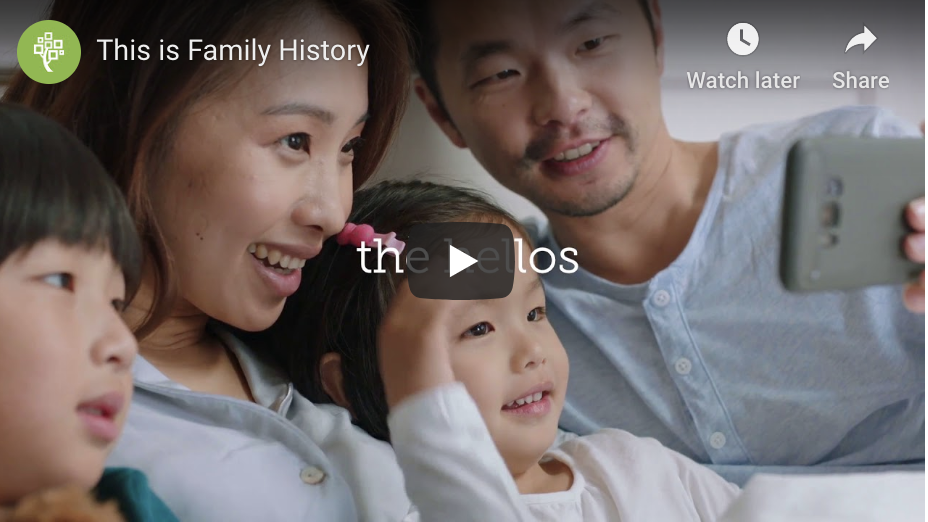
This is Family History (Video)!

Family History

Maybe you didn’t realize it, but you are living your family history every day. The small and big moments that are happening in your life make up your own story. Yours is the family history of future generations.

VIDEO

We live history every day, the lows, the highs, the hellos, and goodbyes.

This is Family History.

Family History

This is Family Sharing

Family History

This is Family Healing

Family History

FamilySearch Celebrates 125th Anniversary as the Largest Genealogy Organization in the World

Excerpts from the Church News Article: FamilySearch celebrates 125th anniversary — here’s how it has become the largest genealogy organization in the world and other sources.


Sister Rosemary Pangan, Sister Diana Wiseman and Elder Steve Wiseman chat during the FamilySearch 125th anniversary celebration at the Family History Library in Salt Lake City on Wednesday, Nov. 13, 2019. Credit: Kristin Murphy, Deseret News
Credit: Kristin Murphy, Deseret News

FamilySearch celebrated the commencement of its 125th Anniversary on November 13.

Former and current Family History Department executive directors, assistant executive directors, managing directors, employees, missionaries and patrons gathered at the Family History Library in Salt Lake City to commemorate the 125th anniversary of the Genealogical Society of Utah — a milestone that epitomizes the growth of not only the organization but also the increasing interest of people worldwide in wanting to know more about their roots.

In an upstairs room of the Church Historian’s Office in Salt Lake City on Nov. 13, 1894, the Genealogical Society of Utah was established under the direction of Wilford Woodruff, the fourth president of The Church of Jesus Christ of Latter-day Saints.

Today, the Genealogical Society of Utah is known as FamilySearch International, and it stands as the largest genealogy organization in the world. Over the past 125 years, FamilySearch has worked to publish almost 4.8 billion searchable records and grow its family tree to more than 1.2 billion people. 

“From a small, humble beginning in an upstairs room with 190 donated books 125 years ago, we today are moving forward at an ever accelerating pace,” said Elder Kevin S. Hamilton, executive director of the Family History Department, during an anniversary celebration on Wednesday, Nov. 13. 

FamilySearch, aka Genealogical Society of Utah, has been helping to create family connections for 125 years.

What began as a humble state family history society over a century ago, today has blossomed into a global organization that continues to help millions of people make inspiring family connections. 

Elder Hamilton quoted President Russell M. Nelson at the Rome Italy Temple dedication when he said, “This is a hinge point in the history of the Church. Things are going to move forward at an accelerated pace. … The Church is going to have an unprecedented future, unparalleled. We’re just building up to what’s ahead now.”

The Power of Knowing Your Ancestral Roots

Discovering one’s family roots has morphed over the past 125 years. Millions of consumers are now using online genealogy services like FamilySearch to better understand who they are and to satisfy their curiosity regarding their heritage. Convenient access to innovative genealogical services like DNA testing, unsurpassed volumes of historical records online, and the proliferation of family history-related reality TV shows have no doubt fueled the boom of consumer interest in genealogy.

New York Times bestselling author, Bruce Feiler, reiterates this principle in his book “The Secrets of Happy Families”. He teaches that the most important thing you can do for your family is to develop strong family narratives or histories that help provide a sense of identity for family members through time. Personal stories and detailed family histories are powerful and important and need to be remembered and shared he says. A related Emery University study concluded that the more children know about their larger family, the better prepared they are to deal with life’s challenges. 

FamilySearch, aka Genealogical Society of Utah, has been making the world's historical genealogical records more accessible for 125 years.

The Beginning

In an interview with the Church News a week before the anniversary celebration, David Rencher, director of the Family History Library and chief genealogical officer of FamilySearch, commented on some of the historical background of the Genealogical Society of Utah.

One point is the connection to the Salt Lake Temple. About 18 months prior to the establishment of the Genealogical Society of Utah, President Woodruff dedicated the Salt Lake Temple on April 6, 1893. In the dedicatory prayer, President Woodruff asked the Lord to send the spirit of Elijah and increase the desire of the Saints to search out their ancestors.

The Salt Lake City offices of FamilySearch, formerly known as the Genealogical Society of Utah, have changed over the past 125 years.
The Salt Lake City offices of FamilySearch, formerly known as the Genealogical Society of Utah, have changed over the past 125 years. Credit: FamilySearch.org

“Over the next two decades after that prayer, there was a flurry of published family histories produced, particularly in New England, where many of the Saints had originated,” Rencher said. “And these published family histories yielded thousands of names of ancestors and family members of the Saints who are here in the valley.”

There were other factors that contributed to the establishment of a genealogical organization. At the time the Salt Lake Temple was dedicated, sealing ordinances were limited. In addition to husbands and wives being sealed to each other, and men and women being sealed by proxy to their deceased parents, it was a custom to be “adopted” into the family of a Church leader or other prominent priesthood holder. 

In the April 1894 general conference, President Woodruff announced a change in policy: “Let every man be adopted to his father … not to any other man outside the lineage of his father.”

President Woodruff continued, “We want the Latter-day Saints from this time to trace their genealogies as far as they can, and to be sealed to their fathers and mothers. Have children sealed to their parents, and run this chain through as far as you can get it” (Hearts Turned to the Fathers: A History of the Genealogical Society of Utah, 1894-1994). 

The new policy had a large impact on genealogical work as Latter-day Saints committed more fully to finding and organizing correct family records. 

With the approval of the First Presidency and Quorum of the Twelve Apostles, the Genealogical Society of Utah was established in 1894. Franklin D. Richards, then a member of the Quorum of the Twelve Apostles, was the first president of the organization. 

The organization began building its library with 190 donated volumes donated by Franklin D. Richards.

Elder Kent F. Richards, emeritus General Authority Seventy of The Church of Jesus Christ of Latter-day Saints, speaks during the FamilySearch 125th anniversary celebration at the Family History Library in Salt Lake City on Wednesday, Nov. 13, 2019.
Elder Kent F. Richards speaks during the FamilySearch 125th anniversary celebration at the Family History Library in Salt Lake City. Credit: Kristin Murphy, Deseret News

The goals of the organization were first, to establish and maintain a genealogical library for the use and benefit of anyone who was interested; second, disseminate genealogical information; and third, acquire records of the dead in order to perform ordinances on their behalf (Hearts Turned to the Fathers: A History of the Genealogical Society of Utah, 1894-1994). 

Rapid Advancements

Many notable advancements over the next century allowed the Genealogical Society of Utah to expand, Rencher explained. Paper indexing began in 1922. In 1924, the Genealogical Research Bureau was established to help in several languages. The Temple Index Bureau was created in 1927 to coordinate efforts and prevent duplication.

Microfilming began in 1938. “Suddenly, that completely changed the landscape for us,” Rencher said. “Not only we didn’t have to depend on just what was published… now we could actually start to look at images of original records.”

The services FamilySearch offers have evolved since the organizations establishment in 1894.
The services FamilySearch offers have evolved since the organizations establishment in 1894. Credit: FamilySearch.org

In 1963, the Granite Mountain Records Vault was built to store microfilm. With the opening of the first branch libraries in 1964, now known as family history centers, those images could be disseminated. Today, more than 5,000 family history centers are found in 129 countries.

The Personal Ancestral File software was released in 1984, allowing patrons to record information on a personal computer. 

“We went from microfiche to compact discs to computer programs to personal desktop organizations. We went through that whole succession of very rapid transition,” Rencher said. 

As part of an effort to simplify ancestral research and encourage members to perform temple ordinances for their ancestors, the Genealogical Department of the Church was renamed to be the Family History Department in 1987. 

Display of historical photos and hard disks during the FamilySearch 125th anniversary celebration at the Family History Library in Salt Lake City on Wednesday, Nov. 13, 2019.
Display of historical photos and hard disks during the FamilySearch 125th anniversary celebration. Credit: Kristin Murphy, Deseret News

President Boyd K. Packer, a member of the Quorum of the Twelve Apostles who died in 2015, was chairman of the Temple and Family History Executive Council when the name change occurred. He said, “The word genealogy often suggests a need for professional training and the change to ‘family history’ will make the work less technical and more appealing to members of the Church.

“A genealogy is, in fact, a family history,” then-Elder Packer continued, “and such sacred family history is fundamental to the temple ordinances and covenants that bless individuals and seal them into eternal families” (Ensign, October 1987). 

There was no change in the name of the Genealogical Society of Utah at that time, but a new and upcoming website would soon spark a name change to the organization.  

With the launch of a website, the Family History Department needed a “handle” that would be “definitive of our online presence,” Rencher said. In 1999, FamilySearch.org was launched. The Genealogical Society of Utah was later renamed in 2005 to “FamilySearch” to better fit the description of what the organization does and what it offers.

An overview of FamilySearch since it was established 125 years ago as the Genealogical Society of Utah.
An overview of FamilySearch since it was established 125 years ago as the Genealogical Society of Utah. Credit: FamilySearch.org

Future

Elder Hamilton commented on the future of FamilySearch during the anniversary celebration. He mentioned the interest in computer-assisted indexing, machine learning and artificial intelligence to speed up the indexing process. He also said FamilySearch is beginning to look at the potential of using computer-assisted tree building. 

“We’re just beginning our strategy for DNA research and DNA utilization,” he added. “The technology is new and we do not yet completely understand how this all works. But the potential is there for us to reconstruct the family tree of humankind using DNA.”

Elder Hamilton said FamilySearch will continue to strive to engage, entice and encourage all of Heavenly Father’s children to participate in the work of salvation. 

For more details you can read the full article from Church news: FamilySearch celebrates 125th anniversary — here’s how it has become the largest genealogy organization in the world

New Records on FamilySearch From August, September and October 2019

Brazil-Rio de Janeiro
Rio de Janeiro, Brazil

New Records on Family Search August 2019

FamilySearch expanded its free online archives in August of 2019 with an astounding 23.3 million new indexed family history records and over 7.6 million digital images from all over the world. New historical records were added from Australia, Austria, Brazil, Canada, England, French Polynesia, Germany, Honduras, the Netherlands, Norway, Peru, South Africa, and the United States, which includes Alabama, Alaska, Arizona, Arkansas, California, Colorado, Connecticut, Delaware, District of Colombia, Florida, Hawaii, Idaho, Illinois, Iowa, Kansas, Maine, Maryland, Minnesota, Massachusetts, Missouri, Nebraska, Nevada, New Mexico, New York, North Carolina, Ohio, Oklahoma, Pennsylvania, Rhode Island, South Carolina, Utah, Virgin Islands, Virginia, West Virginia,, and Wyoming. The United States Deceased Physician Files, United States Freedmen’s Bureau Hospital and Medical Records,, Native American Birth and Death records, and United States Veterans Administrations are included as well. Digital Images came from Alabama, Alaska, Arizona, Colorado, Connecticut, Delaware, District of Colombia, Florida, Hawaii, Idaho, Maryland, Minnesota, Missouri, Nebraska, Nevada, New Mexico, Oklahoma, Utah, Virgin Islands, Virginia, West Virginia, and Wyoming.

Find your ancestors using these free archives online, including birth, marriage, death, and church records. Millions of new genealogy records are added each month to make your search easier.

CountryCollectionIndexed RecordsDigital ImagesComments 
AustraliaAustralia, Queensland, Toowoomba, Prison Records Index, 1864-19067,6340New indexed records collection
AustraliaAustralia, Victoria, Inward Passenger Lists, 1839-1923164,0230Added indexed records to an existing collection
AustriaAustria, Vienna Population Cards, 1850-189622,5320Added indexed records to an existing collection
AustriaAustria, Vienna, Jewish Registers of Births, Marriages, and Deaths, 1784-191116,0670Added indexed records to an existing collection
BrazilBrazil, Bahia, Passenger Lists, 1855-19641,166,6750Added indexed records to an existing collection
BrazilBrazil, Pernambuco, Civil Registration, 1804-2016345,8190Added indexed records to an existing collection
CanadaCanada, Prairie Provinces Census, 192656,8670Added indexed records to an existing collection
CanadaNova Scotia Births, 1864-18771780Added indexed records to an existing collection
CanadaNova Scotia Deaths, 1864-18772660Added indexed records to an existing collection
CanadaNova Scotia Marriages, 1864-191827,9920Added indexed records to an existing collection

To see the rest of the records published by FamilySearch in August 2019 follow the link to the official FamilySearch Blog Article: New Records on FamilySearch from August 2019

New Records on Family Search September 2019

FamilySearch expanded its free online archives in September of 2019 with almost 13.2 million new indexed family history records and over 13.6 million digital images from all over the world. New historical records were added from Bolivia, Brazil, Canada, Colombia, Costa Rica, England, France, Germany, Ireland, Italy, Panama, Paraguay, Peru, Portugal, Russia, South Africa, Spain, and the United States, which includes Alabama, California, Delaware, Illinois, Kansas, Louisiana, Maine, Minnesota, North Carolina, Pennsylvania, South Carolina, and Virginia. The United States Deceased Physician Files, United States Census 1880, United States World War I Draft Registration Cards, United States Cemetery Abstracts, and United States Members of the Church of Jesus Christ of Latter-day Saints Military Servicemen in World War 1 Records 1919 are included as well. Digital Images came from Italy, Peru, and The United States Census 1880.

Find your ancestors using these free archives online, including birth, marriage, death, and church records. Millions of new genealogy records are added each month to make your search easier.

CountryCollectionIndexed RecordsDigital ImagesComments
BoliviaBolivia Catholic Church Records, 1566-1996120,3280Added indexed records to an existing collection
BrazilBrazil, Pernambuco, Civil Registration, 1804-2016162,7060Added indexed records to an existing collection
BrazilBrazil, Rio de Janeiro, Civil Registration, 1829-20126,9140Added indexed records to an existing collection
BrazilBrazil, São Paulo, Civil Registration, 1925-19951990Added indexed records to an existing collection
CanadaManitoba, Church Records, 1800-19592,5250Added indexed records to an existing collection
CanadaNova Scotia Deaths, 1864-18774070Added indexed records to an existing collection
CanadaNova Scotia Marriages, 1864-19182220Added indexed records to an existing collection

To see the rest of the records published by FamilySearch in September 2019 follow the link to the official FamilySearch Blog Article: New Records on FamilySearch from August 2019

New Records on Family Search October 2019

FamilySearch expanded its free online archives in October of 2019 with over 14.8 million new indexed family history records and over 400 thousand digital images from all over the world. New historical records were added from American Samoa, Argentina, Brazil, Canada, Chile, Colombia, England, France, Guatemala, Peru, South Africa, Sweden, Ukraine, Uruguay, Wales, and the United States, which includes Alabama, Alaska, California, Delaware, Florida, Georgia, Hawaii, Illinois, Indiana, Iowa, Kansas, Kentucky, Louisiana, Maine, Maryland, Massachusetts, Mississippi, Missouri, Nebraska, New Hampshire, New Jersey, New York, North Carolina, North Dakota, Ohio, Oklahoma, Oregon, Pennsylvania, South Carolina, Tennessee, Texas, Utah, Virginia, and Wisconsin. The United States Deceased Physician Files, United States GenealogyBank Historical Newspaper Obituaries 1815-2011, and United States Census (Slave Schedule) are included as well. Digital Images came from England, Ukraine, Hawaii, Pennsylvania, and Wales.

Find your ancestors using these free archives online, including birth, marriage, death, and church records. Millions of new genealogy records are added each month to make your search easier.

CountryCollectionIndexed RecordsDigital ImagesComments
American Samoa American Samoa, Vital Records, 1850-19722,8740Added indexed records to an existing collection
American Samoa American Samoa, Vital Records, 1850-19721,0420New indexed records collection
ArgentinaArgentina, Salta, Catholic Church Records, 1634-197298,9070Added indexed records to an existing collection
BrazilBrazil, Pernambuco, Civil Registration, 1804-201670Added indexed records to an existing collection
BrazilBrazil, Santa Catarina, Civil Registration, 1850-19994,0720Added indexed records to an existing collection
BrazilBrazil, Santa Catarina, Civil Registration, 1850-19992,6160Added indexed records to an existing collection

To see the rest of the records published by FamilySearch in October 2019 follow the link to the official FamilySearch Blog Article: New Records on FamilySearch from October 2019

FamilySearch Updates Enhance your Experience

from the FamilySearch Blog

FamilySearch is proud to have the world’s largest online family tree and thrilled to provide free family history experiences to millions. In order to give users the best experience possible, we are constantly working on updates and improvements to our online experience.

To keep you up to date on the latest FamilySearch experience changes, the FamilySearch Blog will be listing them here chronologically. Check back often to see how your FamilySearch experience has improved!


Update: November 7, 2019—Control What You See in Your Feed

FamilySearch users will now be able to dismiss content from the feed on their signed-in home page.

When you first sign in to FamilySearch.org, you find an updating list of recent memories added to your ancestors’ person pages. In the bottom right corner of each memory, you can click the three dots and open a new menu. Here, you can choose to hide the memory, stop receiving update notifications from that ancestor’s page, or report abuse.

Screenshot of how to hide a memory on FamilySearch.org.

Update: November 7, 2019—Improvements to Family Tree Search

Screenshot of Tree search with residence, birth, and death information.

When you search the Family Tree to find a relative’s profile on FamilySearch.org, you can now add residence information to narrow your search. Also, to simplify the search, the options to add christening and burial information have been combined with birth and death event information.

To search the Family Tree, go to FamilySearch.org, and click Search and then Family Tree. In the search form, add your relative’s name.

  • How to add a residence: Under Search with life event, click Residence. Here you can add a place-name and a date range.
  • How to add christening and burial Information: You will no longer see an option in the life events section to choose christening or burial. Instead, simply enter christening information as a birth event,and burial information as a death event. The search will automatically include christenings and burials as it looks for birth events and death events.

Did you like these two updates? For more recent updates read the original articles on FamilySearch Blog

10 Ways to Start Your Family History

phone_family_picture_technology

1. See What’s Been Done

Depending on how long your family has been in the Church, you may have a pretty full tree that goes back many generations. Take a minute to navigate FamilySearch Family Tree to get to know your ancestors’ names.

2. Keep the Sabbath Day holy

Exploring your family history is one of the best ways to keep the Sabbath day holy.

3. Top-10 Lists

Create top-10 lists from your life experiences: Top-10 Favorite Breakfast Cereals as a Kid. Top-10 Mission Experiences. Top-10 Favorite Scriptures. Each of these is a window into your mind.

4. Upload Photos to FamilySearch

Scan your old photos. Then log on to FamilySearch and upload them to your “My Memories” gallery. Or migrate photos from your Google Photos or Instagram accounts. Then write a bunch of captions.

5. Smartphone Stories

Download a recording app on your smartphone, then ask each member of your family to record themselves telling a funny memory of you.

6. Make a “Day in the Life” Video

Use your smartphone to record a 10-second video of yourself at the top of every hour for a whole day. Then edit the clips together. You may not win an Oscar, but your grandkids will love it.

7. Collect Your Sacrament Talks

They’re all there on your hard drive. Put them together. Your testimony will bless your posterity.

8. Download Your Facebook Data

Go to Facebook.com/settings. On the left, choose “Your Facebook Information.” Then choose “Download Your Information.” And voilà!

9. Lip Sync/Karaoke/Dance Party

What five songs have influenced you the most? Film yourself singing them. Or lip-syncing them. Or just cutting a rug to them. Rest assured—this will be an instant family treasure. Wouldn’t you love to have video of your great-great-grandmother dancing?

10. Favorite Recipes

Collecting your favorite meals will let posterity make them too and experience firsthand what it was like around your table.

(Adapted from the article “Eight Funtastic Ways to Jump-Start Your Personal History in the October issue of the Ensign magazine)

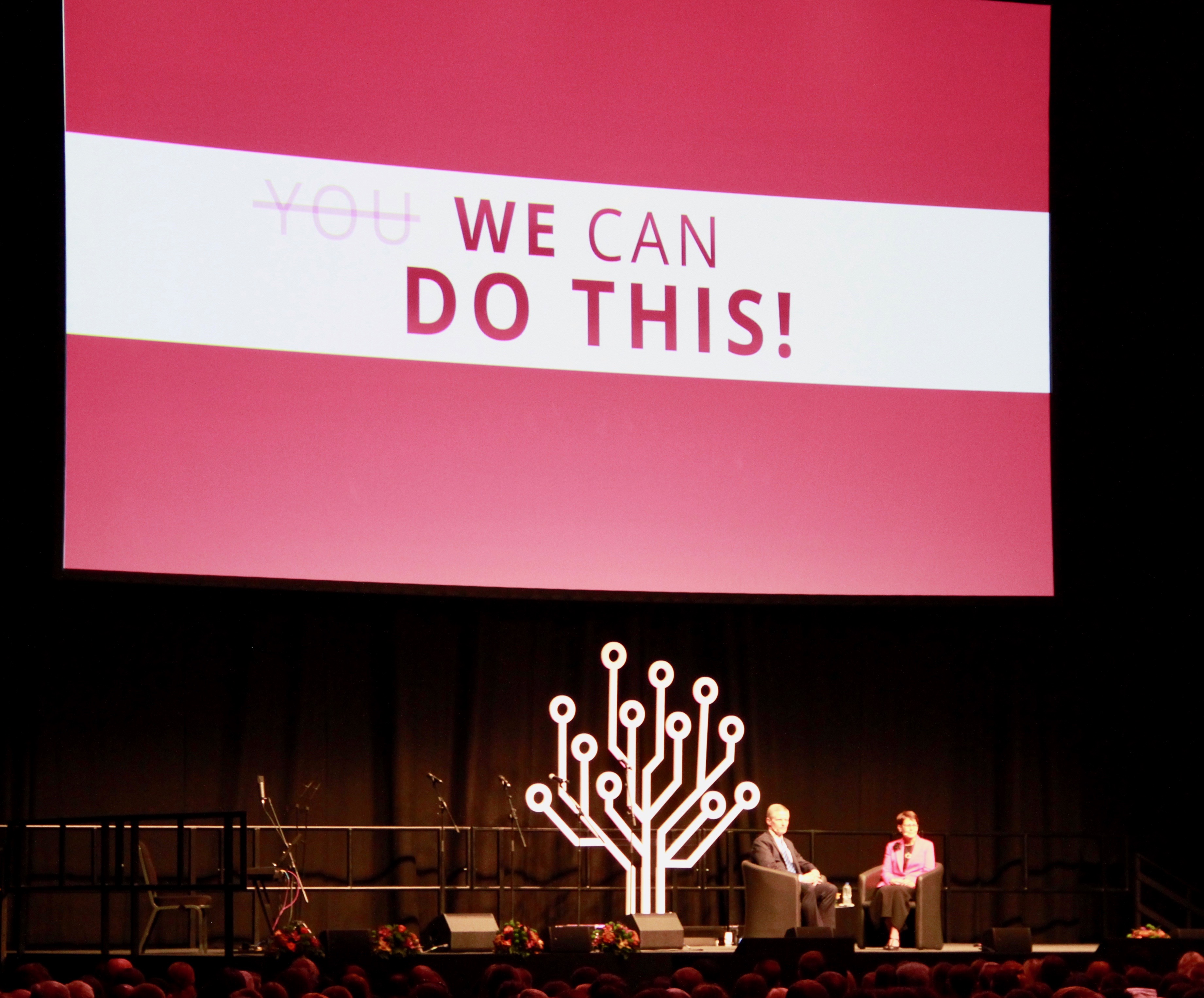
Elder David A. Bednar and Sister Susan Bednar speak at RootsTech London

Elder David A. Bednar and his wife, Sister Susan Bednar, speak in the ExCel auditorium during the concluding “An Evening with Elder and Sister Bednar” session of RootsTech London on Saturday, Oct. 26, 2019. Credit: Scott Taylor
Elder David A. Bednar and his wife, Sister Susan Bednar, speak in the ExCel auditorium during the concluding “An Evening with Elder and Sister Bednar” session of RootsTech London on Saturday, Oct. 26, 2019. Credit: Scott Taylor

I was not there, but thanks to modern technology we can all easily watch and learn from some of the best speakers at Rootstech London without having to fly to England or even pay the ticket.

Interest in the RootsTech conference in the United States has been growing steadily since its launch in 2011. More than 17,000 guests from every state and 47 countries gathered at the Salt Palace Convention Center in Salt Lake City, Utah, and more than 111,000 tuned in via the internet for RootsTech 2018.

The first-ever RootsTech London family history conference, held October 24-26, included an evening with Elder David A. Bednar of the Quorum of the Twelve Apostles and his wife, Sister Susan K. Bednar, on Saturday, October 26. Taking advantage of the presence of Elder and Sister Bednar in London, a Face to Face with Young Adults was also organized for the day before, October 25.

Several people who attended reported that it was a great experience to be involved in the event in person, but if you didn’t have that opportunity or you want to watch again Elder and Sister Bednar, I am sharing here the links to their two addresses.

  1. Face to Face with Young Adults (October 25)

2. An Evening with Elder and Sister Bednar (October 26)

Available in the following languages

Česky (Czech) – Dansk (Danish) – Deutsch (German) – English (English)  – Español (Spanish) – Français (French) – Italiano (Italian) – Magyar (Hungarian) – Nederlands (Dutch) – Norsk (Norwegian) – Português (Portuguese) – Shqip (Albanian) – Suomi (Finnish) – Svenska (Swedish)

The “Young Adult Face To Face” event the night of Oct. 25 (my birthday, by the way) was an unscripted question-and-answer session. Elder and Sister Bednar answered anonymous questions sent to them via text to his iPad.

On the afternoon of Oct. 26, Elder and Sister Bednar also conducted the “Youth Experience”, meeting onstage with a panel of eight youth and visiting with them about their previous involvement in and experiences with family history.

Later, the panelists and all the audience’s youth were dismissed to spend 90 minutes participating in 15 “discovery activities” before returning for an ensuing discussion on what they had discovered and how they would apply their learning.

With Elder David A. Bednar and Sister Susan Bednar featured own the video screen, eight youth participate in the panel discussion with the Benders during the "Youth Experience" session at RootsTech London on Saturday, Oct. 26, 2019.
Elder David A. Bednar and Sister Susan Bednar during the “Youth Experience” session at RootsTech London on Saturday, Oct. 26, 2019. Credit: Scott Taylor

In the Oct. 26 “An Evening with Elder and Sister Bednar,” the Apostle and his wife emphasized a “you can do this” theme, as they invited members to help others on both sides of the veil take a step toward making covenants with God and receiving essential ordinances.

Building on President Russell M. Nelson’s teaching of “while salvation is a personal matter, exaltation is a family matter,” Elder Bednar said: “As we all engage in our own temple and family history service, our individual efforts quickly become family efforts and lift us from the realm of ‘you can do this’ to ‘we can do this’ — together, as families.”

Sister Bednar pointed to the unique interests and skills different family members can offer in the “we” effort — grandparents, parents and older relatives know the stories, have the photos, possess the heirlooms and provide the memories; children and youth more comfortable and capable with technology can help collect, enter and compile.

“Each of us is a link in the chain of our generations. … Each person plays a role,” Elder Bednar said, adding the Bednars’ oft-repeated updated phrase of the evening, “together, we can do this.”

(for more details follow this link and the read the article in the Church News)

Appreciation and Respect: The Antidote to Contempt, The Second Horseman of The Apocalypse (John Gottman)

The Four Horsemen of the Apocalypse, according to Dr. John Gottman, are certain negative communication styles that are lethal to a relationship. Gottman’s research shows that the Four Horsemen predict relationship failure with over 90% accuracy if the behavior isn’t changed (Click here for a more detailed explanation of the Four Horsemen).

Contempt

Contempt is any statement or nonverbal behavior that puts yourself on a higher ground than your spouse or partner. It shows up in statements that come from a position of moral superiority and includes sarcasm, cynicism, name-calling, eye-rolling, sneering in disgust, mockery, and hostile humor.

Contempt is destructive and defeating. It destroys the fondness and admiration between partners, and it is the greatest predictor of divorce. Of all the horsemen, contempt is the most dangerous and it should be avoided at all costs.

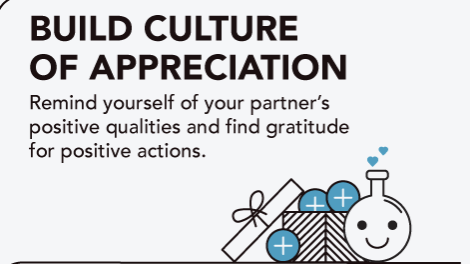
The Antidote to Contempt: Build a Culture of Appreciation and Respect

The antidote to contempt is to build a culture of appreciation and respect in your relationship. To regularly express appreciation, gratitude, affection, and respect creates a positive perspective in a relationship that acts as a buffer when negative feelings emerge. The more positive you feel about your relationship and yourself, the less likely that you will feel or express contempt!

Gottman also discovered the 5:1 “magic ratio” of positive to negative interactions. In any relationship, if you have five or more positive interactions for every one negative interaction, then you are constantly making deposits into your emotional bank account, which keeps your relationship healthy and positive.

Examples of Contempt and Its Antidote

Contempt: “You forgot to buy groceries again? Ugh. You are so incredibly lazy.” (Rolls eyes.)

Antidote: “I understand that you’ve been busy today but could you please remember to buy grocery when I work late? I’d appreciate it.”

Contempt:  “It happened again. Your irresponsible spending again maxed out our credit card limit. All you think about is yourself, and don’t appreciate all the sacrifices I’ve made for our family.”

Antidote:   “I feel frustrated about the state of our finances and the amount we spend versus how much we save each month. I would like to define better a monthly budget.”

(Most of this information comes from the Book: The Seven Principles for Making Marriage Work by John Gottman)

The Gentle Startup: The Antidote to Criticism, The First Horseman of The Apocalypse (John Gottman)

Yesterday I wrote about The Four Horsemen of the Apocalypse. Dr. John Gottman uses this strong expression to describe certain negative communication styles that are lethal to a relationship. According to his research, the Four Horsemen predict relationship failure with over 90% accuracy if the behavior isn’t changed (Click here for a more detailed explanation of the Four Horsemen).

This blog post is about the antidote to Criticism, the first of the Four Horsemen: The Gentle Startup.

The first step in managing conflict successfully is to identify and counteract the Four Horsemen when they arrive in your conflict discussions. Fortunately, for every horseman there is an antidote that can be applied to the specific situation.

Gentle Start Up: Antidote to Criticism

A Gentle Startup is the antidote to the first Horseman, or Criticism.

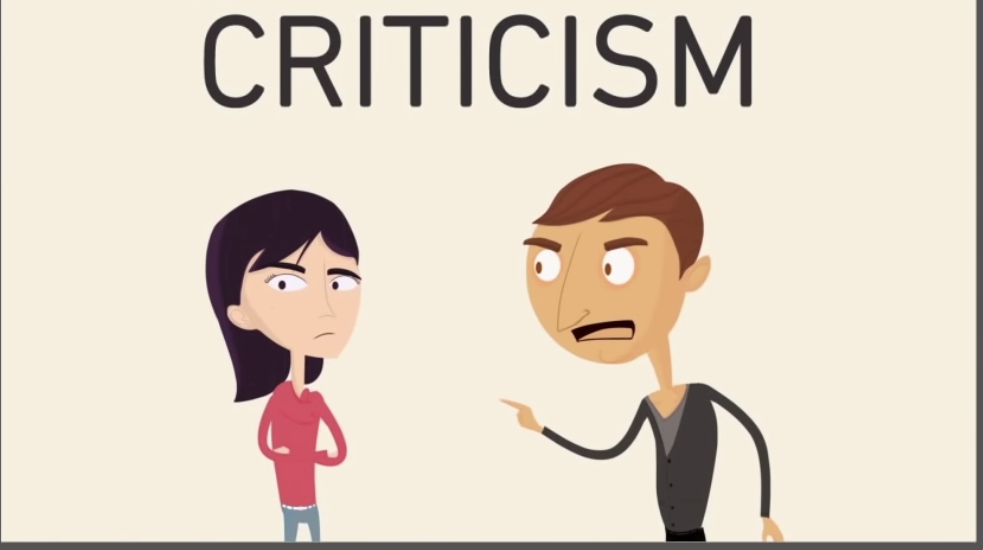
The problem with criticism is that it attacks a person’s character. On the other hand, a complaint focuses on a specific behavior.

According to Dr. Gottman, the first three minutes of a conversation will determine how the conversation will go. When people don’t control their negative emotions and want to have a conversation about a problem, they usually start attacking their partner harshly.

However, the antidote for criticism is to complain without blaming our partner by using a soft or gentle startup.

To formulate your soft start-up consider asking yourself: What do I feel? What do I need?

Often a harsh startup is the result of trying to hide our vulnerable emotions: criticism then becomes a way to cover them up.

There are 5 elements to the Gentle Startup

1.Make statements that start with “I” instead of “You” to avoid blame. Rather than saying, “You’re so selfish…” explain how you feel, “I feel worried…”

2.Describe what is happening; don’t evaluate or judge. The focus should be on facts, not interpretation. Instead of saying, “You never help me with house chores,” you may say “The bathroom needs cleaning.”

3.Explain clearly what you need or want in positive terms. Don’t focus on what you don’t want, but on what you want. Something like, “I’d be so happy if we could have one night a week only for the two of us.”

4.Be polite. Try to use simple but effective words such as “please” and “thank you.”

5.Give appreciations. It’s important to acknowledge what your partner does right, even when you have a hard time to find anything positive.

Example of Soft Startup

(from the Book: The Seven Principles for Making Marriage Work by John Gottman)

Justine: Okay (deep breath). Housework.

Michael: Yeah. Well, I mean I definitely clean off the counters in the kitchen and the table whenever we do stuff. (Defensive) this tine:Hm-hmm. You do. (Repair attempt)

Michael: Hm-hmm. (He’s relaxed; Justine’s repair attempt was successful.)

Justine: I think it’s just, like, sometimes when things are just kind of left, or the laundry just piles up … (Softened startup)

Michael: Yeah. I haven’t even been thinking about laundry (laughs). I mean, I just haven’t been thinking about it at all. (Not defensive)

Justine (laughs): That’s kind of cute. Who do you think’s doing it? You keep having clothes to wear.

Michael: Yeah, I guess.

Justine: And maybe that’s okay. But it just gets to me after a while.

Michael: Well, it hasn’t even crossed my mind that, like, we have to do the laundry. (Chuckles.)

Justine: Actually, Tim’s been folding them. (A neighbor in their apartment complex-the washer and dryer are in a communal laundry room.) I left a load in, and then when I passed by, the sheets were folded.

Michael: Maybe we should put our hamper in his room?

Justine (laughs): (Shared humor deescalates tension and lowers heart rates.)

Michael: So, okay, like maybe every other day or something when I first get back home from work…

Justine: Yeah, you could fold what makes sense, especially towels and underwear and the sheets…

Michael: Yeah, I’ll just look in the basket. (He is accepting her influence.)

Justine: Okay.

Perhaps the most important quality of this exchange is the virtual absence of the Four Horsemen of the Apocalypse–criticism, contempt, defensiveness, and stonewalling- those hallmarks of marriage-harming conflict.

The reason for their absence is that Justine’s startup is soft. In contrast, a harsh startup usually begins the cycle of the four horsemen, which leads to flooding and, in turn, increased emotional distance and loneliness that lets the marriage wither. Only 40 percent of the time do couples divorce because they are having frequent, devastating fights. More often marriages end because, to avoid constant skirmishes, husband and wife distance themselves so much that their friendship and sense of connection are lost.

The Four Horsemen of The Apocalypse by John Gottman

Certain negative communication styles are so lethal to a relationship that Dr. John Gottman calls them the Four Horsemen of the Apocalypse. They predict relationship failure with over 90% accuracy if the behavior isn’t changed.

The Four Horsemen Video

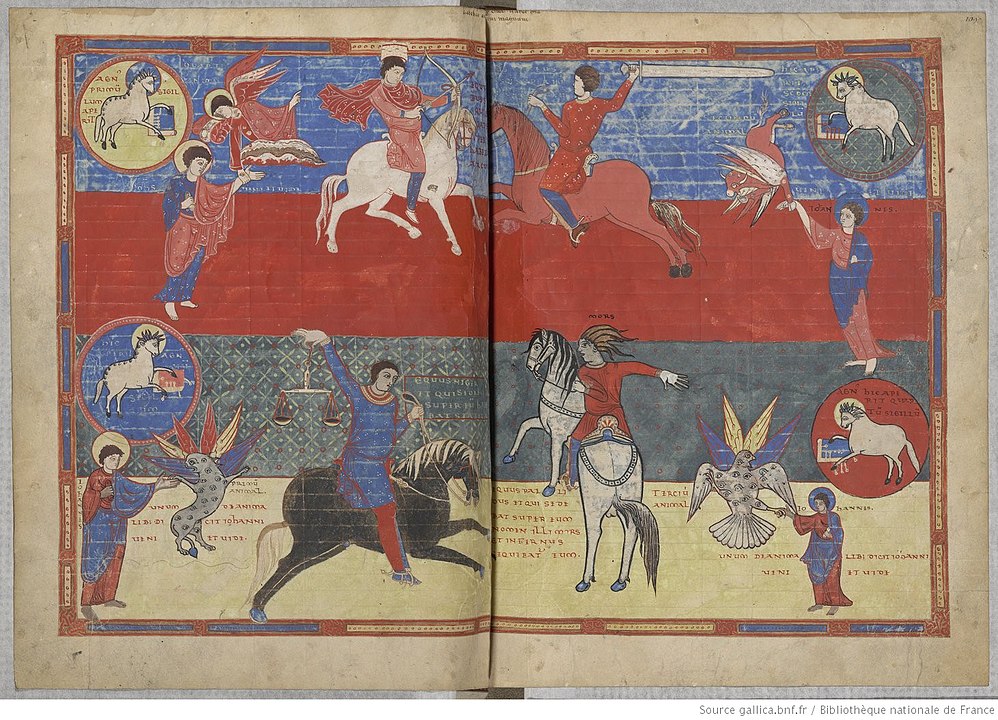
Chapter 6 of Revelation in the Holy Bible describes of four horsemen tied to judgments that will come upon the world, and therefore these four horsemen in the popular culture have become associated with destruction.

The Four Horsemen of the Apocalypse describe conquest, war, hunger, and death respectively. John Gottman uses this metaphor to describe communication styles that, according to his research, can predict the end of a relationship. The four “marriage horsemen” mentioned by John Gottman will certainly bring destruction to a marriage if they go unchecked.

1. Criticism

Criticism

The first horseman is criticism. When we criticize others, including our spouse, we attack their personality or character, usually with blame, rather than a specific behavior. Criticizing our partner is different than offering a critique or voicing a complaint. The latter two are about specific issues, whereas the former is an attack on our partner at the core of their character. In effect, we are dismantling their whole being when we criticize them.

There is an important difference between expressing a complaint and criticizing. For example:

  • Complaint: “I was scared when you were running late and didn’t call me. I thought we had agreed that we would do that for each other.”
  • Criticism: “You never think about how your behavior is affecting other people. I don’t believe you are that forgetful, you’re just selfish. You never think of others! You never think of me!”

To be critical of each other doesn’t necessarily means that our relationship is doomed to fail. However, when criticism becomes pervasive, it paves the way for the other, far deadlier horsemen to follow.

Because it makes the victim feel assaulted, rejected, and hurt, it often causes the perpetrator and victim to fall into an escalating pattern where the first horseman reappears with greater and greater frequency and intensity, which eventually leads to contempt.

2. Contempt

Contempt

When criticism becomes pervasive, it opens the door to the second horseman, contempt. When we communicate with contempt, we become mean, we treat our spouse with disrespect, sometimes we mock them with sarcasm, ridicule, or even call them names, and use body language such as eye-rolling or scoffing. The target of contempt feels despised and worthless.

Contempt is a step above criticism, because while criticism attacks our partner’s character, contempt assumes a position of moral superiority over them, such as:

“John, you’re a failure as a husband and father!” or “I had to call the baby-sitter again today because you are so lazy!”

Interestingly, research shows that couples that are contemptuous of each other are more likely to suffer from infectious illness (colds, the flu, etc.) than others due to weakened immune systems!

According to Gottman’s research, contempt is the single greatest predictor of divorce.

3. Defensiveness

Defensiveness

The third horseman is defensiveness, and it is usually a response to criticism. This horseman is nearly omnipresent when relationships are beginning to fail. When we feel unjustly accused, we look for excuses and try to play the innocent victim in the hope that our partner will stop.

At this point, we refuse to acknowledge our part in the problem. We deny responsibility and make excuses and counteraccusations instead of listening to our spouse’s concerns. We insist in passing all responsibility for fixing the problem back to our spouse.

Unfortunately, this strategy is almost never successful. Our excuses just tell our partner that we don’t take their concerns seriously and that we won’t take responsibility for our mistakes.

While it makes sense to defend ourselves when we feel attacked, this strategy will not solve the problem. Defensiveness most of the time will escalate the conflict, unless the critical partner decides to back down and apologize. This is because defensiveness doesn’t allow for healthy conflict management.

4. Stonewalling

Stonewalling

Defensiveness often escalates to stonewalling, the fourth horseman. To stonewall means to simply walk away from the problem and cut off all interaction, and simply stops responding to our partner. Problems in a marriage may never be solved when one spouse refuses to discuss it.

Rather than confronting the issues with their partner, people who stonewall can make evasive maneuvers such as tuning out, turning away, acting busy, or engaging in obsessive or distracting behaviors.

It takes time for the negativity created by the first three horsemen to become so overwhelming that stonewalling becomes an understandable solution. However, stonewalling isn’t easy to stop. It is a result of feeling physiologically flooded, and when we stonewall, we may not even be in a physiological state where we can discuss things rationally.

Consequences

The consequences of allowing the four horsemen into a marriage can be devastating. The negativity cycle has a predictable train of events. When problems are not worked through, couples often become so upset that constructive discussion is not possible. They feel that talking the problems out is useless. Often they start to lead parallel lives in which they seldom spend any time with each other. All of this brings feelings of loneliness and rejection.

The final stage before breakup is for the couple to start rewriting their history: they forget all the good times and rewrite the past in light of their present feelings.

About John Gottman

John Gottman (born April 26, 1942) is an American psychological researcher and clinician who did extensive work over four decades on divorce prediction and marital stability.

He is also an award-winning speaker, author, and a professor emeritus in psychology. He is known for his work on marital stability and relationship analysis through scientific direct observations, many of which were published in peer-reviewed literature.

The lessons derived from this work represent a partial basis for the relationship counseling movement that aims to improve relationship functioning and the avoidance of those behaviors shown by Gottman and other researchers to harm human relationships.

Dr. John Gottman and Dr. Julie Schwartz Gottman co-founded and lead a relationship company and therapist training entity called The Gottman Institute.

Gottman was recognized in 2007 as one of the 10 most influential therapists of the past quarter century. “Gottman’s research showed that it wasn’t only how couples fought that mattered, but how they made up. Marriages became stable over time if couples learned to reconcile successfully after a fight.”

error

Enjoy this blog? Please spread the word :)