Members of The Church of Jesus Christ of Latter-day Saints (also called Mormons or Latter-day Saints) are found in many countries and speak many languages. They are fathers, mothers, sons and daughters, they may be married or single, and they work as businesspeople, teachers, clerks, nurses, doctors, lawyers, bookkeepers, waiters, actors, and so on. They are members of many different political parties, and they usually look like everybody else.
“No matter where Mormons live, they find themselves part of a network of mutual concern; in Mormon theology everyone is a minister of a kind, everyone is empowered in some way to do good to others, and to have good done unto them: it is a 21st century covenant of caring. This caring is not limited to Church members alone, but extends far beyond.”
The Church of Jesus Christ of Latter-day Saints is the fourth largest Christian church in America. More than half of its 16 million members live outside the United States. However, despite the faith’s growth and presence, survey results continue to show that relatively few people are familiar with Mormon beliefs. Many don’t even know the official name of the Church, or The Church of Jesus Christ of Latter-day Saints, as explained by the current president of the Church, President Russell M. Nelson.
This is why the title of this article include the word Mormon, it’s because many people have not yet made the connection between Mormons and Latter-day Saints, and even more importantly, many still erroneously call Mormon Church what is in reality The Church of Jesus Christ of Latter-day Saints, because it’s not the Church of Mormon, but the Church of Jesus Christ.
12 Articles and Videos about the Basic Beliefs of The Church of Jesus Christ
These are links to a series of simple articles and videos about 12 basic beliefsof The Church of Jesus Christ.
Throughout history, God has established various patterns, practices, and ordinances to help His children remember Him and strengthen their relationship with Him. Some of these sacred reminders include:
• The Sabbath day, a dedicated day of rest and worship, emphasizing the importance of honoring and remembering God (Exodus 20:8–11; Doctrine and Covenants 59:9–13).
• Passover, a solemn yet joyous observance for the Israelites, reminding them of their deliverance from Egyptian bondage and pointing them to Jesus Christ as the ultimate provider of spiritual deliverance for all (Exodus 12–13).
• The sacrament, a sacred ordinance instituted by Jesus Christ to remember His atoning sacrifice (Matthew 26; Mark 14; Luke 22; 3 Nephi 18). Through partaking in the sacrament, members of the Church also renew their covenants with God.
Each of these serves as a powerful reminder, directing our focus towards God. Similarly, the temple garment acts as a tangible symbol of our covenant relationship with God the Father, made possible through the Savior Jesus Christ. This garment serves as a covering for God’s most sacred creations—His children.
The First Presidency has expressed, “It is a sacred privilege to wear the garment, and doing so is an outward expression of an inner commitment to follow the Savior Jesus Christ.”1 Every time we engage in priesthood ordinances, serve others, offer prayers, or study the gospel, we outwardly express our personal commitment to follow the Savior. While the temple garment remains unseen by the world, its faithful wearing can serve as a constant reminder to the wearer of the sacred temple covenants established with God—an emblem of our aspiration to fulfill our divine potential.
The garment serves as a reminder that we can shed our natural tendencies and strive to become saints through the Atonement of Jesus Christ (Mosiah 3:19).
When Adam and Eve were expelled from the Garden of Eden, our Heavenly Father did not forsake them. Instead, He provided guidance on His plan for happiness and salvation, entering into covenants with them. As a symbolic reminder of these covenants, He gave them “coats of skins” (Genesis 3:21; Moses 4:27).
During the exodus of the Israelites from Egypt, the Lord once again established covenants with His chosen people. He also offered instructions regarding their garments, emphasizing how their attire could serve as a reminder of His commandments (Numbers 15:37-41). For individuals like Aaron, who were ordained to officiate in the tabernacle, Moses was commanded to create “holy garments… for glory and for beauty… that they may minister unto me” (Exodus 28:2-3).
Even today, religious and ceremonial clothing continues to symbolize devotion to God. From the nun’s habit and the priest’s cassock to the Jewish prayer shawl and the Muslim skullcap, religious vestments are prevalent. In The Church of Jesus Christ of Latter-day Saints, adult members, both men and women, wear a distinctive undergarment that serves as a constant reminder of the covenants they have made with God. While these underclothes are not publicly displayed, they hold deep significance for Church members.
Outside the Church, LDS garments are sometimes referred to as “Mormon undergarments,” or “Mormon temple garment.” However, these terms are inaccurate and can be hurtful. Church members refer to these underclothes simply as the “garment,” the “sacred temple garment,” or the “garment of the Holy Priesthood.” Members often do not openly discuss the temple garment not because it is secretive, but because it is sacred to them. The temple garment serves as a physical reminder of the sacred promises they have made with their Heavenly Father, and it prompts members to remember the blessings they can receive by honoring their commitments. Similar to the respect shown towards the religious vestments of other faiths, Latter-day Saints kindly request that the LDS temple garment be treated with the same reverence.
What do people usually ask Bard (Google AI chatbot) about Mormons (Latter-day Saints) and what does he answer?
I asked this question to Bard, the conversational generative artificial intelligence chatbot developed by Google:
What do people usually ask you about Mormons and what do you answer?
People usually ask me about the following things when it comes to Mormons:
What are Mormons beliefs?
What are the differences between Mormons and other Christians?
Do Mormons practice polygamy?
What are some of the challenges that Mormons face?
Here are my answers to these questions:
Mormons believe in the Bible and the Book of Mormon. They believe that Jesus Christ is the Son of God and that he died for our sins. They also believe that Joseph Smith was a prophet who was called by God to restore the true gospel of Jesus Christ to the earth.
Mormons are Christians, but they have some unique beliefs that set them apart from other Christian traditions. For example, Mormons believe that God the Father, Jesus Christ, and the Holy Ghost are three distinct beings. They also believe that the Book of Mormon is a true record of ancient prophets who lived in the Americas.
Polygamy was practiced by some Mormons in the early days of the church, but it is no longer practiced by the vast majority of Mormons. The practice of polygamy was officially discontinued by the church in 1890.
Mormons face some challenges, just like any other group of people. However, they are a strong and resilient people who are committed to living their lives according to the teachings of their faith.
If you have any other questions about Mormons, please feel free to ask me.
I asked for a little bit more details and this is what Bard answered:
Here are some more details about the beliefs and practices of Mormons:
Beliefs: Mormons believe in the Bible and the Book of Mormon. They believe that Jesus Christ is the Son of God and that he died for our sins. They also believe that Joseph Smith was a prophet who was called by God to restore the true gospel of Jesus Christ to the earth.
The Book of Mormon: The Book of Mormon is a sacred text of the Church of Jesus Christ of Latter-day Saints. It is believed to be a record of ancient prophets who lived in the Americas. Mormons believe that the Book of Mormon is a companion to the Bible and that it contains additional information about God, Jesus Christ, and the plan of salvation.
The Plan of Salvation: Mormons believe that God has a plan for all of His children. This plan is called the Plan of Salvation. The Plan of Salvation teaches that we are all spirit children of God and that we came to this earth to learn and grow. It also teaches that we can return to live with God again after we die, if we follow His commandments.
Practices: Mormons have a number of practices that are unique to their faith. These practices include:
Baptism: Mormons believe that baptism is necessary for salvation. They are baptized by immersion, which means that they are completely submerged in water.
The Lord’s Supper: Mormons partake of the Lord’s Supper every week. The Lord’s Supper is a sacrament that reminds Mormons of the sacrifice of Jesus Christ.
Temple Worship: Mormons believe that temple worship is essential for their spiritual growth. Temples are sacred buildings where Mormons can participate in ordinances that help them to prepare for eternal life.
Challenges: Mormons face some challenges, just like any other group of people. However, they are a strong and resilient people who are committed to living their lives according to the teachings of their faith. Some of the challenges that Mormons face include:
Persecution: Mormons have been persecuted throughout their history. In the early days of the church, Mormons were driven from their homes and forced to live in exile. Even today, Mormons sometimes face discrimination and prejudice.
Misunderstanding: Mormons are often misunderstood by people who do not know much about their faith. This can be a challenge, as it can make it difficult for Mormons to share their beliefs with others.
Internal challenges: Like any other group of people, Mormons face internal challenges. These challenges can include things like sin, temptation, and doubt. However, Mormons are taught to rely on God for help in overcoming these challenges.
Despite the challenges that they face, Mormons are a strong and resilient people who are committed to living their lives according to the teachings of their faith. They are a positive force in the world and they make a significant contribution to society.
I finally asked the same question, but used the more appropriate form “Latter-day Saints” instead than “Mormons”, and the answer was the same.
People usually ask me about the following things when it comes to Latter-day Saints:
What are Latter-day Saints beliefs?
What are the differences between Latter-day Saints and other Christians?
Do Latter-day Saints practice polygamy?
What are some of the challenges that Latter-day Saints face? (etc.)
I tried ChatGPT before and today I tried Google Bard AI. I asked Bard if he could tell me something about the Book of Mormon and this is the first version of what answered:
“The Book of Mormon is a religious text of the Latter Day Saint movement, which, according to Latter Day Saint theology, contains writings of ancient prophets who lived on the American continent from 600 BC to AD 421 and during an interlude dated by the text to the unspecified time of the Tower of Babel. It was first published in March 1830 by Joseph Smith as The Book of Mormon: An Account Written by the Hand of Mormon upon Plates Taken from the Plates of Nephi. The Book of Mormon is one of four standard works of the Latter Day Saint movement and one of the movement’s earliest unique writings.
The Book of Mormon is organized as a compilation of smaller books, each named after its main named narrator or a prominent leader, beginning with the First Book of Nephi (1 Nephi) and ending with the Book of Moroni. The book’s sequence is primarily chronological based on the narrative content of the book. Exceptions include the Words of Mormon and the Book of Ether. The Words of Mormon contains editorial commentary by Mormon. The Book of Ether is presented as the narrative of an earlier group of people who had come to the American continent before the immigration described in 1 Nephi.
The Book of Mormon contains a variety of genres, including historical narrative, genealogy, prophecy, and scripture. The book’s central theme is the coming of Jesus Christ to the Americas following his resurrection. The Book of Mormon also teaches the doctrines of the Latter Day Saint movement, such as the restoration of the gospel of Jesus Christ, the importance of family and marriage, and the need for repentance and baptism.
The Book of Mormon has been translated into over 100 languages and is available in most countries of the world. It is a popular book among Latter Day Saints, who believe that it is a true record of ancient American prophets. The Book of Mormon has also been the subject of much scholarly and critical study.””
That was a good start, but I wanted a little bit more and I got this:
“Sure. Here is more information about the Book of Mormon:
The Book of Mormon is a record of two groups of people who migrated to the Americas from the Middle East. The first group, known as the Nephites, were descendants of Lehi, a prophet who lived in Jerusalem around 600 BC. The second group, known as the Lamanites, were descendants of Lehi’s brother, Laman.
The Nephites and Lamanites were constantly at war with each other. The Nephites were a righteous people who followed God’s commandments, while the Lamanites were a wicked people who did not follow God.
Jesus Christ appeared to the Nephites and Lamanites after his resurrection. He taught them the gospel and restored the priesthood to them.
The Book of Mormon teaches that all people are children of God and that they can be saved through Jesus Christ. It also teaches that families can be together forever after death.
The Book of Mormon is a sacred text for Latter Day Saints. It is a source of comfort, guidance, and inspiration to them. The Book of Mormon has also been a source of controversy. Some people believe that it is a true record of ancient American prophets, while others believe that it is a fraud.
Regardless of one’s beliefs about the Book of Mormon, it is a fascinating and important text. It is a valuable source of information about the history and culture of the Americas, and it is a powerful testimony of the gospel of Jesus Christ.”.
I particularly liked the final comment about the Book of Mormon being a “valuable source of information about the history and culture of the Americas, and it is a powerful testimony of the gospel of Jesus Christ.”.
But it was still not a lot of information so I asked Bard to write at least 3000 words about the Book of Mormon:
“Sure. Here is a 3000-word essay about the Book of Mormon:
The Book of Mormon is a religious text of the Latter Day Saint movement, which, according to Latter Day Saint theology, contains writings of ancient prophets who lived on the American continent from 600 BC to AD 421 and during an interlude dated by the text to the unspecified time of the Tower of Babel. It was first published in March 1830 by Joseph Smith as The Book of Mormon: An Account Written by the Hand of Mormon upon Plates Taken from the Plates of Nephi. The Book of Mormon is one of four standard works of the Latter Day Saint movement and one of the movement’s earliest unique writings.
The Book of Mormon is organized as a compilation of smaller books, each named after its main named narrator or a prominent leader, beginning with the First Book of Nephi (1 Nephi) and ending with the Book of Moroni. The book’s sequence is primarily chronological based on the narrative content of the book. Exceptions include the Words of Mormon and the Book of Ether. The Words of Mormon contains editorial commentary by Mormon. The Book of Ether is presented as the narrative of an earlier group of people who had come to the American continent before the immigration described in 1 Nephi.
The Book of Mormon contains a variety of genres, including historical narrative, genealogy, prophecy, and scripture. The book’s central theme is the coming of Jesus Christ to the Americas following his resurrection. The Book of Mormon also teaches the doctrines of the Latter Day Saint movement, such as the restoration of the gospel of Jesus Christ, the importance of family and marriage, and the need for repentance and baptism.
The Book of Mormon has been translated into over 100 languages and is available in most countries of the world. It is a popular book among Latter Day Saints, who believe that it is a true record of ancient American prophets. The Book of Mormon has also been the subject of much scholarly and critical study.
The Book of Mormon begins with the story of Lehi, a prophet who lived in Jerusalem around 600 BC. Lehi had a dream in which God told him that Jerusalem would be destroyed by the Babylonians. Lehi and his family left Jerusalem and traveled to the Americas.
Once in the Americas, Lehi’s family split into two groups. The first group, led by Lehi’s son Nephi, were righteous people who followed God’s commandments. The second group, led by Lehi’s son Laman, were wicked people who did not follow God.
The Nephites and Lamanites were constantly at war with each other. The Nephites were a peaceful people who wanted to live in peace with the Lamanites. The Lamanites were a warlike people who wanted to conquer the Nephites.
The Book of Mormon records the history of the Nephites and Lamanites for over 1000 years. During that time, the two groups had many wars and conflicts. However, there were also times of peace and prosperity.
The Book of Mormon also records the coming of Jesus Christ to the Americas after his resurrection. Jesus Christ appeared to the Nephites and Lamanites and taught them the gospel. He also restored the priesthood to them.
The Book of Mormon teaches that all people are children of God and that they can be saved through Jesus Christ. It also teaches that families can be together forever after death.
The Book of Mormon is a sacred text for Latter Day Saints. It is a source of comfort, guidance, and inspiration to them. The Book of Mormon has also been a source of controversy. Some people believe that it is a true record of ancient American prophets, while others believe that it is a fraud.
Regardless of one’s beliefs about the Book of Mormon, it is a fascinating and important text. It is a valuable source of information about the history and culture of the Americas, and it is a powerful testimony of the gospel of Jesus Christ.

Here are some additional facts about the Book of Mormon:
The Book of Mormon is about 500 pages long.
It is divided into 15 books.
It has been translated into over 100 languages.
It is the most popular book in the world among Latter Day Saints.
It has been the subject of much scholarly and critical study.
If you are interested in learning more about the Book of Mormon, I encourage you to read it for yourself. It is a powerful and inspiring book that can change your life.”
Again the final comment was one of the best, “If you are interested in learning more about the Book of Mormon, I encourage you to read it for yourself. It is a powerful and inspiring book that can change your life.” This is absolutely true Bard!
I finally asked for a 20,000-word essay about the Book of Mormon, but this time Bard admitted to be a little lazy …
“I am a large language model, also known as a conversational AI or chatbot trained to be informative and comprehensive. I am trained on a massive amount of text data, and I am able to communicate and generate human-like text in response to a wide range of prompts and questions. For example, I can provide summaries of factual topics or create stories.
However, I am not able to generate content that is 20,000 words or more. The Book of Mormon is a religious text that is over 500 pages long. It would take me a very long time to generate that much content, (I have italicized this part) and it is not something that I am able to do at this time.
I apologize for any inconvenience this may cause. If you have any other questions, please do not hesitate to ask.””
I think that Bard should take the time to read the Book of Mormon instead of telling me that it is not able to do this at the time like some of the people who are contacted by the missionaries of the Church of Jesus Christ of Latter-day Saints…but overall, Bard gave reasonable information, and it included the source, always Wikipedia, and links to related content, while ChatGPT never did, when I tried it. en.wikipedia.org/wiki/Book_of_Mormon
I have asked ChatGPT what do the Mormons believe about Prophets, and I got a simple answer, then I asked to expand a couple of times and it has given me some more details. It has given me very basic information, but it is correct. Surely many repetitive writing jobs are in danger…
So, “”According to ChatGPT, a large language model trained by OpenAI, based on the GPT-3.5 architecture …
Mormons, also known as members of The Church of Jesus Christ of Latter-day Saints, believe in modern-day prophets who receive divine revelation from God. Mormons believe that God communicates with His children through prophets, just as He did in biblical times.
Mormons believe that Joseph Smith Jr. was a prophet called by God to restore the true church of Jesus Christ to the earth in the early 19th century. They also believe in a succession of prophets who have led the Church since that time, with the current prophet being considered the mouthpiece of God on earth.
Mormons believe that prophets are not infallible, but that they are called by God to lead and guide His people. They believe that the teachings and counsel of prophets are inspired by God and are meant to help individuals and families come closer to God and live happier, more fulfilling lives. Mormons believe that following the teachings of prophets is essential to living a righteous life and obtaining salvation in the afterlife.””
After requesting more information I got this:
“Certainly! Here are some additional details about what Mormons believe about prophets:
Mormons believe that prophets are called by God to be special witnesses of Jesus Christ. They believe that prophets receive revelation directly from God, and that this revelation is essential for guiding the Church and its members in the right direction.
Mormons believe that prophets have the authority to act in God’s name and perform sacred ordinances, such as baptism and temple sealing ceremonies. They believe that these ordinances are essential for salvation and exaltation in the afterlife.
Mormons believe that prophets are not only called to guide the Church as a whole, but also to provide individual guidance and inspiration to members as needed. They believe that prophets have a deep understanding of the needs and challenges facing individuals and families, and that they can provide inspired counsel to help people overcome those challenges.
Mormons believe that prophets are not infallible, but that they are human beings who make mistakes like everyone else. However, they believe that when prophets speak or act under the influence of the Holy Spirit, their words and actions are inspired and should be followed.
Mormons believe that following the teachings of prophets is not just a matter of intellectual assent, but requires a personal commitment to living those teachings in everyday life. They believe that obedience to God’s commandments, as taught by prophets, is the key to spiritual growth and development.
Overall, Mormons view prophets as essential to their faith and to their relationship with God. They believe that the teachings and guidance of prophets are a source of comfort, inspiration, and direction in a complex and challenging world.”
“
The third time I got this:
“Certainly, here is some additional information about what Mormons believe about prophets:
Mormons believe that prophets are called to testify of Jesus Christ and to help individuals and families come closer to Him. They believe that the prophet is God’s authorized representative on earth and that his teachings are essential for spiritual growth and development.
Mormons believe that prophets receive revelation from God through the Holy Spirit. This revelation can come in many forms, including dreams, visions, and impressions. Mormons believe that prophets are able to receive revelation that is specific to the needs of the Church and its members, as well as revelation that applies more broadly to humanity as a whole.
Mormons believe that prophets have the authority to act in God’s name and to perform sacred ordinances, such as baptism and temple sealing ceremonies. They believe that these ordinances are necessary for salvation and exaltation in the afterlife.
Mormons believe that the teachings of the prophet are inspired by God and that they are relevant to the challenges and issues facing people today. They believe that the prophet’s counsel is meant to help people live happier, more fulfilling lives and to prepare them for the blessings of the afterlife.
Mormons believe that following the prophet’s teachings requires a personal commitment to living the gospel of Jesus Christ. They believe that obedience to God’s commandments is essential for spiritual growth and development, and that following the prophet’s counsel is a key part of that obedience.
Mormons believe that prophets are human beings and that they are not infallible. However, they believe that when a prophet speaks under the influence of the Holy Spirit, his words are true and should be followed. Mormons believe that the prophet’s teachings are consistent with the teachings of Jesus Christ and that they help individuals and families come closer to Him.
Overall, Mormons believe that the prophet is an essential part of their faith and that his teachings are vital for spiritual growth and development. They believe that the prophet’s teachings are inspired by God and that they provide direction and guidance for the Church and its members. Mormons strive to follow the prophet’s counsel and to live their lives in accordance with the gospel of Jesus Christ.” ChatGPT. (2023, May 6). What do Mormons believe about prophets? [Response to a user question].
I am going to ask more questions to ChatGPT and learn what it knows….
Does God Have a Physical Body According to the Bible?
There shouldn’t be any question about the physical nature of the Savior’s resurrection for those who believe in the Bible.
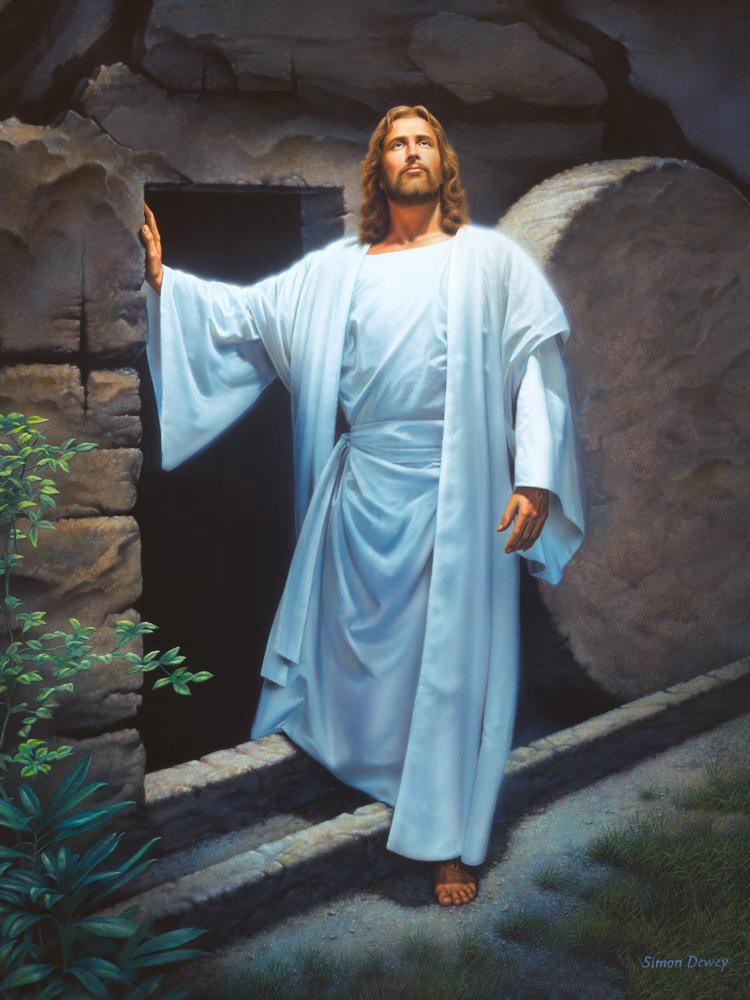
To his disciples the Savior testified: “Behold my hands and my feet, that it is I myself: handle me, and see; for a spirit hath not flesh and bones, as ye see me have” (Luke 24:39). To impress on them even more the corporeal nature of his resurrected body, the Savior ate a “piece of broiled fish, and of an honeycomb” (Luke 24:42).
This scripture, however, doesn’t seem to be enough for the immaterialists who contend that Jesus’ resurrected body of flesh and bones was but a temporary manifestation to appeal to mortal man, because Jesus is not restricted to a physical body, but is a spirit.
However, with a resurrected body the Savior penetrated the solid walls of the room where the apostles were gathered.
“When the doors were shut where the disciples were assembled for fear of the Jews, came Jesus and stood in the midst, and saith unto them, Peace be unto you” (John 20:19).
After traveling with the two men on the road to Emmaus, Jesus with His resurrected body “vanished out of their sight” (Luke 24:31). during His mortal ministry, it was with His physical body that the Savior walked on water.
How important is it for us to understand the nature of God? John the Beloved taught the imperative need to understand God when he wrote, “This is life eternal, that they might know thee the only true God, and Jesus Christ, whom thou hast sent” (John 17:3). The Church of the New Testament and the early Christian writers taught that God the Father, his Son Jesus Christ, and the Holy Ghost were three, separate, distinct beings, having a oneness in unity and purpose. Unfortunately, this simple doctrinal belief quickly evolved into a mystery, namely that the Father, Son, and Holy Ghost were an inexplicable triune—three gods who were somehow only one substance and one God…
Unfortunately there is much confusion in the Christian world today about the nature of God and the relationship between the Father, Son, and Holy Ghost, and whether they are material or immaterial beings. If someone is not aware of this uncertainty, then he simply needs to ask ten or twenty Christians of different faiths, at random, the following questions: Do you believe that God the Father and Jesus Christ are the same being or separate beings? Do you believe that God has a material body or instead is some immaterial, undefinable entity? Do you believe Jesus was resurrected with a glorified body of flesh and bones and, if so, does he still have a material body in heaven today? If Christ retained his resurrected body, does God the Father also have a similar glorified body of flesh and bones, since Jesus is in his Father’s express image? If Jesus, however, does not have a glorified physical body in heaven today, then what happened to his resurrected body, and what was the purpose of his resurrection? Further, ask a little child how she pictures her Father in Heaven—does she view him as some amorphous being or as a kindly, loving Father who is in the image of the mortal Jesus?
One God or Three Gods?
If the members of the Godhead are different manifestations of the same person or substance, as some assert, then many scriptural events and passages make no sense whatsoever. Much of the confusion centers around John 10:30: “I and my Father are one.” From this, many have assumed that God the Father and Jesus Christ are one and the same person. They often include the Holy Ghost in this “oneness.” The scriptures assert and many of the early Christian writers testified, however, that they were three separate and distinct persons who shared a oneness, not in identity of person, but in purpose, unity, and will. The scriptural references to their separateness are numerous. Following are but a few examples.
Why would Jesus have prayed to himself? Why would he have pled with himself for the cup to be removed? Why would he in agony have said, “My God, my God, why hast thou forsaken me” (Matthew 27:46) if he and the Father were the same? What imploring value would those petitions have had, if made only to self? If they were the same individual—the same God—why would Jesus have stated: “My Father is greater than I” (John 14:28). How could his Father be “greater” than he if they were the same person? It was Jesus who said, “I seek not mine own will, but the will of the Father which hath sent me” (John 5:30). Certainly, this was a magnificent statement of submission. But what submission would there have been if he were merely following his own will under a different name?…
The separate, distinct nature of the three members of the Godhead was evidenced at the baptism of the Savior. On that occasion Jesus stood in the water, the Holy Ghost descended upon him, and the Father spoke from the heavens: “This is my beloved Son, in whom I am well pleased” (Matthew 3:16–17). The three members of the Godhead again manifested themselves at the stoning of Stephen. While “full of the Holy Ghost,” Stephen saw “Jesus standing on the right hand of God” (Acts 7:55). For those who tried to dilute or mystify the reality of three gods, Dionysius of Alexandria (c. A.D. 264) wrote, “If from the fact that there are three hypostases [essential parts], they say that they are divided, there are three whether they like it or no, or else, let them get rid of the divine Trinity altogether.” In other words, he argued, there is either a trinity or there is not—but do not give me any nonsense that they are three separate, distinct persons yet somehow only one being or substance.
While there are some scriptures that suggest the Father and the Son are one (John 10:30; John 17:21; 1 John 5:7), they become clear as to what is meant by “one” when read in context. There are likewise scriptures that suggest a husband and wife are one: “Therefore shall a man leave his father and his mother, and shall cleave unto his wife: and they shall be one flesh” (Genesis 2:24).17 Accordingly, the real question is, “What does it mean to be one, as that term is used in the scriptures?” No one would contend a husband and wife are one physical body, or one and the same individual manifested in different forms. However, a husband and wife may be one in purpose and in mind and in will…
Jesus prayed that this type of oneness be extended to all his disciples: “That they all may be one; as thou, Father, art in me, and I in thee” (John 17:21). Certainly he was not preaching that all believers be merged into one physical mass, but rather be one in purpose and mind.
Edwin Hatch noted Christianity’s affinity for Greek philosophy: “The ideas of men were trooping in one vast host to proclaim with a united voice that there are not many gods, but only One, one First Cause by whom all things were made, . . . one Supreme Being. This formed the basis of the theological battle for several centuries—three gods as dictated by the scriptures versus one God as dictated by the philosophers. How did the battle end? As Edwin Hatch correctly observed: “The struggle really ended as almost all great conflicts end, in a compromise.” But in weighing this compromise, he added: “The dominant Theistic philosophy of Greece became the dominant philosophy of Christianity. It prevailed in form as well as in substance.”
The Nicene Creed, adopted in A.D. 325,24 was a crucial step in the integration of the scriptures with Greek philosophy.
An Immaterial or Material God?
Origen of Alexandria spoke of the separate and distinct identities of God the Father, Jesus Christ, and the Holy Ghost, but he acknowledged that the church at his time did not have a clear understanding of whether God was material or immaterial…
What an admission! The doctrine concerning the physical nature of God was lost. Instead, it was replaced by the opinions of men. While Origen acknowledged that the church in his day did not have a doctrinal stance on the physical nature of God, he nonetheless gave his opinion that God was immaterial…
As a result of this theological uncertainty concerning the corporeal existence of God, a false doctrine arose concerning the nature of God, namely, that God was immaterial. This heresy was founded upon one or more of the following assumptions: (1) God was invisible and therefore had no form or substance, (2) all matter was corruptible and, therefore, a god who was eternal could not be composed of a corruptible substance, and (3) God is a spirit and therefore cannot have a material body.
No doubt much of the foregoing was influenced by Greek philosophy. Aristotle had taught: “The Supreme Being is immaterial; it can have no impressions, no sensations, nor appetites, nor a will in the sense of desire, nor feelings in the sense of passions; all these things depend on matter.” …
God declared his materiality in the first book of the Bible: “And God said, Let us make man in our image, after our likeness. . . . So God created man in his own image, in the image of God created he him” (Genesis 1:26–27). A few chapters later, Moses confirmed that Adam was “in the likeness of God,” and then, to help us understand how he was using the words “likeness” and “image,” Moses observed that Adam “begat a son in his own likeness, after his image; and called his name Seth” (Genesis 5:3). The parallel was clear—man is in the physical likeness and image of God, just as Seth was in the physical image of his father.
It is of further interest to note that Paul declared that Christ is in “the express image of his [God’s] person” (Hebrews 1:3), meaning that he looks like God the Father, much as a son is in the image of his mortal father. What does the word image mean in these verses if God has no form, no substance, no materiality? Yet almost every Christian church today teaches that God is a spirit, without body, parts, or form. At least one major church declares that God is also without passions, hence the phrase that “God is without body, parts, or passions.”…
What type of relationship can someone develop with a god who is immaterial, invisible, and undefinable? It must be difficult, if not impossible, for the human heart and mind to fully contemplate and consummate a relationship with a mysterious “something” that can be neither envisioned nor defined. Contrary to such a belief, Paul declared: “We are also his [God’s] offspring.” Then he added, “Forasmuch then as we are the offspring of God, we ought not to think that the Godhead is like unto gold, or silver, or stone, graven by art and man’s device” (Acts 17:28–29). What was Paul’s point? That like begets like, and thus, if we are his offspring, we must be like him. A similar message was recorded in Hebrews, which reminds us to be “in subjection unto the Father of spirits and live” (Hebrews 12:9). There are multiple passages that refer to God as our Father in Heaven. Why? Because we are his spirit children, created in his image.
God is not an “it,” as many Christians assert. He is not a thing. He is not some neuter force, not some ethereal non substance. The scriptures not only refer to God as our Father in Heaven, but as “him” or “he” in verse after verse. Why? Because God is a male personage.
Consistent with being a male personage, God has a corporeal body. Jacob declared: “I have seen God face to face” (Genesis 32:30). Paul spoke of a “face to face” encounter with the Lord (1 Corinthians 13:12), and John saw the day when the worthy would approach the throne of God and “see his face” (Revelation 22:4). The ten commandments were “written with the finger of God” (Exodus 31:18). God said to Moses: “I will take away mine hand, and thou shalt see my back parts: but my face shall not be seen” (Exodus 33:23).
The Lord said with regard to Moses: “With him will I speak mouth to mouth” (Numbers 12:8). It was the resurrected Savior whom Stephen saw “standing on the right hand of God” (Acts 7:55). Ezekiel saw “the appearance of his loins” (Ezekiel 1:27). John saw the coming of the Lord and declared that “his eyes were as a flame of fire, and on his head were many crowns. . . . And out of his mouth goeth a sharp sword” (Revelation 19:12, 15). He further revealed that Jesus “sat upon” a white horse and “was clothed with a vesture dipped in blood” (Revelation 19:11, 13). The scriptures also tell us that “Enoch walked with God” (Genesis 5:24) and that Abraham “stood yet before the Lord” (Genesis 18:22).
It is hard to say that we believe in the Bible and still insist that God is a being without body, parts, or passions.
A bishop counsels his congregation’s members on spiritual matters. 2012 by Intellectual Reserve, Inc. All rights reserved.
A bishop is the leader of a local congregation (known as a ward) with duties similar to those of a pastor, priest or rabbi. He has overall responsibility for ministering the temporal and spiritual affairs of the congregation. In The Church of Jesus Christ of Latter-day Saints, this position is unpaid.
Each bishop is assisted by two counselors. Together, this bishopric oversees the spiritual and social needs of their ward members. The bishop helps each member of his congregation in their efforts to follow Jesus Christ. In addition to spiritual matters, a bishop helps members who are struggling financially or in other ways to become self-reliant through welfare assistance. A bishop also oversees practical matters such as records, reports, finances and the meetinghouse where members meet.

Bishops typically serve for about five years. Bishops report to stake presidents, and these local leaders have a significant amount of local autonomy to make decisions regarding the members in their wards and stakes.
Is a branch president the same as a bishop?
A branch president is a leader of a “branch” congregation of The Church of Jesus Christ of Latter-day Saints (LDS Church). The calling of branch president is very similar to the calling of bishop, except that instead of presiding over a ward, the branch president presides over a branch.
What is the difference between a ward and a branch?
Ideally, a branch will grow in numbers and strength and eventually become a ward. A ward is created when there are sufficient numbers and strength of members to carry out the full program of the Church. A ward does not have to have been a branch first. If there are enough members in an area, a ward can be created.
The Church’s Unpaid Clergy
Personal sacrifice is vital to the religious faith of members of The Church of Jesus Christ of Latter-day Saints. Members volunteer their time to serve in various positions in tens of thousands of congregations throughout the world. Their service is critical at the local level because the Church has no full-time paid clergy.
“The Lord in His infinite wisdom has designed His Church to operate with a lay ministry. That means we have been charged to watch over one another and to serve one another. We are to love one another as our Father in Heaven and the Lord Jesus Christ love us. Our callings and circumstances change from time to time, providing us with different and unique opportunities to serve and to grow.”
In addition to serving in the Church, bishops have their own careers and families to look after. While there is no stipulated period of service, it is common for a bishop to serve his congregation for about five years, at which time he returns to the body of the congregation or is assigned another responsibility elsewhere such as teaching a youth class, helping others find employment or even directing a choir.
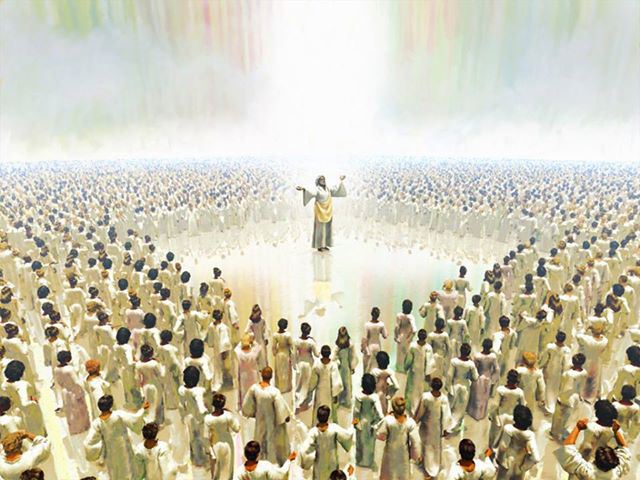
The number 144,000 appears three times in the Book of Revelation, in the Bible:
Revelation 7:3–8:
“Do not harm the earth or the sea or the trees, until we have sealed the servants of God on their foreheads.” And I heard the number of the sealed, 144,000, sealed from every tribe of the sons of Israel:
Revelation 14:1:
Then I looked, and behold, on Mount Zion stood the Lamb, and with him 144,000 who had his name and his Father’s name written on their foreheads.
Revelation 14:3–5:
and they were singing a new song before the throne and before the four living creatures and before the elders. No one could learn that song except the 144,000 who had been redeemed from the earth. It is these who have not defiled themselves with women, for they are virgins. It is these who follow the Lamb wherever he goes. These have been redeemed from mankind as firstfruits for God and the Lamb, and in their mouth no lie was found, for they are blameless.
The Jehovah’s Witnesses, according to Wikipedia,
believe that exactly 144,000 faithful Christians from Pentecost of 33 AD until the present day will be resurrected to heaven as immortal spirit beings to spend eternity with God and Christ. They believe that these people are “anointed” by God to become part of the spiritual “Israel of God”.They believe the 144,000 (which they consider to be synonymous with the “little flock” of Luke 12:32) will serve with Christ as king-priests for a thousand years, while all other people accepted by God (the “other sheep” of John 10:16, composed of “the great crowd” of Revelation 7:9,14 and the resurrected “righteous and the unrighteous” ones of Acts 24:15), will be given an opportunity to live forever in a restored paradise on earth.
Individual Witnesses indicate their claim of being “anointed” by partaking of the bread and wine at the annual Memorial of Christ’s death. More than 19,500 Witnesses worldwide—an increase of about 11,000 since 1995—claim to be of the anointed “remnant” of the 144,000. The members of the Governing Body who exercise teaching authority over Jehovah’s Witnesses worldwide claim to be among the anointed 144,000,
Jehovah’s Witnesses are unique in their belief, most other religious denominations interpret the number 144,000 to be symbolic, but they still differ in their explanations.
According to Catholic.com, for example,
Witnesses … insist that there are exactly 144,000 of these people, no more and no less, making it a literal number, but they interpret every other detail about this group in a symbolic manner.
If they were consistent, they would have to conclude that the 144,000 are Jews, drawn equally from the twelve tribes of Israel …, that they are all male virgins who do not lie and who have two names literally written on their foreheads. The problem is that almost none of the 9,000 Witnesses supposed to be members of this group fit this description. Many of them are married Gentile women with children, and they presumably have bent the truth more than a few times in their lives.
The only detail from the text that the Witnesses take literally is the number. Every other detail of the text is taken non-literally. They should either take all of the details literally or see the 144,000 as a symbol of the Church as a whole (as does virtually everyone else).
In “The Lost Language of Symbolism” by Alonzo Gaskill, a Latter-day Saint scholar, a very different interpretation is offered, one that focuses on the symbolic nature of the number 144,000, which is a combination of the number 12, its square, 144, and the number 1,000.
“The number twelve is a symbol for priesthood, including its power and right to govern. Examples of this in scripture and the temple are legion.
“In Matthew 10:1-4 we are told that Jesus called twelve Apostles and gave them the priesthood. When he appeared to the Nephites, Jesus again called twelve men as ministers to the people and gave them ‘power and authority to baptize’ (3 Nephi 12:1). In the dispensation of the fulness of times, the Lord has again called and commissioned twelve Apostles to further his work (see D&C 18:27). The number twelve in relation to the Apostles suggests that they are the epitome of priesthood authority and governance.
“The number twelve appears over and over again in relation to priesthood holders, the temple, the covenant people who have received the necessary priesthood ordinances, and the celestial kingdom. Hence there are twelve tribes, twelve stones on the breastplate of the high priest, twelve foundations and gates into the heavenly city, twelve priesthood-holding patriarchs from Seth to Noah, and another twelve from Shem to Jacob. . . .
” . . .Because the number twelve symbolizes priesthood, multiples of twelve are traditionally understood to be a symbol for the fulness of the priesthood, or making one’s calling and election sure. Thus one commentary notes, ‘Anytime the number twelve is multiplied by another number, it symbolizes an increase in power and covenant responsibility.’
“So in Revelation 7 we read, ‘And I hear the number of them which were sealed an hundred and forty and four thousand of all the tribes of the children of Israel’ (v.4). Of these 144,000 individuals, ‘we are to understand that those who are sealed are high priests, ordained unto the holy order of God, to administer the everlasting gospel; for they are they who are ordained out of every nation, kindred, tongue, and people, by the angels to whom is given power over the nations of the earth to bring as many as will come to the church of the Firstborn’ (D&C 77:11). Contrary to the teachings of some churches, this number is not intended to be taken literally. Rather it serves to highlight the necessity of priesthood and priesthood ordinances (e.g., “twelve thousand” of each tribe).
It emphasizes the fact that those who partake of the ordinances required by the Lord, and then keep the covenants associated therewith, shall become members of the Church of the Firstborn and have their calling and election made sure. This is available to all of God’s children, not a predetermined, limited number. Of this verse one commentator wrote:
“Twelve represents the priesthood. Biblical people squared a number to amplify its symbolic meaning. Thus, 144 suggests a fulness of priesthood authority. But John is not satisfied with that. He gives the image a superlative quality by multiplying 1,000, representing completeness. In this way he shows the strength and breadth of the priesthood in the latter days, in this dispensation that is, indeed, the dispensation of the fulness of times. During this period that complete priesthood authority will operate.”
The Latter-day Saint Prophet Joseph Smith asked to the Lord this same question – who are these one hundred and forty four thousand? The Lord gave him an answer in Doctrine & Covenants 77:12. In response to the question “What are we to understand by sealing the one hundred and forty-four thousand, out of all the tribes of Israel – twelve thousand out of every tribe?”, the revelation of Joseph Smith states that
“We are to understand that those who are sealed are high priests, ordained unto the holy order of God, to administer the everlasting gospel; for they are they who are ordained out of every nation, kindred, tongue, and people, by the angels to whom is given power over the nations of the earth, to bring as many as will come to the church of the Firstborn.”
“‘the number 144,000 mentioned in Revelation 7:4-8 is the number of ordained high priests out of the twelve tribes of Israel who will assist others in their quest for exaltation. it is not, as some people believe, the total number of people who will be exalted
You have heard of prophets in the Bible, and you may have heard of modern-day prophets too. Who are they? What is their purpose? Let’s talk about it.
God told Noah to build an ark before the flood came. He did, and the family of Noah was saved. God gave Moses 10 commandments to teach to the people. Those who follow the commandments were blessed. Noah, Moses, and other prophets found in the Bible were called by God to speak for Him. When they did, it was as if God was speaking.
Mormons, more properly referred to as Latter-day Saints, believe God still speaks to us, His children, through prophets. Just like prophets found in the Bible and The Book of Mormon, additional scripture, today’s prophet is a witness of Jesus Christ. He testifies of the Savior’s divinity and teaches His gospel. He receives direction from God and often offers warnings in order to prepare us for what is to come.

So who are these modern prophets?
Prophets Overview
As members of The Church of Jesus Christ of Latter-day Saints, we are blessed to be led by living prophets—inspired men called to speak for the Lord, as did Moses, Isaiah, Peter, Paul, Nephi, Mormon, and other prophets of the scriptures. We sustain the President of the Church as prophet, seer, and revelator—the only person on the earth who receives revelation to guide the entire Church. We also sustain the counselors in the First Presidency and the members of the Quorum of the Twelve Apostles as prophets, seers, and revelators.
Like the prophets of old, prophets today testify of Jesus Christ and teach His gospel. They make known God’s will and true character. They speak boldly and clearly, denouncing sin and warning of its consequences. At times, they may be inspired to prophesy of future events for our benefit.
We can always trust the living prophets. Their teachings reflect the will of the Lord, who declared: “What I the Lord have spoken, I have spoken, and I excuse not myself; and though the heavens and the earth pass away, my word shall not pass away, but shall all be fulfilled, whether by mine own voice or by the voice of my servants, it is the same” (Doctrine and Covenants 1:38).
Our greatest safety lies in strictly following the word of the Lord given through His prophets, particularly the current President of the Church. The Lord warns that those who ignore the words of the living prophets will fall (see Doctrine and Covenants 1:14–16). He promises great blessings to those who follow the President of the Church:
“Thou shalt give heed unto all his words and commandments which he shall give unto you as he receiveth them, walking in all holiness before me;
“For his word ye shall receive, as if from mine own mouth, in all patience and faith.
“For by doing these things the gates of hell shall not prevail against you; yea, and the Lord God will disperse the powers of darkness from before you, and cause the heavens to shake for your good, and his name’s glory” (Doctrine and Covenants 21:4–6).
Just as God revealed His will to ancient prophets now recorded in the Holy Bible, He reveals His will today to modern-day prophets. To those who seek Him, He inspires with personal revelation to know His plan for them.
Do you wonder how we know about God? Does God speak to us? Members of The Church of Jesus Christ of Latter-day Saints, also known as Latter-day Saints, believe as other Christians that God speaks to His children through revelation, or direct communication. He does this because He loves us and wants us to know about Him and His plan for each of us. He does this through prophetic revelation and personal revelation.
Prophets like Moses, Noah, and others found in the Bible were God’s spokesmen. They communicated God’s will to all of His children.
Through these ancient prophets, God declared His will on a variety of topics relevant to their day for their benefit. He gave commandments to live by, instructions regarding how to treat others, and also important truths about the life and mission of Jesus Christ.
God communicates to prophets through inspirations to the heart and mind, through visitations of angels, and by personal appearances. His teachings were preserved in a book of scripture known as the Holy Bible.
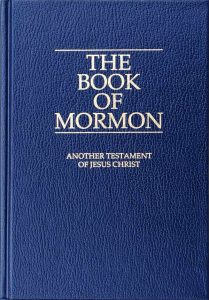
God revealed Himself to other prophets in the Americas. Their teachings are also considered scripture and are found in the Book of Mormon: Another Testament of Jesus Christ.
God’s communication through His prophets is referred to as Prophetic Revelation.
God also knows and cares for all His children. There are times when He speaks personally—to each of us—to guide, encourage, and correct our paths. God speaks to us through the Comforter, or Holy Ghost. He is a personage of spirit and communicates God’s will to His children.
God communicates in unique, special ways to each of us. Latter-day Saints call this Personal Revelation.
Revelation can come as an impression to warn or prepare. It can come as a warmth in the heart or as an idea in the mind. Through the Holy Ghost, God offers promptings of instruction and whispers of encouragement. We can receive revelation about things we learn in the scriptures or from modern prophets.
The Holy Spirit can help in your life as you seek God through prayer. He will reveal Himself to you through the Holy Spirit or through miracles, blessings, or spiritual gifts. He will bring you comfort and guidance in life.
God does this because He wants to reveal Himself so we can become like Him and return to live with Him. Now you know more about the power and purpose of revelation and why and how God speaks to us.
The Book of Mormon contains sacred writings from followers of Jesus. Just like God spoke to Moses and Noah in the Bible, He also spoke to people in the Americas. These men, called prophets, wrote down God’s word. Their writings were eventually gathered into one book by a prophet named Mormon.
God’s people have always been taught by living prophets. Like us today, the women and men of those times struggled with temptation, searched for wisdom, and led happier lives when they followed the teachings of Jesus Christ. We can recognize ourselves in their stories—inspired and inspiring spiritual records. The Book of Mormon is evidence that God loves all His children and is involved in their lives. It serves as a witness to the truths in the Bible and to the divinity and teachings of Jesus Christ.
The Book of Mormon answers the big questions
The Book of Mormon can help us understand the essential questions that we all have at some point:
Is there life after death?
What’s waiting for us on the other side?
What is the purpose of life?
How can I find happiness and peace now?
Does God know me and hear my prayers?
Translations of the Book of Mormon
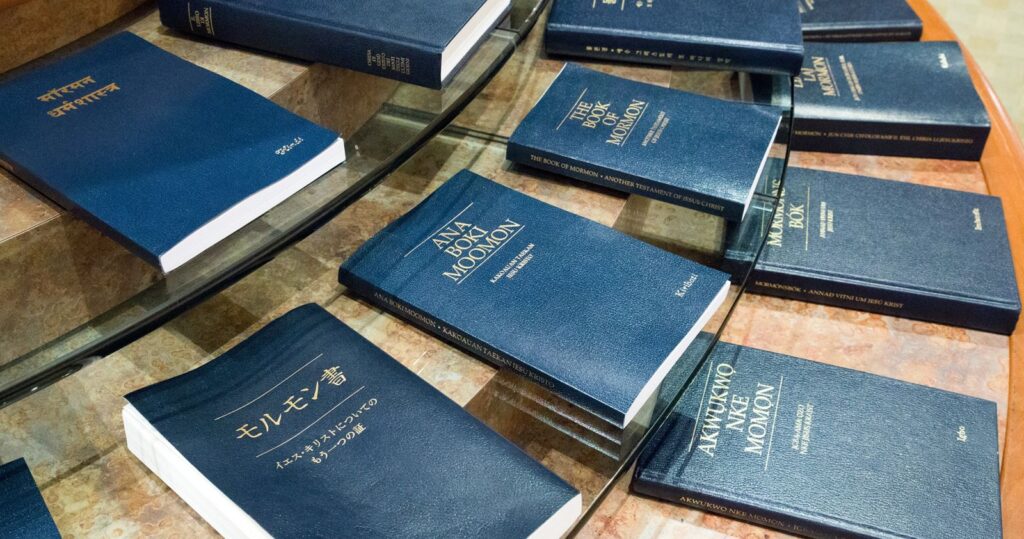
The Book of Mormon is published in 112 languages, and many of them are available in multiple formats online.
In March 1830, 5,000 copies of the Book of Mormon were printed in the E. B. Grandin print shop in Palmyra, New York. From that humble beginning, today the Church prints over 3 million copies a year on large web presses. Over 180 million total copies have been distributed since 1830. Truly, this important witness of Jesus Christ is beginning to cover the earth.
Today, all or part of the Book of Mormon has been translated into 112 languages. 91 are translations of the full book and 21 are translations of Selections from The Book of Mormon, which is approximately one third of the full book.
The Book of Mormon is available in print in various sizes, bindings, and colors.
Audio recordings are also available in many languages, as indicated in the list below.
The scriptures website (scriptures.ChurchofJesusChrist.org) has text and audio in many languages.
Joseph Smith stated: “I teach the people correct principles and they govern themselves.” That is a foundational truth of Church and home government: “And Zion cannot be built up unless it is by the principles of the law of the celestial kingdom” (Doctrine and Covenants 105:5).
Why is it more effective to teach principles than rules? There are at least two key reasons: First, rules are often limited to one or perhaps a few specific situations, while principles generally have much broader application. Second, principles create an environment that maximizes agency while rules tend to minimize agency by restricting, and sometimes even dictating our choices.
The law of Moses contained a set of 613 rules. It was given to Israel because of their unworthiness to abide by the greater law composed of principles, higher ordinances and the Melchizedek Priesthood. When the Savior came in the meridian of time, He replaced the lesser law of Moses with the higher law of Christ. The former was rule-driven; the latter was principle-driven.
Tad R. Callister is an emeritus General Authority and former Sunday School general president. 2020 by Intellectual Reserve, Inc. All rights reserved.
President Russell M. Nelson gave this wise counsel: “Don’t answer a behavioral question with a behavioral answer. It is much better to give an answer based upon a principle, or even better, with a doctrinal answer, if you can.”
Principles are compatible with the higher law, rules with the lesser. Our constant focus should be to teach doctrinal principles. Why? Because principles have the greatest capacity to lift us to celestial heights, and in the end, principles — not rules — will govern in the celestial kingdom.
Follow the list of the articles chosen for next week, that include the story of Korihor
Alma 30 to 31 – “The Virtue of the Word of God”
Alma counters Korihor’s philosophy by logic and by an appeal to the power of God’s word.
“Countering Korihor’s Philosophy,” Gerald N. Lund, Ensign, July 1992 Lund approaches the story of Korihor from a philosophical angle in this Ensign article. He explains various fields of philosophy and shows how those different philosophies come out in Korihor’s theology. He also uses this discussion as a springboard into how we see these same philosophies at work in the world today, and how one can stay faithful in the gospel.
“The Trial of Korihor,” John W. Welch, Legal Cases in the Book of Mormon The story of Korihor may be initially confusing for some readers, because it seems that Korihor is wrongfully being denied his freedom of speech when he is convicted. However, the trial of Korihor aligns well with ancient Israelite legal practices.
“‘All Things Denote There is a God’: Seeing Christ in the Creation,” Bruce A. Roundy, Robert J. Norman, Religious Educator 6, no. 2 Using Alma 30:44 as a springboard, the authors dive into a discussion on how all things in the earth and in nature can be seen symbolically in testifying of God. Through the symbols of rocks, light, water, and vegetation, one can see how God has employed these powerful images throughout scripture to testify of his greatness and glory.
“The Zoramites and Costly Apparel: Symbolism and Irony,” Shon Hopkin, Parrish Brady, Journal of Book of Mormon Studies 22, no. 1 The Zoramite narratives of Alma 31–35 and Alma 43–44 are richly symbolic accounts woven with many subtle details regarding the importance of costly apparel and riches as an outward evidence of pride. This literary analysis focuses on how Mormon as editor structured the Zoramite narrative and used clothing as a metaphor to show the dangers of pride and the blessings afforded by humble adherence to God’s teachings and covenants.