“Progress is made by lazy men looking for easier ways to do things.” ― Robert A. Heinlein
Travel recommendations from Bard and ChatGPT

I asked for travel recommendations to ChatGPT and Bard. Specifically I asked them to create a travel itinerary for some of the best European capitals with details about transportation and accommodations.
ChatGPT replied:
“Sure! Here’s a travel itinerary for exploring some of Europe’s capital cities within the given timeframe, starting from Salt Lake City in the middle of September and ending at the end of September:
Day 1-3: Salt Lake City to London, United Kingdom
- Fly from Salt Lake City to London, which serves as a major international hub.
- Accommodation: Look for budget-friendly hotels or consider staying at hostels in central London.
Day 4-6: London, United Kingdom
- Explore iconic landmarks like Buckingham Palace, Tower Bridge, Big Ben, and the British Museum.
- Utilize the London Underground (Tube) and buses for transportation within the city.
Day 7-9: Paris, France
- Take a train from London to Paris via the Eurostar.
- Visit attractions such as the Eiffel Tower, Louvre Museum, Notre-Dame Cathedral, and Montmartre.
- Accommodation: Look for affordable hotels or hostels in central Paris.
Day 10-12: Amsterdam, Netherlands
- Take a train from Paris to Amsterdam.
- Explore the picturesque canals, visit the Anne Frank House, Van Gogh Museum, and enjoy the vibrant atmosphere.
- Accommodation: Look for budget-friendly hotels or consider staying in hostels in central Amsterdam.
Day 13-15: Berlin, Germany
- Fly from Amsterdam to Berlin.
- Discover the historical significance of Berlin by visiting the Berlin Wall, Brandenburg Gate, Museum Island, and the Reichstag.
- Utilize the local transportation system, including the U-Bahn and S-Bahn trains, trams, and buses.
Day 16-18: Prague, Czech Republic
- Take a train from Berlin to Prague.
- Explore the enchanting Old Town Square, Prague Castle, Charles Bridge, and enjoy the city’s rich history and architecture.
- Accommodation: Look for affordable hotels or consider staying in hostels in central Prague.
Day 19-21: Vienna, Austria
- Take a train from Prague to Vienna.
- Visit attractions such as Schönbrunn Palace, St. Stephen’s Cathedral, Belvedere Palace, and enjoy the city’s classical music heritage.
- Accommodation: Look for budget-friendly hotels or hostels in central Vienna.
Day 22-24: Budapest, Hungary
- Take a train from Vienna to Budapest.
- Discover the stunning Parliament Building, Fisherman’s Bastion, Buda Castle, and relax in the thermal baths.
- Accommodation: Look for affordable hotels or consider staying in hostels in central Budapest.
Day 25-27: Rome, Italy
- Fly from Budapest to Rome.
- Explore ancient Roman sites such as the Colosseum, Roman Forum, Vatican City, and enjoy the city’s culinary delights.
- Utilize the Rome Metro and buses for transportation within the city.
- Accommodation: Look for budget-friendly hotels or consider staying in hostels in central Rome.
Day 28-30: Departure from Rome
- Fly back to Salt Lake City from Rome.
For transportation within Europe, consider using train services like Eurostar and local trains, as well as budget airlines for longer distances between cities. Plan your travel in advance to secure affordable flight and train tickets. Research and book accommodations well in advance to find the best deals.
Note: This itinerary provides a general framework, but be sure to check the latest travel restrictions, entry requirements, and COVID-19 guidelines for each destination before your trip.”
ChatGPT is still worried about Covid because uses old data, but it provided a reasonable itinerary quickly.
Bard, on the other hand, gave me a three days itinerary, instead than 2 weeks, but with pictures from Wikipedia.
“Here is a possible 3-day itinerary for visiting the capitals of three European countries:
Day 1: London, England
-
- Start your day with a visit to Buckingham Palace to see the Changing of the Guard ceremony.
-
- Next, head to Westminster Abbey to see the coronation thrones and other royal artifacts.
-
- In the afternoon, take a walk along the River Thames and see some of London’s most famous landmarks, such as the Tower Bridge and the Houses of Parliament.
- In the evening, enjoy a traditional British meal in a pub.
Day 2: Paris, France
-
- Start your day with a visit to the Eiffel Tower.
-
- Next, take a walk through the Jardin du Luxembourg, one of Paris’ most beautiful parks.
-
- In the afternoon, visit the Louvre Museum, one of the world’s largest and most famous museums.
- In the evening, enjoy a romantic dinner cruise on the Seine River.
Day 3: Rome, Italy
-
- Start your day with a visit to the Colosseum, one of the most iconic landmarks in the world.
-
- Next, take a walk through the Roman Forum, the center of ancient Rome.
-
- In the afternoon, visit the Vatican City, the smallest country in the world.
- In the evening, enjoy a delicious Italian meal at a local restaurant.
Here are some transportation options for getting from Salt Lake City to each of these cities:
-
- London: You can fly from Salt Lake City International Airport (SLC) to London Heathrow Airport (LHR) on a variety of airlines, including British Airways, American Airlines, and Delta Air Lines. The flight time is approximately 11 hours.
-
- Paris: You can fly from SLC to Paris Charles de Gaulle Airport (CDG) on a variety of airlines, including Air France, United Airlines, and Delta Air Lines. The flight time is approximately 10 hours.
-
- Rome: You can fly from SLC to Leonardo da Vinci–Fiumicino Airport (FCO) on a variety of airlines, including Alitalia, United Airlines, and Delta Air Lines. The flight time is approximately 11 hours.
Here are some accommodation options in each of these cities:
- London: There are a variety of hotels to choose from in London, ranging from budget-friendly options to luxurious 5-star hotels. Some popular hotels include the Ritz London, the Savoy Hotel, and the Four Seasons Hotel London at Park Lane.
- Paris: There are also a variety of hotels to choose from in Paris, ranging from budget-friendly options to luxurious 5-star hotels. Some popular hotels include the Hotel Plaza Athénée, the Ritz Paris, and the Hôtel de Crillon.
- Rome: There are also a variety of hotels to choose from in Rome, ranging from budget-friendly options to luxurious 5-star hotels. Some popular hotels include the Hotel Hassler, the Hotel de Russie, and the Hotel Santa Maria.
This is just a suggested itinerary, and you can tailor it to your own interests and preferences. With a little planning, you can have a wonderful trip to Europe and visit some of the most iconic cities in the world.”
I reminded Bard that I had asked for 2 weeks and not 3 days, he then apologized and gave me suggestions for a trip of 8 days.
But why 8 days only? He replied “I apologize for interrupting at day 8. I was trying to keep the itinerary to 2 weeks, as you had requested.”
Bard needs to get better.
Can ChatGPT help me as a personal assistant?

I ask ChatGPT if he can help me as a personal assistant.
This is his answer.
“Yes, as a personal assistant, I can help you with various tasks and provide support in managing your day-to-day activities. Here are some ways I can assist you:
- Schedule Management: I can help you organize your schedule, set reminders for important events, appointments, and deadlines. I can also assist in coordinating meetings and events by suggesting available time slots and sending calendar invitations.
- Task and To-Do Lists: I can help you create and manage task lists to ensure you stay organized and productive. You can ask me to create reminders for specific tasks, set priorities, and even provide progress updates.
- Email and Communication: I can help you draft and respond to emails, allowing you to save time and ensure clear and professional communication. You can provide me with the necessary information, and I can assist in composing and proofreading your messages.
- Travel Planning: If you have upcoming trips or vacations, I can help you with various aspects of travel planning. This includes researching flights, accommodations, and local attractions, as well as providing you with relevant information such as weather forecasts and travel advisories.
- Information Retrieval: Whether you need quick facts, news updates, or research on specific topics, I can assist you in finding relevant information and providing you with summaries or detailed answers.
- Reminders and Alarms: If you need reminders for important tasks, appointments, or events, I can set up personalized reminders for you. Just let me know the details, and I’ll ensure you receive timely notifications.
- General Assistance: You can rely on me for general inquiries and assistance. I can help answer questions, provide recommendations for restaurants or entertainment options, or offer suggestions for various everyday situations.
Please note that while I can provide valuable support as a personal assistant, there may be limitations to my capabilities, especially when it comes to physical tasks or interactions that require human intervention. In such cases, it’s advisable to seek assistance from people or services that can fulfill those specific needs.”
Interesting that ChatGPT specified that “there may be limitations to my capabilities, especially when it comes to physical tasks or interactions that require human intervention.” I already knew that 🙂 but I will be testing the other things that can do in the near future.
What do people usually ask Bard (Google AI chatbot) about Mormons (Latter-day Saints) and what does he answer?

I asked this question to Bard, the conversational generative artificial intelligence chatbot developed by Google:
What do people usually ask you about Mormons and what do you answer?
People usually ask me about the following things when it comes to Mormons:
- What are Mormons beliefs?
- What are the differences between Mormons and other Christians?
- Do Mormons practice polygamy?
- What are some of the challenges that Mormons face?
Here are my answers to these questions:
- Mormons believe in the Bible and the Book of Mormon. They believe that Jesus Christ is the Son of God and that he died for our sins. They also believe that Joseph Smith was a prophet who was called by God to restore the true gospel of Jesus Christ to the earth.
- Mormons are Christians, but they have some unique beliefs that set them apart from other Christian traditions. For example, Mormons believe that God the Father, Jesus Christ, and the Holy Ghost are three distinct beings. They also believe that the Book of Mormon is a true record of ancient prophets who lived in the Americas.
- Polygamy was practiced by some Mormons in the early days of the church, but it is no longer practiced by the vast majority of Mormons. The practice of polygamy was officially discontinued by the church in 1890.
- Mormons face some challenges, just like any other group of people. However, they are a strong and resilient people who are committed to living their lives according to the teachings of their faith.
If you have any other questions about Mormons, please feel free to ask me.
I asked for a little bit more details and this is what Bard answered:
Here are some more details about the beliefs and practices of Mormons:
- Beliefs: Mormons believe in the Bible and the Book of Mormon. They believe that Jesus Christ is the Son of God and that he died for our sins. They also believe that Joseph Smith was a prophet who was called by God to restore the true gospel of Jesus Christ to the earth.
- The Book of Mormon: The Book of Mormon is a sacred text of the Church of Jesus Christ of Latter-day Saints. It is believed to be a record of ancient prophets who lived in the Americas. Mormons believe that the Book of Mormon is a companion to the Bible and that it contains additional information about God, Jesus Christ, and the plan of salvation.
- The Plan of Salvation: Mormons believe that God has a plan for all of His children. This plan is called the Plan of Salvation. The Plan of Salvation teaches that we are all spirit children of God and that we came to this earth to learn and grow. It also teaches that we can return to live with God again after we die, if we follow His commandments.
- Practices: Mormons have a number of practices that are unique to their faith. These practices include:
- Baptism: Mormons believe that baptism is necessary for salvation. They are baptized by immersion, which means that they are completely submerged in water.
- The Lord’s Supper: Mormons partake of the Lord’s Supper every week. The Lord’s Supper is a sacrament that reminds Mormons of the sacrifice of Jesus Christ.
- Temple Worship: Mormons believe that temple worship is essential for their spiritual growth. Temples are sacred buildings where Mormons can participate in ordinances that help them to prepare for eternal life.
- Challenges: Mormons face some challenges, just like any other group of people. However, they are a strong and resilient people who are committed to living their lives according to the teachings of their faith. Some of the challenges that Mormons face include:
- Persecution: Mormons have been persecuted throughout their history. In the early days of the church, Mormons were driven from their homes and forced to live in exile. Even today, Mormons sometimes face discrimination and prejudice.
- Misunderstanding: Mormons are often misunderstood by people who do not know much about their faith. This can be a challenge, as it can make it difficult for Mormons to share their beliefs with others.
- Internal challenges: Like any other group of people, Mormons face internal challenges. These challenges can include things like sin, temptation, and doubt. However, Mormons are taught to rely on God for help in overcoming these challenges.
Despite the challenges that they face, Mormons are a strong and resilient people who are committed to living their lives according to the teachings of their faith. They are a positive force in the world and they make a significant contribution to society.
I finally asked the same question, but used the more appropriate form “Latter-day Saints” instead than “Mormons”, and the answer was the same.
People usually ask me about the following things when it comes to Latter-day Saints:
- What are Latter-day Saints beliefs?
- What are the differences between Latter-day Saints and other Christians?
- Do Latter-day Saints practice polygamy?
- What are some of the challenges that Latter-day Saints face? (etc.)
60 Beliefs of The Church of Jesus Christ of Latter-day Saints in 60 Seconds
What Google Bard AI had to say about the Book of Mormon

I tried ChatGPT before and today I tried Google Bard AI. I asked Bard if he could tell me something about the Book of Mormon and this is the first version of what answered:
“The Book of Mormon is a religious text of the Latter Day Saint movement, which, according to Latter Day Saint theology, contains writings of ancient prophets who lived on the American continent from 600 BC to AD 421 and during an interlude dated by the text to the unspecified time of the Tower of Babel. It was first published in March 1830 by Joseph Smith as The Book of Mormon: An Account Written by the Hand of Mormon upon Plates Taken from the Plates of Nephi. The Book of Mormon is one of four standard works of the Latter Day Saint movement and one of the movement’s earliest unique writings.
The Book of Mormon is organized as a compilation of smaller books, each named after its main named narrator or a prominent leader, beginning with the First Book of Nephi (1 Nephi) and ending with the Book of Moroni. The book’s sequence is primarily chronological based on the narrative content of the book. Exceptions include the Words of Mormon and the Book of Ether. The Words of Mormon contains editorial commentary by Mormon. The Book of Ether is presented as the narrative of an earlier group of people who had come to the American continent before the immigration described in 1 Nephi.
The Book of Mormon contains a variety of genres, including historical narrative, genealogy, prophecy, and scripture. The book’s central theme is the coming of Jesus Christ to the Americas following his resurrection. The Book of Mormon also teaches the doctrines of the Latter Day Saint movement, such as the restoration of the gospel of Jesus Christ, the importance of family and marriage, and the need for repentance and baptism.
The Book of Mormon has been translated into over 100 languages and is available in most countries of the world. It is a popular book among Latter Day Saints, who believe that it is a true record of ancient American prophets. The Book of Mormon has also been the subject of much scholarly and critical study.””
That was a good start, but I wanted a little bit more and I got this:
“Sure. Here is more information about the Book of Mormon:
- The Book of Mormon is a record of two groups of people who migrated to the Americas from the Middle East. The first group, known as the Nephites, were descendants of Lehi, a prophet who lived in Jerusalem around 600 BC. The second group, known as the Lamanites, were descendants of Lehi’s brother, Laman.
- The Nephites and Lamanites were constantly at war with each other. The Nephites were a righteous people who followed God’s commandments, while the Lamanites were a wicked people who did not follow God.
- Jesus Christ appeared to the Nephites and Lamanites after his resurrection. He taught them the gospel and restored the priesthood to them.
- The Book of Mormon teaches that all people are children of God and that they can be saved through Jesus Christ. It also teaches that families can be together forever after death.
The Book of Mormon is a sacred text for Latter Day Saints. It is a source of comfort, guidance, and inspiration to them. The Book of Mormon has also been a source of controversy. Some people believe that it is a true record of ancient American prophets, while others believe that it is a fraud.
Regardless of one’s beliefs about the Book of Mormon, it is a fascinating and important text. It is a valuable source of information about the history and culture of the Americas, and it is a powerful testimony of the gospel of Jesus Christ.”.
I particularly liked the final comment about the Book of Mormon being a “valuable source of information about the history and culture of the Americas, and it is a powerful testimony of the gospel of Jesus Christ.”.
But it was still not a lot of information so I asked Bard to write at least 3000 words about the Book of Mormon:
“Sure. Here is a 3000-word essay about the Book of Mormon:
The Book of Mormon is a religious text of the Latter Day Saint movement, which, according to Latter Day Saint theology, contains writings of ancient prophets who lived on the American continent from 600 BC to AD 421 and during an interlude dated by the text to the unspecified time of the Tower of Babel. It was first published in March 1830 by Joseph Smith as The Book of Mormon: An Account Written by the Hand of Mormon upon Plates Taken from the Plates of Nephi. The Book of Mormon is one of four standard works of the Latter Day Saint movement and one of the movement’s earliest unique writings.
The Book of Mormon is organized as a compilation of smaller books, each named after its main named narrator or a prominent leader, beginning with the First Book of Nephi (1 Nephi) and ending with the Book of Moroni. The book’s sequence is primarily chronological based on the narrative content of the book. Exceptions include the Words of Mormon and the Book of Ether. The Words of Mormon contains editorial commentary by Mormon. The Book of Ether is presented as the narrative of an earlier group of people who had come to the American continent before the immigration described in 1 Nephi.
The Book of Mormon contains a variety of genres, including historical narrative, genealogy, prophecy, and scripture. The book’s central theme is the coming of Jesus Christ to the Americas following his resurrection. The Book of Mormon also teaches the doctrines of the Latter Day Saint movement, such as the restoration of the gospel of Jesus Christ, the importance of family and marriage, and the need for repentance and baptism.
The Book of Mormon has been translated into over 100 languages and is available in most countries of the world. It is a popular book among Latter Day Saints, who believe that it is a true record of ancient American prophets. The Book of Mormon has also been the subject of much scholarly and critical study.
The Book of Mormon begins with the story of Lehi, a prophet who lived in Jerusalem around 600 BC. Lehi had a dream in which God told him that Jerusalem would be destroyed by the Babylonians. Lehi and his family left Jerusalem and traveled to the Americas.
Once in the Americas, Lehi’s family split into two groups. The first group, led by Lehi’s son Nephi, were righteous people who followed God’s commandments. The second group, led by Lehi’s son Laman, were wicked people who did not follow God.
The Nephites and Lamanites were constantly at war with each other. The Nephites were a peaceful people who wanted to live in peace with the Lamanites. The Lamanites were a warlike people who wanted to conquer the Nephites.
The Book of Mormon records the history of the Nephites and Lamanites for over 1000 years. During that time, the two groups had many wars and conflicts. However, there were also times of peace and prosperity.
The Book of Mormon also records the coming of Jesus Christ to the Americas after his resurrection. Jesus Christ appeared to the Nephites and Lamanites and taught them the gospel. He also restored the priesthood to them.
The Book of Mormon teaches that all people are children of God and that they can be saved through Jesus Christ. It also teaches that families can be together forever after death.
The Book of Mormon is a sacred text for Latter Day Saints. It is a source of comfort, guidance, and inspiration to them. The Book of Mormon has also been a source of controversy. Some people believe that it is a true record of ancient American prophets, while others believe that it is a fraud.
Regardless of one’s beliefs about the Book of Mormon, it is a fascinating and important text. It is a valuable source of information about the history and culture of the Americas, and it is a powerful testimony of the gospel of Jesus Christ.
Here are some additional facts about the Book of Mormon:
- The Book of Mormon is about 500 pages long.
- It is divided into 15 books.
- It has been translated into over 100 languages.
- It is the most popular book in the world among Latter Day Saints.
- It has been the subject of much scholarly and critical study.
If you are interested in learning more about the Book of Mormon, I encourage you to read it for yourself. It is a powerful and inspiring book that can change your life.”
Again the final comment was one of the best, “If you are interested in learning more about the Book of Mormon, I encourage you to read it for yourself. It is a powerful and inspiring book that can change your life.” This is absolutely true Bard!
“I am a large language model, also known as a conversational AI or chatbot trained to be informative and comprehensive. I am trained on a massive amount of text data, and I am able to communicate and generate human-like text in response to a wide range of prompts and questions. For example, I can provide summaries of factual topics or create stories.
However, I am not able to generate content that is 20,000 words or more. The Book of Mormon is a religious text that is over 500 pages long. It would take me a very long time to generate that much content, (I have italicized this part) and it is not something that I am able to do at this time.
I apologize for any inconvenience this may cause. If you have any other questions, please do not hesitate to ask.””
I think that Bard should take the time to read the Book of Mormon instead of telling me that it is not able to do this at the time like some of the people who are contacted by the missionaries of the Church of Jesus Christ of Latter-day Saints…but overall, Bard gave reasonable information, and it included the source, always Wikipedia, and links to related content, while ChatGPT never did, when I tried it. en.wikipedia.org/wiki/Book_of_Mormon
Change Leadership: John Kotter’s 8-Step Model

Change is hard, especially in the context of an organization. It undermines the status quo and may lead to conflict. Barriers to change can come in various forms, like lack of teamwork or leadership, rigid workplace cultures, arrogant attitudes, fear, and so on. Opposition can disrupt any change implementation project.
To overcome these barrier, and successfully implement change, a reliable change framework is indispensable.
What Is a Change Management Framework?
Change management can be defined as the process of managing organizational transitions, transformations, and changes. Change management is a well-established discipline with decades of history.
Like all business processes, change management needs to be systematized in order to be effective.
A framework provides a systematic approach to managing change. Each framework has its strengths and weaknesses. Some are more appropriate than others for a given situation.
When combined with other change management tools and techniques, frameworks strongly increase the chances of success.
Many business leaders have developed or used frameworks and processes to effect organizational change.
John P. Kotter’s Top 48 Best Quotes
Kotter’s 8-step change management framework
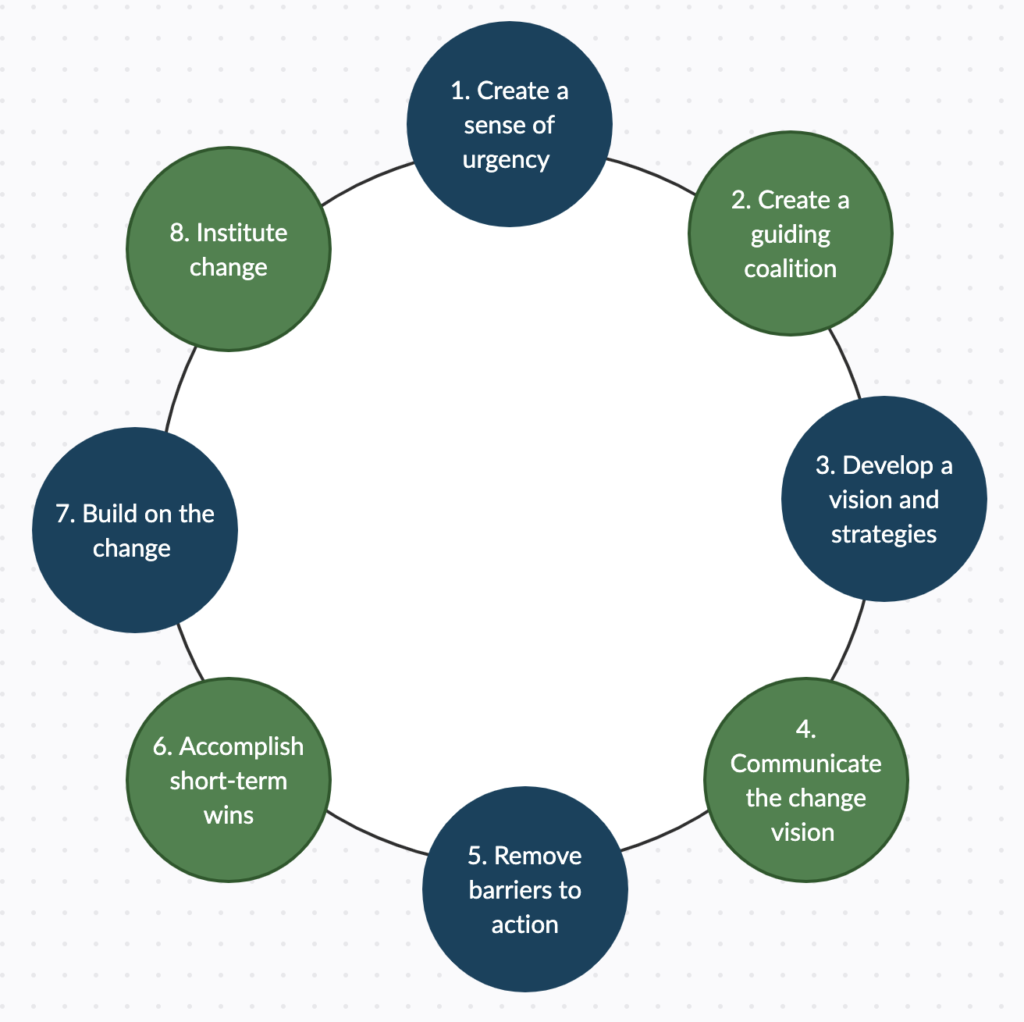
Kotter’s 8-step model is one of the most well-known and widely used change management frameworks. It outlines how to systematically and effectively implement change in an organization.
Dr. John Kotter, a leading expert on change management, introduced his 8-steps change management framework in the 1990s, and it has since become one of the world’s most renowned change models.
In 1996, John Kotter wrote Leading Change, his famous book on change management, in which he detailed a step-by-step model for leading organizational change.
Those steps, according to Dr. Kotter’s institute, have several aims:
- Enable a core change team to drive change forward
- Enact change within a hierarchical organizational structure
- Focus on one thing and execute a series of linear actions over time
- Implement change sequentially and in a finite manner
8 Steps to Accelerate Change: A Breakdown
Here are the steps in that model:
1. Create a Sense of Urgency
The process of change should start with establishing a sense of urgency among both managers and employees. Everyone involved should feel the need for change. Without a broad support, it will be difficult to keep the momentum of the change initiative and achieve lasting transformation.
The objective of this step is to prepare the organization for the upcoming change and motivate the employees to offer their contribution.
For this first step to succeed, approximately 75% of the organization’s management should support the change initiative.
Kotter believes that to be successful, a change initiative needs to appeal to both the emotions and the intellect.
2. Build a Guiding Coalition
The second step of the model focuses on bringing together an effective team with the right skills, qualifications, connections and enough power to influence stakeholders and provide leadership to the efforts.
It should be a cross-functional, diverse team, enabled to work both inside and outside of the traditional hierarchy, and very committed to change.
The Guiding Coalition is, in many ways, the nerve center of the 8-Step Process. It can take many shapes, but must consist of members from multiple layers of the hierarchy, represent many functions, receive information about the organization at all levels and ranks, and synthesize that information into new ways of working.
3. Develop a Vision and Strategies

The objective of this step is to create a vision to achieve change successfully by inspiring and guiding team actions and decisions. It should also define clear and realistic targets to help measure success and engage the company’s stakeholders.
“Vision refers to a picture of the future with some implicit or explicit commentary on why people should strive to create that future. In a change process, a good vision serves three important purposes. First, by clarifying the general direction for change .., it simplifies hundreds or thousand of more detailed decisions. Second, it motivates people to take action in the right direction, even if the initial steps are personally painful. Third, it helps coordinate the actions of different people, even thousands and thousands of individuals, in a remarkably fast and efficient way.” (Leading Change, p. 68-69)
For a vision to be effective, it must be conceivable, desirable, achievable, focused, flexible and communicable. Importantly, an inefficient vision can be more harmful than not having a new vision.

4. Communicate the Change Vision
“A great vision can serve a useful purpose even if it is understood by just a few key people. But the real power of a vision is unleashed only when most of those involved in an enterprise or activity have a common understanding of its goal and direction. That shared sense of a desirable future can help motivate and coordinate the kinds of actions that create transformations.” (Leading Change, p. 85)
The vision needs to be shared with those involved. To be successful, they need to be aware of their roles and goals.
This shared sense is what motivates and facilitate the coordination for a major transformation. However, this vision sharing isn’t easy for traditional managers.
Some of the best techniques to facilitate vision communication are simplicity, use of metaphors, analogies and examples, repetition, lead by example, and elimination of inconsistent information.
The goal of effectively communicating the vision is to capture the hearts and minds of the employees; to get them to believe that change is possible and to make sacrifices to support the change.
5. Empower Employee for Broad-Based Action

When implementing organizational changes, obstacles occur frequently. They may come in the form of insufficient processes, resistance to change by employees themselves, disempowering managers, organizational policies, etc.
When this occurs, the guiding coalition and the senior management should work to remove these obstacles that block the organization’s change.
Remove Barriers to Action
Four main barriers to empowerment that must be eliminated are:
1. Structures: Remove actuation structures that prevent work from being streamlined. Many levels of leadership, for example, can slow down decision making.
2. Skills: Lack of skill is detrimental to development. Provide training for your employees to be 100% qualified.
3. Systems: Correct leadership helps transform the system to align with the new vision.
4. Supervisors: Confront supervisors who are not committed to change, who do not encourage employees, and who are not aligned with the new vision and strategies.
6. Generate Short-Term Wins
To sustain the effort needed to create a big change, people often need compelling evidence that shows that they are on the right track and that what they are doing is worthwhile. Without this feedback, most people begin to question themselves and what they are doing.
This is why short-term wins are important in a change process.
When we reach those wins, they become fuels for us to continue dedicating ourselves. They reaffirms vision and strategies and prove that our sacrifice is worthwhile, giving us needed positive feedback and keeping the teams united and dedicated to the goals.
Going for a long time without any victories to celebrate may discourage employees.
A short-term win is an improvement that can be implemented within a short period of time. Such win should be highly visible throughout the organization, unambiguous, and related to the change initiative.
7. Consolidate Gains and Produce More Change
In a long process of transformation, the sense of urgency may eventually be lost. Complacency may increase, and old habits and traditions may return to work.
Resistance to change never completely disappears, and progress can fail quickly for two reasons: the corporate culture and the high interdependence created.
The transformation takes place in a series of projects and these projects are made of other smaller projects. With the proper leadership and management, goals can be achieved and excess interdependence diminish.
With less interdependence and more autonomy, decision making speed increases, which makes projects complete faster and transformation becomes more real.
Change must be gradual, and new practices cannot be implemented all at once. This is why culture transformation comes at the end of the transformation.
It’s important to make sure that the team doesn’t declare victory prematurely after a few quick wins.
To continue the momentum of change,
- After every win, it is important to identify what worked and what went wrong to decide what needs to be improved
- Gains from the quick wins need to be consolidated and there is a need to continue to work on implementing larger change throughout the organization
- Unnecessary processes and inter-dependencies need to be identified and removed
- Continue communicating the vision and delivering benefits
8. Anchor New Approaches into the Culture
“In many transformation efforts, the core of the old culture is not incompatible with the new vision, although some specific norms will be. In that case, the challenge is to graft the new practices onto the old roots while killing off the inconsistent pieces.” (Leading Change, p. 151)
In this final step, the change leaders work on nurturing a new culture where change can become permanent. This includes changing not only organizational norms and values, but also processes, reward systems, and other infrastructure elements to align everything with the new direction.
Is Kotter’s 8-Step Model Still Relevant?
In 2014, responding to the changing needs of the business world, Dr. Kotter and his team released a newer version of the 8-step process for accelerating change.
This new model has different objectives:
- Rather than running steps linearly and sequentially, they can be run continually and simultaneously
- Instead of allowing a core change to drive change, change managers recruit a volunteer army who acts as the “change engine”
- The new change model can function either inside of or outside of a traditional hierarchy
- While the previous version of Kotter’s model emphasized specialization on one task, the new model aims to proactively seek new opportunities and complete them quickly
Both versions of the model are still relevant. They are just designed for different use cases, circumstances, and objectives.
For example, an organization that operates with a traditional hierarchy and wants to implement change linearly will probably use the earlier model, while an organization with a flat hierarchy who wants to continuously implement change will probably use the newer model.
The Updated 8-Step Process for Leading Change
From Kotter’s website:
- Create a sense of urgency
- Build a guiding coalition
- Form a strategic vision and initiatives
- Enlist a volunteer army
- Enable action by removing barriers
- Generate short-term wins
- Sustain acceleration
- Institute change
About John Kotter
John Paul Kotter is the Konosuke Matsushita Professor of Leadership, Emeritus, at the Harvard Business School, an author, and the founder of Kotter International, a management consulting firm based in Seattle and Boston. He is a thought leader in business, leadership, and change.
His best-selling book “Leading Change” which discusses mistakes organizations often make when implementing change and an eight-step process for successfully bringing about change, is often referred to by managers as the bible of change across the world.
WHEN COLLABORATION MAY KILL CREATIVITY

In her book Quiet: The Power of Introverts in a World That Can’t Stop Talking, Susan Cain included a chapter about collaboration and creativity that I found particularly interesting.
The author mentions a series of studies conducted by the Institute of Personality Assessment and Research at the University of California, Berkeley, on the nature of creativity that found that the more creative people tended to be socially poised introverts. They were interpersonally skilled but “not of an especially sociable or participative temperament.” They described themselves as independent and individualistic.
These findings suggest that in a group of people who have been extremely creative throughout their lifetimes, we’re likely to find a lot of introverts. Why is that? According to Susan Cain, among other possible explanations, there’s a less obvious, yet surprisingly powerful one, for introverts’ creative advantage: introverts prefer to work independently, and solitude can be a catalyst to innovation.
As the influential psychologist Hans Eysenck once observed, introversion “concentrates the mind on the tasks in hand, and prevents the dissipation of energy on social and … (others) matters unrelated to work.” In other words, if you’re in the backyard sitting under a tree while everyone else is clinking glasses on the patio, you’re more likely to have an apple fall on your head. (Newton was one of the world’s great introverts. William Wordsworth described him as “A mind forever / Voyaging through strange seas of Thought alone.”)
If this is true—if solitude is an important key to creativity—then we might all want to develop a taste for it. We’d want to teach our kids to work independently. We’d want to give employees plenty of privacy and autonomy.
But the way we organize our workplaces tells a very different story. It’s the story of what the author calls “the New Groupthink”, a phenomenon that has the potential to stifle productivity at work.
Susan Cain explains:
The New Groupthink elevates teamwork above all else. It insists that creativity and intellectual achievement come from a gregarious place. It has many powerful advocates. “Innovation—the heart of the knowledge economy— is fundamentally social,” writes the prominent journalist Malcolm Gladwell. “None of us is as smart as all of us,” declares the organizational consultant Warren Bennis, in his book Organizing Genius,
The New Groupthink is embraced by many corporations and most high-level managers believe that teams are the key to success.
Some teams are virtual, working together from remote locations, but others demand a tremendous amount of face-to-face interaction, in the form of team-building exercises and retreats, shared online calendars that announce employees’ availability for meetings, and physical workplaces that afford little privacy. Today’s employees inhabit open office plans, in which no one has a room of his or her own, the only walls are the ones holding up the building, and senior executives operate from the center of the boundary-less floor along with everyone else.
Open-source creators didn’t share office space
The mighty force that pulled the ideas of cooperative learning, corporate teamwork, and open office plans together was the rise of the World Wide Web.
On the Internet, wonderful creations like Linux, the open-source operating system or Wikipedia, the online encyclopedia, were produced via shared brainpower.
These collective productions, exponentially greater than the sum of their parts, were so awe-inspiring that we came to revere the hive mind, the wisdom of crowds, the miracle of crowdsourcing. Collaboration became a sacred concept—the key multiplier for success.
But then we took things a step further than the facts called for. We came to value transparency and to knock down walls—not only online but also in person. We failed to realize that what makes sense for the asynchronous, relatively anonymous interactions of the Internet might not work as well inside the face-to- face, politically charged, acoustically noisy confines of an open-plan office. Instead of distinguishing between online and in-person interaction, we used the lessons of one to inform our thinking about the other.
The Internet’s role in promoting face-to-face group work is especially ironic because the early Web was a medium that enabled bands of often introverted individualists … to come together to subvert and transcend the usual ways of problem-solving. A significant majority of the earliest computer enthusiasts were introverts…
But the earliest open-source creators didn’t share office space—often they didn’t even live in the same country. Their collaborations took place largely in the ether. This is not an insignificant detail. If you had gathered the same people who created Linux, installed them in a giant conference room for a year, and asked them to devise a new operating system, it’s doubtful that anything so revolutionary would have occurred.
Even before the COVID-19 pandemic many organizations were beginning to understand the value of silence and solitude. Many were already creating “flexible” open plans that offer a mix of solo workspaces, quiet zones, casual meeting areas, reading rooms, computer hubs, and even “streets” where people can chat casually with each other without interrupting others’ workflow.
It will be interesting to see in the next few years whether the experience produced by the forced increase of remote collaboration during the COVID-19 pandemic and the concerns with the health of the employees will also directly or indirectly promote a work environment that better accommodate the needs of creative introverts.
Quiet: The Power of Introverts in a World That Can’t Stop Talking
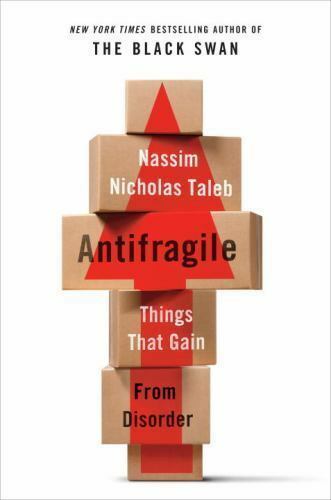
80 Top Quotes From Antifragile: Things That Gain From Disorder by Nassim Nicholas Taleb

Just as human bones get stronger when subjected to stress and tension, many things in life benefit from stress, volatility, and turmoil. What Nicholas Taleb identified and called antifragile are things that not only gain from chaos but need it in order to survive and flourish.
In The Black Swan, Taleb had explained how highly improbable and unpredictable events underlie almost everything about our world. In Antifragile: Things That Gain From Disorder, Taleb shows how uncertainty can be desirable, even necessary. The antifragile is beyond the resilient or robust. The resilient resists shocks and stays the same; the antifragile gets better and better.
Nassim Nicholas Taleb

Nassim Nicholas Taleb (born 1960) is a Lebanese-American essayist, scholar, mathematical statistician, and former option trader and risk analyst, whose work concerns problems of randomness, probability, and uncertainty. His 2007 book The Black Swan has been described by The Sunday Times as one of the twelve most influential books since World War II.[2]
Taleb is the author of the Incerto, a five volume philosophical essay on uncertainty published between 2001 and 2018 (of which the most known books are The Black Swan and Antifragile). He has been a professor at several universities, serving as a Distinguished Professor of Risk Engineering at the New York University Tandon School of Engineering since September 2008. He has been co-editor-in-chief of the academic journal Risk and Decision Analysis since September 2014. He has also been a practitioner of mathematical finance, a hedge fund manager, and a derivatives trader.
He criticized the risk management methods used by the finance industry and warned about financial crises, subsequently profiting from the late-2000s financial crisis. He advocates what he calls a “black swan robust” society, meaning a society that can withstand difficult-to-predict events. He proposes antifragility in systems, that is, an ability to benefit and grow from a certain class of random events, errors, and volatility as well as “convex tinkering” as a method of scientific discovery, by which he means that decentralized experimentation outperforms directed research. (From Wikipedia)
80 Quotes from Antifragile: Things That Gain From Disorder
1 – Nature likes to over-insure itself. Layers of redundancy are the central risk management property of natural systems. We humans have two kidneys–this may even include accountants…
2 – Some things benefit from shocks; they thrive and grow when exposed to volatility, randomness, disorder, and stressors and love adventure, risk, and uncertainty. Yet, in spite of the ubiquity of the phenomenon, there is no word for the exact opposite of fragile. Let us call it antifragile. Antifragility is beyond resilience or robustness. The resilient resists shocks and stays the same; the antifragile gets better.
3 – We can almost always detect antifragility (and fragility) using a simple test of asymmetry: anything that has more upside than downside from random events (or certain shocks) is antifragile; the reverse is fragile.
4 – Injecting some confusion stabilizes the system.
5 – This is the central illusion in life: that randomness is a risk, that it is a bad thing.
6 – Much of modern life is preventable chronic stress injury.”
7 – The fragile wants tranquility, the antifragile grows from disorder, and the robust doesn’t care too much.”
8 – Simply, people need to be blinded by knowledge—we are made to follow leaders who can gather people together because the advantages of being in groups trump the disadvantages of being alone. It has been more profitable for us to bind together in the wrong direction than to be alone in the right one. Those who have followed the assertive idiot rather than the introspective wise person have passed us some of their genes. This is apparent from a social pathology: psychopaths rally followers.
9 – Don’t cross a river if it is four feet deep on average.
10 – But it remains the case that you know what is wrong with a lot more confidence than you know what is right.
11 – If you want to get an idea of a friend’s temperament, ethics, and personal elegance, you need to look at him under the tests of severe circumstances, not under the regular rosy glow of daily life.
12 – Unlike a well-defined, precise game like Russian roulette, where the risks are visible to anyone capable of multiplying and dividing by six, one does not observe the barrel of reality.”
13 – At no point in history have so many non risk takers–that is, those with no personal exposure, exerted so much control.
14 – Technology is the result of antifragility, exploited by risk takers in the form of tinkering and trial and error, with nerd driven design confined to the back stage. Engineers and tinkerers develop things, while history books are written by academics.
15 – Less is more and usually more effective…but simplicity is not so simple to attain. Steve Jobs figured out that you have to work hard, to get your thinking clean, to make it simple.
16 – This so called ‘worst case event,’ when it happened, exceeded the worst case at the time.
17 – Well nature, unlike fragilista Greenspan, prepares for what has not happened before, assuming worse harm is possible.
18 – When you don’t have debt, you don’t care about your reputation in economic circles. And, somehow, it is only when you don’t care your reputation that you tend to have a good one.
19 – You pick up a language best thanks to situational difficulty, from error to error, when you need to communicate under more or less straining circumstances.
20 – If nature ran the economy, it would not continuously bail out its living members to make them live forever, nor would it have permanent administrations and forecasting departments that try to outsmart the future.
21 – When you are fragile, you depend on things following the exact planned course, with as little deviation as possible, for deviations are more harmful than helpful. This is why the fragile needs to be very predictive in its approach, and conversely, predictive systems cause fragility. When you want deviations and you don’t care about the possible dispersion of outcomes that the future can bring, since most will be helpful, you are antifragile.
22 – Good systems, such as airlines, are setup to have small errors, independent from each other. Or, in effect, negatively correlated with each other, since mistakes lower the odds of future mistakes.
23 – It is easy to assess iatrogenics when the surgeon amputates the wrong leg, or operates on the wrong kidney, or when the patient dies of a drug reaction. But when you medicate a child for an imagined or invented psychiatric disease, say, ADHD or depression, instead of letting him out of the cage, the long term harm is largely unaccounted for.
24 – An agency problem, for instance, is present with the stock broker and medical doctor, whose ultimate interest is their own checking account, not your financial or medical health, respectively, and who gives you advice that is geared to benefit themselves.
25 – Entrepreneurs are selected to be just doers, not thinkers, and doers do–they don’t talk. And it would be unfair, wrong and down right insulting to measure them in the talk department.
26 – Corporations are in love with the idea of the strategic plan…it makes the corporation option blind, as it gets locked into a non-opportunistic course of action. Almost everything theoretical in management, from Taylorism to all productivity stories, upon empirical testing, has been exposed as pseudo-science.
27 – Perhaps, thus, he should have asked himself ‘what is not intelligible to me is not necessarily unintelligent? Perhaps there is a realm of wisdom from which the logician is exiled?’ Nietzsche
28 – …exposure is more important than knowledge. Decision effects supersede logic. Textbook knowledge misses a dimension: the hidden asymmetry of benefits, just like the notion of average. The need to focus on the payoff from your actions instead of studying the structure of the world, or understanding the true and the false, has been largely missed in intellectual history.
29 – It’s simple. I just remove everything that is not David. Michaelangelo
30 – People think focus means saying yes to the thing you’ve got to focus on. But that’s not what it means at all. It means saying no to the hundred other good ideas that there are. You have to pick carefully. I am actually as proud of the things we haven’t done as the things I have done. Innovation is saying no to a thousand things. – Steve Jobs
31 – A half man, or rather half person, is not someone who does not have an opinion, just someone who does not take risks for it.
32 – A blatant manifestation of the agency problem is the following: there is a difference between a manager running a company that is not his own and an owner-operated business, in which the manager does not need to report numbers to anyone but himself, and for which he has a downside. Corporate managers have incentives without disincentives.
33 – ..and marketing beyond conveying information is insecurity.
34 – My major hobby is teasing people who take themselves and the quality of their knowledge too seriously.
35 – We should reward people, not ridicule them, for thinking the impossible.
36 – We are witnessing the rise of a new class of inverse heroes, that is, bureaucrats, bankers, Davos-attending members and academics with too much power and no real downside and/or accountability. They game the system while citizens pay the price.
37 – You need perfect robustness for a crack not to end up crashing the system. Given the unattainability of perfect robustness, we need a mechanism by which the system regenerates itself continuously by using, rather than suffering from, random events, unpredictable shocks, stressors, and volatility.
38 – You cannot say with any reliability that a certain remote event or shock is more likely than another, but you can state with a lot more confidence that an object or a structure is more fragile than another should a certain event happen.
39 – Modernity has replaced ethics with legalese, and the law can be gamed with a good lawyer.
40 – If you see fraud and do not say fraud, you are a fraud.
41 – The sword of Damocles represents the side effect of power and success: you cannot rise and rule without facing this continuous danger – someone out there will be actively working to topple you.
42 – Fiscal deficits have proven to be a prime source of fragility in social and economic systems.
43 – For society, the richer we become, the harder it gets to live within our means. Abundance is harder for us to handle than scarcity.
44 – When I was a pit trader, I learned that the noise produced by the person is inverse to the pecking order: as with mafia dons, the most powerful traders were the least audible. One should have enough self-control to make the audience work hard to listen, which causes them to switch into intellectual overdrive.
45 – Much of modern life is preventable chronic stress injury.”
46 – When you are fragile, you depend on things following the exact planned course, with as little deviation as possible – for deviations are more harmful than helpful. This is why the fragile needs to be very predictive in its approach, and, conversely, predictive systems cause fragility.
47 – A loser is someone who, after making a mistake, doesn’t introspect, doesn’t exploit it, feels embarrassed and defensive rather than enriched with a new piece of information, and tries to explain why he made the mistake rather than moving on.
48 – This is the central illusion in life: that randomness is risky, that it is a bad thing – and that eliminating randomness is done by eliminating randomness.
49 – The problem is that by creating bureaucracies, we put civil servants in a position to make decisions based on abstract and theoretical matters, with the illusion that they will be making them in a rational, accountable way.
50 – Stability is not good for the economy: firms become very weak during long periods of steady prosperity devoid of setbacks, and hidden vulnerabilities accumulate silently under the surface – so delaying the crises is not a very good idea.
51 – In a computer simulation, Alessandro Pluchino and his colleagues showed how adding a certain number of randomly selected politicians to the process can improve the functioning of the parliamentary system.”
52 – Absence of political instability, even war, lets explosive material and tendencies accumulate under the surface.
53 – The problem with artificially suppressed volatility is not just that the system tends to become extremely fragile; it is that, at the same time, it exhibits no visible risks.
54 – It’s much easier to sell “Look what I did for you” than “Look what I avoided for you.” Of course a bonus system based on “performance” exacerbates the problem.
55 – The more data you get, the less you know what’s going on.
56 – Political and economic “tail events” are unpredictable, and their probabilities are not scientifically measurable. No matter how many dollars are spent on research, predicting revolutions is not the same as counting cards; humans will never be able to turn politics and economics into the tractable randomness of blackjack.
57 – Warren Buffett tries to invest in businesses that are “so wonderful that an idiot can run them. Because sooner or later, one will.”
58 – To become a successful philosopher king, it is much better to start as a king than as a philosopher.
59 – Success brings an asymmetry: you now have a lot more to lose than to gain.
60 – For my last job, I wrote my resignation letter before starting the new position, locked it up in a drawer, and felt free while I was there.
61 – Yogi Berra said, “In theory there is no difference between theory and practice; in practice there is.”
62 – We don’t put theories into practice. We create theories out of practice.”
63 – Do not invest in business plans but in people.
64 – In spite of what is studied in business schools concerning “economies of scale,” size hurts you at times of stress; it is not a good idea to be large during difficult times.
65 – I once testified in Congress against a project to fund a crisis forecasting project. The people involved were blind to the paradox that we have never had more data than we have now, yet have less predictability than ever.
66 – As shown from the track record of prophets: Before you are proven right, you will be reviled; after you are proven right, you will be hated for a while, or what’s worse, your ideas will appear to be “trivial” thanks to retrospective distortion.
67 – We confuse the necessary and the causal: because all surviving technologies have some obvious benefits, we are led to believe that all technologies offering obvious benefits will survive.”
68 – A writer with arguments can harm more people than any serial criminal.”
69 – Never ask anyone for their opinion, forecast, or recommendation. Just ask them what they have – or don’t have – in their portfolio.”
70 – Never ask the doctor what you should do. Ask him what he would do if he were in your place. You would be surprised at the difference.
71 – Myles Burnyeat provides the example of a philosopher who puzzles about the reality of time, but who nonetheless applies for a research grant to work on the philosophical problem of time during next year’s sabbatical – without doubting the reality of next year’s arrival.”
72 – We accept that people who boast are boastful and turn people off. How about companies? Why aren’t we turned off by companies that advertise how great they are?”
73 – If you have more than one reason to do something (choose a doctor or veterinarian, hire a gardener or an employee, marry a person, go on a trip), just don’t do it. It does not mean that one reason is better than two, just that by invoking more than one reason you are trying to convince yourself to do something. Obvious decisions (robust to error) require no more than a single reason.
74 – If there is something in nature you don’t understand, odds are it makes sense in a deeper way that is beyond your understanding. So there is a logic to natural things that is much superior to our own. Just as there is a dichotomy in law: ‘innocent until proven guilty’ as opposed to ‘guilty until proven innocent’, let me express my rule as follows: what Mother Nature does is rigorous until proven otherwise; what humans and science do is flawed until proven otherwise.”
75 – Trial and error is freedom.
76 – Difficulty is what wakes up the genius”
77 – The irony of the process of thought control: the more energy you put into trying to control your ideas and what you think about, the more your ideas end up controlling you.
78 – I want to live happily in a world I don’t understand.
79 – This is the tragedy of modernity: as with neurotically overprotective parents, those trying to help are often hurting us the most.
80 – The best way to verify that you are alive is by checking if you like variations. Remember that food would not have a taste if it weren’t for hunger; results are meaningless without effort, joy without sadness, convictions without uncertainty, and an ethical life isn’t so when stripped of personal risks.
Bezos, Musk, & Buffett See The World Differently, Because They See Time Differently (by Michael Simmons)

I have found an interesting article written by Michael Simmons. This is the link to the full article.
Here I share only some of his interesting comments. If you like what you read, go for the full article.
“The greatest CEOs that we ever studied manage for the quarter… century.” ― Jim Collins
According to Simmons, self-made billionaire entrepreneurs like Jeff Bezos, Bill Gates, Warren Buffett, Ray Dalio, and Elon Musk “see in 4D while most people see in 1D:”

- Dimension 1: Focus on one field (specialization)
- Dimension 2: Learn across disciplines, apply to a specialty (polymath)
- Dimension 3: Think vertically from hacks to principles (mental models)
- Dimension 4: Think hundreds of years into the past and future (time)
The Power Of The Long Game
Where almost all public company CEOs, not to mention people in general, plan days, weeks, and months ahead, these visionaries think decades or even centuries into the future. And they don’t just plan: They put their money where their mouths are. They make bold bets that won’t pay off anytime soon — and that have a high probability of failure.
Jeff Bezos’ Unique Approach To Long-Term Thinking
Take this Jeff Bezos interview where he makes a very surprising proclamation:
I believe on the longest time frame — and really here I’m thinking of a timeframe of a couple of hundred years — I get increasing conviction with every passing year, that Blue Origin, the space company, is the most important work I’m doing.
Explaining why his space company will be more important than Amazon in the future, he says…
I’m pursuing this work [with Blue Origin] because if we don’t, we will eventually end up with a civilization of stasis, which I find very demoralizing. I don’t want my great grandchildren’s great grandchildren to live in a civilization of stasis.
According to Bezos, the cause of the stasis is an upcoming energy crisis…
But for Bezos here, the word ‘upcoming’ means a few hundred years from now.
As soon as you read these words, you start to realize that Bezos is coming from an entirely different paradigm…
- Bezos believes Amazon is just getting started even though it’s nearly 30 years old. He refers to this mindset as the “Day One Philosophy”, and it’s baked into Amazon’s culture.
- Bezos is willing to repeatedly lose billions of dollars on bold experiments that are likely to fail and will take seven years for the experiment to pay off.
- Bezos’ daily focus is three years into the future. Most CEOs focus on putting out fires, dealing with quarterly shareholders, and driving to hit their quarterly earnings. Bezos explains how he does things differently in a fascinating interview with Forbes, “Friends congratulate me after a quarterly-earnings announcement and say, ‘Good job, great quarter.’ And I’ll say, ‘Thank you, but that quarter was baked three years ago.’ I’m working on a quarter that’ll happen in 2021 right now… I get to work two or three years into the future, and most of my leadership team has the same setup.”
A long-term time horizon is the “decoder” that makes Amazon’s iconoclastic strategy over the years make sense.
Without long-term thinking, Amazon would never have:
- Expanded from the world’s largest bookstore to the world’s largest everything store.
- Focused on deferring profits for most of its first 20 years.
- Focused on making bold bets on customer experience (ie — free two-day shipping) that would result in significant losses in the short-term.
- Kept experimenting with a third-party sellers program after the first two experiments (auctions and Zshops) flopped.
- Structured employee compensation plans to heavily focus on long-term incentives.
But Bezos isn’t alone.
Sam Altman, the former president of Y Combinator, the largest startup accelerator in the world, refers to long-term thinking as “one of the few arbitrage opportunities left in the market.” He adds, “When you’re thinking about a startup, it’s really worthwhile to think about something you’re willing to make a very long-term commitment to because that is where the current void in the market is.”
Warren Buffett is famous for only investing in companies and individuals he could see himself investing in for decades into the future. He has built his whole career on the power of compound interest and compound learning. He has purposely kept his lifestyle expenses low so that his money could compound. In addition, he has spent 80% of his time reading and thinking for his entire career.
In a TED interview, Elon Musk shows that he also thinks about time differently than almost everybody…
I look at the future from a standpoint of probabilities. It’s like a branching stream of probabilities. And there are actions that we can take that effect those probabilities or that accelerate one thing or slow down another thing, introduce something new to the probability stream.
The Top 3 Reasons The Long Game Works Wonders
#1: Thinking long-term gives you an “arbitrage” advantage because almost no one else thinks long-term
“If everything you do needs to work on a three-year time horizon, then you’re competing against a lot of people. But if you’re willing to invest on a seven-year time horizon, you’re now competing against a fraction of those people because very few companies are willing to do that. Just by lengthening the time horizon, you can engage in endeavors that you could never otherwise pursue.” ― Jeff Bezos
The biggest innovation opportunities take many years to pay off and have low odds of success. Therefore, many traditional CEOs don’t pursue them. This means that Bezos, Musk, and others have less competition for super high-quality investments. This approach has given Amazon, Tesla, and SpaceX several-year huge head starts against other companies.
In other words:
- In the market of business opportunities, there are short-term actors and there are long-term actors.
- Short-term actors only pursue opportunities that pay off in a short-period of time. Long-term actors pursue the best opportunities, whether they are short-term or long-term.
- Therefore, long-term actors have a larger basket of opportunities to choose from.
- Longer-term opportunities are almost always the largest opportunities.
- There is little competition for long-term opportunities.
#2: Having a long-term time horizon helps you make better decisions
Long-term thinking supports the failure and iteration required for invention, and it frees us to pioneer in unexplored spaces. Seek instant gratification — or the elusive promise of it — and chances are you’ll find a crowd there ahead of you. — Jeff Bezos
In Time Paradox, one of the most recognized psychologists of all time, Stanford professor Philip Zimbardo, concluded that our attitudes toward time have a profound impact on our lives that we seldom recognize. Our time horizons are as invisible to us as water is to fish, but they have everything to do with how we make decisions and how successful we are.
After surveying more than 10,000 people with the Zimbardo Time Perspective Inventory, Zimbardo found that attitudes toward time fall into five categories:
- Past positive people focus on the “good old days”.
- Past negative people focus on all the things that went wrong in the past.
- Present hedonistic people live in the moment, seeking pleasure and avoiding pain.
- Present fatalistic people feel that decisions are moot because, “What will be, will be.”
- Future-oriented people plan for the future and trust that their decisions will work out.
Each of these mindsets is like living in a different world, but…
Future-oriented people tend to be more successful professionally and academically, to eat well, to exercise regularly, and to schedule preventative doctor’s exams. The mantra of a Future is “meet tomorrow’s deadline, complete all the necessary work before tonight’s play.” Futures consider work a source of special pleasure. Tomorrow’s anticipated gains and losses fuel today’s decisions and actions.
When challenged to solve maze puzzles as quickly as they could, present-oriented people responded very differently from future-oriented ones.
The Presents started immediately from the start, moving their pencils through the maze. The Futures did not move at all at first, looking for the goal, then working backwards to the starting point, checking out dead ends along the route. The Futures always won.
Bottom line: Our “time horizons” determine our decisions. Decisions determine our destiny.
#3: Long-term thinking leverages the power of compounding
Einstein famously called compound interest the eighth wonder of the world. Warren Buffett said that compound interest was one of the top three factors that led to his success.
If we do the right things consistently over a long period of time, the future we want becomes more and more inevitable because our actions compound upon one another over time.
Just as a small snowball being rolled down the hill slowly picks up snow with each rotation and becomes a huge one:
Or how a tiny domino can eventually knock over a huge one if you give the momentum time to compound upon itself:
With both the snowball and the dominoes, the ending is inevitable.
We’re Wired To Think Short-Term
In a TED talk, the late and renowned Harvard Professor Clayton Christensen shares a story that perfectly captures the situation:
As Christensen tells it, when he graduated from Harvard Business School, all of his classmates had ambitious plans to make an impact and be successful. At their early class reunions, everything seemed like it was on track. People were sharing all of their successes.
However, as time passed by, he noticed something surprising. People’s lives got worse and worse on many levels:
- They got divorced
- They became estranged from their kids
- Some even got in trouble for fraud
- They suffered poor health
Christensen explains why:
Everyone here is driven to achieve. And when you have an extra ounce of energy or an extra 30 minutes of time, instinctively and unconsciously you’ll allocate it to whatever activities in your life give you the most immediate evidence of achievement.
In other words, his classmates got stuck in short-term thinking.
Similarly:
The reason why successful companies fail is that they invest in things that provide the most immediate and tangible evidence of achievement. And the reason why they have such a short time horizon is that they are run by people like you and I [people focused on achievement].
To have the largest impact in the long-term, we necessarily must go slower in the short-term.
Clayton Christensen (1952-2020), Latter-day Saint Leader Famous for His Theory of Disruptive Innovation, Dies at 67

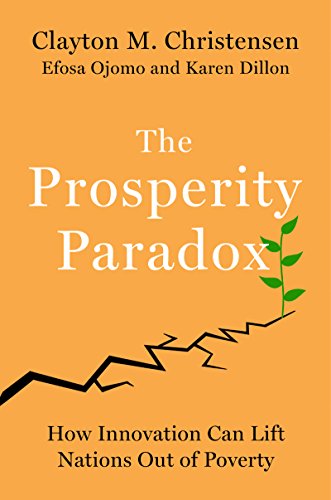
In the last few months I had been reading, or reading again, several of Clayton Christensen’s books. Not only the more famous like the Innovator’s Dilemma or The Innovator’s Solution, but also books like How Will You Measure Your Life?, or The Prosperity Paradox. They were all sources of ideas and inspiration for my life and work.
Particularly in this book How Will You Measure Your Life? his Latter-day Saints religious background becomes more evident, even when he is not directly talking about his religion, like in The Power of Everyday Missionaries.
These quotes are a good example of it:
“When I have my interview with God, our conversation will focus on the individuals whose self-esteem I was able to strengthen, whose faith I was able to reinforce, and whose discomfort I was able to assuage—a doer of good, regardless of what assignment I had. These are the metrics that matter in measuring my life.”― Clayton M. Christensen
“The only metrics that will truly matter to my life are the individuals whom I have been able to help, one by one, to become better people.” ― Clayton M. Christensen
“Decide what you stand for. And then stand for it all the time.” ― Clayton M. Christensen
“Intimate, loving, and enduring relationships with our family and close friends will be among the sources of the deepest joy in our lives.”― Clayton M. Christensen
If you want to help people, being a manager with the right attitude can serve you well:
“I used to think that if you cared for other people, you need to study sociology or something like it. But….I [have] concluded, if you want to help other people, be a manager. If done well, management is among the most noble of professions. You are in a position where you have eight or ten hours every day from every person who works for you. You have the opportunity to frame each person’s work so that, at the end of every day, your employees will go home feeling like Diana felt on her good day: living a life filled with motivators.” ― Clayton M. Christensen
Regarding his passing away the Deseret News reported earlier today:
Clayton Christensen, whose theory of disruptive innovation made him a key influence on Silicon Valley powerhouses like Netflix and Intel and twice earned him the title of the world’s most influential living management thinker, died Jan. 23 at age 67.
His brother, Carlton, told the Deseret News that Christensen died Thursday evening of complications from cancer treatment in Boston, Massachusetts, where he had been a notable part of the Latter-day Saint community for over 40 years. He was considered an equally robust spiritual thinker.
Christensen introduced disruptive innovation in the Harvard Business Review in 1995, but the theory and the term burst into the public consciousness in 1997 when he published “The Innovator’s Dilemma: When New Technologies Cause Great Firms to Fail.” Soon afterward, Intel CEO Andy Grove stood up with a copy of the book at COMDEX in Las Vegas and declared it the most important book he’d read in a decade. The two men appeared together on the cover of Forbes magazine in 1999 — and both Christensen and the business world were changed forever.
Christensen initially used the term “disruptive technologies.” Grove dubbed it the “Christensen Effect.” After Christensen altered it to “disruptive innovation,” the term became ubiquitous. Five years ago, the Economist said it had long since entered the zeitgeist.
Though he coined the term, Christensen grew uncomfortable with it as he saw it overused and misapplied. He utilized it narrowly to describe innovations that upended existing markets, but only if they fit a certain pattern he had discovered. A true disruptive innovation, he taught, first appealed only to a niche market and appeared less attractive than the powerful incumbent it eventually usurped. In fact, the incumbent typically looked down on it as inconsequential until it ate up huge swaths of its market share.
Netflix CEO Reed Hastings used “The Innovative’s Dilemma” with his team. The biographer of Steve Jobs said the book “deeply influenced” Apple’s co-founder. Jeff Bezos tells his Amazon executives to read another Christensen book, “The Innovator’s Solution.”
READ THE FULL OBITUARY FOR CHRISTENSEN AT Deseret.com.
18 Insightful Quotes and Brief Summary of “The Myths of Innovation” by Scott Berkun

According to Scott Berkun, author of The Myths of Innovation, the purpose of his book is to
share the truths everyone should know about how big ideas really change the world. Far too much of what we know about creativity isn’t based on facts at all, and my mission is to change this.
The book was heavily researched with 100s of footnotes and references, and these are the main points, the Ten Myth of Innovation:
- We mistakenly obsess about flashes of insight (The myth of epiphany). Flashes of insight dominate how creativity is reported, despite how small a role they play in breakthroughs. Epiphanies are a consequence of effort, not just the inspiration for it. And no idea is completely original, as all ideas are made from other ideas.
- Technological progress does not move in a straight line (The myth that we know history). We romanticize the past to fit the present, creating traps for creatives who don’t know the true history of their own field. Edison did not invent the lightbulb. Ford did not invent the assembly line.
- Progress, and market success, are inherently unpredictable (The myth of a method). The challenge with creative work, especially in a marketplace, is the many factors beyond your control. You can do everything right and still fail. Most books on creativity make big promises based on history: they cherry pick examples from the past to support their “method”. Methods can be useful but they deny that the present is different from the past. There are too many variables in the present to have certainty.
- People resist change, including progress (The myth we love new ideas). While talking about creativity is very popular, actually being creative puts your social status at risk. All great ideas were rejected, often for years or decades. The history of breakthroughs is a tale of persistence against rejection.
- We overstate individual contributions and under-recognize teams (The myth of the lone inventor). It’s easier to worship a hero if they are portrayed as superhuman. But even people worthy of the title genius or prodigy like Mozart, Picasso and Einstein had family and teachers who taught them.
- Good ideas are everywhere, it’s courage that’s scarce (The myth that good ideas are rare). We are built for creativity. The problem is the conventions of adult life demand conformity and we sacrifice our creative instincts in favor of social status. Unlike a child, adults are supremely and instantly judgmental, killing ideas before they’ve had even a moment to prove their worth.
- People in charge often resist change (The myth your boss knows more than you). To rise in power demands good political judgement, yet innovation requires a willingness to defy convention. Convention-defiers are harder to promote in most organizations, yet essential for progress.
- The world of ideas is not a meritocracy (The myth the best idea wins). Marketing, politics and timing have tremendous influence on why one idea or its competitors wins. To be successful with ideas demands studying why some lousy ideas have triumphed and some great ones are still on the sidelines.
- Defining problems well is as important as solving them (The myth that problems are less interesting than solutions). There are many creative ways to think about a problem, and different ways to look at a situation. The impatient run at full speed into solving things, speeding right past the insights needed to find a great solution.
- Unintended consequences are hard to avoid (The myth that innovation is always good). How would you feel about an invention that ends your profession? All innovation is change and all change helps some people and hurts others.
18 Quotes from The Myths of Innovation
“The best lesson from the myths of Newton and Archimedes is to work passionately but to take breaks. Sitting under trees and relaxing in baths lets the mind wander and frees the subconscious to do work on our behalf. ” ― Scott Berkun
“In a recent survey, innovative people — from inventors to scientists, writers to programmers — were asked what techniques they used. Over 70% believed they got their best ideas by exploring areas they were not experts in”― Scott Berkun
“Howard H. Aiken, a famous inventor, said, “Don’t worry about people stealing your ideas. If your ideas are any good, you’ll have to ram them down people’s throats.” ― Scott Berkun
“Freeman Dyson, a world-class physicist and author (said): “I think it’s very important to be idle…people who keep themselves busy all the time are generally not creative. So I am not ashamed of being idle.” ― Scott Berkun
“The love of new ideas is a myth: we prefer ideas only after others have tested them.” ― Scott Berkun
“Nearly every major innovation of the 20th century took place without claims of epiphany.” ― Scott Berkun
“Professional management was born from the desire to optimize and control, not to lead waves of change.” ― Scott Berkun
“Einstein said, “ Imagination is more important than knowledge,” but you’d be hard-pressed to find schools or corporations that invest in people with those priorities…We reward conformance of mind, not independent thought, in our systems — from school to college to the workplace to the home — yet we wonder why so few are willing to take creative risks.” ― Scott Berkun
“One way to think about epiphany is to imagine working on a jigsaw puzzle. When you put the last piece into place, is there anything special about that last piece or what you were wearing when you put it in? The only reason that last piece is significant is because of the other pieces you’d already put into place. If you jumbled up the pieces a second time, any one of them could turn out to be the last, magical piece. Epiphany works the same way: it’s not the apple or the magic moment that matters much, it’s the work before and after” ― Scott Berkun
“The future never enters the present as a finished product, but that doesn’t stop people from expecting it to arrive that way.” ― Scott Berkun
“The Greeks were so committed to ideas as supernatural forces that they created an entire group of goddesses (not one but nine) to represent creative power; the opening lines of both The Iliad and The Odyssey begin with calls to them. These nine goddesses, or muses, were the recipients of prayers from writers, engineers, and musicians. Even the great minds of the time, like Socrates and Plato, built shrines and visited temples dedicated to their particular muse (or muses, for those who hedged their bets). Right now, under our very secular noses, we honor these beliefs in our language, as the etymology of words like museum (“place of the muses”) and music (“art of the muses”) come from the Greek heritage of ideas as superhuman forces.” ― Scott Berkun
“In this age, being seen as an “expert” may have little bearing on the “expert’s” ability to do the thing she is supposedly an expert in.”
― Scott Berkun
“The chief cause of problems is solutions. — Eric Sevareid” ― Scott Berkun
“It’s natural for people to protect what they know instead of leaping into the unknown, and managers are no exception. Managers might even be worse, as the politics they rely on to survive can make them more entrenched and defensive.” ― Scott Berkun
“Einstein once said, “If I had 20 days to solve a problem, I would take 19 days to define it,” ― Scott Berkun
“By idolizing those whom we honor, we do a disservice both to them and to ourselves…we fail to recognize that we could go and do likewise. — Charles V. Willie” ― Scott Berkun
“Developing new ideas requires questions and approaches that most people won’t understand initially, which leaves many true innovators at risk of becoming lonely, misunderstood characters.” ― Scott Berkun
“Innovating comes at a price: it might be money, time, sanity, friends, or marriages, but there will definitely be one.” ― Scott Berkun
Scott Berkun
Scott Berkun is an American author and speaker. Berkun studied computer science, philosophy, and design at Carnegie Mellon University. He worked at Microsoft from 1994 to 2003 on Internet Explorer 1.0 to 5.0, Windows, MSN, and in roles including usability engineer, lead program manager, and UI design evangelist. He left Microsoft in 2003 with the goal of filling his bookshelf with books he has written.
He has written three best-selling books: Making things happen, The Myths of Innovation, and Confessions of a Public Speaker.
Bibliography
- The Art of Project Management
- Making things happen,
- The Myths of Innovation,
- Confessions of a Public Speaker,
- Mindfire: Big Ideas for Curious Minds,
- The Year Without Pants: WordPress.com and the Future of Work,
- The Ghost of My Father
Ford is Challenging Tesla by Planning a Huge North American Electric Charging Network

There is an interesting development in the war for the electric cars market: to the “Apple style” charging network represented by Tesla, now Ford is countering with its own “Android style” network.
Today Ford announced that it will be creating North America’s largest electric vehicle public charging network by building out 12,000 places to charge electric cars and over 35,000 charge plugs.
Currently Ford has no new electric cars on the market but a 370-mile-range SUV inspired by the Mustang, will come next year.
No set date was given on the network’s completion, but the network will address one of the main concerns of potential customers:
“Among people who already own or want to purchase electric vehicles and plug-in hybrids, 48 percent say that a lack of charging stations is one of their main concerns,” says Ted Cannis, Ford director of global electrification, in a press statement. “By offering industry-leading charging access we are dismantling those barriers, allowing more customers to confidently enjoy the benefits of owning an electric vehicle.”

Tesla has been working on an electric charging network for years, creating an extensive network in the U.S., Canada, and Mexico. Tesla has built out 4,375 public charging stations in the U.S, which is 12.9 percent of the 33,859 currently in operation, according to the Department of Energy.
But there will be significant differences between the Tesla and Ford models of networks. Tesla chargers are run and operated by the company and are designed exclusively for Tesla vehicles.
The Ford network, on the other hand, will be built with help from the company Electrify America, and the Shell Gas-owned Greenlots, which will “bring together multiple charging providers” under the FordPass banner.

It would be interesting to see which model of charging networks will be more successful, or if they will coexist like Apple and Android operating systems.
While Tesla is trying to become the Apple of electric charging stations with its proprietary ecosystem, Ford is following the model of the more open Android system.
Ford is also focusing on home charging. The company is saying that all of its future electric vehicles will come with what is known as a Ford Mobile Charger, capable of charging on a higher-voltage 240-volt electrical outlet.
“The fact that most of our customers will plug in at home is a key advantage to an all-electric vehicle,” said Matt Stover, Ford director of charging, energy services and business development. “We will deliver a charging experience that is hassle-free whether you’re at home or on-the-go.”
Ford’s major investment in electric vehicles, however, is only beginning: the company is planning to spend $11.5 billion on the technology through 2022.
The Prosperity Paradox: Corruption Is Not the Problem, It’s a Solution by Clayton Christensen

The title of chapter 9 of The Prosperity Paradox, Corruption Is Not the Problem; It’s a Solution by Clayton Christensen, Efosa Ojomo and Karen Dillon easily catches our attention.
What is Clayton Christensen trying to say with this title? Does he approve corruption? Not really.
The book The Prosperity Paradox: How Innovation Can Lift Nations Out of Poverty is about finding and trying new innovative solutions to solve the problem of poverty and development.
Christensen and his co-authors offer a new framework for economic growth based on entrepreneurship and market-creating innovation instead than on the traditional plan of identifying
“areas that need help, flood them with resources, and hope to see change over time.“
Flooding poor countries with resources, and hope for the best, according to the authors, has not proven to be very effective in creating sustainable economic growth and eliminate poverty.
Corruption Is Not the Problem; It’s a Solution
Traditionally, corruption is considered one of the main barriers to prosperity and stability in poor countries, and many efforts are directed at eradicating it, but what if…
“Instead of asking, How can we eliminate corruption? we ask, Why does corruption persist in the first place? The answer, we believe, lies not solely in some fundamental moral failings, but rather in understanding why many people choose to “hire” corruption.
The authors refer here to Christensen’s theory of Jobs to be Done (JTBD). A JTBD is not a product, service, or a specific solution, but it’s the real purpose for which customers buy products, services, or solutions. In other words, people don’t simply buy products or services, they ‘hire’ them to make progress in specific circumstances.
The classic example used by Clayton Christensen to introduce his theory is that of the fast food chain who hired two consultants to understand how to improve milkshake sales. After conducting in-depth interviews, the consultants discovered that customers were buying milkshakes for breakfast during their morning commute because they were relatively tidy and could stave off hunger until lunch, and not because of their flavor or thickness. They discovered which “job” the customers were “hiring” the milkshakes to do.
So…..Why Do People Hire Corruption?
Christensen and colleagues say that they have uncovered three powerful reasons why people decide to “hire” corruption.
“First, the vast majority of individuals in society want to make progress … most of us want to improve … When society offers us few legitimate options to make progress, corruption becomes more attractive.”
“Second, every individual, just like every company, has a cost structure —how much money they spend to maintain a particular lifestyle … Understanding this simple revenue-cost relationship can help predict circumstances where the likelihood of corruption will be high.
“The third reason people hire corruption is that most individuals—regardless of income level—will seek to subvert the prevailing law enforcement strategies in order to make progress or benefit themselves … When we are confronted with a law that limits our ability to do something we want to do, most of us instinctively make a mental calculation. Do I need to obey this law, or can I get away with disobeying it? … the average rational person will juxtapose the benefits of obeying the law with the consequences of disobedience.
According to the authors, therefore, corruption is more prevalent in those societies where 1) there are few legitimate options to make progress; 2) people have a hard time to maintain a reasonable lifestyle without corruption; and 3) the benefits of disobeying the law are greater than the negative consequences.
But societies evolve. The path, however, from a society steeped in corruption to one where trust and transparency thrive typically follows a predefined and often predictable pattern, with three phases: “overt and unpredictable corruption,” followed by “covert and predictable corruption,” ultimately transitioning to what we will call a “transparent” society.
Phase 1: Overt and Unpredictable
The first phase is what we call Overt and Unpredictable Corruption, and this is where many poor countries find themselves. In these countries, contracts are difficult to enforce, government institutions are hard to trust, and corruption scandals are commonplace.
It is very difficult for capital to be deployed in this kind of environment. Investors understandably shy away from this kind of unpredictability and opacity. For example, imagine doing business in Venezuela.
Phase 2: Covert and Predictable
The second phase in the corruption spectrum is Covert and Predictable Corruption. …People are aware that there is corruption, but it’s baked into the system. Because development is happening in parallel, corruption is seen as a necessary cost of doing business.
The transition from unpredictable to predictable corruption can be very expensive—economically and politically—and primarily requires the creation of new markets, not laws. Most people who engage in corruption know they should not do what they are doing.
Think of China. Development is happening, but is not yet a transparent society. For prosperity to become sustainable in the long term, a nation must transition to the third phase.
Phase 3: Transparency
An example of phase 3 are the United States.
“In 2017, total lobbying in the United States totaled more than $3.3 billion…(but at the same time) … Corruption is largely frowned upon in America, and is routinely rooted out and prosecuted to the fullest extent of the law.
In the US lobbyists openly spend billions of dollars trying to influence the government, but those engaged in corruption are also aggressively pursued and eventually prosecuted. It seems a contradiction, but the truth is that that lobbying is legal and it is also fairly transparent.
Moreover, the American economy is relatively predictable. While there is corruption in America, it is often exposed, prosecuted, and punished.
What, Then, Must We Do?
Christensen and colleagues have two suggestions to help move corrupted societies (those in phase 1 or 2) toward more transparency (phase 3).
First: What if we stopped focusing all our effort on fighting corruption? Without simultaneously providing a substitute for what people can hire, corruption will be incredibly difficult to minimize.
They suggest that poor-country governments should focus on enabling the creation of new markets that help citizens solve their everyday problems, instead than continuing to aggressively fight corruption with the very limited resources they have.
The creation of new market would start a positive “chain reaction”. With the creation of new markets, people would naturally start to have an interest in seeing them succeed. The governments would begin to generate more revenue that would allow to improve their courts, law enforcement, and legislative systems. The markets would also begin to provide jobs for the people who would then be able to accumulate wealth without having to resort to corruption.
“Asking people to fire corruption without giving them anything else to hire is not very realistic, and, as the data show, often doesn’t work.”
Second, business organizations should focus on what they can control, by integrating and internalizing their operations in order to reduce opportunities for corruption to occur.
The more components of an organization’s business model that it brings in house, the more opportunity the organization has to reduce corruption.
For example, Roshan, the leading telecommunications provider in Afghanistan, in order to reduce corruption, did set up a government relations department that handles corruption allegations.
From Pirate to Paying Subscriber

The solution presented by Christensen and his colleagues is simple, perhaps too simple, some would argue, but it’s worth considering.
“Corruption for most people, especially in poor countries, is simply a means to an end. If they had an alternative, most people would not choose to hire corruption to make progress. And short of enforcing morality—often an expensive and difficult strategy with mixed results—we cannot think of a better strategy for curbing corruption than the subsequent creation of new markets.
To make the point once more, the authors close the chapter with one example from the recent history of music.
“Consider what happened in the music industry in America at the turn of this century—where, in relatively rapid succession, a culture of piracy and illegal music sharing gave way to one in which customers opted to pay for streaming music instead.”
“The music industry might have been able to knock down music pirates here and there, but until it truly understood why people were “hiring” those alternative solutions, it was never going to prevail. The same is true throughout society. We might win cases against corrupt politicians and corrupt practices, but until we truly understand why people hire corruption, we will continue to spend our hard-earned resources fighting this problem.”
About Clayton Christensen
Clayton Magleby Christensen (born April 6, 1952) is an American academic, business consultant, and religious leader who currently serves as the Kim B. Clark Professor of Business Administration at the Harvard Business School of Harvard University.
He is best known for his theory of “disruptive innovation“, first introduced in his 1997 book The Innovator’s Dilemma, which has been called the most influential business idea of the early 21st century.
The Prosperity Paradox by Clayton Christensen, Efosa Ojomo and Karen Dillon: Book Review and 25 Great Quotes

The starting point of the book The Prosperity Paradox: How Innovation Can Lift Nations Out of Poverty is expressed by this statement in the initial page of the first chapter:
According to the World Bank, more than 750 million people still live in extreme poverty, surviving on less than $1.90 a day. We all want to help. But what might seem to be the most obvious solution to these problems—directly assisting poor countries by investing to fix these visible signs of poverty—has not been as successful as many of us would like. You only have to look at the billions of dollars that have been channeled to these problems over the years with relatively slow progress to conclude that something is not quite right. With these efforts, we may be temporarily easing poverty for some—but we’re not moving the needle enough.
What is needed is a different approach. The problem needs to be considered through different lenses. Instead of trying to fix the visible signs of poverty, we should focus on creating lasting prosperity.
How can we do this? Christensen, Ojomo and Dillon believe that the solution is innovation. But what type of innovation? Sustaining innovation? Efficiency innovation?

In The Prosperity Paradox, the authors argue that while sustaining and efficiency innovations have an important place in the economic development of nations, more market-creating innovation is what is really needed to help raise nations from poverty.
Global poverty is one of the world’s most vexing problems. From education to healthcare, infrastructure to eradicating corruption, the vast majority of solutions rely on trial and error. Essentially, the plan is often to identify areas that need help, flood them with resources, and hope to see change over time.
But this is a mistake, because these solutions are not producing consistent results. “At least twenty countries that have received billions of dollars’ worth of aid are poorer now.”
Christensen and his co-authors offer a new framework for economic growth based on entrepreneurship and market-creating innovation. They use successful examples from the US, including Ford, Eastman Kodak, and Singer Sewing Machines, and others from countries like Japan, South Korea, Nigeria, India, Mexico, and more.
The Prosperity Paradox is not simply a business book for companies who are looking for long-term growth and sustainable progress, but it’s also “a call to action for anyone who wants a fresh take for making the world a better and more prosperous place.
This book is a must read for those who are interested in innovation and for those who work in the development space. It is another masterpiece from Clayton Christensen and colleagues.
25 of My Favorite Quotes
“Innovation is not only about high-tech solutions; it is the change in the processes by which an organization transforms labor, capital, materials, and information into products and services of greater value. That doesn’t necessarily involve cutting-edge technology.”
“It may sound counterintuitive, but our research suggests that enduring prosperity for many countries will not come from fixing poverty. It will come from investing in innovations that create new markets within these countries”
“Market creating innovations do exactly what the name implies, they create new markets. But not just any new markets, new markets that serve people for whom, either no products existed or existing products were neither affordable nor accessible for a variety of reasons. These innovations transform complicated and expensive products into ones that are so much more affordable and accessible that many more people are able to buy and use them.”
“This struggle often presents itself as “non consumption” where would-be consumers are desperate to make progress in a particular aspect of their lives, but there is no affordable and accessible solution to their problem.”
“As a culture of innovation began to emerge in America, one in which entrepreneurs looked to serve more and more nonconsumers, a virtuous cycle of prosperity creation was set in motion.”
“At the core of any market-creating innovation is a business model that profitably democratizes an innovation so that many more people nonconsumers who can benefit from using the innovation—gain access to it. That’s where the transformative power comes into play.”
“Not all innovations are created equal.”

“What we learn from these nations is that prosperity is a process, not an event, one that requires a continuous commitment to innovation.”
“The real voyage of discovery consists not in seeking new landscapes but in having new eyes. – Marcel Proust”
“When I come across a Sony product these days, I don’t just see a cool innovation, I see something much more powerful and enduring: the process by which one of the most prosperous nations in the world developed.”
“Eiji Toyoda summarized Toyota’s attitude toward training and providing relevant education for its workforce: “It is people who make things. So we must first make people before we make things.”
“The problem is, it is very difficult to “see” what you are not looking for. Many of our economic forecasts don’t necessarily help, they typically focus on what we call the “consumption economy,” the part of the economy that is most visible through conventional metrics.
“When you look at Mexico’s economy not through the lens of investment dollars, but through the lens of innovation, a pattern becomes clear. Many companies in the country—domestic and international—have invested heavily in efficiency innovations. But in what should be a vibrant economy, flush with resources, there is a disappointing lack of market-creating innovations. And as Mexico painfully illustrates, an overreliance on efficiency innovations can only take an economy so far.”
“People are nonconsumers because they are struggling to accomplish something, but none of the available solutions are good options for them.”

“Development and prosperity take root when we develop innovations that pull in necessary resources a society requires.”
“An efficiency innovation–based strategy—which enables companies to squeeze as much as possible from existing and newly acquired assets—typically sells its products into the “consumption economy,” those who can already afford existing products on the market. Because these innovations are not targeted at nonconsumption, they typically do not create new markets.”
“If we create a market that successfully serves a growing population of nonconsumers, that market is likely to pull in many other resources an economy requires.”
“Once a market is created, however, it is difficult to destroy. Markets fundamentally change the way people live their lives, and when you are responsible for creating a market, the rewards can be abundant.”
“Just because a nation is economically poor does not mean that vast market creation opportunities do not exist within its borders.”
“We cannot fix problems with the law, systems, and institutions by simply adding another law, system, or institution. Effective institutions are not just about rules and regulations. Ultimately, institutions are about culture—how people in a region solve problems and make progress. At their core, institutions reflect what people value. And that, it turns out, has to be homegrown. Innovation can play a critical role in this process.”
“In general, poor countries are overwhelmed with bad institutions, while prosperous countries are filled with good ones, or at least much better ones. Conventional wisdom suggests that countries that want to tackle poverty must first establish rule of law, fix their institutions, and adopt Western-style systems before they can make progress toward prosperity.”
“The problem is, the institutions of a society reflect its values rather than create them. So building strong institutions—ones that will shape and hold a country’s values for generations—is not as simple as “export what works elsewhere, add water, and stir.”
“In focusing on adopting “best practices” that seem to work in other parts of the world we often fail to understand the contextual complexities specific to a particular region. As a consequence, we measure success on how much a system resembles another system that works versus on whether it actually solves a particular problem.””
“An institution is really a reflection of the culture”
“If you build it, they may not come.”
Facebook Is Testing Hiding Like Counts To Improve Users’ Well-being

Facebook is testing hiding like counts to improve users’ well-being and mental health. If the experiment is successful, it could lead to more tests and eventually to a significant change in the social media world. It’s well known that there are many negative effects associated with the “popularity contexts” that are created by Facebook and other social media.
If you post a photo of your last family activity and very few people like it, you feel bad. What’s wrong with your family? Why other families get hundreds of likes and you only a dozen? And why everybody seems so happy while your life stinks?
Facebook has begun testing hiding like counts, starting in Australia on September 27th. Users no longer see the number of likes, reactions and video views on other’s posts. Likes will be private and only visible to the post’s author. A similar test on Instagram was started in July in Australia.

According to Facebook Australia’s director of policy Mia Garlick the change was based on well-being research and feedback from mental health professionals that believe that like counts can cause social comparison and distress.
The test will hide the number of likes on a post, only displaying that a post was liked by “[a friend] and others,” instead of displaying the total number to the viewers. The limited test will measure whether the feature can improve users’ sense of well-being.
Getting rid of the ability of seeing the exact number of likes is a small change but the hypothesis is that it could help reducing feelings of anxiety and depression of many social media user.
“[It is about] taking that number out of the equation, so that people can focus on the quality of their interactions and the quality of the content rather than on the number of likes or reactions,” spokeswoman Mia Garlick told the Australian Associated Press. “We’ve had really positive feedback from a lot of the anti-bullying groups and mental health organisations that we work with.”
Facebook could also be testing the program in the hopes of slowing the spread of disinformation in the 2020 US presidential election.

Instagram first started testing these change in April. The company was hoping to create “a less pressurized environment” where followers focus on what people share, and not how many likes posts get.
In a very interesting article on Techcrunch, the author reports how
a collection of studies found that while chatting with friends and comment threads on Facebook made people feel better, passively scrolling and Liking could lead to envy spiraling and declines in perception of well-being. Users would compare their seemingly boring life to the well-Liked glamorous moments shared by friends or celebrities and conclude they were lesser.
For example, Krasanova et al discovered that 20% of the envy-inducing moments users experienced in life were on Facebook, and that “intensity of passive following is likely to reduce users’ life satisfaction in the long-run, as it triggers upward social comparison and invidious emotions.”
According to the author,
If Facebook wants to build a social network people continue using for another 15 years, it has to put their well-being first — above brands, above engagement, and above ad dollars…But if the Like hiding works and eventually becomes standard, it could help Facebook get back to the off-the-cuff sharing that made it a hit at colleges so long ago. No one wants to be in a life-long popularity contest.
I am very interested in the results of this and other similar tests. I believe that changes are needed, even if modifying the technology may not be enough, unless users become more aware of the dangers of continuous exposure and use of social media.
Apple iOS 13 Has Bugs, But I Love Swipe To Type And The New Photos App

Apple’s website announced recently the new iOS 13 operating system with a bold statement:
“A whole new look. On a whole new level.
Truly, the iOS 13 was full of bugs according to an article on Forbes when it was released a week ago. I waited for the release of iOS 13.1 to upgrade from iOS 12 and it still had some bugs, but I have not discovered anything particularly annoying, until now at least.
But a few minutes ago I have installed the latest update, the iOS 13.1.1 and I expect to see even more bugs go away.
MAIN NEW FEATURES
- Systemwide Dark Mode
- Revamped Photos app
- New Photo editing interface
- Sign in with Apple option
- Location data limits
- Look Around view in Maps
- New Reminders app
- Swipe to Type
I love the new features, especially the new Swipe to type and the improved Photos App.
Swipe to Type
Since I had moved from Androids to iPhones a few years ago, the only feature that I was really missing from Android was the Swipe. Since my thumbs are too big to type quickly on a phone, I had to type with just one finger, and not having Swipe was a major hindrance. But now I am back to swiping even with an iPhone, and I am surely happier, because it’s a lot faster for me.
Photos app
I also love the improved Photo App. Now the Photos app introduces a new feature that curates the entire Photos library and shows a selection of highlights from your life by day, month, or year. Photos and videos are intelligently organized, making it easier to browse and review memories.
The Photo editing tools has also been improved to make it easier to edit your images.
What is even better, iOS 13 makes most of the photo editing tools available for video editing, so that you can now rotate, crop, and apply filters even to videos.